







Executive Overview
The modern public transportation landscape stands at a critical technological crossroads. As urban centers swell, climate imperatives intensify, and commuter expectations shift toward seamless, on-demand experiences, transit agencies face unprecedented pressure to modernize. However, this imperative for digital transformation collides with a stubborn reality: legacy infrastructure. For decades, public transit authorities have procured disparate hardware, software, and tools from a revolving door of vendors. The result is a fragmented technological patchwork—siloed systems that fail to communicate, draining operational budgets through expensive custom integrations and constant manual oversight.
Enter Almaviva, a global digital transformation powerhouse with over four decades of industry experience. Operating across Europe, North America, South America, and the Middle East, the company commands a workforce exceeding 40,000 professionals and generates pro forma revenues surpassing $2 billion. Fueling its rapid expansion into the intelligent mobility infrastructure sector is its strategic 2024 acquisition of Iteris, alongside the scaling of its North American Transit division.
At the helm of this North American expansion is Eric Reese, Senior Vice President of Transit North America for Almaviva. A seasoned industry leader with a background spanning transit operations, high-level consulting, and executive roles—including leading the Americas region for Vix Technology and serving as CEO of Bytemark—Reese possesses a front-row seat to the systemic challenges confronting modern transit agencies.

In an in-depth discussion, Reese unpacks the complex realities of the transit technology landscape. He explores why interoperability, open architecture, and modular system design are no longer just "nice-to-have" engineering concepts, but foundational survival strategies for public agencies constrained by tight budgets and rising commuter demands. This report explores these themes, analyzing how Almaviva’s flagship Moova mobility platform and strategic approach to digital transformation are helping agencies break free from vendor lock-in, streamline operations, and future-proof the passenger experience.
Detailed Chronology: The Evolution of Almaviva and North American Transit
To understand Almaviva’s current positioning in the North American transit market, it is necessary to examine the trajectory of its global digital footprint and the strategic milestones that brought the company to its current vantage point.
Decades of Digital Transformation
Founded more than 40 years ago, Almaviva established its reputation in Europe as a premier partner for digital transformation, helping both private enterprises and government entities overhaul legacy operations. By leveraging emerging technologies, the firm enabled organizations to optimize service delivery, streamline back-end processes, and enhance end-user engagement. Over the decades, Almaviva scaled its operations globally, building a formidable presence spanning Europe, the Middle East, and the Americas. Today, its workforce exceeds 40,000 employees, underpinning a robust financial foundation with pro forma revenues eclipsing the $2-billion threshold.
Strategic Expansion into Intelligent Mobility
Recognizing the convergence of urban mobility, data analytics, and sustainable infrastructure, Almaviva systematically targeted the transportation sector as a primary engine for future growth. This strategic vision materialized significantly through major corporate acquisitions and platform developments designed to address the world’s most pressing mobility challenges.
- The Iteris Acquisition (2024): A watershed moment for Almaviva occurred with the acquisition of Iteris, a recognized leader in smart mobility infrastructure management solutions. This move married Almaviva’s deep software and digital transformation expertise with Iteris’s advanced traffic management, cloud-based predictive analytics, and smart mobility infrastructure capabilities.
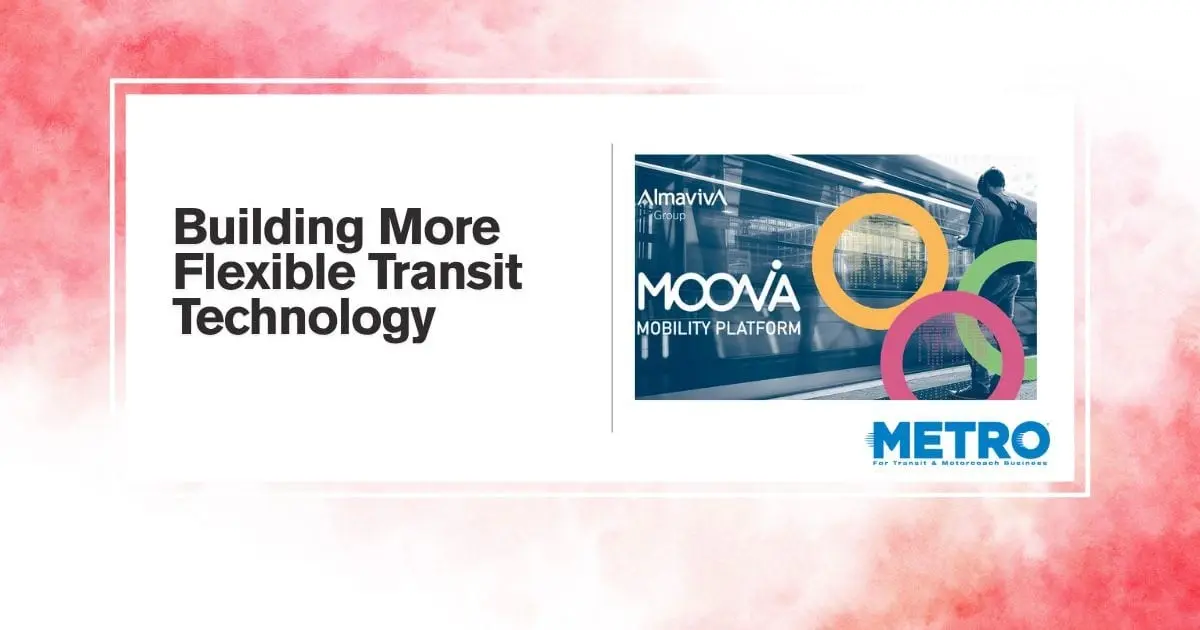
- Anchoring the North American Transit Push: Bolstered by this expanded portfolio, Almaviva positioned its Moova mobility platform at the center of its North American market strategy. Moova serves as an integrated, scalable ecosystem designed to unify disparate transit networks, optimize traffic flows, and deliver unified passenger information systems.
Leadership and the North American Vision
To steer this ambitious regional strategy, Almaviva appointed Eric Reese as Senior Vice President of Transit North America. Reese brought a rare blend of cross-sector expertise to the role. Having cut his teeth in hands-on transit operations, advisory consulting, and executive leadership within the supplier ecosystem—including a tenure leading the Americas for Vix Technology and serving as CEO of Bytemark—Reese understood the acute pain points of transit authorities firsthand. Under his leadership, Almaviva’s North American transit division has pivoted toward a consultative, partnership-driven model, emphasizing open standards, modular deployments, and long-term economic sustainability for public agencies.
Supporting Context & Metrics: The Cost of Fragmentation
The challenges facing public transit agencies are systemic, deeply rooted in historical procurement practices, and exacerbated by financial constraints. To contextualize why figures like Eric Reese advocate so passionately for open architecture, one must analyze the metrics and operational realities driving modern transit agencies.
The Legacy Trap: Siloed Systems and Escalating Costs
Historically, transit agencies procured technology on a project-by-project, vendor-by-vendor basis. An agency might purchase computer-aided dispatch/automatic vehicle location (CAD/AVL) systems from Vendor A, fare collection hardware from Vendor B, and passenger information displays from Vendor C. Over time, these acquisitions form an intricate web of isolated data silos.
According to industry insights, agencies operating in this siloed paradigm face three primary cost drivers:
- Excessive Manual Labor: When systems cannot communicate, agency staff are forced to manually bridge the gap. Personnel spend countless hours cross-referencing spreadsheets, reconciling data feeds, and manually updating disparate platforms—a process prone to human error and administrative fatigue.
- Custom Integration Expenses: To bridge incompatible systems, agencies rely on custom software integrations. These bespoke bridges are notoriously fragile; every time a vendor pushes a software update, the custom integration risks breaking, triggering a recurring cycle of expensive maintenance and emergency engineering fees.
- Information Blindspots: Without real-time data sharing across departments, transit operators lack a unified, accurate picture of network performance. When a disruption occurs, delays compound because identifying and diagnosing the root cause takes significantly longer in a fragmented environment.
The Budgetary Reality of Public Transit
Public transportation agencies operate within rigid public funding cycles, voter-approved referendums, and strict legislative budgets. Unlike private corporations that can inject capital reserves to completely overhaul operations, transit authorities must stretch every dollar.
In this climate, the traditional "rip-and-replace" methodology—discarding an entire technology suite every decade to upgrade—is financially untenable. Agencies cannot afford multi-million-dollar system overhauls that require years of downtime and public disruption. Consequently, the demand for interoperability and modularity has transformed from an IT preference into an operational necessity.
Official Statements and Insights: The Q&A with Eric Reese
In a comprehensive discussion, Eric Reese addresses the core structural challenges facing transit technology today, offering strategic insights into interoperability, open architecture, vendor lock-in, and modular design.
Interoperability and Operational Challenges
METRO: Why has interoperability become such an important consideration when organizations are building or upgrading systems today?
Eric Reese: Most organizations run a variety of disconnected tools, hardware, and products purchased from different vendors over many years. When those pieces can’t talk to each other, every upgrade becomes its own expensive project. Few organizations can afford to rip out and replace everything to make progress, especially with limited budgets. Interoperability lets transit agencies add one new piece while managing time and money better.
METRO: What are the highest costs or operational challenges organizations face when systems from different vendors can’t communicate or work together?
Eric Reese: There are many challenges transit agencies face when systems don’t work together. The costs really show up in three places: manual labor by agency staff, cost, and visibility. Our job is to make it easier. First, we help agencies automate by reducing time-consuming, error-prone manual processes; second, we eliminate expensive custom integrations and the recurring costs of fixing them after vendors update their software. Finally, when systems don’t share information, no one has an accurate, real-time picture of what is happening, which makes it take longer to identify and fix problems.
Open Architecture and Evaluating Systems
METRO: How does an open-architecture approach reduce the amount of customization required, and where can that translate into meaningful cost or time savings?
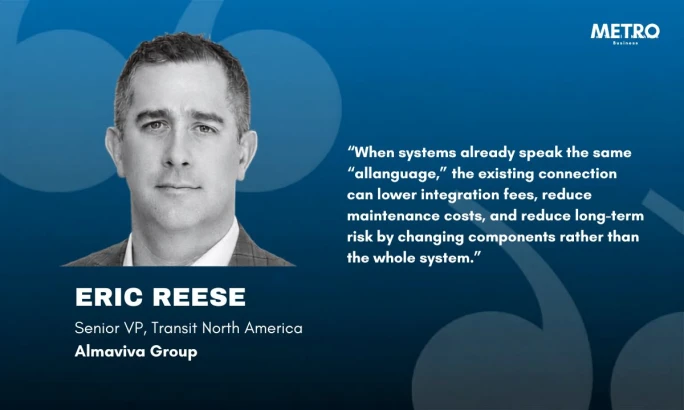
Eric Reese: Open architecture uses shared, published rules for moving data in and out, rather than a proprietary format only one vendor understands. When systems already speak the same "language," the existing connection can lower integration fees, reduce maintenance costs, and reduce long-term risk by changing components rather than the whole system. In short, the payoff is less time and money spent on standing up a system, paying for its maintenance, and reducing the cost of a complete rebuild.
METRO: Vendor lock-in is a concern with many technology investments. What should organizations look for when evaluating a system to make sure they maintain flexibility and aren’t tied to a single vendor long-term?
Eric Reese: Before you sign the dotted line, it is the responsibility of a strategic organization to ask the right questions about the system’s future. Don’t fall for "future-proofing" marketing-speak. Instead ask: Does the system use open, widely adopted data and communication standards? Who owns the data, and can you export and reuse it elsewhere? Will it work with our existing hardware? What happens if we switch vendors later? If vendor responses include phrases such as "closed, proprietary format," "required replacements," and "start over," the system is unlikely to add, remove, or replace without a full rebuild.
On Modularity and Scalability
METRO: How does modular design allow organizations to take a phased approach rather than making a large investment all at once?
Eric Reese: Modular design unlocks a system by breaking it down into separate, connected components rather than a binary, all-or-nothing one. This gives agencies the flexibility to prioritize essential components, prove they work, and build the case for the next. This cadence mirrors agency budgeting, which is based on stages across cycles. Modularity also lowers risk, since right-sized rollouts make it easier to manage, adapt, and learn before scaling.
METRO: As technology continues to evolve, how can interoperability and modularity help organizations expand or upgrade their systems without having to start over?
Eric Reese: Technology doesn’t stand still; there are always new tools, data formats, and expectations. Building a system on open standards and modular components lets transit agencies swap or upgrade components without disrupting the rest of the system. That is the real goal: instead of budgeting for a full system replacement every decade, organizations can evolve while preserving investments already made. Interoperable, modular systems can do more than break vendor lock-in; they can show passengers and the broader community that agencies can deliver projects that move the whole region faster.
Future Outlook: The Next Frontier of Intelligent Mobility
As the urban transit ecosystem continues to evolve at a blistering pace, the philosophies championed by leaders like Eric Reese and backed by global entities like Almaviva will define the next generation of public mobility. The industry is moving decisively away from closed, proprietary ecosystems toward collaborative, open, and agile frameworks.
The Shift Toward Passenger-Centric Mobility
Ultimately, back-end technological efficiency translates directly into front-end passenger experience. Commuters do not care which vendor supplies a CAD/AVL system or how data moves between fare collection gates; they care about reliability, real-time accuracy, seamless multimodal connectivity, and intuitive payment apps.
By dismantling internal data silos and adopting modular platforms like Almaviva’s Moova, transit agencies can deliver on the promise of Mobility-as-a-Service (MaaS). Passengers will be able to plan, book, and pay for trips spanning buses, trains, micro-mobility rentals, and ride-sharing networks through a single, unified interface.
Overcoming Resistance to Change
While the technical benefits of open architecture and modularity are indisputable, widespread adoption requires a cultural shift within public agencies. Procurement departments must move away from lowest-bidder RFPs that lock agencies into proprietary vendor contracts, replacing them with strategic frameworks that prioritize long-term data ownership, interoperability compliance, and system flexibility. Industry advocacy groups, media outlets, and technology providers must continue educating stakeholders on the long-term cost savings inherent in open-access standards.
Conclusion: A Resilient Path Forward
Almaviva’s continued expansion in North America—anchored by deep expertise, strategic acquisitions like Iteris, and visionary leadership from executives like Eric Reese—signals a maturing market. The message to public transit agencies is clear: technological modernization does not require financial ruin or endless system rebuilds.
By embracing open architecture, demanding data ownership, and deploying modular solutions that evolve in tandem with public funding cycles, transit agencies can break free from the legacy trap. In doing so, they protect taxpayer investments, empower operational staff, and build a resilient, interconnected mobility network capable of carrying urban communities confidently into the future.