As Australia’s electric vehicle (EV) transition accelerates, the narrative is rapidly shifting from metropolitan adoption to regional infrastructure integration. While inner-city dwellers grapple with kerbside charging solutions and apartment constraints, Australia’s vast rural townships face a different challenge entirely: capturing the modern road-tripper.
Nowhere is this dynamic more apparent than in Kingaroy, Queensland. Located roughly 218 kilometers northwest of Brisbane at the intersection of the D’Aguilar and Bunya Highways, Kingaroy serves as a vital artery for tourists navigating mountain passes, national parks, and boutique agricultural regions. Recently, the town played host to a landmark electric vehicle meet-and-organize event coordinated by the Australian Electric Vehicle Association Queensland (AEVA Qld) and the South Burnett Sustainable Future Network (SBSFN).
The event drew more than 20 electric vehicles and scores of curious locals, throwing a spotlight on a critical economic imperative: tourist regions need reliable, high-speed EV charging infrastructure to survive and thrive. Without it, regional economies risk being bypassed by a growing demographic of eco-conscious travelers. This report examines the intersection of regional tourism, EV infrastructure vulnerabilities, shifting rural demographics, and the path forward for Australia’s country towns.
The journey toward Kingaroy’s regional EV showcase was not without friction. Months prior to the event, the town’s sole high-speed DC fast charger had fallen out of service, remaining offline for an extended period. For local advocates, including the South Burnett Sustainable Future Network, the prolonged outage was more than an inconvenience; it represented a structural roadblock to regional economic development.
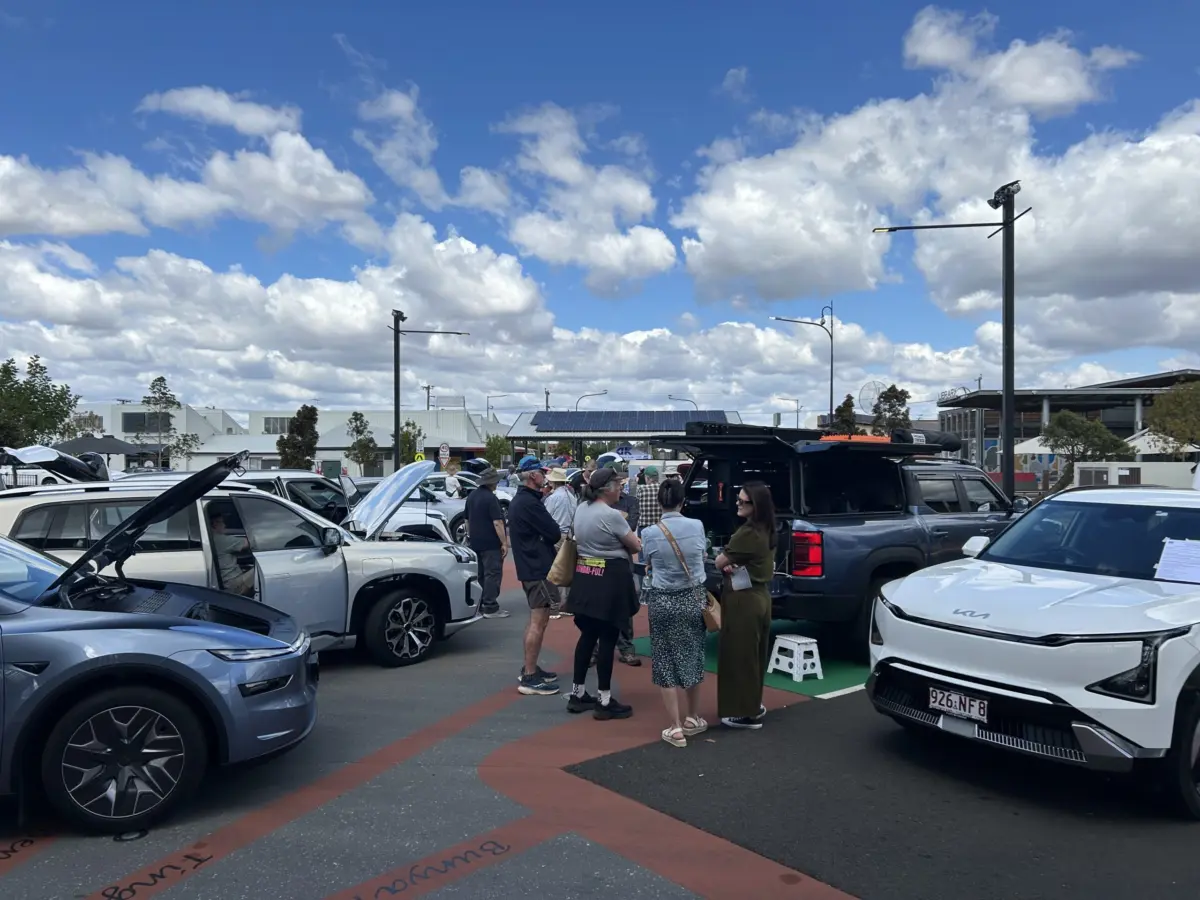
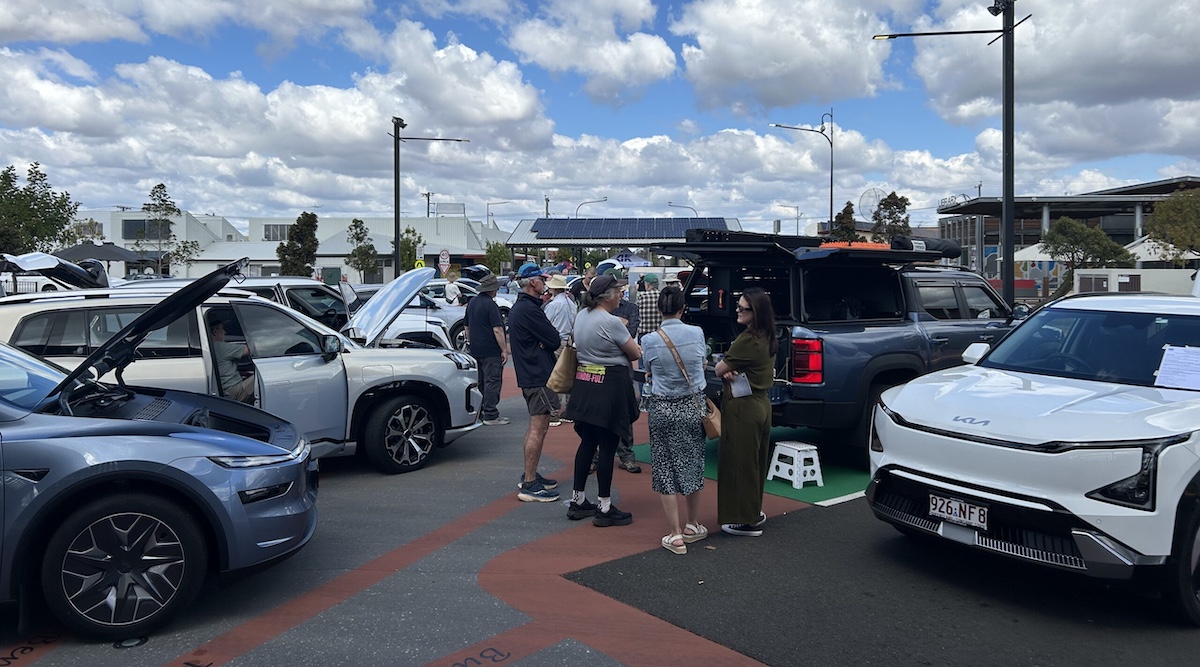
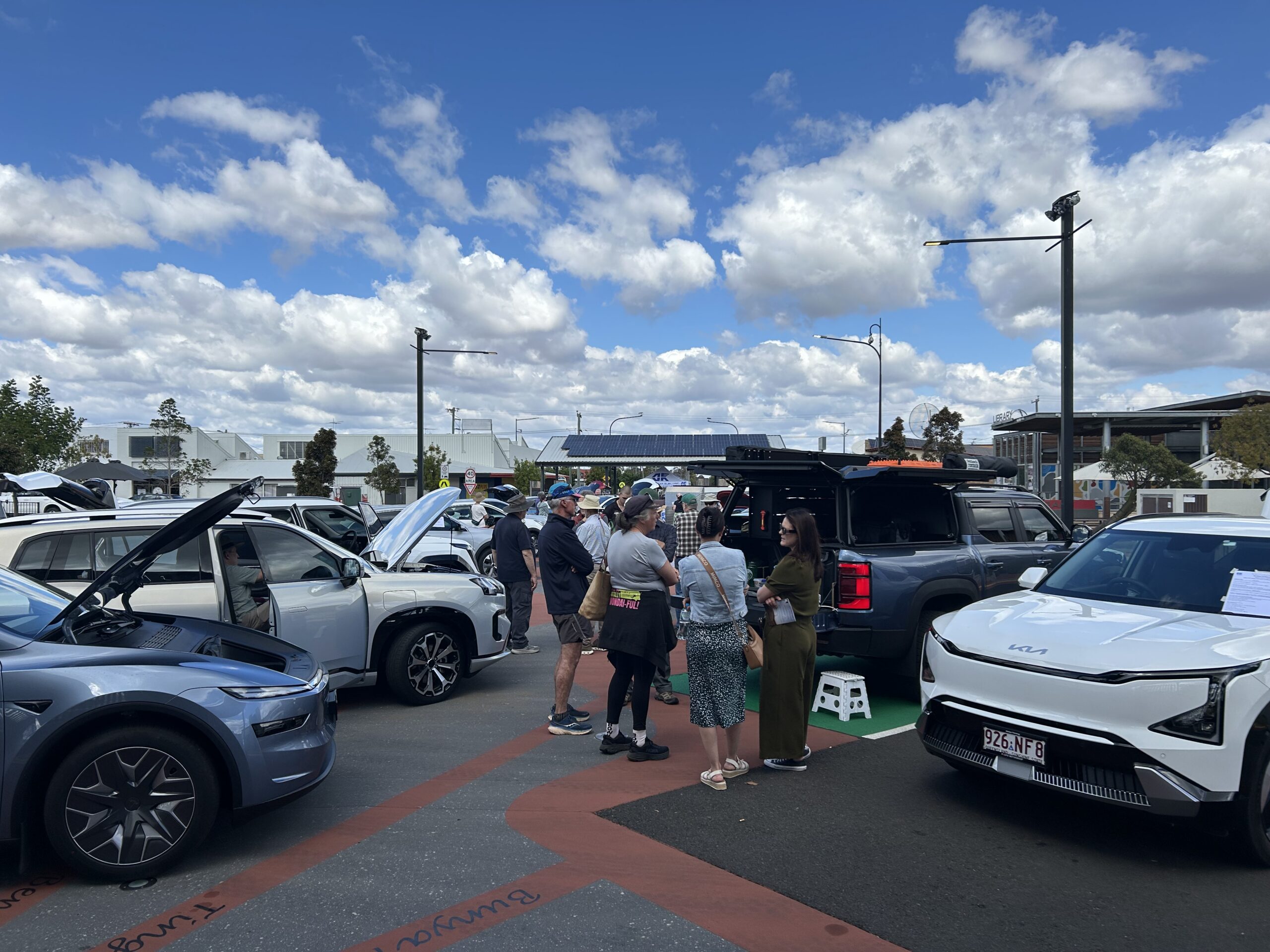
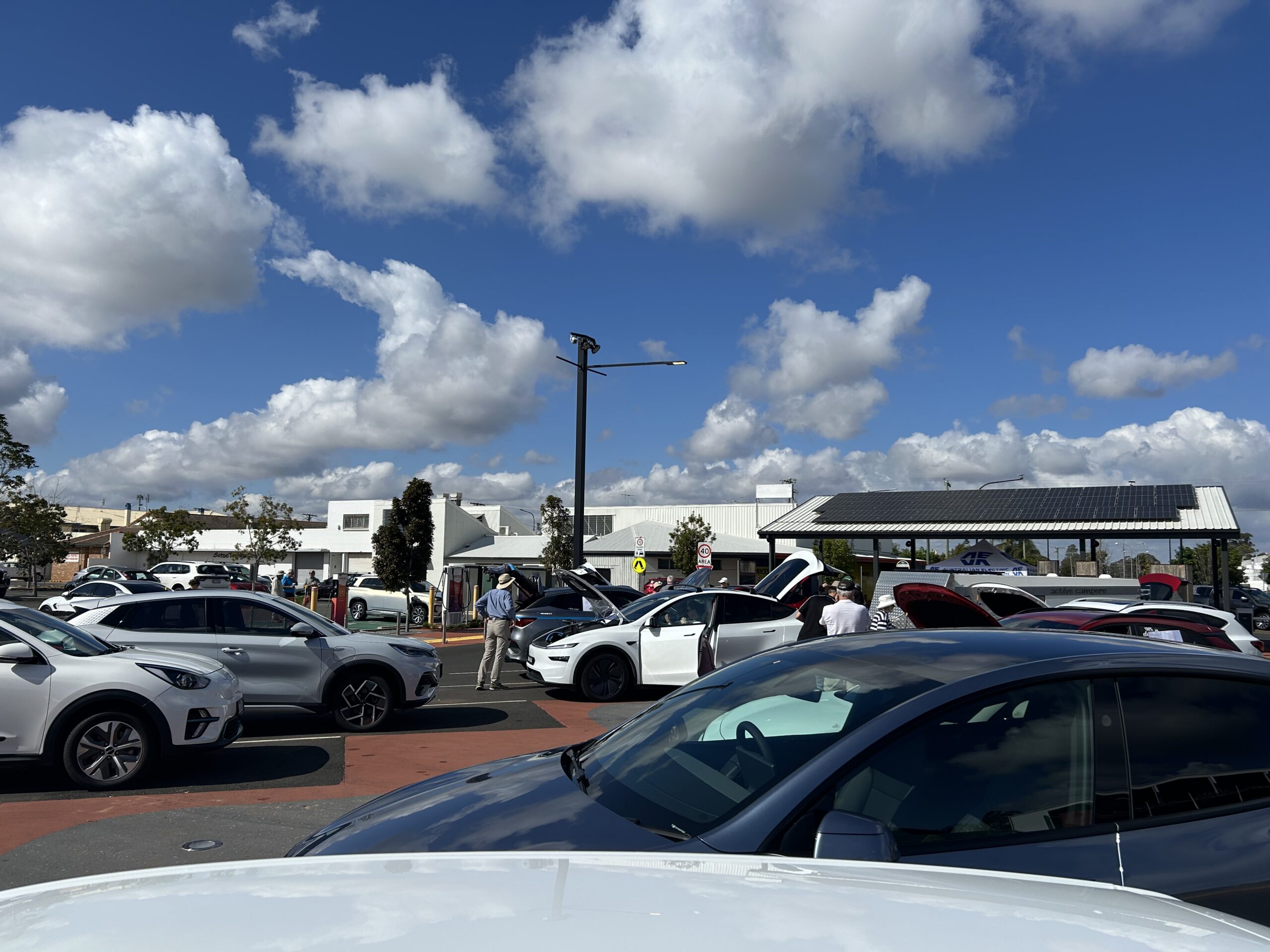
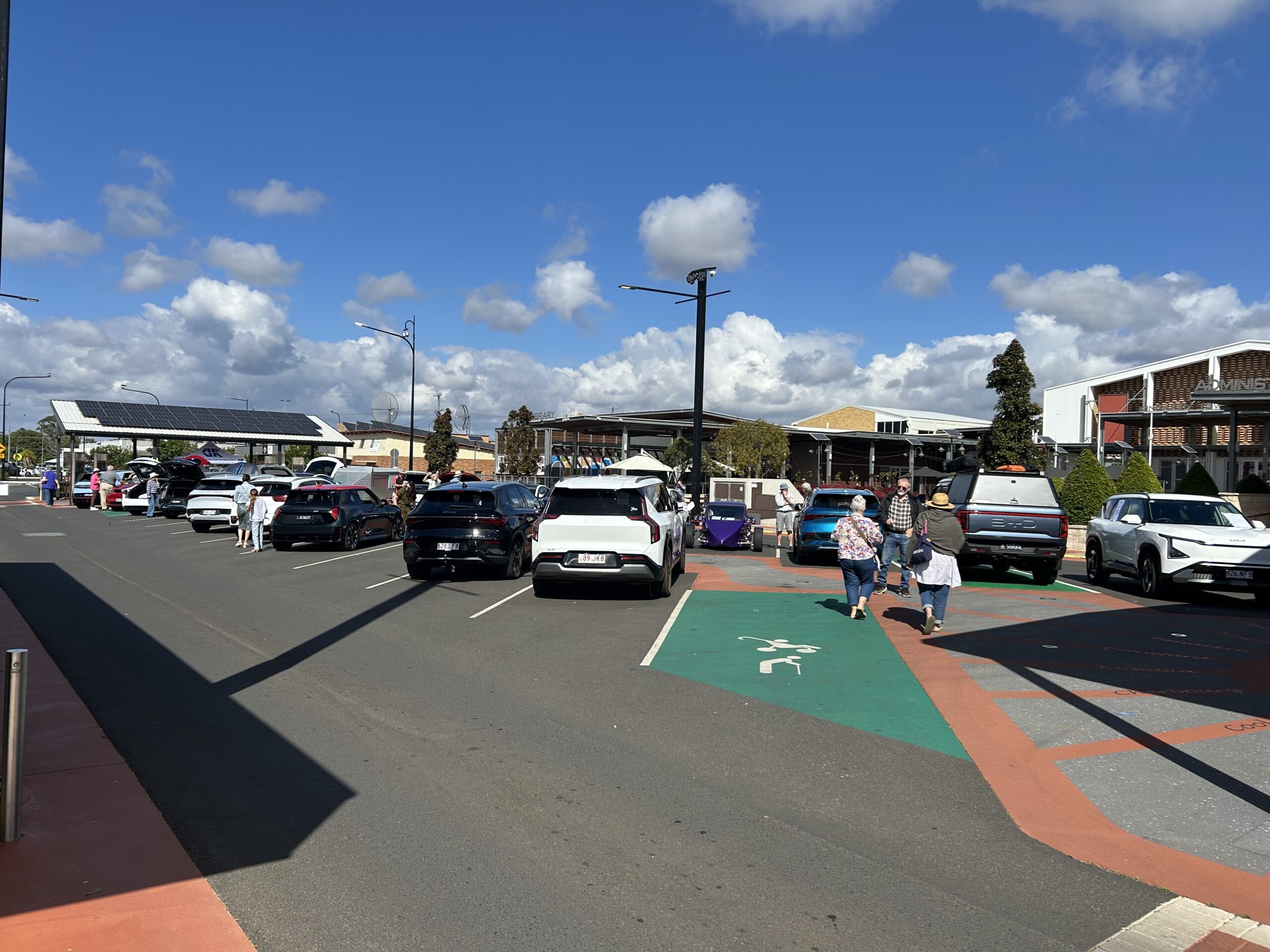
Fortunately, pressure mounted, and the high-speed unit was repaired just in time for the AEVA gathering, operating reliably throughout the weekend. On the day of the event, a diverse convoy of more than 20 electric vehicles converged on Kingaroy. Participants made the trek from far-flung locales across Queensland, including Mackay, Gympie, the Sunshine Coast, Toowoomba, and Brisbane.
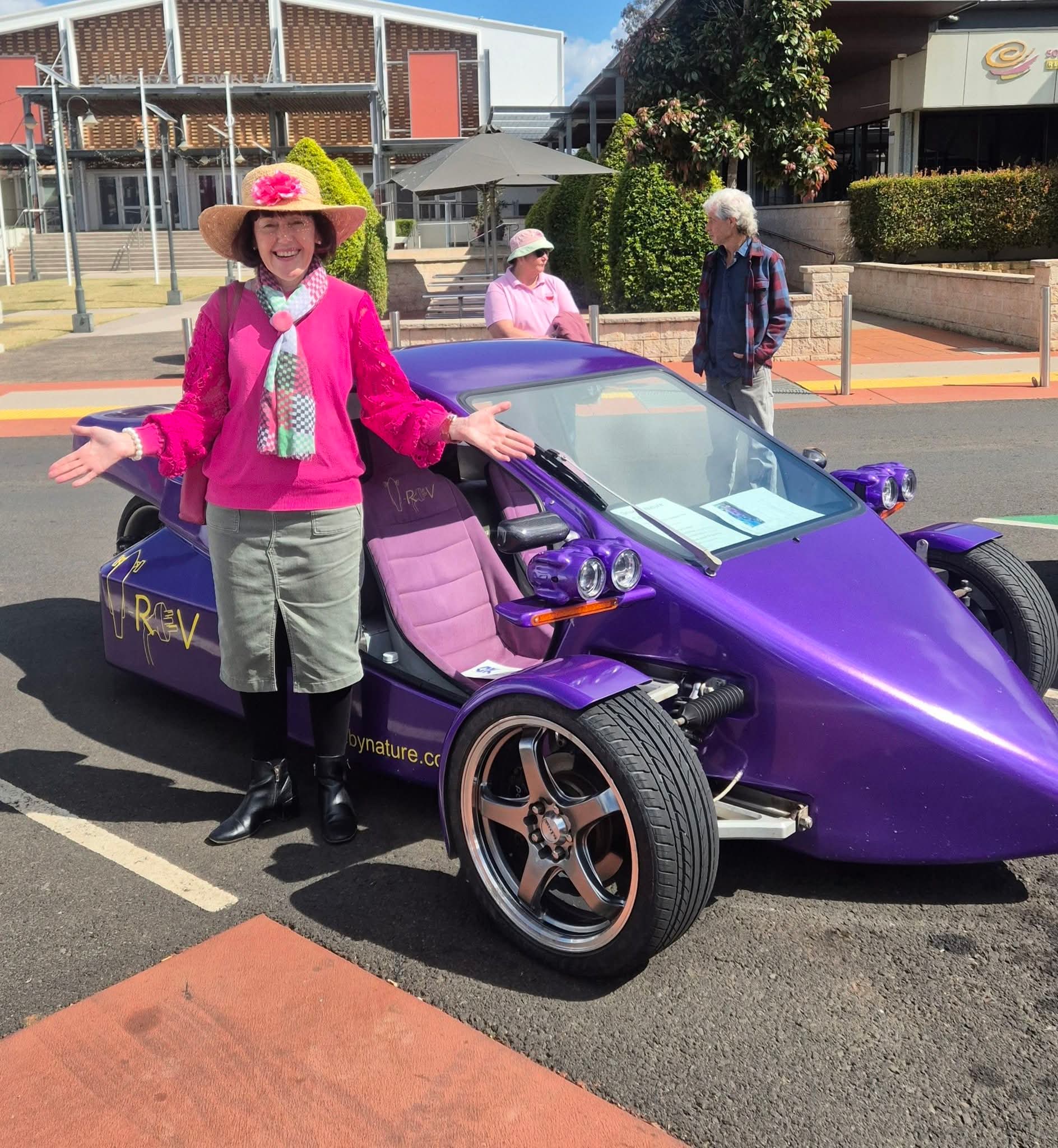
The vehicle lineup reflected the rapidly diversifying Australian EV market. While Tesla models and the BYD Atto 3 remained the predominant sights, a wide spectrum of automotive engineering was on display. Attendees and onlookers inspected a Mini Cooper EV, an Aion V, a Cupra Born, and various configurations from Hyundai and Kia. Notably, the event even featured a Tesla towing a caravan—a real-world demonstration of how modern EVs are increasingly capable of heavy-duty touring and towing applications.
Crowds trickled in steadily throughout the day, engaging with vehicle owners, asking pointed questions about battery longevity, and challenging preconceived notions about electric mobility. Local leadership took active part in the proceedings, with South Burnett Mayor Kathy Duff attending the showcase, engaging with owners, and participating in constructive dialogues regarding the future expansion of regional charging networks.
Yet, the event was not entirely insulated from traditional regional skepticism. While most interactions with the conservative local populace were characterized by polite curiosity or benign indifference, one striking incident underscored the cultural friction still associated with the energy transition. According to event organizers, a local four-wheel-drive utility vehicle—hauling curing, dead pigs over its tray and generating thick clouds of carcinogenic diesel soot—passed the venue while occupants hurled verbal abuse at the electric convoy. Aside from this outlier, however, the overwhelming sentiment from participants was one of surprise at the positive public engagement and the lack of systemic hostility.
Supporting Context & Metrics: Regional Adoption vs. Urban Growth
While metropolitan centers like inner-city Brisbane and the Gold Coast historically led Australia’s EV transition, recent data demonstrates a fascinating paradigm shift: regional Queensland is now outpacing the capital in percentage growth.
According to data compiled by the Royal Automobile Club of Queensland (RACQ), EV uptake across regional postcodes has surged exponentially. Between June 2025 and June 2026, the Western Downs region recorded an astonishing 97.8% increase in EV ownership. Close behind were Gladstone with a 95.6% jump and the Somerset region with an 87.2% surge. By comparison, metropolitan hubs experienced more modest, albeit steady, growth: Brisbane saw a 43.4% lift, the Gold Coast 47.1%, and the Sunshine Coast 60.3%.
Dr. Michael Kane, Executive Manager of Public Policy at RACQ, emphasized the significance of these trends:
"We are seeing decent growth in EVs in western Queensland too. To many of these towns, tourists are a critical revenue stream. Maintenance issues continue to be a barrier to a thriving EV tourism industry."
Despite these impressive growth rates, the absolute numbers in deep regional postcodes remain low. Geographic areas like Kingaroy (postcode 4610) currently house roughly 80 plug-in electric vehicles. Across Australia, regional postcodes typically hover below a 1% EV penetration rate relative to total vehicle registrations.
This creates a chicken-and-egg economic dilemma for local councils and small business owners:
The Infrastructure Gap: Regional councils and small businesses are hesitant to shoulder the upfront capital expenditure of installing high-speed DC chargers for a local demographic where EV penetration is still in its infancy.
The Tourism Penalty: Without fast chargers, long-distance EV tourists bypass the town entirely, starving local cafes, motels, wineries, and retail shops of crucial visitor dollars.
Analysts point out that framing EV chargers purely as a local convenience misses the broader economic picture. High-speed chargers act as modern highway signposts, compelling transient motorists to pull off the asphalt, stretch their legs, and spend money locally while topping up their vehicle batteries.
Official Statements & Stakeholder Perspectives
The discussions at Kingaroy brought diverse viewpoints to the surface, illustrating the complex realities of transitioning regional Australia to sustainable transport.
Mayor Kathy Duff on Regional Realities
South Burnett Mayor Kathy Duff underscored the economic value of infrastructure during the AEVA event.
"EV chargers are a benefit to our region as they encourage more travellers and tourism to the South Burnett."
However, Mayor Duff also offered a pragmatic personal perspective that illuminates why robust infrastructure is so desperately needed. Managing a demanding travel schedule that often requires logging up to 1,200 kilometers per week away from home, she noted that a plug-in hybrid vehicle currently aligns best with her practical requirements. Her travel pattern highlights the core anxiety holding back regional motorists: without ubiquitous, reliable fast-charging networks, pure battery-electric vehicles (BEVs) can still pose logistical hurdles for high-mileage rural professionals. Expanded fast-charging options across the South Burnett would fundamentally shift that calculus.
AEVA Members on Practical Range and Towing
Reflecting on the day’s charging metrics, AEVA member Allan observed that visible charger congestion was remarkably low.
"I think I only saw about four vehicles charging during the day. Not many attendees appeared to need a recharge, which perhaps says something about either the availability of destination charging or the practical range of modern EVs."
This observation points to a maturing technology market. Modern electric vehicles boast real-world highway ranges that frequently exceed 400 to 500 kilometers, meaning many regional day-trippers arrived with ample state-of-charge remaining. Nevertheless, for cross-country travelers embarking on multi-week holiday itineraries, the availability of a high-speed top-up remains an absolute prerequisite rather than a daily necessity.
Don, another AEVA participant, echoed the enthusiasm of the vehicle owners present:
"Tesla and Atto 3 were the predominant vehicles, [alongside] a couple of exceptions—a Mini Cooper EV, an Aion V, a few Hyundais/Kias… Those with whom I did speak were all happy with their vehicles. Although we used the charger twice, we didn’t think to take a photo. The morning just went so quick."
Future Outlook: The Blueprint for Regional Electrification
The success of the Kingaroy EV showcase serves as a microcosm for the broader challenges and opportunities facing rural Australia. If the country’s multi-billion-dollar tourism industry is to remain inclusive of electric vehicle owners, strategic interventions must be executed across three main pillars:
1. Capitalizing the Infrastructure Gap
Who pays for regional high-speed chargers? Asking cash-strapped rural councils or individual small business owners to shoulder the full five-figure capital cost of a commercial DC fast charger is neither realistic nor fair. A collaborative funding model—sharing the financial load symmetrically across municipal councils, state and federal government infrastructure grants, and private energy operators—is essential.
2. Guaranteeing Network Reliability
The months-long outage of Kingaroy’s primary fast charger prior to the AEVA event illustrates a persistent Achilles’ heel in Australia’s charging ecosystem: maintenance neglect. Chargers located hundreds of kilometers from major metropolitan service hubs often suffer from prolonged downtime when hardware faults occur. Service-level agreements (SLAs) with strict uptime guarantees and rapid technician dispatch must be baked into any government-funded regional deployment.
3. Proof of Concept: Looking to Uluru
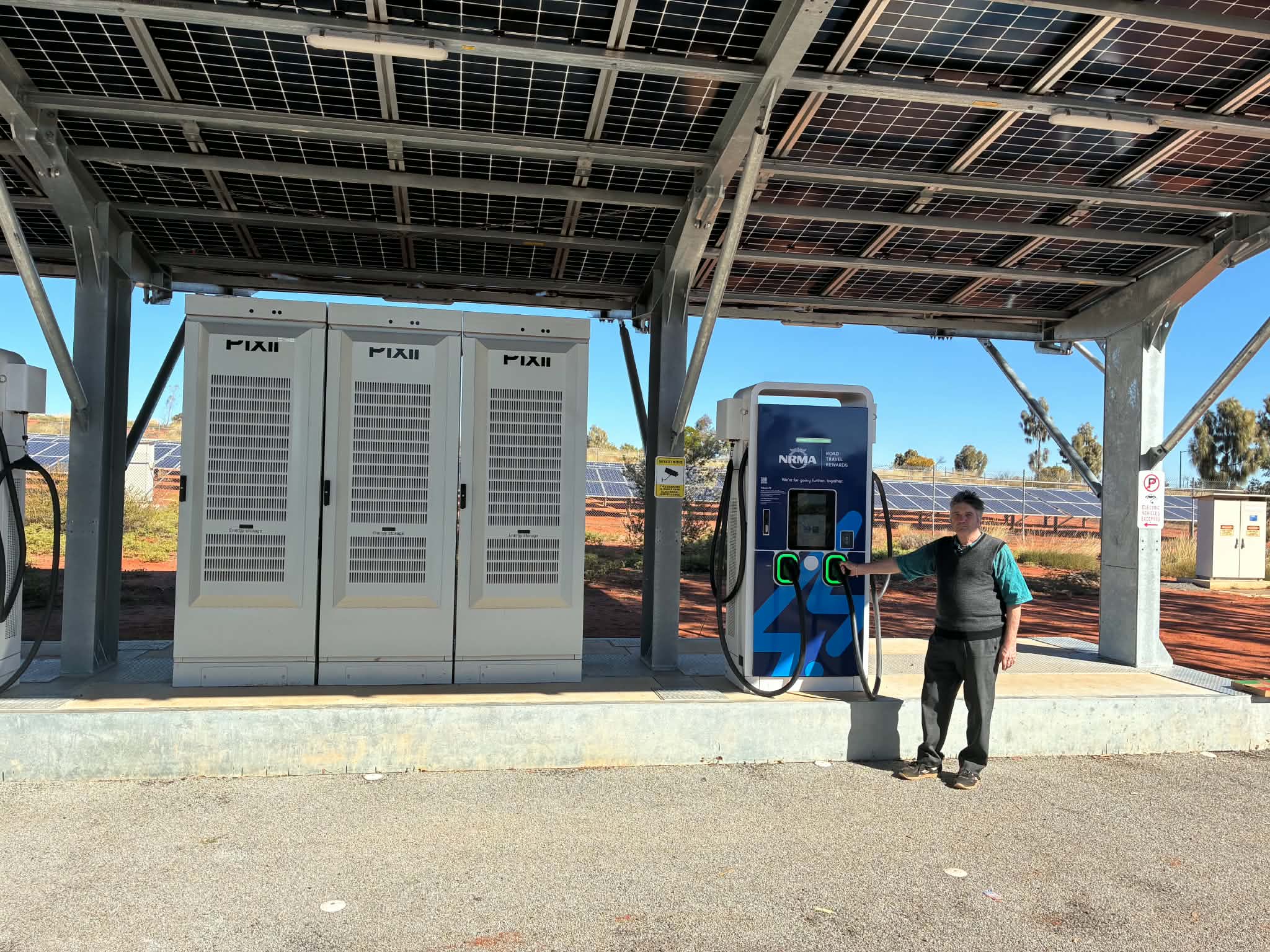
Skeptics frequently argue that remote installations are economically unviable or technically too difficult to maintain. Yet, the successful deployment of high-speed charging infrastructure at Uluru (Ayers Rock) deep in Australia’s red center proves that geography is no longer an acceptable excuse. If ultra-reliable high-speed charging can be established at the foot of one of the world’s most remote natural wonders, it can certainly be achieved in agricultural hubs like Kingaroy.
Conclusion
As the data from RACQ confirms, regional adoption of electric vehicles is no longer a distant futuristic projection—it is happening at a blistering pace. Towns that proactively embrace this transition by securing reliable high-speed charging infrastructure will capture the modern tourist dividend. Those that delay risk watching the electric highway pass them by. In both the bustling alleyways of the inner cities and the sun-drenched rural townships of the countryside, the future is undeniably bright, green, and electric.