







Executive Overview
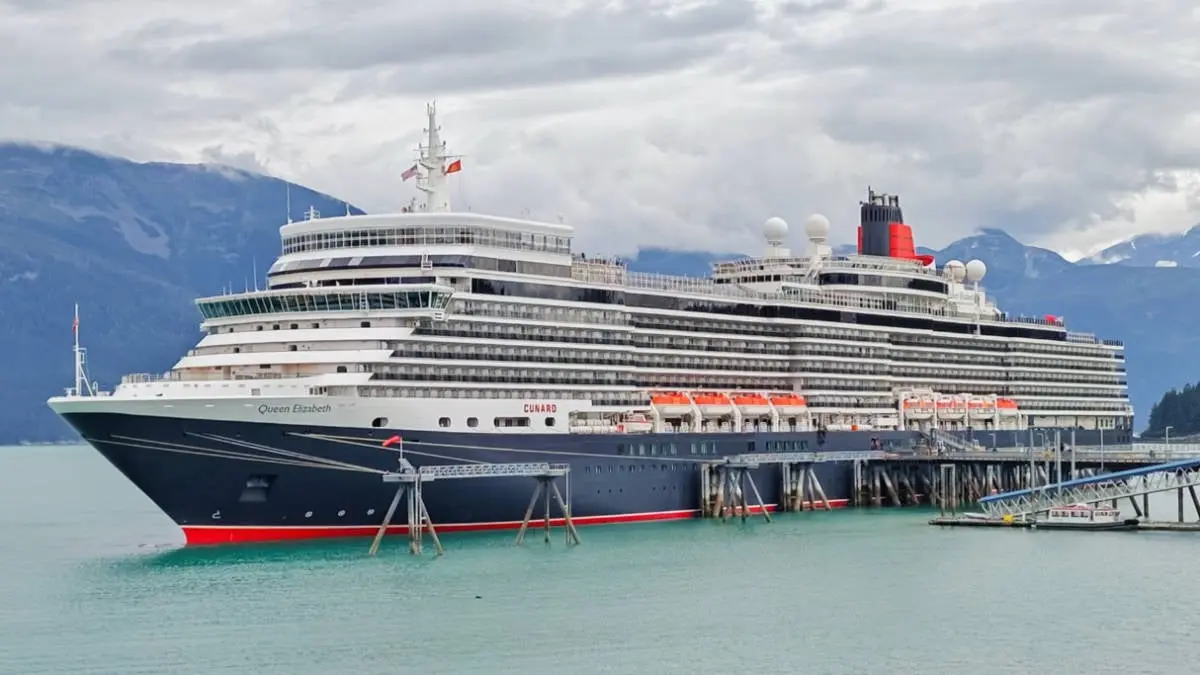
Passengers embarking on the final Alaska voyage of the 2026 season aboard Cunard Line’s Queen Elizabeth experienced an unexpected and disruptive start to their vacation when the luxury liner was forced to remain docked in Seattle, Washington, for an extra 24 hours. The 2,081-passenger vessel was originally scheduled to depart from its Pacific Northwest homeport at 4:30 p.m. on September 17. However, an undisclosed mechanical and technical maintenance requirement abruptly upended the itinerary, stranding guests at Pier 91 and forcing a complex operational shuffle within the busy port facility.
The delay highlights the delicate logistical balance required to manage turnarounds for mega-cruise ships during peak regional transition periods. While Cunard officials have maintained a veil of discretion regarding the precise nature of the onboard engineering challenge, the disruption has cast a shadow over what was designed to be a celebratory grand finale to the ship’s 2026 deployment in the Pacific Northwest. Guests aboard the vessel—many of whom are booked on a longer 28-night trans-canal segment stretching all the way to Miami—found themselves navigating impromptu overnight stays, shifting berths to accommodate arriving Royal Caribbean mega-ships, and facing potential downstream adjustments to their scheduled ports of call in Southeast Alaska.
This comprehensive report examines the timeline of the delay, the operational challenges faced at the Port of Seattle, passenger reactions captured from the ground, the broader context of Cunard’s seasonal deployment, and the potential implications for the remainder of the voyage.

Detailed Chronology of the Seattle Delay
The unfolding of events aboard the Queen Elizabeth on September 17 and 18, 2026, reads like a masterclass in modern maritime logistical pivoting. What began as a standard embarkation day quickly transformed into a protracted port stay defined by cascading schedule adjustments and overnight maneuvering.
Embarkation and the Initial Notice
Boarding proceeded largely according to plan through the early afternoon hours of September 17 at Seattle’s Smith Cove Cruise Terminal at Pier 91. Passengers streamed onto the ship, eager to settle into their staterooms and explore the luxury amenities of the iconic Cunard liner. However, shortly after boarding, guests were met with a surprise in their cabins: an official notice informing them that the vessel’s scheduled 4:30 p.m. departure was being pushed back to 9:00 p.m. The reason cited was brief and opaque—"essential maintenance."
For seasoned cruisers, minor boarding delays are occasionally par for the course, typically linked to late-arriving provisions, minor regulatory sign-offs, or late passenger transfers. Consequently, most guests settled into the ship’s lounges and dining rooms, anticipating a late-evening sailaway beneath the Seattle skyline.
The Captain’s Evening Announcement
As the initial 9:00 p.m. departure target approached, hope for an evening departure evaporated. The ship’s captain made a formal announcement over the public address system, followed shortly thereafter by a formal printed letter delivered to every stateroom. The maintenance work required significantly more time than initially anticipated.
The letter read, in part:
"Following the Captain’s announcement this evening, we are writing to inform you of our delayed departure from Seattle. To allow for on-going essential routine maintenance to be completed, we will need to remain in Port until 17:00 tomorrow, Friday, September 18."
The push meant that an entire day at sea—originally scheduled for September 18 as the ship tracked northward toward the Inside Passage—would instead be spent tied to the pier in Washington.
The Midnight Berth Shuffle
Compounding the maintenance delay was the rigid schedule of the Port of Seattle’s maritime traffic. Pier 91 is a high-volume facility shared by multiple major cruise lines. To accommodate the scheduled arrival of another mega-ship, port authorities required the Queen Elizabeth to vacate its primary berth.
Initially, instructions given to passengers indicated that the ship would physically cast off lines at 9:00 p.m., head out into Puget Sound, and then return to dock at 7:30 a.m. the following morning. However, maritime reality proved more nuanced. According to passenger accounts shared on social media platforms such as Reddit, the ship did not actually leave the harbor. Instead, it executed a delicate, highly localized repositioning maneuver.
Rather than sailing out to sea, the Queen Elizabeth slowly and quietly shifted one berth to the west, sliding into a different docking space at Pier 91 to clear the way for its incoming harbor-mate. While Cunard’s internal communications did not explicitly name the vessel requiring the pier space, port scheduling records identified Royal Caribbean’s massive Voyager of the Seas as the ship occupying the original berth on the morning of September 18.
Supporting Context & Metrics: The 2026 Alaska Season
To fully appreciate the gravity of this delay, one must examine the broader operational scope of the Queen Elizabeth and its deployment schedule in the Pacific Northwest.
Cunard’s 2026 Pacific Northwest Footprint
Cunard Line, a brand historically synonymous with transatlantic ocean liners and traditional luxury, has significantly expanded its footprint in the Alaska cruise market in recent years. For the 2026 season, the Queen Elizabeth was deployed to Seattle as its homeport, operating a robust series of 15 roundtrip itineraries. These voyages varied in length from 7 to 12 nights, capturing the lucrative summer adventure travel demographic while maintaining the line’s signature White Star Service.
| Operational Metric | Detail |
|---|---|
| Vessel | Queen Elizabeth (Cunard Line) |
| Passenger Capacity | 2,081 guests (double occupancy) |
| Homeport | Port of Seattle (Pier 91 / Smith Cove) |
| Season Milestone | Final Alaska deployment of the 2026 calendar year |
| Itinerary Length | 7-night roundtrip Alaska (with segments extending to 28-night repositioning) |
| Original Departure Date | September 17, 2026 (4:30 p.m.) |
| Actual Departure Date | September 18, 2026 (5:00 p.m.) |
| Total Port Delay | Over 26 hours |
The Grand Itinerary Design
The delayed sailing is not a standard standalone cruise. It is a strategically significant voyage that serves a dual purpose:
- The Alaska Finale: It represents the final northbound and southbound Alaska exploration of the year for the vessel, visiting iconic Southeast Alaska ports including Ketchikan, Juneau, and scenic cruising through Endicott Arm, alongside a stop in Victoria, British Columbia.
- The Trans-Canal Integration: Significantly, this voyage is marketed as the opening segment of a much grander, highly coveted 28-night grand voyage. Guests boarded in Seattle with the understanding that after returning to Washington on September 24, the ship would not terminate its journey but instead embark on a sprawling repositioning itinerary down the Pacific Coast of North America, traversing the Panama Canal and ultimately terminating in Miami, Florida.
Official Statements and Passenger Experience
Cunard’s Operational Response
Throughout the ordeal, Cunard’s management team worked to mitigate the friction caused by the unexpected layover. The cruise line confirmed that despite the vessel remaining stationary at Pier 91, the full complement of onboard programming, entertainment, dining venues, and enrichment lectures operated on a normal schedule. Guests were not confined to their staterooms; they were granted full freedom to disembark and spend the extra day exploring Seattle’s rich culinary, cultural, and retail landscape.
However, operational boundaries remained firm. In subsequent communications, the ship’s hotel and deck departments advised all passengers that they were required to be back onboard by 4:00 p.m. on Friday, September 18, ensuring a prompt departure at the revised 5:00 p.m. timestamp.
Cunard has remained notably tight-lipped regarding the exact nature of the "essential routine maintenance" that necessitated the overhaul. In maritime law and corporate cruise communications, phrasing of this nature typically points to critical propulsion, electrical, navigational, or hotel-services infrastructure that must be verified by classification societies before a vessel is cleared to sail into open waters.
The Passenger Perspective
Social media channels—most notably the active online communities on Reddit dedicated to Cunard cruisers—became real-time clearinghouses for information, frustration, and dark humor among stranded guests.
One passenger detailed the surreal nature of the overnight berth shift:
"QE was to move to another berth at 9 pm to make way for an arriving ship. We moved very slowly a few feet, but then stopped… We are in a different berth now. The captain said our original berth was needed for a larger vessel. A Royal Caribbean ship is in our original spot and we moved one berth to the west."
While many travelers expressed disappointment at losing a day of ocean transit and the romanticized sailaway past the Seattle waterfront during daylight hours, most praised the transparency of the crew and the continuity of onboard amenities. The ability to freely leave the ship and revisit Seattle—or sample the local coffee and seafood one last time—softened the blow of the unexpected delay.
Future Outlook: Downstream Itinerary Implications
As the Queen Elizabeth finally cleared Seattle harbor at 5:00 p.m. on September 18, shipboard leadership and passengers alike turned their attention to the horizon. The primary question on everyone’s mind: What happens to the rest of the voyage?
Port Call Vulnerabilities
September 18 was originally engineered as a full sea day, designed to give the ship ample time to cover the distance northward from Washington state into the waters of Southeast Alaska. Because that entire day of forward momentum was sacrificed to dockside maintenance, the ship’s engine departments will likely need to increase cruising speeds to maintain the published timetable.
The first scheduled port of call is Ketchikan, where the Queen Elizabeth was originally due to arrive on the morning of September 19. While no official cancellation of the Ketchikan stop had been broadcast at the time of the ship’s departure, maritime analysts note that maintaining this call will require optimal weather and aggressive cruising speeds through the international waters and protected channels of the Inside Passage.
Cunard’s Proactive Warnings
Recognizing the mathematical reality of lost time, Cunard issued precautionary advisories to all guests. The line explicitly warned that further adjustments to the voyage are anticipated. While management has pledged to make every effort to preserve the core ports of call—including Juneau, Endicott Arm, and Victoria—passengers have been warned that itinerary compression, shortened port stays, or outright omissions remain a distinct possibility.
An official operational update was promised to guests late on September 18 once the engineering teams completed their sea trials and navigation officers calculated precise transit times to the first northern port.
Conclusion
The 24-hour unscheduled layover of the Queen Elizabeth in Seattle serves as a stark reminder of the complex mechanical dependencies that underpin modern luxury cruising. Even for a storied, prestigious brand like Cunard, mechanical realities can supersede the most meticulously planned itineraries. As the grand liner finally makes its way north toward the glaciers of Alaska on the final curtain call of the 2026 season, passengers and management alike are hoping that the worst of the journey’s hurdles are safely left behind in the waters of Puget Sound.