





Executive Overview
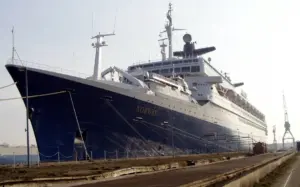
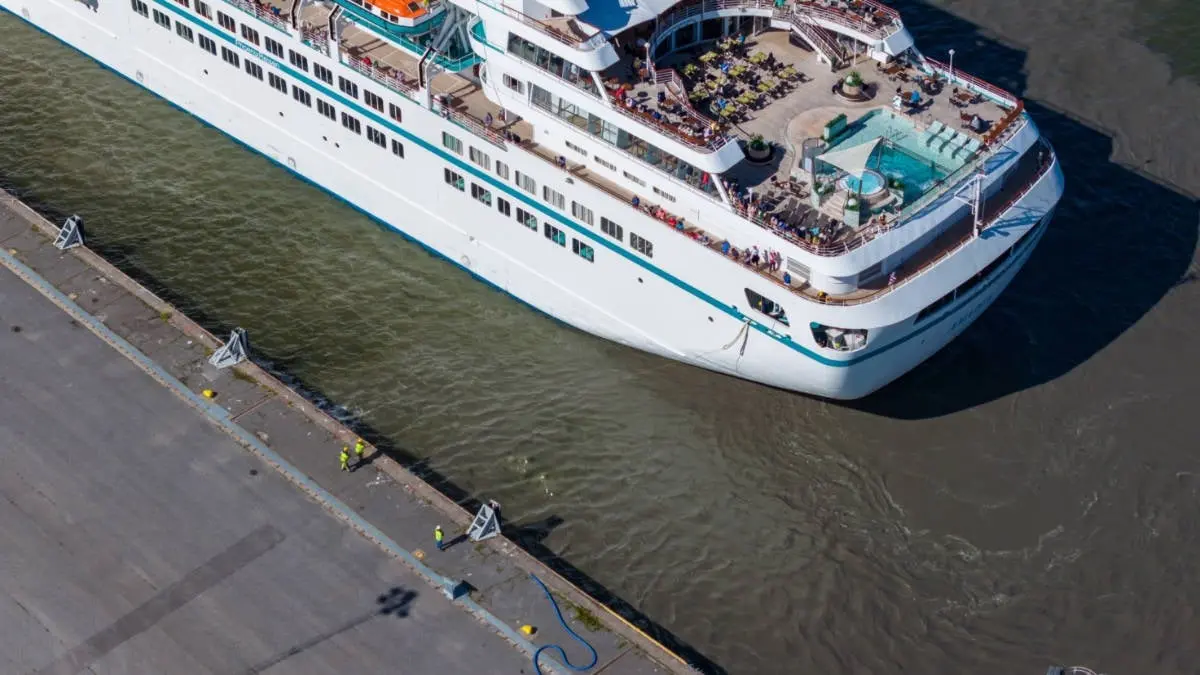
Maritime safety was put to the ultimate test on Monday morning, September 14, 2026, when a sudden fire broke out aboard Phoenix Reisen’s elegant cruise vessel, the Amadea. Docked peacefully in the picturesque port of Rønne on the Danish island of Bornholm, the ship was preparing for a bustling day of shore excursions when emergency protocols were abruptly triggered. A blaze erupted in the vessel’s laundry facilities, specifically within a linen storage area, necessitating an immediate and coordinated crisis response.
Over the course of ten high-stakes minutes, the ship’s crew executed a textbook emergency evacuation, relocating 320 passengers from one deck to another away from the affected zone. Local emergency services responded with impressive speed, boarding the vessel within minutes to support the ship’s internal fire suppression efforts. Thanks to seamless collaboration between the shipboard crew, local firefighters, and port authorities, the fire was brought entirely under control by 7:31 a.m., with no injuries reported among guests or crew members.
While small fires are an inherent risk within high-appliance and service-heavy sectors of modern cruise ships—such as laundries, galleys, and engine rooms—the swift intervention aboard the Amadea prevented what could have escalated into a catastrophic maritime emergency. Despite the initial alarm, the vessel sustained minimal disruption to its overarching schedule, allowing the 624-guest ship to depart Rønne as planned and continue its 12-night Baltic Sea voyage. This incident serves as a testament to the rigorous training regimens mandated across the global cruise industry, highlighting how preparation, split-second decision-making, and inter-agency cooperation safeguard lives at sea.
Detailed Chronology of Events: The Ten-Minute Crisis
To understand the gravity of the morning events aboard the Amadea, it is necessary to examine the precise timeline of the response. Cruise ships function as floating smart-cities, where standard morning routines—such as room service preparations, breakfast services, and debarkation briefings—can be upended in an instant.
07:21 A.M. – The First Alarm
The quiet morning air in Rønne harbour was disrupted at precisely 7:21 a.m. on September 14, 2026. Smoke sensors in the lower decks of the Amadea detected abnormal heat and particulate matter within a linen storage area connected to the ship’s main laundry facilities. Automatic safety dampers closed to starve the compartment of oxygen, while the ship’s central bridge team received immediate notification of the localized anomaly. Shipboard general alarms sounded internally, alerting the designated damage control teams and officers to mobilize.
07:23 A.M. – Emergency Teams Mobilize and Passengers Shifted
Within two minutes of the initial sensor activation, the ship’s internal emergency response teams were fully deployed with specialized firefighting gear and breathing apparatuses. Simultaneously, hospitality and security crew members began directing the 320 guests who were currently congregating or resting in the vicinity of the affected zones. Rather than forcing an immediate open-air muster on the outer decks—which could have interfered with incoming emergency personnel—crew members executed a lateral evacuation, guiding passengers safely across decks and into secure, unaffected sections of the ship.
07:25 A.M. – Shore-Side Emergency Services Arrive
Realizing the potential risks associated with shipboard fires, port authorities in Rønne acted with exemplary swiftness. Port employees stationed along the docks immediately cleared the access roads, guiding emergency vehicles from the Bornholm Fire Service directly to the vessel’s gangway. Emil Görlv, incident commander with the Bornholm Fire Service, later praised the port workers for their foresight, noting that their clear directions allowed heavy firefighting apparatuses to reach the ship without a single second wasted.
07:31 A.M. – The Fire Extinguished
Equipped with thermal imaging cameras and dry-chemical suppression systems, the combined forces of the ship’s internal damage control team and the newly arrived Bornholm firefighters located the seat of the fire within the linen storage space. By 7:31 a.m.—exactly ten minutes after the initial alert—the fire was declared completely extinguished. Ventilation systems were immediately engaged to clear residual smoke from the lower service corridors, ensuring air quality remained safe for all occupants.
Post-Incident Assessment and Departure
Following the extinguishment, structural integrity checks were conducted around the laundry compartments. With the fire localized and fully suppressed, and air quality verified, the vessel’s master and safety officers cleared the ship for normal operations. The scheduled debarkation for the day’s port visit proceeded with only minor logistical adjustments, and the Amadea cast off lines to maintain her scheduled itinerary.
Supporting Context & Metrics: Operational Realities of the Amadea
To properly contextualize the incident, it is essential to look at the vessel involved, its itinerary, and the operational profile that allowed for such a resilient recovery.
Vessel Profile: MS Amadea
- Operator: Phoenix Reisen (German travel and cruise operator)
- Passenger Capacity: Approximately 624 guests (boutique-style cruising emphasizing personal service)
- Build and History: Originally built as the MS Asuka in 1991 before joining the Phoenix Reisen fleet in 2006, the Amadea is well-known in the European market for classic ocean cruising, known famously as the filming location for the German television series Das Traumschiff.
Itinerary Disruptions and Recovery
The fire occurred roughly midway through a comprehensive 12-night Baltic Sea itinerary:
- September 5, 2026: Embarked from Bremerhaven, Germany.
- Interim Ports: Visited multiple cultural and scenic ports across Norway, Sweden, Denmark, and Poland.
- September 14, 2026: Docked in Rønne, Denmark (scheduled from 8:00 a.m. to 6:00 p.m.). The fire broke out at 7:21 a.m., just prior to official guest debarkation, but did not prevent the ship from departing on schedule.
- September 15, 2026: Called at Wismar, Germany.
- September 17, 2026: Arrived back in Bremerhaven for final passenger debarkation.
The ability of the ship to maintain this tight schedule underscores the containment success of the crew. Had the fire breached structural fire boundaries or damaged critical propulsion and electrical cabling, the financial and operational consequences for Phoenix Reisen would have been severe.
Official Statements and Inter-Agency Praise
In the wake of maritime incidents, investigative transparency and multi-agency debriefs are vital for maintaining public confidence in the cruise industry. While the corporate offices of Phoenix Reisen chose not to issue a formal press release regarding the morning’s events—relying instead on operational continuity—local authorities and emergency responders were vocal about the high level of professionalism displayed on board.
The Bornholm Fire Service Perspective
Emil Görlv, the incident commander for the Bornholm Fire Service who led the shore-side response team, offered high praise for the shipboard personnel during post-incident interviews with local media outlets like Bornholms Tidende and maritime safety publications:
"They did a fantastic job," Görlv stated, reflecting on the chaotic first few minutes of the intervention. "And they gave us good guidance so we could quickly find our way around on board."
This sentiment highlights a critical evolution in modern cruise safety. Historically, shoreside firefighters frequently faced communication barriers and navigational confusion when boarding massive, labyrinthine passenger vessels. Modern cruise operators, however, maintain rigorous joint-training exercises with international port authorities. Vessel blueprints, digital layout schematics, and dedicated liaison officers are routinely made available to municipal fire brigades the moment they step onto a ship, drastically reducing response times and improving tactical execution.
Ongoing Investigations by Bornholm Police
While the physical fire was swiftly managed, legal and regulatory protocols require a full inquiry into the origin of the blaze. Bornholm Police formally launched an investigation later that morning to determine the root cause.
Preliminary findings confirmed that the fire originated within a linen storage area attached to the main laundry room. Investigators sifted through scorched textiles, electrical panels servicing industrial washing and drying units, and ventilation shafts to rule out foul play or systemic electrical faults. As of the latest updates, no official cause has been formally published, though maritime experts routinely point to spontaneous combustion from improperly laundered oily rags or overheating industrial machinery as common culprits in laundry room fires.
Industry Perspective: Fire Safety and Precedents in Modern Cruising
Fires at sea remain one of the most feared hazards in maritime operations. However, the frequency of small, contained fires within high-risk auxiliary spaces—such as laundries, galleys, and machinery rooms—is a known operational challenge that modern cruise lines mitigate through advanced engineering and strict safety management systems.
Understanding High-Risk Shipboard Zones
- Laundry Facilities: High volumes of combustible materials (linens, cottons, uniforms) combined with high-heat commercial dryers create an environment where lint accumulation or chemical reactions can spark combustion if maintenance protocols lapse.
- Galleys (Kitchens): Deep fryers, open flames, grease accumulation in exhaust hoods, and high-wattage electrical equipment make galleys frequent sites for localized flare-ups.
- Engine Rooms: The presence of pressurized fuel lines, high temperatures, and extensive electrical wiring requires redundant fire-suppression systems, including total-flood water mist and CO2 systems.
Recent Industry Precedents
To view the Amadea incident in a broader industry framework, consider several comparable maritime events from recent years:
- MSC Cruises (MSC Armonia, June 10, 2024): A small electrical fire broke out in the main laundry room as the vessel was arriving in Venice, Italy. Crew members extinguished the blaze rapidly, ensuring that the ship’s arrival and subsequent passenger turnover were largely unaffected.
- P&O Cruises (Iona, August 29, 2025): A minor fryer fire in one of the shipboard kitchens forced the temporary closure of multiple specialty restaurants and required a precautionary muster call for crew members. Quick suppression meant guests were never required to report to emergency muster stations, and culinary operations resumed later that evening.
- Norwegian Cruise Line (Norwegian Jade & Klondike Express, September 14, 2026): In a striking coincidence occurring on the exact same day as the Amadea fire, a major fire erupted aboard a tour boat, the Klondike Express, at a cruise dock in Whittier, Alaska. The incident forced the nearby Norwegian Jade to cast off lines and maneuver away from the dock for safety. While the tour boat suffered severe damage over a multi-hour ordeal, the cruise ship sustained no damage, though it was forced to shift its embarkation terminal for its next voyage.
- Fincantieri Shipyard (Norwegian Aura, September 2026): Demonstrating that fire risks exist even before vessels enter service, a small trash bin fire was contained during the construction phase of Norwegian Cruise Line’s upcoming mega-ship in Monfalcone, Italy, resulting in zero structural damage.
These incidents, when viewed alongside the Amadea event, illustrate that while localized fires are an unavoidable statistical reality in maritime operations, the modern safety architecture of cruise vessels is overwhelmingly effective at preventing minor incidents from becoming major disasters.
Future Outlook and Takeaways for Travelers
The successful containment of the fire aboard the Amadea reinforces several reassuring takeaways for the global cruising community:
- Rigorous Crew Training Saves Lives: The ten-minute turnaround from alarm to extinction was not a stroke of luck; it was the direct result of continuous, mandatory safety drills practiced by cruise crews on a weekly basis. Crew members are thoroughly trained in crowd control, lateral evacuation, and rapid-response firefighting long before passengers ever step foot on the gangway.
- Seamless Shoreside Integration: The cooperative synergy between the Bornholm Fire Service, port workers, and the ship’s officers demonstrates that European port cities maintain high standards of emergency preparedness for visiting passenger vessels.
- Resilience of Modern Ship Design: Subdivision bulkheads, fire-retardant materials, and advanced smoke-detection grids ensure that fires remain localized to the compartment of origin, protecting passenger accommodations and core navigational infrastructure.
For the guests aboard the Amadea, the morning of September 14, 2026, will undoubtedly be remembered as an unexpected and pulse-pounding start to their day in Denmark. Yet, as the vessel continued its journey toward Wismar and ultimately back to Bremerhaven, the overriding narrative remained one of competence, calm under pressure, and the unyielding efficacy of modern maritime safety standards.