







Executive Overview
On the evening of August 14, 2025, a routine maritime excursion in one of the United Kingdom’s busiest and most historically vital waterways turned into an unmitigated disaster. The rigid inflatable boat (RIB) Peaky Blinder, carrying three individuals, violently allided with navigation beacon 81 within the confines of Portsmouth Harbour. The forceful impact instantly upended the vessel, ejecting the owner—who was at the helm—and both passengers directly into the dark, cold waters of the estuary.
The consequences of the collision were catastrophic. Despite immediate emergency response efforts, one passenger was pulled from the water unresponsive and subsequently pronounced dead. The boat’s owner vanished beneath the surface, prompting a massive, multi-agency search and rescue operation that ultimately ended five days later when recovery divers located his remains. Miraculously, the second passenger survived the ordeal, sustaining only minor physical injuries, though the psychological scars left in the wake of the disaster remain profound.
The incident has sent shockwaves through the local maritime community, recreational boating circles, and regulatory bodies alike. As detailed in Accident Investigation Report 15/2026, the tragedy highlights the severe vulnerabilities inherent in high-speed, high-maneuverability recreational watercraft operating in confined and heavily commercialized shipping lanes. The Peaky Blinder allision has forced maritime authorities, port operators, and national transport regulators to re-evaluate existing safety frameworks, night-navigation protocols, and the oversight of privately owned small craft. This comprehensive journalistic investigation examines the sequence of events, the broader context of harbour safety, the regulatory gaps exposed by the disaster, and the urgent recommendations issued to prevent similar catastrophes in the future.

Detailed Chronology
The Setting: Portsmouth Harbour at Dusk
Portsmouth Harbour is a complex, dynamic maritime environment. Characterized by narrow channels, swift tidal streams, and dense mixed-use traffic ranging from towering Royal Navy aircraft carriers and international commercial ferries to small recreational sailing dinghies and high-speed RIBs, the harbour demands constant vigilance and expert navigation.
On August 14, 2025, conditions as daylight faded were typical for late summer, yet the transition from twilight to evening introduced significant visual challenges. Navigation marks, channel markers, and beacons are critical waypoints designed to guide mariners safely through the dredged channels away from shallow mudflats and immovable concrete or steel structures.
The Final Voyage
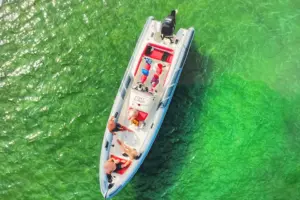
The Peaky Blinder, a high-performance rigid inflatable boat known for its agility and speed, set out with the owner acting as skipper, accompanied by two passengers. While the exact motivations and itinerary of the evening trip remain part of the official investigative record, RIBs of this class are frequently utilized for leisure cruising, sightseeing, and recreational thrills.
As evening descended, the vessel was navigating within the harbour boundaries. Approaching the vicinity of navigation beacon 81—a fixed structural hazard marking the channel edge—events escalated with terrifying speed. According to findings corroborated by investigators, the vessel failed to alter course or safely clear the hazard, resulting in a catastrophic, high-energy allision with the beacon.
The Impact and Ejection
The physics of a high-speed allision with a stationary steel or concrete structure are unforgiving. When the Peaky Blinder struck navigation beacon 81, the abrupt deceleration converted kinetic energy into destructive force, instantly arresting the boat’s forward momentum while hurling its occupants forward.
All three individuals—the owner-driver and the two passengers—were forcefully ejected from the vessel upon impact. Without the protection of a cabin, and given the suddenness of the deceleration, the occupants had no time to brace. They plunged directly into the harbour waters, leaving the unmanned Peaky Blinder compromised and drifting in the immediate aftermath of the crash.
Emergency Response and Search Operations
The immediate aftermath triggered a rapid response from local emergency services. Maritime rescue coordination centers dispatched lifeboats, police vessels, and shore-based emergency teams to the scene.
Rescuers quickly located one of the passengers floating in the water. Pulled aboard in an unconscious state, life-saving measures were initiated immediately, and the individual was rushed to a nearby medical facility. Tragically, resuscitation efforts proved unsuccessful, and the passenger was later declared dead.
The second passenger, exhibiting extraordinary fortune amid the tragedy, managed to stay afloat and was rescued with only minor physical injuries. However, the boat’s owner was nowhere to be found.
What followed was an intensive, agonizing five-day search and recovery operation. Coastguard helicopters, RNLI all-weather lifeboats, specialist police dive teams, and volunteer marine search units combed the expanse of Portsmouth Harbour and its approaches. The search focused heavily on tidal flows, eddy currents, and the immediate vicinity of navigation beacon 81. Five days after the fateful allision, the search concluded with the grim recovery of the owner’s body.
Supporting Context & Metrics
The Rise of High-Performance RIBs in Recreational Boating
To fully understand the context of the Peaky Blinder tragedy, one must examine the evolution of the recreational boating market over the past two decades. Rigid inflatable boats have surged in popularity. Valued for their deep-V hulls, exceptional buoyancy collars, and powerful outboard engines, modern RIBs are capable of achieving high speeds and executing sharp turns that rival specialized craft.
Originally designed for military, commercial, and professional rescue applications (such as those used by the RNLI and Royal Marines), RIBs have increasingly transitioned into the private leisure sector. However, this democratization of high-speed maritime capability has outpaced formal training requirements. In the United Kingdom, while commercial operators face stringent coding, safety management systems, and mandatory certification (such as RYA Yachtmaster or Powerboat Level 2), private recreational boat owners face remarkably few legal prerequisites. An individual can purchase a high-powered, multi-hundred-horsepower RIB with no mandatory licensing, formal examination, or proof of navigational competence.
Navigational Hazards in Confined Waters
Portsmouth Harbour presents a unique set of navigational challenges. The narrow entrance, flanked by historic fortifications and bustling commercial terminals, requires precise adherence to the International Regulations for Preventing Collisions at Sea (COLREGs) and local harbour bylaws.

Navigation beacons, such as beacon 81, are vital reference points. However, at night or during periods of reduced visibility, fixed structures in the water present severe collision risks if vessels are traveling at speeds inappropriate for the conditions. The human factors involved in night navigation—such as night blindness, target fixation, spatial disorientation, and the deceptive nature of background shore lights—frequently contribute to maritime accidents. When combined with the high operational speeds characteristic of RIBs, the margin for error shrinks to mere seconds.
Comparative Safety Metrics in UK Waters
Accident Investigation Report 15/2026 forms part of a broader body of work by the Marine Accident Investigation Branch (MAIB), which continuously monitors safety trends across the UK maritime sector. While commercial shipping maintains exceptional safety records driven by international conventions (SOLAS, STCW), the recreational sector remains a persistent area of concern.
Data compiled by maritime safety organizations indicates that recreational craft incidents account for a disproportionate number of fatalities and serious injuries in UK coastal and estuarine waters. Ejection accidents, man-overboard scenarios, and collisions with fixed stationary objects are among the leading causes of severe trauma in high-speed leisure boating. The absence of mandatory kill-cord usage—a simple safety device designed to cut the engine if the driver is separated from the helm—frequently turns minor navigational errors into fatal disasters. While the specific mechanical details of the Peaky Blinder are addressed within the formal MAIB documentation, the broader narrative of leisure craft safety highlights a systemic need for cultural and regulatory reform.
Official Statements
The gravity of the Peaky Blinder disaster prompted statements from leading maritime authorities, emphasizing the need for accountability, reflection, and systemic change within the recreational boating community.
Statement from the Chief Inspector of Marine Accidents
In conjunction with the publication of Accident Investigation Report 15/2026, the Chief Inspector of Marine Accidents released a poignant and authoritative assessment of the tragedy:
"The loss of life resulting from the allision of the Peaky Blinder with navigation beacon 81 in Portsmouth Harbour is a stark and painful reminder of the unforgiving nature of the marine environment. Operating high-performance watercraft demands unyielding concentration, thorough voyage planning, and a profound respect for local navigational hazards, particularly as daylight fades.
This investigation has laid bare critical safety gaps that extend far beyond the immediate events of August 14, 2025. When private individuals take the helm of powerful vessels without mandatory competency standards or rigorous safety protocols, the margin between leisure and tragedy becomes perilously thin. We urge all recreational mariners, port authorities, and regulatory bodies to engage deeply with the findings and recommendations of Report 15/2026. Only through proactive safety cultures, adherence to local bylaws, and an uncompromising commitment to risk management can we prevent such avoidable sorrow in our nation’s waterways."
Regulatory Responses and Stakeholder Reactions
Local authorities, including the King’s Harbour Master Portsmouth, have echoed these sentiments, stressing the importance of collaborative safety campaigns. Port officials have long grappled with the tension between promoting public access to vibrant coastal waters and enforcing stringent speed limits and navigational safety rules among leisure boaters.
Representatives from recreational boating associations have also weighed in, noting that while the vast majority of private skippers operate responsibly, incidents like the Peaky Blinder allision provide undeniable momentum for discussions regarding enhanced education, voluntary safety schemes, and potential legislative updates regarding operator licensing for high-powered craft.
Future Outlook
Actionable Recommendations from Report 15/2026
Accident Investigation Report 15/2026 goes beyond chronicling the tragedy; it establishes a clear roadmap for institutional and regulatory reform designed to safeguard Portsmouth Harbour and UK waters at large.
The report directs targeted recommendations to two primary authorities:
-
The King’s Harbour Master Portsmouth:
- Review and enhance local navigational risk assessments regarding fixed hazards within the harbour channels.
- Implement enhanced monitoring, communication, and advisory frameworks for high-speed recreational craft operating during twilight and night hours.
- Strengthen outreach and educational campaigns directed at local yacht clubs, marinas, and private boat owners regarding safe speed limits and hazard awareness within the port limits.
-
The Secretary of State for Transport:
- Evaluate the current regulatory framework governing private recreational craft, specifically addressing the absence of mandatory competency certification for operators of high-powered vessels.
- Consider expanding national safety campaigns focused on man-overboard prevention, mandatory kill-cord compliance, and night-navigation safety standards.
- Facilitate closer collaboration between the Maritime and Coastguard Agency (MCA), port authorities, and recreational governing bodies to close existing safety loopholes in the leisure marine sector.
Fostering a Culture of Maritime Safety
Looking forward, the legacy of the Peaky Blinder must be one of constructive transformation. Technology alone—whether radar, advanced chartplotters, or structural lighting on beacons—cannot compensate for human error, complacency, or lack of preparedness.
The tragedy serves as a solemn call to action for the entire maritime community. For individual boat owners and recreational skippers, it reinforces the vital importance of continuous training, situational awareness, and respect for environmental conditions. For regulators and port operators, it underscores the necessity of robust oversight and clear, enforceable standards.
As Portsmouth Harbour continues to bustle with the vibrant, complex tapestry of modern maritime life, the memory of those who lost their lives on August 14, 2025, remains a guiding warning. By embracing the lessons of Accident Investigation Report 15/2026, the maritime sector can strive toward a future where high-speed leisure navigation is matched by an equally high standard of safety, vigilance, and care.