





Executive Overview
Nestled within the rugged, cypress-studded coastline of Monterey County, Carmel-by-the-Sea has long held a reputation as one of the Pacific Coast’s most distinct hideaways. In a landmark 2026 ranking by Architectural Digest, this distinction was formalized on a national scale when the single-square-mile village was crowned the single prettiest town in California.
What separates Carmel-by-the-Sea from the myriad picturesque destinations spanning the Golden State is its unique synthesis of untamed natural topography and intentional, historic human artistry. The destination does not rely solely on the dramatic framing of the Pacific Ocean or the ancient canopy of Monterey pines; rather, it pairs these environmental assets with an eccentric, storybook architectural identity rooted in a century-old bohemian legacy.
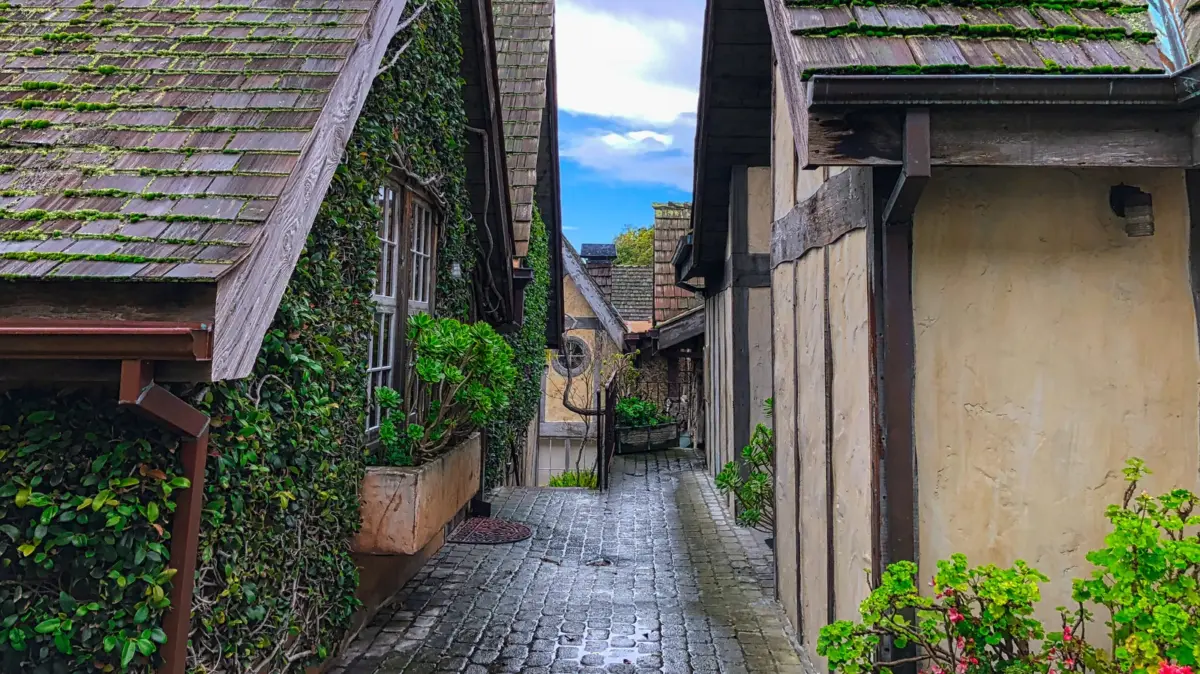
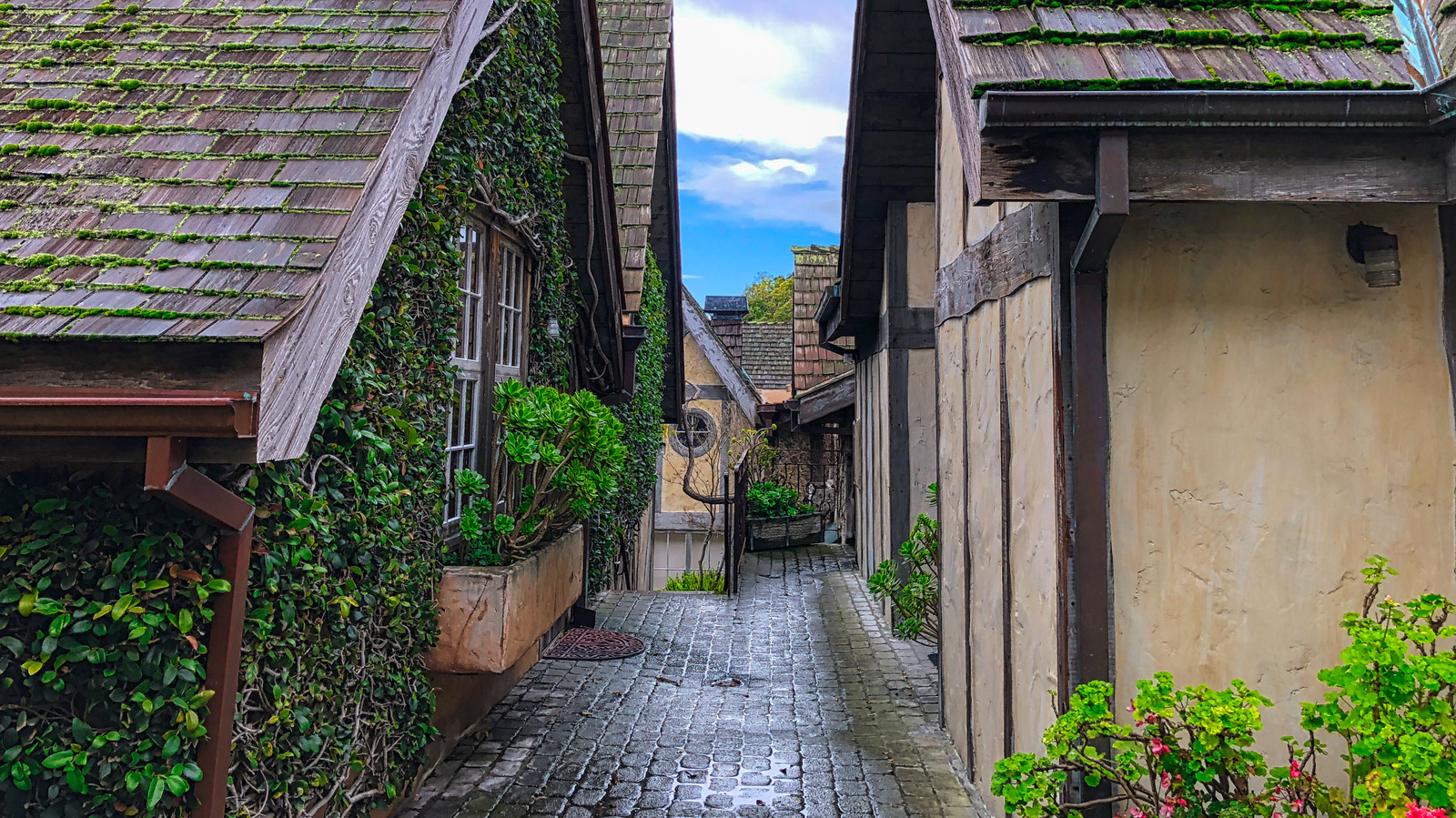
From its half-timbered cottages and secret, cobblestone courtyards to a crescent of powdery white sand frequently lauded as America’s finest beach, Carmel-by-the-Sea represents a rare intersection of European fairytale aesthetics and quintessential Northern California coastal ecology. This report examines the historical evolution, architectural milestones, coastal geography, and future outlook of a coastal enclave that continues to redefine American town planning and boutique tourism.

Detailed Chronology
The visual appeal and cultural fabric of Carmel-by-the-Sea are the direct results of a deliberate historical trajectory spanning more than a century. Its evolution from an Indigenous territory to a bohemian sanctuary and, finally, to a globally recognized architectural treasure is marked by several pivotal eras:
- Pre-1900s – Indigenous Heritage and Spanish Missionization: Before its emergence as an artists’ colony, the Carmel area was inhabited by the Ohlone people, who thrived along the marine-rich Monterey Peninsula. In 1771, Father Junipero Serra relocated the headquarters of the Alta California missions to the banks of the Carmel River, establishing the historic Carmel Mission (San Carlos Borromeo del Río Carmelo). The stone compound remains one of the state’s most culturally significant architectural anchors.
- 1900–1920s – The Birth of the Artists’ Colony: Following the 1906 San Francisco earthquake and fire, a wave of displaced painters, poets, writers, and free-thinkers migrated south to the Monterey Peninsula. Attracted by the dramatic lighting, cheap land, and inspirational landscape, figures like poet George Sterling and author Mary Austin established a thriving creative enclave. During this period, the town operated outside rigid municipal norms, prioritizing artistic expression over commercial development.
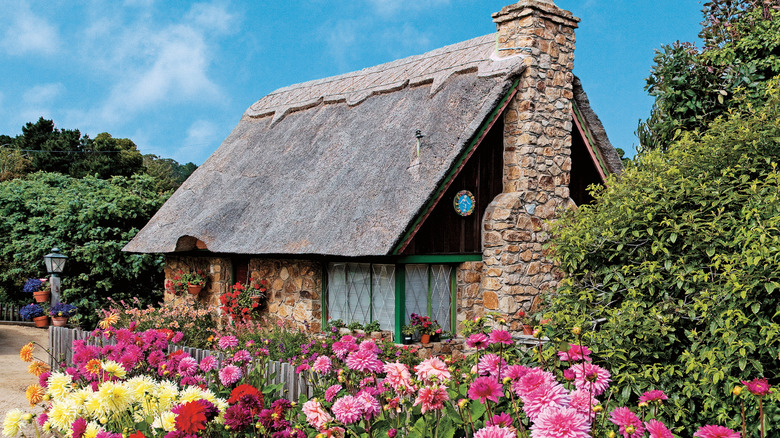
- The 1920s – The Rise of the Fairytale Cottages: The defining architectural era of Carmel-by-the-Sea began in the mid-1920s with the work of master builder and designer Hugh Comstock. Inspired by traditional English and European folk architecture, Comstock constructed whimsical, handcrafted dwellings featuring steeply pitched shake roofs, whimsical stone chimneys, and asymmetrical, half-timbered walls. His first creations—aptly named "Hansel" and "Gretel"—sparked a local building boom that established the village’s signature storybook vernacular.
- 1980s – Municipal Protection and Historic Preservation: As modern commercialism threatened to homogenize historic American downtowns, Carmel-by-the-Sea implemented strict municipal codes to safeguard its unique character. The town famously banned high-rise chain developments, neon signs, and street addresses (relying instead on poetic house names and cross-streets for mail delivery). Furthermore, ordinances were enacted to protect the towering Monterey cypresses and pines from widespread removal.
- 2026 – National Architectural Recognition: Capitalizing on decades of preservation and careful urban planning, Architectural Digest officially named Carmel-by-the-Sea the prettiest town in California in its 2026 state-by-state architectural and cultural index, cementing its legacy as a masterclass in community aesthetic preservation.
Supporting Context & Metrics
Understanding the allure of Carmel-by-the-Sea requires examining the granular details, quantitative metrics, and geographic features that contribute to its outsized reputation:
+--------------------------------------------------------------------------+
|                       CARMEL-BY-THE-SEA: BY THE NUMBERS                  |
+----------------------------------+---------------------------------------+
| Metric / Feature                 | Data Point                            |
+----------------------------------+---------------------------------------+
| Total Land Area                  | Approx. 1 Square Mile                 |
| Architectural Style              | 1920s English Storybook / Folk        |
| Secret Courtyards & Passageways  | Over 40 Hidden Access Points          |
| Frank Lloyd Wright Residences    | 1 (Clinton Walker House)              |
| Beach Ranking (SpinBlitz Index)  | #1 Most Beautiful Beach in America    |
| Distance from Monterey Regional  | Approx. 10-Minute Drive               |
+----------------------------------+---------------------------------------+
The Architectural Blueprint: Beyond the Facade
The visual language of Carmel-by-the-Sea cannot be separated from its structural layout. Rather than adhering to a standard American grid system, the village features a pedestrian-friendly core where major thoroughfares like Ocean Avenue slope gently downward toward the Pacific, intersecting with hidden footpaths and dense floral landscapes.
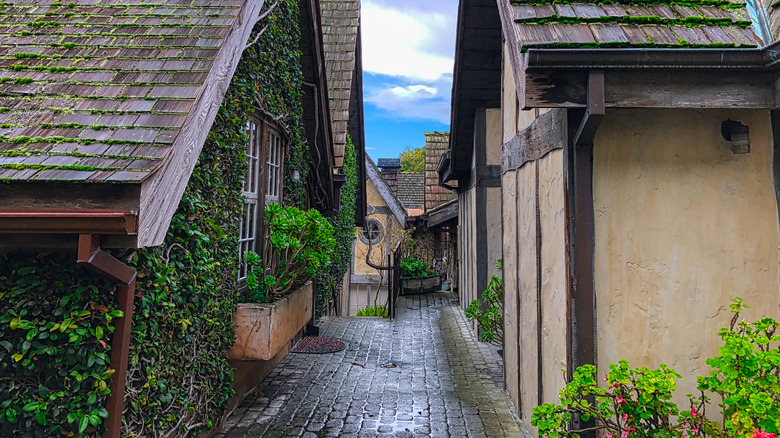
Among these pedestrian pathways are over 40 distinct courtyards and secret passageways tucked discreetly between art galleries, bistros, and boutiques. For instance, Der Ling Lane—widely regarded as the town’s oldest public alleyway—features a narrow arched entrance on Ocean Avenue that opens into a quiet, cobblestone garden shielded from the modest hum of downtown traffic. Similarly, the Court of the Fountains, located behind the Anton & Michel restaurant, offers visitors a sequestered sanctuary complete with bubbling fountain pools, wrought-iron gazebos, and overflowing floral window boxes.
Coastal Topography and Marine Ecology
The natural boundaries of Carmel-by-the-Sea provide an uncompromised horizon. Unlike many Southern California beachfront cities bordered by high-rise condominiums, asphalt parking lots, or commercial boardwalks, Carmel Beach is framed exclusively by natural bluffs, rolling sand dunes, and wind-sculpted Monterey cypresses.
Data aggregates from travel analytics platforms, including studies cited by SpinBlitz, have ranked Carmel Beach at the pinnacle of American coastal beauty. This pristine strip of quartz sand is accessible via a network of wooden staircases leading down from the bluff-top Scenic Road, a 1.5-mile coastal route that transitions from soft sandy vistas in the north to rugged, granite-hewn headlands in the south.
Official Statements & Expert Perspectives
The ongoing preservation of Carmel-by-the-Sea’s unique character is a coordinated effort managed by local government bodies, preservation societies, and architectural historians.
In assessments accompanying the 2026 Architectural Digest ranking, urban planners highlighted the town as a rare example of a community that successfully resisted post-war suburban sprawl through rigorous legislative oversight:
"Carmel-by-the-Sea demonstrates that visual beauty is not merely an accident of geography, but a deliberate civic choice. By prioritizing pedestrian scale, historic architectural preservation, and native landscape integration over rapid commercial expansion, the community has maintained an authentic cultural identity that is increasingly rare in the 21st century."
The Carmel Chamber of Commerce emphasizes that the town’s fairytale aesthetics were never designed as a commercial gimmick for modern tourists, but rather evolved organically from the pragmatic and imaginative housing needs of early 20th-century artists. In historical outreach materials, the chamber notes:
"The original builders of these cottages—such as Hugh Comstock and his contemporaries—were working within the constraints of local materials, utilizing clinker brick, local stone, and recycled timber. Their goal was to create functional, affordable bohemian homes that harmonized with the surrounding forest and sea. That those structures have endured for a century is a testament to their enduring structural and aesthetic integrity."
Architectural historians frequently point to the Clinton Walker House, designed by Frank Lloyd Wright in 1948, as a masterclass in site-specific design. Built directly into the granite outcroppings along Scenic Road, the oceanfront residence utilizes local stone and green glass to mirror the natural palette of the Pacific shoreline. Commenting on the property’s integration into the coastal landscape, architecture critics have long cited it as Wright’s most successful sea-facing residential commission.
Future Outlook
As Carmel-by-the-Sea enters a new era following its designation as California’s prettiest town, municipal leaders and conservationists face a delicate balancing act. The primary challenge moving forward lies in managing the influx of cultural tourism while safeguarding the fragile ecosystems and historic infrastructure that define the village.
- Climate Adaptation and Coastal Resilience: With rising sea levels and shifting weather patterns threatening California’s coastline, local authorities are heavily investing in bluff stabilization and dune restoration along Carmel Beach. Protecting the root systems of the iconic Monterey cypresses along Scenic Path remains an environmental priority.
- Strict Preservation Enforcement: The City of Carmel-by-the-Sea continues to enforce stringent design review guidelines for any structural modifications within the historic district. Property owners looking to renovate vintage cottages must adhere to strict material and stylistic codes to ensure the preservation of the 1920s aesthetic.
- Sustainable Tourism Management: To prevent overcrowding and preserve the tranquil, contemplative atmosphere prized by residents and visitors alike, regional tourism boards are increasingly promoting off-peak travel and low-impact exploration methods, such as self-guided walking tours of the town’s hidden courtyards and easy transit links from the nearby Monterey Regional Airport.
Ultimately, Carmel-by-the-Sea stands as a timeless anomaly on the American landscape—a living museum of art, architecture, and ecology that proves human habitation can enhance, rather than detract from, the natural splendor of the Pacific coast.