






Executive Overview
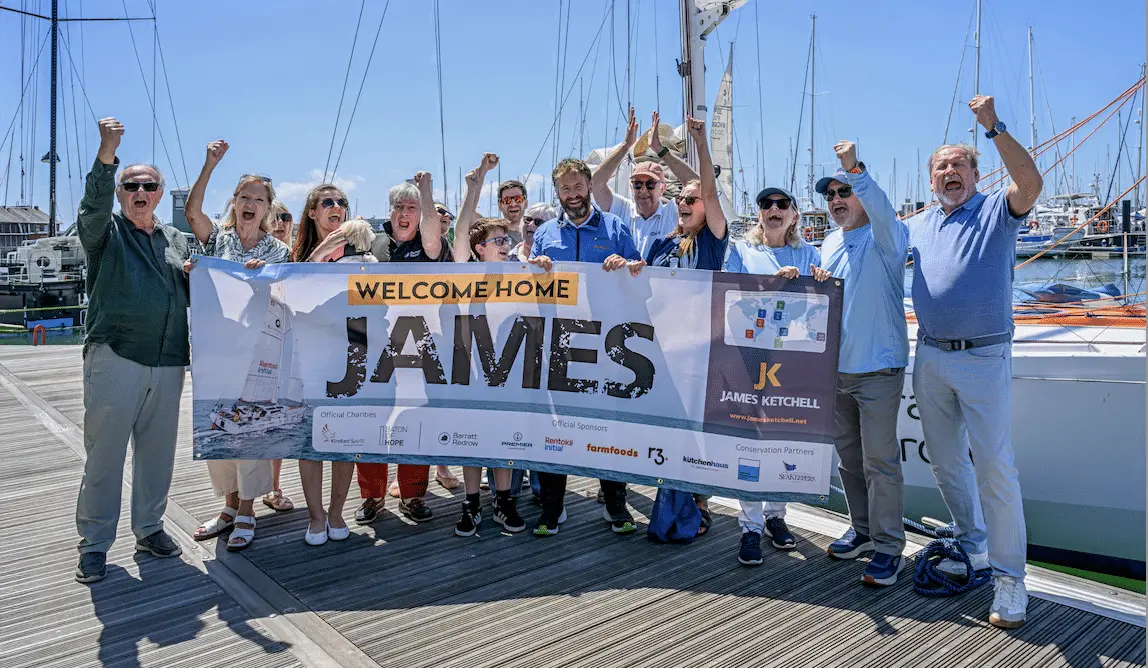
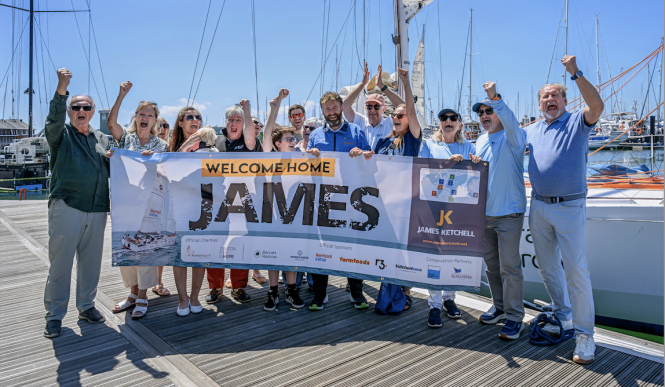
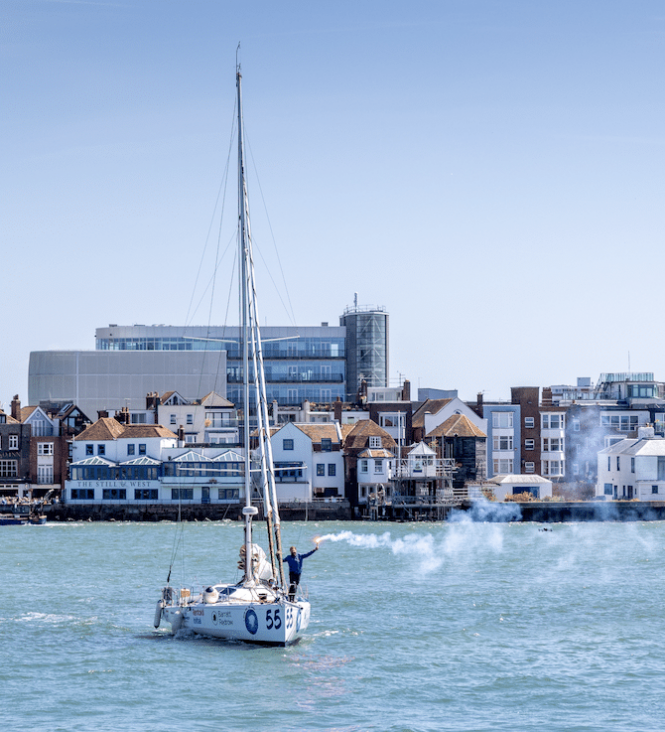
On June 13, 2026, British adventurer James Ketchell guided his sailing vessel, Mindset, back into the harbor of Gosport, United Kingdom, bringing a triumphant close to one of the most audacious endurance feats of the modern era. With this arrival, Ketchell officially etched his name into the history books as the first person ever to circumnavigate the globe by land, air, and sea.
Yet, this milestone transcends the boundaries of traditional exploration. Rather than focusing purely on personal glory or the sheer logistics of global traversal, Ketchell’s monumental voyage fused extreme endurance with urgent environmental stewardship. Operating as an Ambassador for the UK’s National Oceanography Centre (NOC) and partnering with The International SeaKeepers Society’s DISCOVERY Programme, Ketchell transformed his 30,000-nautical-mile maritime expedition into a floating marine laboratory.
Over nearly a year at sea, he collected critical oceanographic data, deployed autonomous monitoring equipment in remote waters, and gathered microplastic samples to aid global research institutions. Furthermore, his journey served as a high-profile platform for educational outreach, connecting with classrooms worldwide, and raising awareness and essential funds for mental health and human rights charities. Ketchell’s achievement proves that the age of modern exploration can—and must—directly serve the preservation of our planet.
Detailed Chronology: The Evolution of a Global Record
To fully comprehend the magnitude of Ketchell’s 2025–2026 maritime triumph, one must examine the grueling, decades-long progression of endurance milestones that preceded it. Ketchell’s relationship with global circumnavigation is not a singular event, but the culmination of a lifelong commitment to pushing the limits of human capability across every conceivable medium.
The Foundation of Endurance
Long before his historic triple-element circumnavigation, Ketchell established his credentials as a premier endurance athlete through a series of punishing physical trials. He has successfully rowed across the Atlantic Ocean and climbed to the summit of Mount Everest, feats that would satisfy the lifetime ambitions of most extreme athletes. However, for Ketchell, these accomplishments were merely stepping stones toward an even grander vision of global traversal.
Phase One: Conquering the Land (2013)
The first official chapter of Ketchell’s global circumnavigation unfolded in 2013, when he undertook a monumental unsupported bicycle journey around the world. Pedaling tens of thousands of kilometers across varied terrain, extreme weather conditions, and international borders, he demonstrated the psychological resilience and physical stamina required to sustain momentum on a planetary scale. This land-based crossing laid the groundwork for navigating the logistical hurdles of global travel, testing his ability to endure isolation, physical exhaustion, and unpredictable environments.
Phase Two: Taking to the Air (2019)
Having conquered the earth beneath his wheels, Ketchell turned his sights to the skies. In 2019, he completed a historic circumnavigation of the globe in a lightweight gyrocopter—an open-cockpit aircraft that exposed him to the elements while demanding absolute precision and navigational mastery. Flying across continents and oceans in a craft of that size presented unprecedented meteorological and mechanical challenges. By successfully completing this aerial leg, Ketchell secured a unique place in aviation history and completed the second pillar of his land, air, and sea triad.
Phase Three: The Final Frontier—The Sea (2025–2026)
The final and most complex phase of Ketchell’s master plan commenced in July 2025, when he cast off aboard his sailing vessel, Mindset. This maritime leg was designed to cover approximately 30,000 nautical miles, tracing a punishing oceanic route that would test the structural integrity of his vessel and his own psychological endurance.
Departing the UK, Ketchell’s itinerary took him south through Lanzarote and Cape Verde before crossing the Atlantic to Brazil. From South America, he navigated the treacherous waters toward Cape Town, pushed onward across the vast expanses of the Southern Ocean to Hobart, Australia, and rounded the legendary, storm-tossed waters of Cape Horn. Finally, after nearly twelve months at sea battling shifting weather systems, heavy swells, and profound isolation, Ketchell navigated the final miles back to Gosport on June 13, 2026, completing the trifecta of land, air, and sea.
Supporting Context & Metrics: Science on the High Seas
What elevates James Ketchell’s latest voyage from an extraordinary athletic achievement to a milestone in environmental conservation is his integration of ocean science into the daily routine of single-handed sailing. While navigating some of the most remote and inhospitable marine environments on Earth, Ketchell acted as a citizen scientist for the SeaKeepers DISCOVERY Programme and the National Oceanography Centre (NOC).
+-------------------------------------------------------------------+
                  KETCHELL'S SCIENTIFIC CONTRIBUTIONS
+-------------------------------------------------------------------+
|  [1] Argo Float Deployment                                        |
|      -> Deployed in the remote Indian Ocean                       |
|      -> Contributes to a global network of 4,000+ monitoring units  |
|                                                                   |
|  [2] Microplastic Sampling                                        |
|      -> Collected for NOC & International SeaKeepers Society      |
|      -> Mapps pollution levels across global ocean basins         |
|                                                                   |
|  [3] Bathymetric Data Collection                                  |
|      -> Contributed to the Nippon Foundation-GEBCO Seabed 2030    |
|      -> Aids in mapping the complete ocean floor by 2030          |
+-------------------------------------------------------------------+
The Argo Float Deployment in the Indian Ocean
One of the most impactful scientific tasks executed during the voyage occurred in the vast, under-sampled expanses of the Indian Ocean. Ketchell successfully deployed an autonomous Argo float—a sophisticated cylindrical profiling float designed to drift with ocean currents and measure temperature and salinity down to depths of 2,000 meters.
This instrument joined a global array of more than 4,000 active Argo floats that provide real-time subsurface data crucial for understanding global climate patterns, heat storage, and ocean circulation. Because vast regions of the open ocean lack commercial shipping traffic, utilizing solo adventurers like Ketchell to deploy these devices represents an invaluable mechanism for gathering deep-ocean data.
Microplastic Sampling and Marine Pollution Research
The proliferation of plastic pollution in the world’s oceans is one of the defining environmental crises of our time. In collaboration with the NOC and The International SeaKeepers Society, Ketchell systematically gathered microplastic samples along his 30,000-nautical-mile route.
Using specialized filtration equipment provided by researchers, he filtered seawater samples at regular intervals across different latitudes and ocean basins. These samples provide marine biologists with empirical data regarding the concentration, distribution, and composition of microplastics in remote areas far removed from industrial centers, helping to model how pollutants circulate through global marine ecosystems.
Mapping the Unknown: Seabed 2030
Despite covering more than 70 percent of the Earth’s surface, the ocean floor remains largely unmapped—we possess better topographical maps of the surface of Mars than we do of our own ocean basins. To combat this knowledge gap, Ketchell contributed valuable bathymetric data to the Nippon Foundation-GEBCO Seabed 2030 Project.
This ambitious collaborative initiative seeks to compile all available bathymetric data to produce the definitive map of the world ocean floor by 2030. By operating specialized sonar and data-logging equipment aboard the Mindset, Ketchell helped illuminate previously uncharted underwater topography as he traversed remote deep-sea trenches and oceanic ridges.
Inspiring Youth and Championing Social Causes
Beyond his contributions to physical oceanography, Ketchell leveraged the immense media attention surrounding his expedition to drive social impact. Throughout the voyage, he maintained active links with educational institutions, delivering live virtual Q&A sessions, tailored worksheets, and interactive classroom modules from ports of call across the globe. His goal was to ignite a passion for STEM (Science, Technology, Engineering, and Mathematics) fields and environmental conservation among the next generation.
Simultaneously, the expedition served as a high-profile vehicle for charitable fundraising. Ketchell championed two vital causes:
- Baton of Hope: An organization dedicated to raising suicide awareness, breaking the stigma surrounding mental health, and promoting suicide prevention initiatives across the UK and beyond.
- Kindled Spirit: A charity committed to transforming the lives of vulnerable women and children who have survived the horrors of human trafficking and modern-day slavery.
Official Statements and Reflections
The historic nature of Ketchell’s return prompted widespread praise from the scientific community, conservation organizations, and the adventurer himself.
Gill Rodrigues, Director of International Relations at The International SeaKeepers Society, emphasized the seamless integration of endurance sport and rigorous scientific inquiry:
"James has shown how adventure and science can sail side by side. We couldn’t be prouder to welcome him home. His commitment to utilizing his platform for the betterment of ocean research exemplifies the core mission of the DISCOVERY Programme, proving that individuals can make a tangible difference to marine conservation, even in the most challenging circumstances."
Reflecting on the completion of his epic global trifecta, James Ketchell shared his gratitude and a hint of disbelief at the scale of his lifetime accomplishments:
"I am extremely grateful to all my partners that have supported me over so many years and continue to do so for this challenge. After rowing oceans, climbing Everest, cycling, flying, and sailing around the world, I’m not sure what challenge is left on this planet."
From the perspective of industry stakeholders, the success of the expedition underscores a broader shift in how modern maritime adventures are perceived and valued. CharterWorld, a prominent advocate and partner of The International SeaKeepers Society, released a statement highlighting the broader implications of the voyage:
"At CharterWorld, we are proud partners of The International SeaKeepers Society and strongly support its mission to advance ocean conservation, scientific research, and marine education through the global yachting community. Projects such as James Ketchell’s groundbreaking circumnavigation demonstrate the unique role that vessels and ocean travelers can play in collecting valuable scientific data while raising awareness of the challenges facing our oceans. Through programs like SeaKeepers DISCOVERY, the yachting industry continues to make meaningful contributions to marine science and environmental stewardship."
Future Outlook: The Expanding Horizon of Citizen Science
As the global community grapples with accelerating climate change, biodiversity loss, and marine degradation, the traditional models of scientific research are undergoing a quiet revolution. Academic institutions and research vessels alone cannot monitor the vast expanse of the global commons. Initiatives like James Ketchell’s historic circumnavigation point toward a promising future where adventurers, private vessel owners, and the broader yachting community act as frontline data collectors for the scientific establishment.
The success of the SeaKeepers DISCOVERY Programme demonstrates that structural partnerships between explorers and marine scientists yield high-value data at a fraction of the cost of dedicated research expeditions. By outfitting private sailing yachts, cruisers, and circumnavigators with standardized sampling kits, sonar equipment, and autonomous deployment devices, the scientific community can exponentially expand its observational capacity across remote oceans.
For James Ketchell, the question of what comes next remains open. Having conquered the land on a bicycle, the skies in a gyrocopter, and the oceans aboard a solo sailboat—while simultaneously summitting Everest and rowing across the Atlantic—he has established a standard of multi-modal exploration that may stand unmatched for generations. Yet, his enduring legacy will not merely be the records he broke or the stamps in his passport, but the Argo floats drifting in the Indian Ocean, the microplastic datasets informing climate policy, and the thousands of school children inspired to look closer at the world around them.
As SeaKeepers continues to expand its global network of vessel owners, captains, and researchers, Ketchell’s voyage serves as a shining blueprint: a testament to what can be achieved when human grit, scientific curiosity, and environmental dedication set sail together.