








Executive Overview
The curtain has fallen on IFA Berlin, Europe’s premier consumer electronics and home appliances trade show, leaving behind a clear, albeit complex, narrative regarding the state of global sustainability. If there was a singular overarching takeaway from the bustling exhibition halls this year, it is that the clean technology transition is no longer defined by a single breakthrough or a monolithic ideology. Instead, sustainability has matured into a sprawling, multi-dimensional discipline. It encompasses everything from radical material science and circular supply chains to hyper-efficient domestic electrification, alternative refrigerants, and the unglamorous yet vital mechanics of product repair and modular longevity.
For international observers, particularly those arriving from markets where clean tech is still frequently marketed as a novel differentiator, the European landscape can feel jarringly advanced. In Germany, foundational sustainable systems have crossed the threshold from cutting-edge luxury to baseline expectation. Heat pumps are rapidly becoming the domestic standard. Induction cooktops have decisively eclipsed legacy gas and electric-resistance alternatives. Meanwhile, baseline energy efficiency is treated as a foundational prerequisite rather than a marketing bullet point.

Yet, despite this normalization, the European consumer market maintains an insatiable appetite for incremental and disruptive ecological innovations. Major multinational conglomerates and regional white-label manufacturers alike are discovering inventive ways to reduce their environmental footprint. This deep-dive dispatch explores the trends, hardware, and ideological shifts that dominated IFA Berlin, mapping out how the broader consumer technology sector is adapting to a resource-constrained, climate-conscious era.

Detailed Chronology & Technological Breakdown
Walking the expansive exhibition floors of IFA Berlin reveals a fascinating mosaic of product engineering. To understand the direction of the European market, one must examine how individual manufacturers are tackling distinct facets of the sustainability puzzle—ranging from embodied carbon in manufacturing to thermal dynamics in home comfort.

Rethinking Material Flows: Bosch and Ferre
While a significant portion of historic clean-tech discourse has justifiably centered on operational efficiency—how much electricity a device consumes while running—far less attention has historically been paid to the sheer material mass of consumer appliances. Major appliances are heavy, resource-intensive, and demand significant energy to forge, transport, and assemble.
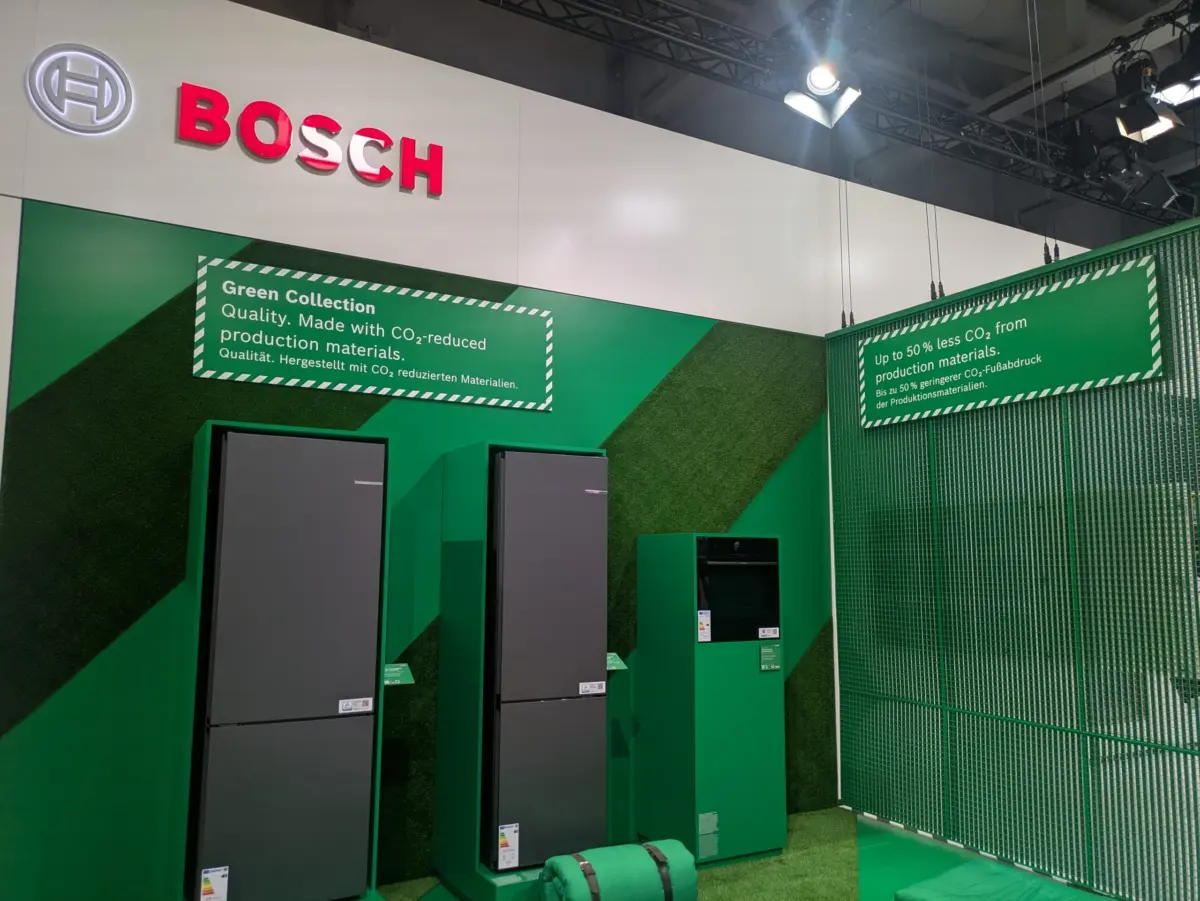
Bosch addressed this blind spot head-on at IFA with its newly minted Green Collection. The standout feature of this lineup is a staggering reduction of up to 50% in CO2 emissions generated during the production and sourcing of constituent materials. Beyond the chemistry and metallurgy, the collection introduced a striking matte black aesthetic that successfully divorced eco-friendly design from the tired, clinical white-plastic tropes of early environmentalism.

Similarly, manufacturers like Ferre turned their analytical gaze toward an even more ephemeral vector of waste: packaging. By dedicating substantial exhibition space to closed-loop, recycled, and biodegradable packaging solutions, Ferre highlighted how logistics and boxing materials contribute significantly to the lifecycle footprint of home goods.
The Industrial Scale of Efficiency: Gorenje’s Comprehensive Approach
Among the most robust displays of ecological engineering belonged to Gorenje. Operating as a titan within the European appliance sector and functioning as the fourth-largest manufacturer on the continent, Gorenje showcased a philosophy of sustainability that spans the entire corporate pipeline—from raw material sourcing and Slovenian manufacturing facilities to end-of-life recycling.

In conversations with Gorenje’s product development teams, a central strategic theme emerged: the democratization of high-performance electrification. The company argues that the most effective way to drive consumers away from fossil-fueled cooking and heating is not moral persuasion, but dramatic performance upgrades. To that end, Gorenje spotlighted high-output induction cooktops capable of rivaling or exceeding the thermal responsiveness of commercial gas ranges, alongside specialized electric pizza ovens engineered for domestic culinary enthusiasts. Though many American consumers may remain unfamiliar with the Gorenje moniker, its corporate lineage—tied to Hisense and various white-label manufacturing agreements across Europe—means that a significant percentage of households are already cooking on Gorenje-engineered hardware.
The Refrigerant Revolution: R290 and the HVAC Transformation
Perhaps the most critical industrial pivot observable at IFA Berlin was the swift, undeniable industry-wide transition away from legacy hydrofluorocarbons (HFCs) and toward natural refrigerants, chief among them R290 (propane).

Midea commanded significant foot traffic by showcasing its next-generation heat pump lineup utilizing R290. Traditional refrigerants possess global warming potentials (GWPs) thousands of times higher than carbon dioxide, posing a severe atmospheric risk in the event of leaks. R290, by contrast, boasts an ultra-low GWP of near zero, making it a vastly superior environmental choice.
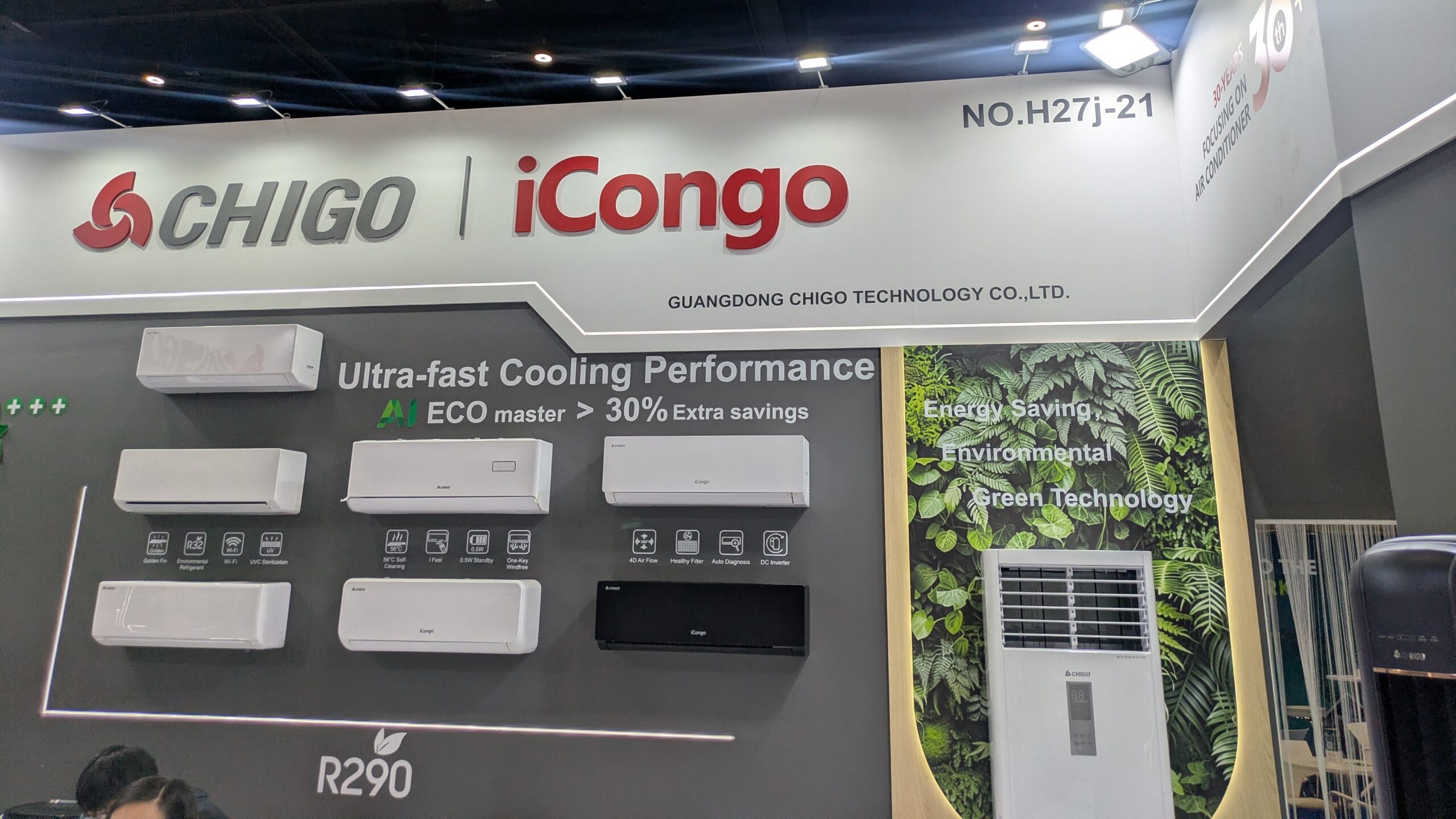
Midea was far from alone. Across the convention center, brands like Chigo and iCongo demonstrated R290-based air conditioning units, pairing the chemical transition with intelligent hardware adjustments. Chigo, for instance, claimed up to 30% energy savings derived from what it terms "AI-powered dynamic adjustments." While such proprietary software claims always warrant rigorous independent empirical testing, the hardware baseline—combining natural refrigerants with algorithmic variable-speed compression—signals the precise trajectory of modern climate control.
Targeted Thermal Comfort: Eurom’s Infrared Innovation
While heat pumps continue to dominate whole-home heating discussions, alternative approaches to human comfort captured considerable interest. Eurom exhibited a sophisticated line of infrared home heaters that challenge conventional whole-volume spatial heating.
From a raw thermodynamics perspective, resistive infrared heaters cannot match the coefficient of performance (COP) delivered by a heat pump on a per-BTU basis. However, Eurom’s approach relies on a different principle: radiant zoning. Much like how the sun warms the Earth through electromagnetic radiation without heating the intervening vacuum of space, infrared panels can invisibly project long-wavelength heat directly onto specific surfaces and human occupants.

In an open-concept living space, an infrared panel can be focused precisely on a primary seating zone. This allows the occupants to feel entirely comfortable while the ambient temperature of the wider room—or even the entire home—is kept significantly lower. When integrated with occupancy sensors and smart-home automation, this targeted thermal delivery presents a compelling supplementary strategy for reducing household energy consumption during peak winter months.
Material Upcycling and the Circular Economy: REEDEE
Moving away from heavy appliances into the realm of personal electronics accessories, REEDEE presented innovative circular pathways for thermoplastic polyurethane (TPU) and polyethylene terephthalate (PET) plastic films, typically utilized for smartphone screen protectors.

Consumer plastics are notoriously difficult to divert from landfills or municipal incinerators, even when deposited faithfully into blue recycling bins. By establishing closed-loop recovery and upcycling pipelines for high-durability polymer films, REEDEE demonstrated that even consumable accessories can be engineered with an eye toward infinite material loops, mitigating virgin petroleum extraction and post-consumer pollution simultaneously.
Decentralized Climate Adaptation: Gforest and White-Label Innovation
Ningbo Green Forest Electronic Technology (operating as Gforest) delivered some of the most pragmatic demonstrations at IFA, bridging the gap between waste management and residential climate adaptation.

Gforest’s food waste recyclers utilize high-efficiency internal heaters to rapidly dehydrate and pulverize organic kitchen waste, transforming damp scraps into dry, stable soil amendments suitable for home gardens.
More fascinating, however, was Gforest’s approach to cooling. With large swaths of Europe historically unequipped with central air conditioning—yet experiencing increasingly intense and prolonged summer heatwaves—millions of residents face acute thermal stress. While conventional AC units remain energy-intensive to install and operate, Gforest showcased both standalone evaporative mister fans and an ingenious modular prototype: an adhesive misting puck designed to mount directly to the center grill of an existing, ordinary household box fan, fed by a compact water tank that attaches to the fan’s central support pole.

This low-tech, high-impact intervention allows consumers to retrofit legacy fans with evaporative cooling capabilities without purchasing entirely new hardware or resorting to energy-hungry refrigeration units. It serves as a potent reminder that not all clean technology needs to be capital-intensive, software-bloated, or complex.
Supporting Context & Metrics: The European Consumer Landscape
To fully contextualize the innovations on display at IFA Berlin, one must examine the macro-environmental and regulatory forces shaping European consumer behavior.

- The Regulatory Push: European Union directives targeting energy efficiency classes (such as the recent tightening of the EU energy label framework) have created a stringent regulatory environment. Manufacturers can no longer afford to treat efficiency as an optional feature; failure to meet top-tier energy classifications effectively locks products out of major retail channels.
- The Thermal Disconnect: Unlike the United States—where central forced-air HVAC systems are ubiquitous—European housing stock varies wildly in age and construction. The rapid adoption of R290 heat pumps and modular cooling solutions reflects a continent urgently retrofitting its built environment to withstand accelerating climate destabilization without overwhelming local electrical grids.
- The Embodied Carbon Reality: According to life-cycle assessments cited by various exhibitors at the conference, up to 50% or more of an appliance’s total lifetime emissions can occur upstream during the extraction, refining, and manufacturing of its metallic and polymeric components. This explains the sudden industry pivot toward recycled aluminum, low-carbon steel, and closed-loop plastic sourcing seen across brands like Bosch and Gorenje.
Official Statements and Industry Insights
The philosophy driving modern European appliance engineering was articulated clearly by product strategists on the floor. A recurring theme in stakeholder discussions was the shift from compliance to value-driven sustainability.
A lead product developer at Gorenje encapsulated this ethos during a briefing on electrified cooking appliances:

"We cannot expect consumers to compromise on performance for the sake of the planet. If an induction cooktop or an electric pizza oven does not outperform the legacy gas alternative in speed, control, and culinary precision, the consumer will not make the switch. Sustainability must be smuggled in through superior engineering."
Similarly, representatives from HVAC manufacturers emphasized the urgency of the R290 transition ahead of impending regulatory phase-outs of high-GWP synthetic refrigerants. The consensus among engineering teams was clear: adaptation is no longer a matter of corporate philanthropy, but an existential prerequisite for market survival in the European Economic Area.

Future Outlook: The Repair Economy and Modular Mobility
As IFA Berlin drew to a close, two final domains underscored the breadth of the modern sustainability movement: the right-to-repair ecosystem and light electric mobility.
The Right to Repair: Repartly
Technological innovation is futile if the resulting products possess artificially shortened lifespans. Companies like Repartly are attacking this issue at the root by establishing regional supply chains for appliance and electronics spare parts within Germany. By making component-level repairs faster, cheaper, and logistically frictionless, Repartly helps consumers bypass the absurd economic penalty of replacing an entire appliance due to a single failed electronic board or mechanical seal. Extending product lifespans preserves the massive embodied energy required for initial manufacturing and drastically reduces municipal electronic waste burdens.

Urban Mobility: Volkswagen’s ID.Polo and ID.Cross
In the personal transport sector, Volkswagen staked out significant turf alongside brands like XPENG and Xiaomi by displaying its latest electric vehicle iterations: the ID.Polo and the ID.Cross.
While the ID.Cross targets the fiercely contested, high-margin crossover segment, the smaller ID.Polo represents a strategic return to Volkswagen’s design heritage. Tailored explicitly for the tight, historic roadways and dense urban environments of European cities, the ID.Polo offers a pragmatic, downsized electric footprint. For consumers seeking an even lighter mobility footprint, Volkswagen’s brand-licensed e-bike offerings—available for test rides on-site—highlighted a holistic corporate vision where personal transit spans everything from sub-compact battery-electric cars to pedal-assist bicycles.

Conclusion
IFA Berlin—whose acronym historically stands for Internationale Funkausstellung, but increasingly embodies the spirit of Innovation For All—demonstrated that the clean energy transition is a tapestry woven from countless distinct threads.
There is no singular silver bullet capable of resolving the complex matrix of climate, resource, and energy challenges facing global society. However, the sheer diversity of approaches showcased across the Berlin exhibition halls proves that every stakeholder—from multinational automotive giants and industrial white-label manufacturers to local repair networks and micro-appliance innovators—possesses a tangible mechanism for impact. Sustainability has officially graduated from a marketing buzzword into the foundational physics of modern consumer product engineering.