






Executive Overview
For millions of travelers, the drive north from Las Vegas along U.S. Route 93 is defined by the stark, unrelenting majesty of the Mojave Desert—an austere landscape of creosote bush, jagged volcanic rock, and blinding sun. Yet, as motorists negotiate a subtle bend in the highway roughly 90 miles north of the neon-soaked Las Vegas Valley, a sudden, surreal vision shimmers into focus: a vast, vibrant expanse of azure water, emerald-green marshes, and towering cottonwood trees.
This unexpected mirage is no illusion. It is the Pahranagat National Wildlife Refuge, a sprawling 5,382-acre desert oasis managed by the U.S. Fish and Wildlife Service (USFWS). Derived from the Southern Paiute (Nuwuvi) word meaning "Valley of Shining Water," Pahranagat represents a rare convergence of high-desert aridity and robust aquatic ecosystems. Sustained by subterranean spring water bubbling up from Crystal and Ash springs, the refuge serves as an indispensable ecological stepping stone, a sanctuary for endangered species, and a cultural touchstone honoring the indigenous stewards who have inhabited the Great Basin for millennia.
Operating entirely free of charge, the refuge bridges the gap between conservation science and public recreation. It welcomes birdwatchers, hikers, campers, and road-trippers navigating the corridor between Southern Nevada and geological marvels like Cathedral Gorge State Park. As anthropogenic pressures, climate change, and water scarcity increasingly threaten desert wetlands across the American Southwest, the preservation and public appreciation of havens like Pahranagat have never been more critical.
Detailed Chronology: From Ancient Stewards to Federal Conservation
To fully understand the ecological complexity of the Pahranagat Valley, one must examine the deep historical and geological timeline that shaped this desert sanctuary.
Deep Time and Indigenous Heritage (Pre-1850s)
Long before the establishment of modern highways and federal wildlife boundaries, the Pahranagat Valley was a thriving hub for indigenous populations. The Nuwuvi (Southern Paiute) people utilized the valley’s abundant water, native flora, and migratory fauna for seasonal habitation and hunting. The surrounding landscape preserves this legacy through ancient petroglyphs, pictographs, and archaeological sites that reflect a deep spiritual and pragmatic relationship with the land. Water was revered not merely as a resource, but as the lifeblood of a sacred geography where high desert ecology and aquatic abundance intersect.
Euro-American Settlement and Agricultural Pressures (Late 19th to Mid-20th Century)
In the latter half of the 19th century, Euro-American settlers recognized the agricultural potential of the spring-fed valley. Ditches, diversions, and cattle ranches gradually altered the natural hydrological flows of the Pahranagat and Muddy River systems. Overgrazing, water extraction, and land clearing fragmented the native wetlands, putting immense pressure on endemic species and migratory bird populations that relied on the uninterrupted chain of marshes.
Establishment of the Refuge (1963)
Recognizing the rapid degradation of vital wetland habitats along the Pacific Flyway—a major north-south flyway for migratory birds in the Americas—the federal government intervened. On September 27, 1963, the Pahranagat National Wildlife Refuge was officially established under the authority of the Migratory Bird Conservation Act. The initial land acquisition was designed to protect, restore, and manage vital feeding, resting, and nesting grounds for waterfowl and other migratory birds.
Modern Management and Ecological Restoration (1980s–Present)
Over the past four decades, management strategies at Pahranagat have shifted from basic land reservation to active ecological restoration and community integration. USFWS biologists have worked to control invasive plant species (such as tamarisk and saltcedar), restore native cottonwood-willow riparian galleries, and manage water levels across the refuge’s roughly 640 acres of open water. Today, the refuge balances public access—such as primitive camping, non-motorized recreation, and environmental education—with stringent wildlife protection mandates.
Supporting Context & Metrics: The Ecology of an Oasis
The resilience of the Pahranagat National Wildlife Refuge is rooted in its unique hydrology and geographic positioning.
Hydrological Lifeblood
The refuge is sustained primarily by geothermal and artesian springs, most notably Crystal and Ash springs, located to the north. These springs discharge water that originates from regional carbonate aquifer systems, traveling underground for decades before emerging at a relatively constant, tepid temperature. This continuous flow prevents the lakes and marshes from freezing entirely in winter and maintains oxygen-rich aquatic habitats during scorching desert summers.
Biodiversity Metrics
Despite encompassing just over 5,300 acres, Pahranagat is a biodiversity hotspot within the Great Basin Desert:
- Avian Diversity: Over 260 distinct bird species have been documented within the refuge boundaries. It serves as a vital refueling station for millions of birds traversing the Pacific Flyway.
- Endangered Species: The refuge provides critical breeding and foraging habitat for the southwestern willow flycatcher (Empidonax traillii extimus), a federally endangered subspecies heavily reliant on dense willow and cottonwood thickets.
- Aquatic Life: The open waters and marsh channels support diverse fish populations, including native species and introduced sportfish such as largemouth bass, channel catfish, and common carp, which are managed to balance recreational fishing with ecological health.
Recreational Infrastructure Metrics
The refuge provides robust yet low-impact infrastructure designed to minimize human footprint while maximizing educational and recreational engagement:
- Trail Network: Approximately 7 miles of maintained trails, ranging from ADA-accessible pathways to moderately challenging desert-upland routes.
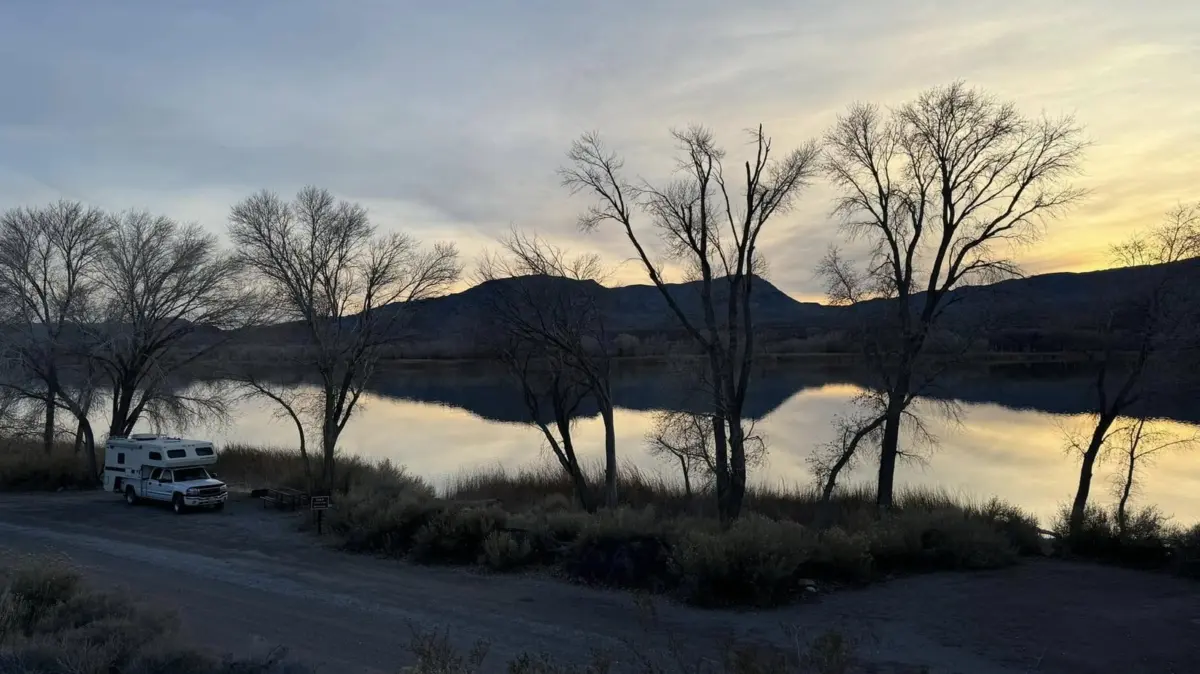
- Campground Capacity: Exactly 15 primitive campsites situated along the shores of Upper Pahranagat Lake, available on a first-come, first-served basis with a strict 14-day stay limit within any 31-day period.
- Admission Fees: $0 (Free entry and camping), though voluntary donations directly support refuge maintenance and wildlife programs.
Official Statements and Management Perspectives
Federal land managers, conservationists, and visitors frequently emphasize the delicate balance required to maintain a pristine wetland within an increasingly arid climate.
In programmatic guidelines released by the U.S. Fish and Wildlife Service (Pacific Southwest Region), agency spokespersons have repeatedly underscored the strategic importance of stepping-stone refuges:
"Wetlands make up less than one percent of the land cover in Nevada, yet they support a disproportionate amount of the state’s biodiversity. Refuges like Pahranagat are not merely recreational escapes for urban populations; they are absolute ecological necessities. Without these managed stopovers along the Pacific Flyway, migratory bird populations would face catastrophic bottlenecks during their seasonal journeys."
Local conservation advocates and park rangers note the unique interpretive value of the refuge, particularly regarding cultural resources:
"When visitors walk the Black Canyon Trail, they aren’t just looking at basalt cliffs and desert wildflowers; they are walking through an open-air museum. The rock art and interpretive signage remind everyone that this valley has been cared for by the Nuwuvi people for generations. Our management philosophy is rooted in honoring that stewardship through rigorous habitat protection and respectful public access."
Recreational visitors consistently praise the juxtaposition of stark desert and lush riparian ecosystems. Reviews collected across outdoor platforms highlight the sensory shift experienced upon entering the valley:
"You drive through hours of brown, dusty basin-and-range topography, and suddenly you are enveloped in this vivid green canopy where yuccas grow side-by-side with cattails and cottonwoods. It is a masterclass in contrasts—tranquil, unexpected, and utterly vital to the soul of the Nevada desert."
Future Outlook: Challenges and Opportunities Ahead
As the American Southwest confronts unprecedented challenges related to climate change, prolonged megadroughts, and expanding urban footprints from metropolitan Las Vegas, the long-term outlook for the Pahranagat National Wildlife Refuge hinges on proactive adaptive management.
Climate and Water Security
The primary existential threat to Pahranagat is hydrological stability. Because the refuge relies entirely on regional spring discharges, any significant drawdown of subterranean aquifers—whether caused by regional municipal pumping, agricultural expansion, or climate-induced reductions in mountain snowpack—could severely diminish spring flows. USFWS hydrologists are actively monitoring aquifer levels and partnering with state water authorities to safeguard these vital spring sources against over-allocation.
Habitat Resilience and Invasive Species Management
The proliferation of invasive non-native plant species, particularly tamarisk (saltcedar), poses a persistent threat to water tables and native riparian vegetation. Tamarisk consumes vast quantities of groundwater and increases soil salinity, crowding out native cottonwoods and willows. Ongoing restoration efforts—including targeted mechanical removal, biological controls, and re-seeding programs—will remain essential to maintaining the structural integrity of the marshes.
Sustainable Tourism and Community Engagement
Balancing increased visitation with wildlife preservation will define the refuge’s operational strategy over the coming decade. As outdoor recreation surges across Southern Nevada, the USFWS aims to enhance educational outreach regarding "Leave No Trace" principles, fire safety (particularly given recurring Stage 1 and Stage 2 Fire Restrictions), and respectful wildlife viewing.
Furthermore, the refuge’s proximity to emerging regional attractions—such as the historic town of Alamo, Cathedral Gorge State Park, and the quirky extraterrestrial culture of Rachel, Nevada, near Area 51—positions Pahranagat as a cornerstone of sustainable rural tourism in Lincoln County.
Conclusion
The Pahranagat National Wildlife Refuge stands as a testament to nature’s tenacity and the power of targeted conservation. By transforming a stretch of desert highway into a symphony of rustling cottonwoods, rushing spring water, and soaring migratory birds, it reminds travelers of the hidden richness pulsing beneath the surface of the American West. Ensuring that this "Valley of Shining Water" remains pristine for future generations will require unwavering vigilance, collaborative water stewardship, and a collective commitment to protecting the fragile oases that sustain us all.