





Executive Overview
The Orange County Transportation Authority (OCTA) Board of Directors has taken a pivotal step toward safeguarding one of the nation’s most vital and vulnerable transportation arteries. During a recent board session, directors reviewed the Draft Coastal Rail Resiliency Feasibility Report, formally directing staff to expand coordination with regional stakeholders, environmental regulatory agencies, and the public. This review marks a critical milestone in a comprehensive study launched in late 2023 to evaluate, protect, and future-proof a highly sensitive, seven-mile stretch of the Los Angeles-San Diego-San Luis Obispo (LOSSAN) Rail Corridor.
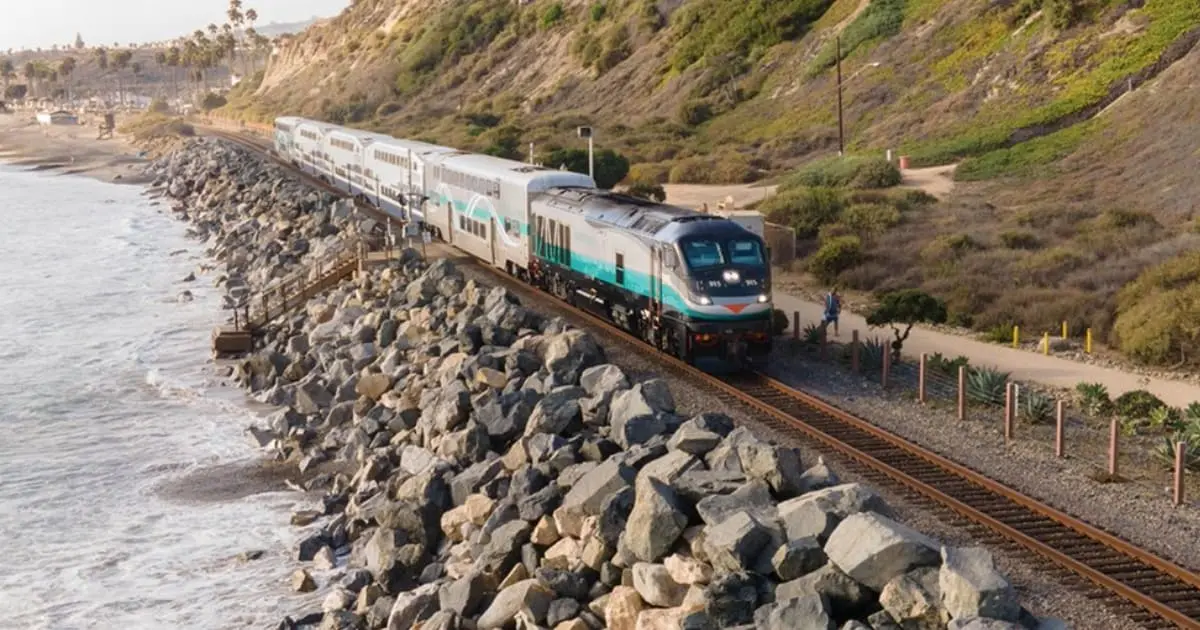
Spanning from Dana Point through San Clemente to the Orange County-San Diego County line, this segment of track is ground zero for the collision of climate change, dynamic coastal geology, and heavy multi-use rail traffic. The corridor is not merely a regional amenity; it is the second busiest intercity passenger rail corridor in the United States. It serves commuters via Metrolink, tourists and long-distance travelers via Amtrak’s Pacific Surfliner, vital freight shipments for commercial supply chains, and crucial military transportation needs connecting installations like Camp Pendleton to the broader national defense network.
For years, this vital rail link has been subjected to relentless environmental pressures. Accelerating coastal erosion, unstable coastal bluffs, sudden landslides, rising sea levels, high tides, and pounding ocean swells have forced repeated emergency shutdowns. Cumulatively, these disruptions have halted passenger rail service through San Clemente for nearly a full year since 2021.
Faced with these persistent crises, OCTA is transitioning away from a reactive, crisis-to-crisis posture. The newly reviewed Draft Feasibility Report outlines a pragmatic, multi-layered toolbox of engineering, geological, and environmental strategies designed to secure the rail line for up to the next 30 years. While a separate, state-led initiative is simultaneously examining ambitious, ultra-long-term solutions beyond that timeframe—such as potential inland rerouting—OCTA’s current mission is focused, urgent, and deliberate: keeping the existing tracks safe and operational over the medium term.
By avoiding a rigid, one-size-fits-all mandate, the draft report proposes a flexible toolkit of solutions tailored to specific geographic vulnerabilities along the seven-mile stretch. From targeted bluff stabilization and modern catchment walls to massive sand replenishment programs and engineered revetments, OCTA is attempting to balance the imperatives of modern transit infrastructure with the delicate ecology of the Southern California coastline.
Detailed Chronology of a Crisis and Response
The current push for coastal rail resiliency is the culmination of years of mounting geological distress along the Orange County coastline, punctuated by emergency interventions and intense planning phases.
The Breaking Point: 2021–2023
While erosion has historically threatened Southern California’s coastal bluffs, the vulnerability of the San Clemente rail segment crossed a critical threshold beginning in 2021. Successive winter storms, compounded by long-term sea-level rise and saturation of the upper bluffs from urban runoff and rainfall, triggered multiple slope failures.

In late 2022 and throughout 2023, repeated landslides dumped thousands of tons of earth, rock, and debris onto the tracks below, particularly in the neighborhoods surrounding Mariposa Point and historic downtown San Clemente. These events forced emergency shutdowns of Amtrak Pacific Surfliner and Metrolink services between Orange and San Diego counties. Each closure severed a crucial economic and commuter link, forcing passengers onto unreliable bus bridges and stranding freight carriers.
Launching the Coastal Rail Resiliency Study (Late 2023)
Recognizing that emergency shoring and temporary rock placements were insufficient to guarantee long-term reliability, OCTA officially launched the Coastal Rail Resiliency Study in late 2023. Funded partially through state and federal grants alongside local transportation measures, the study was mandated to move beyond temporary fixes. Its objective: conduct a rigorous, science-based evaluation of the entire seven-mile stretch to identify vulnerabilities and engineer permanent, proactive defenses.
Emergency Interventions and Funding Milestones (2024–2025)
While long-term planning was underway, nature did not pause. OCTA, in close partnership with local municipalities, state agencies, and federal representatives, aggressively secured more than $300 million in emergency and capital funding. These funds enabled a series of fast-tracked stabilization projects, including:
- The installation of steel-reinforced soldier piles and wood-lagging retaining walls anchored deep into the bedrock of the bluffs.
- The placement of specialized netting and cabling systems to catch loose rock before it reached the tracks.
- The deployment of heavy rock riprap at the toe of the bluffs to absorb the punishing kinetic energy of high surf and storm surges.
In early 2025, OCTA initiated a vital component of its soft-armor defense strategy by delivering an initial wave of approximately 2,500 cubic yards of sand to San Clemente’s North Beach. This pilot project served as a precursor to a much larger, federally and state-backed sand replenishment initiative designed to widen the beach, dissipate wave energy naturally, and protect the rail bed from direct marine assault.
Board Review of the Draft Feasibility Report (Recent)
The presentation and review of the Draft Coastal Rail Resiliency Feasibility Report by the OCTA Board of Directors represents the most structured policy checkpoint to date. By directing staff to conduct exhaustive outreach with regulatory bodies—such as the California Coastal Commission, U.S. Army Corps of Engineers, and regional water quality boards—as well as the public, the board has set the stage for finalizing the study later this year. This phase bridges the gap between raw data collection and actionable, permit-ready project development.
Supporting Context and Metrics: Understanding the Corridor
To fully grasp the significance of OCTA’s resiliency efforts, one must examine the staggering volume of traffic, capital investments, and environmental metrics that define the LOSSAN Corridor.
Economic and Operational Significance
- National Prominence: As the second-busiest intercity passenger rail corridor in the United States, the LOSSAN corridor carries millions of passengers annually.
- Diverse Stakeholders: The tracks accommodate three distinct rail sectors:
- Commuter Rail: Metrolink’s Inland Empire-Orange County and Orange County lines, which provide vital commuter pathways for Southern California workers.
- Intercity Rail: Amtrak’s Pacific Surfliner, connecting San Diego, Orange County, Los Angeles, Ventura, Santa Barbara, and San Luis Obispo.
- Freight & Defense: BNSF Railway freight operations moving commercial goods between the Ports of Los Angeles/Long Beach and national markets, alongside strategic military transport supporting Camp Pendleton.
- Disruption Toll: The cumulative downtime—totaling nearly a full year of closures since 2021—has cost the regional economy tens of millions of dollars in lost productivity, alternative transportation costs, and freight delays.
The Engineering Toolbox: 23 Concepts to a Targeted Strategy
The Coastal Rail Resiliency Study began with a broad canvas, evaluating 23 distinct engineering concepts. These ranged from radical ideas like tunneling through the Santa Ana Mountains to localized interventions. Through exhaustive technical analysis, computer modeling, and stakeholder feedback, the concepts were filtered into a comprehensive "toolbox" categorized into three primary zones:
- Rail-Foundation & Track Improvements: Upgrading the substructure of the track bed itself, utilizing alternative, moisture-resistant railroad ties, improving drainage systems to prevent water pooling, and installing modern subgrade stabilization materials that can withstand differential settlement.
- Bluffside Protection Measures: Interventions designed to stabilize the unstable sandstone and shale cliffs rising above the tracks. These include deep-soil mixing, soil nailing, tiered retaining walls, slope terracing, and advanced sub-surface drainage networks to mitigate the destabilizing effects of groundwater seepage.
- Beachside & Marine Protection Approaches: Defenses deployed at the interface between the ocean and the land. The study heavily prioritizes sand placement as a primary soft-engineering tactic. By artificially widening the beaches, wave energy is dissipated before it strikes the base of the bluffs or the rail bed. Where sand alone is insufficient, the study evaluates repairing, restoring, or augmenting existing reinforcement structures, including:
- Riprap: Piles of heavy, interlocking granite boulders that dissipate wave energy.
- Engineered Revetments: Sloped stone or concrete structures designed to armor the shoreline.
- Seawalls: Vertical concrete barriers built to withstand direct wave impacts during extreme storm surges.
Sand Replenishment Scale
A cornerstone of the environmental strategy is the upcoming placement of up to 540,000 cubic yards of sand along the San Clemente coastline. This massive volume will act as a sacrificial buffer against erosion, protecting both the railway and local recreational beaches. This initiative is carefully timed to complement broader South Orange County coastal replenishment projects, ensuring ecological harmony and maximum longevity for the deposited sediment.
Official Statements and Leadership Perspectives
The complexity of balancing environmental conservation, historic preservation, and critical transportation infrastructure requires high-level collaboration across municipal, state, and federal boundaries. Leadership within OCTA has emphasized transparency, cooperation, and long-term vision.
OCTA Chair Jamey M. Federico, who also serves as a Dana Point council member, underscored the collaborative nature of the board’s recent directive:
"This is an important step toward identifying practical solutions that can help protect this critical rail corridor while continuing to incorporate input from residents, regulatory agencies and other stakeholders. The work ahead will require continued coordination among local, state and federal agencies, and we remain committed to advancing solutions that support safe and reliable rail service while continuing to be a partner in broader coastal resiliency planning efforts."
Federico’s remarks highlight a core tension in coastal engineering: constructing hard protective structures along a dynamic, highly regulated coastline requires navigating a complex web of environmental laws. The California Coastal Commission and other regulatory bodies traditionally look skeptically upon hard armor (like seawalls and heavy riprap) due to its tendency to accelerate beach erosion in adjacent areas ("end-effects"). By emphasizing soft solutions like sand replenishment and blending them judiciously with structural repairs, OCTA aims to satisfy both transit safety mandates and environmental protection standards.
Transportation experts and OCTA executive staff have similarly stressed that the draft report is not an endpoint, but rather a flexible framework. Executive briefings emphasize that as climate projections evolve and sea levels rise at varying rates, the agency must maintain the agility to deploy different tools from the report’s toolbox as micro-climatic conditions dictate at specific mileposts along the San Clemente and Dana Point coastlines.
Future Outlook: The Road Ahead for the LOSSAN Corridor
While the Draft Coastal Rail Resiliency Feasibility Report provides a robust technical foundation for the next three decades of rail operations, significant hurdles remain before any new construction projects break ground.
The Project Development Lifecycle
Moving from a draft feasibility report to an operational defense system is a rigorous, multi-year undertaking. The path forward requires several distinct phases:
- Refined Engineering and Alternatives Analysis: Translating broad concepts into detailed engineering blueprints, taking into account site-specific geotechnical borings, wave-action modeling, and tidal dynamics.
- Environmental Review: Comprehensive evaluation under the California Environmental Quality Act (CEQA) and the National Environmental Policy Act (NEPA). This process involves assessing potential impacts on marine life, beach access, sensitive habitats, and coastal aesthetics.
- Regulatory Permitting: Securing clearances and permits from a multitude of oversight agencies, including the California Coastal Commission, U.S. Army Corps of Engineers, Regional Water Quality Control Boards, and the Department of Fish and Wildlife.
- Funding and Procurement: Identifying, securing, and allocating the hundreds of millions of dollars required for capital construction. While $300 million has already been successfully marshaled for immediate emergency work, full implementation of the resiliency report’s recommendations will demand sustained federal and state funding partnerships.
The 30-Year Horizon and Beyond
OCTA’s current initiative is intentionally calibrated to protect the rail corridor for up to 30 years. However, transportation planners are acutely aware that geological and climatic pressures will only intensify over the course of the 21st century.
To address the ultra-long-term horizon, a separate, state-led comprehensive study is currently evaluating macro-level alternatives for the LOSSAN corridor. This includes examining the feasibility of permanently relocating sections of the rail line inland—away from the eroding bluffs and wave-battered shoreline entirely. Such an undertaking would represent one of the most ambitious and costly civil engineering projects in modern Southern California history, requiring massive tunneling through the Santa Ana mountain ranges or complex routing adjustments through existing urban footprints.
Until such a monumental shift can be studied, funded, and executed—a process that could take decades—OCTA’s Coastal Rail Resiliency Study serves as the indispensable bridge. By fortifying the existing alignment through a sophisticated blend of sand nourishment, bluff stabilization, and targeted structural reinforcements, OCTA is ensuring that the LOSSAN Corridor remains resilient, reliable, and open for business.
As OCTA staff incorporate public and agency feedback and return to the Board of Directors later this year to finalize the report, the region takes another vital stride toward securing its coastal transit future against the unrelenting forces of nature.