








NEW DELHI — The Indian capital is bracing for a massive influx of international delegates, dignitaries, and global media personnel ahead of the upcoming BRICS Summit, scheduled for September 12–13. However, this diplomatic milestone has triggered an immediate and staggering economic shockwave within the city’s hospitality sector. Hotel tariffs across New Delhi—particularly in central districts—have skyrocketed, with elite properties reporting rate hikes ranging from 124% to a staggering 325% compared to standard weekend pricing.
Industry data, direct consumer platform comparisons, and real estate insights reveal an unprecedented squeeze on high-end accommodation. With flagship venues nearing total occupancy, travelers, business tourists, and event planners are navigating a drastically inflated market characterized by limited premium inventory and aggressive pricing strategies.
Executive Overview
The convergence of global leaders, bureaucratic delegations, security entourages, and corporate executives in New Delhi for the BRICS Summit has placed immense pressure on the city’s hospitality infrastructure. As the premier diplomatic gathering of emerging economies takes center stage at the state-of-the-art Bharat Mandapam convention center, luxury hotels in the national capital are experiencing an acute supply-demand imbalance.
Key takeaways from the current hospitality landscape include:
- Severe Price Inflation: Room rates for the September 11–13 window have surged between 124% and 325% compared to baseline rates observed the following weekend (September 18–20).
- Inventory Depletion: Leading five-star and luxury properties—including the Taj Palace, ITC Maurya, The Oberoi, The Imperial, and The Leela Palace—have effectively sold out their inventory for the summit dates.
- Geographic Disparities: The most aggressive pricing spikes are heavily concentrated in central Delhi and diplomatic enclaves located in close proximity to the Bharat Mandapam venue.
- Tax Implications: Inclusive of statutory luxury taxes and goods and services tax (GST), effective nightly rates for remaining suites at top-tier hotels are eclipsing the $1,000 threshold.
This report provides a comprehensive examination of the sudden pricing surge, detailing the operational realities behind the numbers, historical context within India’s luxury hospitality sector, and the broader economic implications for tourism and business travel in the capital.
Detailed Chronology: The Anatomy of a Rate Hike
The trajectory of room availability and pricing adjustments leading up to the September summit illustrates the rapid commercial response of Delhi’s hotel operators to high-profile geopolitical events.
Phase 1: Advance Booking and Diplomatic Blockades (Months Prior)
Months before the official announcement of exact delegation sizes, foreign missions, security agencies, and multinational corporations began securing large blocks of rooms across New Delhi. International summits of this magnitude typically require thousands of room nights to accommodate ministerial delegations, support staff, international press corps, and corporate sponsors. Consequently, a significant portion of New Delhi’s premier luxury inventory was quietly placed under tentative or confirmed holds well in advance, artificially restricting open-market availability.
Phase 2: Open-Market Scarcity and Dynamic Pricing Trigger (30–45 Days Out)
As the summit dates drew closer, travel platforms and direct booking channels reflected an acute tightening of supply. Dynamic pricing algorithms—standard across modern hotel management systems—began responding aggressively to the dwindling room inventory.
A granular comparison of listings on major aggregators such as MakeMyTrip for the summit window of September 11–13 versus the baseline comparative period of September 18–20 exposes the sheer scale of the escalation:
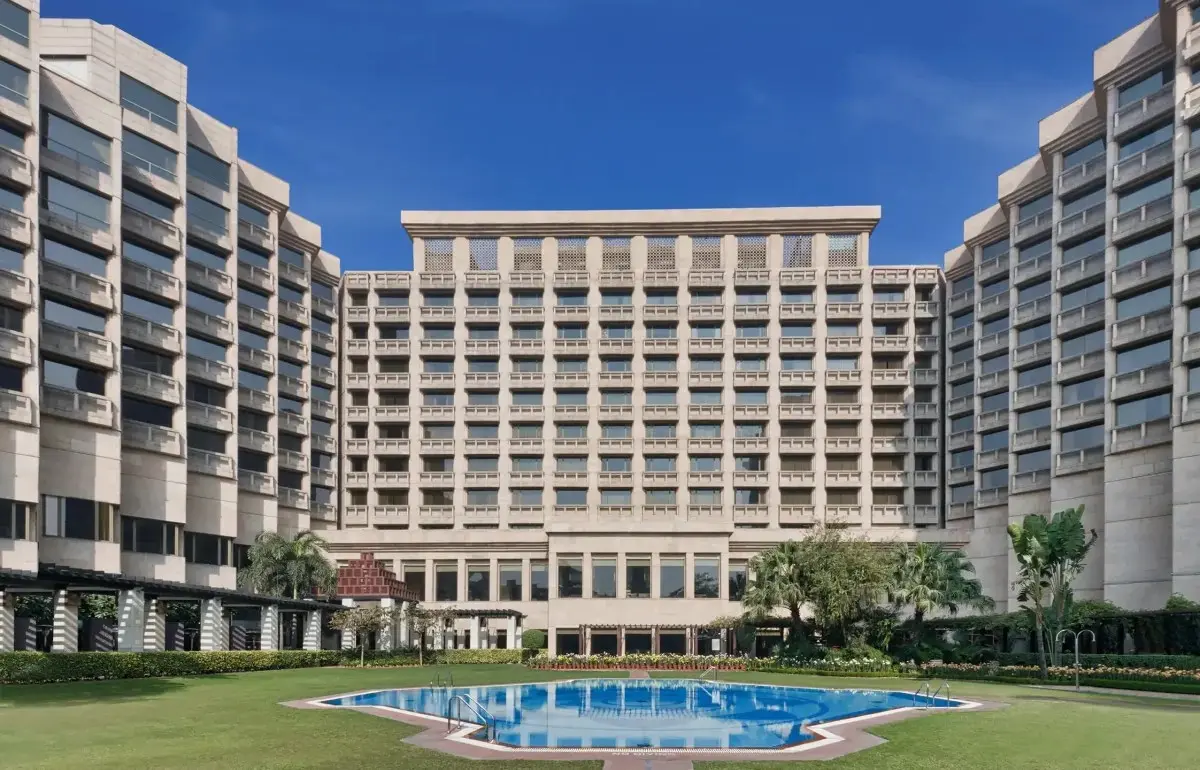
- The Hyatt Regency New Delhi Benchmark: A standard room listed at approximately INR 19,500 ($206) per night excluding taxes for the weekend of September 18–20 soared to roughly INR 83,500 ($884) per night for the summit dates of September 11–13. This represents a raw price increase of approximately 325%. When factoring in applicable luxury taxes and government levies, the effective nightly rate for the same room breaches the $1,080 mark during the summit.
Phase 3: Total Inventory Lockout and Spillover Effects (Present Day)
By early September, open-market availability for true luxury accommodations within the city center had effectively vanished. Gaurav Sharma, Managing Director of Hotels for India and Senior Director at JLL, noted that several flagship properties have reached 100% committed occupancy.
"Several leading luxury hotels, including Taj Palace, ITC Maurya, The Oberoi, The Imperial, and The Leela Palace, have effectively sold out for the summit dates," Sharma confirmed.
This total sell-out phenomenon has created a ripple effect, forcing mid-tier business hotels, boutique properties, and serviced apartments in adjacent commercial districts—such as Aerocity near Indira Gandhi International Airport, Noida, and Gurugram—to revise their pricing structures upward as displaced travelers look further afield for lodging.
Supporting Context & Metrics: Analyzing the Capital’s Hospitality Economics
To fully understand the current pricing anomaly, it is essential to examine the structural dynamics of New Delhi’s hotel market, the profile of the summit venue, and historical precedents set by previous international gatherings hosted in the city.
The Bharat Mandapam Factor
The choice of the newly redeveloped Bharat Mandapam (Pragati Maidan) as the epicenter for the BRICS Summit plays a pivotal role in dictating hotel demand. Located in central Delhi, the convention center is surrounded by the city’s most prestigious diplomatic and historical quarters, including Chanakyapuri, Connaught Place, and the diplomatic enclaves along Sardar Patel Marg.
Because official delegations, security personnel, and international press require minimal transit times to and from high-security zones, demand is hyper-localized. Hotels situated within a 5-to-10-kilometer radius of Bharat Mandapam possess immense pricing power, a dynamic clearly reflected in the 124% to 323% surges recorded across central listings.
Comparative Yield Analysis
| Hotel Property | Baseline Rate (Sep 18–20) | Summit Rate (Sep 11–13) | Percentage Increase | Status |
|---|---|---|---|---|
| Hyatt Regency New Delhi | ~INR 19,500 ($206) | ~INR 83,500 ($884) | +325% | Limited / High Tariff |
| Taj Palace | Standard Luxury Tier | Surge Pricing Applied | 150%–300%+ | Effectively Sold Out |
| ITC Maurya | Standard Luxury Tier | Surge Pricing Applied | 150%–300%+ | Effectively Sold Out |
| The Oberoi, New Delhi | Standard Luxury Tier | Surge Pricing Applied | 150%–300%+ | Effectively Sold Out |
| The Imperial | Standard Luxury Tier | Surge Pricing Applied | 150%–300%+ | Effectively Sold Out |
| The Leela Palace | Standard Luxury Tier | Surge Pricing Applied | 150%–300%+ | Effectively Sold Out |
Historical Precedents
This is not the first time New Delhi has experienced dramatic hospitality inflation driven by major geopolitical events. During previous high-profile international summits and multilateral ministerial conferences hosted in the capital, luxury room rates routinely doubled or tripled. However, the post-pandemic recovery of the Indian travel sector, combined with enhanced security protocols and a broader inventory crunch in central Delhi, has amplified the magnitude of the current price spikes. Industry analysts point out that average daily rates (ADR) across India’s top urban markets have been on an upward trajectory over the past twenty-four months, but the BRICS Summit has compressed months of organic growth into a single, high-intensity 48-hour window.
Official Statements and Industry Insights
The severe supply contraction and resultant pricing behavior have drawn commentary from real estate experts, hospitality leaders, and tourism advocates.
Gaurav Sharma of JLL underscored the unprecedented nature of the demand consolidation:
"The spike is most stark in central Delhi, which is close to Bharat Mandapam, the summit venue, and there is limited premium inventory. Several leading luxury hotels… have effectively sold out for the summit dates. When you combine high-level government delegations, corporate auxiliary teams, and international media representatives competing for a finite number of five-star rooms within the core diplomatic zone, dynamic pricing models will inevitably push tariffs to record highs."
Conversely, consumer advocacy groups and independent travel associations have expressed concern over the potential long-term reputational impact of such aggressive pricing on India’s broader tourism ambitions. While hoteliers defend the surges as a standard function of supply and demand during peak-load events, corporate travel managers are increasingly calling for greater transparency and pre-negotiated rate caps during state-backed international gatherings.
Furthermore, domestic leisure travelers and non-delegate business tourists attempting to visit New Delhi during the September 11–13 window have found themselves effectively priced out of the market. Many have been forced to either postpone their trips or seek alternative accommodations far outside the city center, adding hours of daily commute time amidst expected traffic restrictions and security cordons.
Future Outlook: Navigating the Post-Summit Landscape
As New Delhi prepares to lower the curtain on the BRICS Summit, hospitality analysts and industry stakeholders are already looking ahead to assess the longer-term ramifications of this pricing event.
1. Short-Term Market Normalization
Industry consensus indicates that the acute rate inflation will be short-lived. Immediately following the conclusion of the summit on September 13, occupancy rates in central Delhi are expected to drop sharply as delegations depart. By the following weekend (September 18–20), room tariffs are projected to return to baseline seasonal averages, mirroring the INR 19,500 benchmarks observed at properties like the Hyatt Regency.
2. Strategic Implications for Future Mega-Events
The intense pressure placed on Delhi’s luxury inventory highlights an urgent need for infrastructure expansion and better coordination between event organizers and the hospitality sector. As India continues to position itself as a global hub for international diplomacy, trade expositions, and cultural summits, the limited availability of premier hotel rooms poses a distinct bottleneck. Future municipal planning will likely need to address:
- Inventory Diversification: Encouraging the development of upper-midscale and business-class hotels in emerging commercial corridors connected to major transit hubs.
- Coordinated Room-Block Management: Establishing structured protocols between government tourism boards and hotel associations to reserve baseline accommodations for non-delegate business travelers at controlled rates.
- Transportation Infrastructure: Enhancing rapid transit links from satellite cities like Noida and Gurugram to central convention venues, thereby diffusing accommodation demand across a wider geographic radius.
3. Investor Confidence and Real Estate Valuation
For real estate investors and hotel owners, the dramatic revenue yields generated during the BRICS Summit reinforce the underlying strength and resilience of New Delhi’s luxury hospitality asset class. Despite short-term consumer friction, high Average Daily Rates (ADR) and robust RevPAR (Revenue Per Available Room) metrics during major international events validate ongoing capital expenditure in hotel renovations, technological upgrades, and service enhancements across the capital region.
Conclusion
The staggering hotel rate hikes witnessed across New Delhi ahead of the BRICS Summit serve as a vivid illustration of the economic forces unleashed when global diplomacy intersects with localized supply constraints. While properties such as the Taj Palace, ITC Maurya, and Hyatt Regency reap the financial rewards of record-breaking yields and 100% occupancy, the market dynamics underscore broader challenges regarding accommodation accessibility in India’s primary political hub. As the city successfully navigates the logistical demands of hosting the world’s leading emerging economies, the experience will undoubtedly inform future strategies for balancing commercial yield maximization with sustainable tourism and destination management.