







Executive Overview
The motorcoach and group transportation industry—long characterized by fragmented regional operators, manual booking processes, and opaque pricing structures—is undergoing a profound digital transformation. At the vanguard of this shift is CharterUP, a technology-driven mobility platform that has expanded from an online charter bus marketplace into an essential infrastructure layer supporting both public- and private-sector transit networks.
In a recent appearance on the METROspectives podcast, CharterUP Founder and CEO Armir Harris sat down with METRO Executive Editor Alex Roman to discuss the company’s evolution, the shifting expectations of modern corporate and public transit, and the integration of emerging technologies such as artificial intelligence (AI), electric vehicles (EVs), and autonomous mobility.
Today, CharterUP commands a sprawling network encompassing more than 10,000 buses and over 700 operators across the United States. By bridging the gap between fragmented supply and rising modern demand, the company is not merely disrupting traditional charter operations—it is actively redesigning the operational backbone of group and mass transportation. This comprehensive report examines CharterUP’s historical evolution, its technological interventions, its strategic bridge between public and private sectors, and its forward-looking roadmap for autonomous and electric transit systems.
Detailed Chronology: From Offline Fragmented Markets to a Unified Mobility Platform
The Analog Roots of an Outdated Industry
When Armir Harris first entered the motorcoach and group transportation industry more than two decades ago, the sector operated almost entirely offline. Booking a charter bus required navigating a labyrinth of phone calls, paper manifests, and faxed quotes. Operators worked in localized silos with little insight into broader regional demand, while corporate and private consumers faced an opaque, unpredictable marketplace plagued by inconsistent pricing and variable reliability.
For decades, while other sectors of the global supply chain, logistics, and passenger transit industries rapidly digitized, the charter bus sector remained stubbornly traditional. Operators focused heavily on fleet maintenance and physical logistics, leaving little capital or bandwidth to invest in proprietary software development.
Building the Marketplace: Speed, Transparency, and Reliability
Recognizing this systemic inefficiency, Harris founded CharterUP with a clear mission: to bring Silicon Valley-grade software speed, radical pricing transparency, and institutional reliability to an antiquated market.
Initially, the company launched as an online marketplace designed to match consumer and corporate demand with available charter bus capacity. By introducing digital quoting systems, verified reviews, and upfront pricing, CharterUP successfully reduced friction for consumers while helping independent operators maximize vehicle utilization during shoulder periods.
Scaling into an Infrastructure Provider
As the platform scaled, Harris and his executive team recognized that a purely transactional marketplace—while lucrative—only scratched the surface of the industry’s needs. The true bottleneck in group transportation was not simply connecting a rider to a bus; it was the underlying operational infrastructure that powered fleet management, dispatching, routing, and compliance.
This realization catalyzed CharterUP’s strategic pivot. The company evolved from a transactional intermediary into a comprehensive software-as-a-service (SaaS) and platform provider. By deploying proprietary software directly to bus operators, CharterUP began modernizing the foundational infrastructure of the entire motorcoach ecosystem. Today, the platform handles complex, recurring mobility programs at scale, serving corporate campuses, universities, government agencies, and emergency evacuation networks.
Supporting Context & Metrics: The Modern Mobility Landscape
To understand CharterUP’s trajectory, one must examine the metrics defining its current operational footprint and the broader macroeconomic shifts driving demand for tech-enabled group transit.
Scale and Network Statistics
- Active Network Size: Over 10,000 commercial buses and motorcoaches integrated into the platform.
- Operator Partnerships: More than 700 certified third-party motorcoach and bus operators spanning the United States.
- Service Verticals: Spans private corporate shuttles, university transit loops, emergency disaster response, municipal first- and last-mile connections, and regional charter services.
The Consumer Paradigm Shift in Fleet Management
Historically, enterprise and consumer expectations for transit tracking began and ended with basic GPS positioning and estimated times of arrival (ETAs). According to Harris, those features are now mere "table stakes."
Today’s enterprise clients, municipal transit agencies, and logistics coordinators demand high-resolution visibility. They require real-time telemetry dashboards, granular fleet utilization analytics, predictive maintenance insights, and proactive risk-mitigation tools. Modern fleet management is no longer reactive; it requires predictive data models that anticipate bottlenecks before they disrupt commuter flows.
To address these complex workflows—many of which have historically required heavy manual intervention from dispatchers—CharterUP developed Transit Intelligence. This proprietary AI-driven product suite automates routine back-office operations, streamlines route optimization, and provides operators with actionable insights to maximize fleet efficiency. While enterprise users initially displayed typical skepticism toward adopting machine-learning tools in a blue-collar industry, tangible productivity gains quickly converted skeptics into advocates.
Official Statements and Industry Insights
During his discussion on METROspectives, Armir Harris offered deep insights into the philosophy guiding CharterUP’s growth, emphasizing collaboration over disruption.
On the core motivation behind founding the platform, Harris noted:
"We initially won by bringing the speed, the transparency, and reliability to… a very fragmented and outdated market."
Explaining the company’s evolution beyond simple booking transactions, Harris emphasized infrastructure modernization:
"As we scale over time, it became clear to us that the larger opportunity was not just in being a transactional marketplace, but in really modernizing the underlying infrastructure for the entire mobility space."
Addressing the inevitability of artificial intelligence in reshaping labor and logistics workflows, Harris stated:
"AI is going to fundamentally change the way that… workforce and public and private mobility functions."
Detailing CharterUP’s positioning as a collaborative operational partner rather than a competitor to traditional operators, Harris remarked:
"We sit at a very unique position as the operational technology layer between the operators and the supply side… Our goal here is to expand market share and expand TAM [Total Addressable Market] as we provide better tools across the demand and supply side."
Finally, highlighting the current market dynamics on the platform, Harris shared an encouraging operational reality:
"We’ve got some great announcements just around the corner. We’ve got significantly more demand on our platform than supply."
Bridging Public and Private Mobility
One of CharterUP’s most significant strategic advantages lies in its ability to straddle two traditionally distinct worlds: the private group transportation sector and public-sector mass transit.
Contrasting Demographics and Requirements
While both public and private clients share a fundamental desire for reliable, safe, and comfortable rider experiences, their operational priorities differ significantly:
- Public-Sector Clients: Municipalities and transit agencies prioritize regulatory compliance, strict cost efficiency, structured accountability, and long-term contractual stability. However, traditional municipal procurement cycles are notoriously sluggish, often involving lengthy lead times that make rapid scaling difficult.
- Private-Sector Clients: Corporate enterprises, universities, and event organizers demand dynamic flexibility. Their transportation needs fluctuate rapidly based on hybrid work schedules, campus semesters, and seasonal events.
The Transit Agency Silver Bullet
By plugging into CharterUP’s network of over 10,000 pre-vetted vehicles, public transit agencies gain an agile operational layer. When municipal agencies face sudden demand spikes, operator shortages, first- and last-mile service gaps, or emergency route disruptions, CharterUP allows them to deploy capacity almost instantly—bypassing the months-long procurement delays typical of government contracting.
For independent bus operators, participating in these public-sector programs via the CharterUP platform unlocks high-value, recurring revenue streams that they might not otherwise have the administrative capacity or market visibility to secure independently.
Future Outlook: Autonomy, Electric Vehicles, and Next-Gen Growth
Looking ahead, CharterUP’s roadmap is defined by two major technological revolutions: autonomous transportation and vehicle electrification.
The Autonomous Horizon and the Holon Partnership
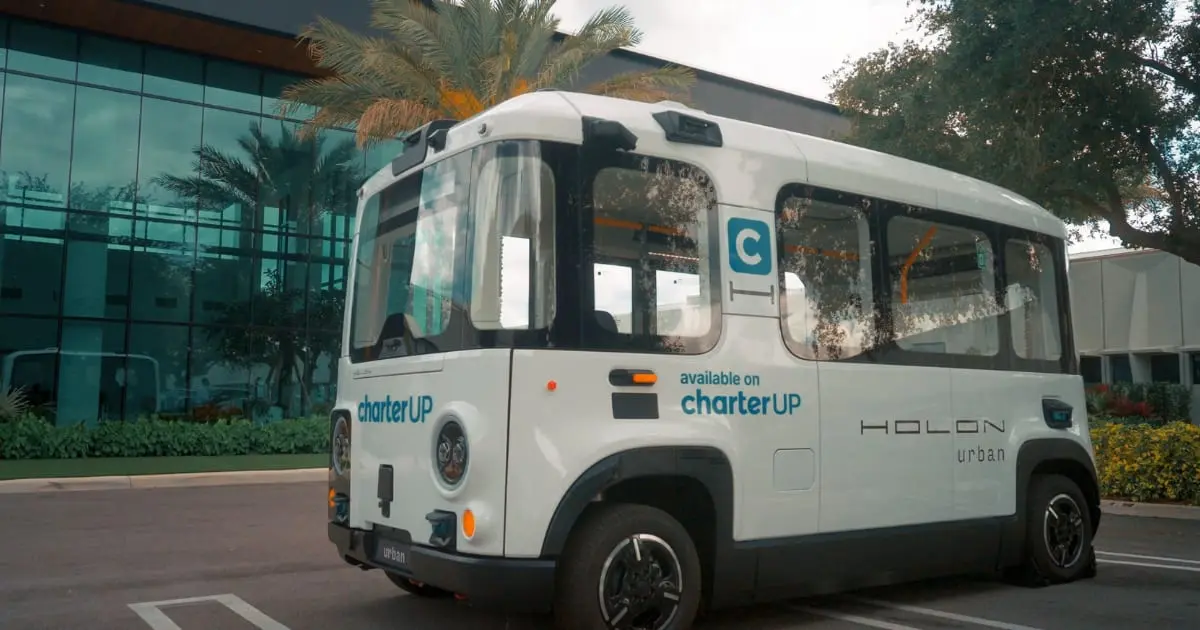
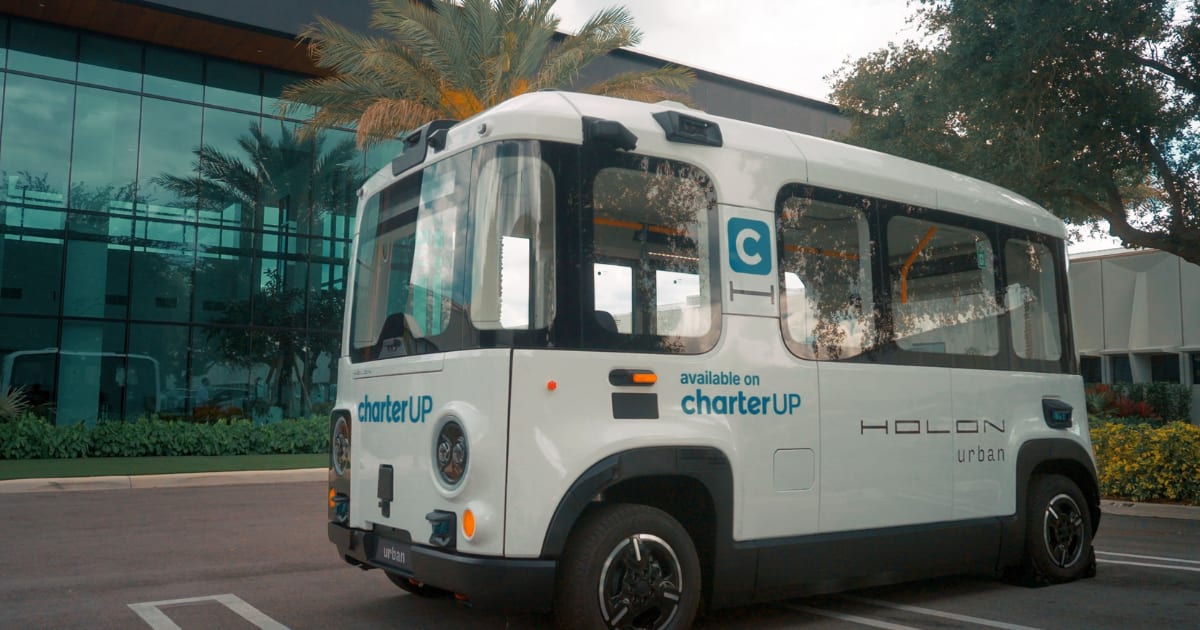
CharterUP is aggressively positioning itself at the frontier of autonomous group transit through a strategic partnership with autonomous vehicle (AV) manufacturer HOLON. As higher-capacity autonomous shuttles move closer to commercial deployment, this collaboration leverages the core competencies of both organizations: CharterUP supplies the robust demand-aggregation engine and customer-facing software platform, while HOLON provides cutting-edge autonomous hardware.
Rather than predicting a wholesale, overnight replacement of human-driven motorcoaches by autonomous pods, Harris envisions a pragmatic hybrid operational model.
- Segregated Environments: Fully autonomous shuttles are expected to dominate controlled, predictable environments first, such as corporate campuses, university grounds, and airport complexes.
- Unified Operating Systems: In the long term, Harris anticipates hybrid networks where autonomous shuttles and manually operated motorcoaches run in parallel, managed seamlessly under a single, unified operating system provided by platforms like CharterUP.
Driving Fleet Electrification
Autonomy is complemented by CharterUP’s active push toward fleet decarbonization. The company has already integrated numerous electric vehicles (EVs) into its network and is actively incentivizing adoption by routing a higher volume of corporate and municipal contracts toward operators that invest in sustainable, zero-emission fleets.
Market Outlook and Upcoming Milestones
With demand on the CharterUP platform currently outpacing available supply, the company is poised for accelerated expansion. By positioning itself as the indispensable technological nervous system connecting modern transit demand with an increasingly diverse array of vehicle types—manual coaches, AI-optimized shuttles, electric fleets, and autonomous pods—CharterUP is redefining what is possible in group and mass transportation.
As the lines between public transit, private enterprise logistics, and next-generation autonomy continue to blur, CharterUP’s software-first approach ensures it will remain in the driver’s seat of the mobility revolution for decades to come.