



On June 6, Pleasure Cove Marina at Lake Berryessa, near Napa, California, will play host to a landmark event in the evolution of sustainable maritime transportation: the inaugural Lake Berryessa Electric Boat Festival. Preceded on June 5 by an exclusive Electric Marine Leadership Summit, the double-header event aims to tackle the logistical, regulatory, and technological hurdles facing the North American electric boating sector.

While the Leadership Summit convenes elite manufacturers, propulsion innovators, commercial fleet managers, marina operators, and state policymakers behind closed doors to shape the future of zero-emission waterways, the Festival swings open to the public. Attendees will be treated to live on-water demonstrations, interactive shore-side exhibits, and hands-on "ride and drive" experiences featuring the latest electric vessels, personal watercraft (PWCs), and advanced e-foils.

The backdrop for this historic convergence could not be more fitting. California has aggressively positioned itself at the vanguard of the zero-emission equipment movement, spearheaded by regulatory bodies such as the California Air Resources Board (CARB) and regional air districts like the Sacramento Metro Air District. Initiatives like the California Clean Off Road Equipment (CORE) Project and the Carl Moyer Memorial Air Quality Standards Attainment Program have injected vital funding into the adoption of electric commercial workboats, paving the way for broader consumer adoption. As traditional combustion engines face tightening emissions regulations and consumer sentiments shift toward sustainable recreation, the Napa festival arrives as a crucial marketplace and thought-leadership forum for the industry’s heavy hitters.

Detailed Chronology: Setting the Stage for the Napa Convergence
The two-day event is meticulously structured to bridge high-level policy dialogue with grassroots consumer exposure.

Day 1: The Electric Marine Leadership Summit (June 5)
Kicking off the proceedings, the Leadership Summit serves as a high-stakes collaborative engine. Invited delegates—ranging from prominent electric boat designers and propulsion engineers to port authorities and regional policymakers—will dissect the systemic challenges currently bottlenecking mass marine electrification. Key agenda items include the expansion of dockside fast-charging infrastructure, standardization of grid connections, grid load management for marinas, and navigating evolving state and federal incentive programs.

Particular focus will be directed toward programs like the California CORE Project, which has already successfully catalyzed the deployment of commercial electric workboats across the state’s key waterways, including San Diego, San Francisco, and Newport Beach.

Day 2: The Electric Boat Festival & Consumer Showcase (June 6)
Transitioning from boardroom strategy to open water, the Festival opens its gates at Pleasure Cove Marina to the general public. Shore-side exhibitions will spotlight the rapidly maturing ecosystem supporting electric boating. Visitors can explore breakthroughs in:

- Marine charging infrastructure (AC and DC fast-charging networks)
- Energy storage systems (advanced lithium-ion architectures and thermal management)
- Marina electrification technologies (grid integration and revenue-generating dockside power solutions)
- Commercial rental and charter fleets
Throughout the day, the marina waters will come alive with live demonstrations. Consumers will have rare opportunities to pilot cutting-edge electric boats, high-performance wake-sports boats, and nimble personal watercraft, dispelling persistent myths surrounding the speed, range, and capability of electric propulsion.

Supporting Context & Metrics: The Ecosystem and Exhibitor Directory
The commercial appetite for sustainable marine technology is vividly reflected in the roster of global and domestic innovators descending upon Lake Berryessa. The festival’s directory reads like a "who’s who" of the electric marine revolution, highlighting companies that are redefining propulsion, energy storage, and infrastructure.

Infrastructure & Charging Pioneers
- AQUA superPower: Operating the first fully marinised global dockside network of fast-charging stations, AQUA uses its cloud-based Neptune platform to deliver reliable hardware, intelligent network management, and 24/7 customer support. Having established over 60 dockside installations across Europe and North America, Aqua continues to help marinas transform the challenge of grid integration into a reliable, future-proof revenue stream.
Advanced Propulsion & Outboard Innovators
- Flux Marine: Known for its clean-sheet approach, Flux Marine has designed an indigenous 115-HP electric outboard featuring a closed-loop cooling system and a belt-drive mechanism that eliminates traditional cogs and gears in favor of instant, quiet torque. Their modular battery architecture has found eager partners in premium RIB and sport-fishing builders like Highfield and Scout.
- ePropulsion: A global powerhouse ranging from 1 kW to 100 kW motors, ePropulsion is showcasing its innovative eLite (a 500-watt portable outboard) alongside its heavy-duty X-Series (12 kW to 40 kW) outboards. Utilizing proprietary eSSA (ePropulsion Smart System Architecture), their systems seamlessly integrate motors, batteries, and smart steering.
- RAD Propulsion: Hailing from the UK, RAD Propulsion is famous for its revolutionary RAD 40 and newly launched RAD 120 (120 kW / ~170 hp) outboards. Featuring a stationary upper head and a lower leg that rotates a full 180 degrees, RAD systems free up deck space, optimize maneuverability, and simplify refits via its containerized "RAD Console" battery system.
- Torqeedo: Acquired by Yamaha two years ago, Torqeedo remains a foundational pillar of the industry. From their lightweight Travel series outboards to the industrial-grade Deep Blue inboards and saildrives (up to 100 kW), Torqeedo offers a comprehensive suite of clean power for everything from kayaks to commercial ferries.
Revolutionary Watercraft & Boatbuilders
- Arc Boats: Founded in Los Angeles by a team of former rocket engineers, Arc brings aerospace-grade manufacturing, custom battery packs, and advanced software to the recreational and commercial sectors. From the pioneering Arc One to the Arc Sport and Arc Coast center console, the company builds high-performance hulls from scratch.
- Vision Marine Technologies: Offering everything from classic cruising launches to high-powered pontoon and speedboat powertrains, Vision Marine’s flagship E-Motion 180e outboard delivers 180 horsepower of purpose-built marine propulsion, cementing its status at the cutting edge of high-speed electric boating.
- ZIN Boats: Specializing in luxury electric runabouts and custom yacht tenders like the Z2R and Z7, ZIN combines high-performance hulls with their proprietary "Magic Box" core distribution unit, allowing full system integration and 0–100% charging in a matter of hours.
- Volare Boats: Founded by industry veterans Matt Moore and Dustin Tupper, Volare introduces the Artemis23—a day boat featuring a passive hydrofoil system and the Volcan Propulsion System, maximizing efficiency, range, and 360-degree joystick maneuverability.
- Taiga: Adapting snowmobile thermal management to personal watercraft, Taiga’s Orca electric jetski features optimized fluid cooling that increases continuous battery power by up to 65% in warm marine environments, backed by advanced over-the-air software diagnostics.
Official Statements & Policy Impacts
The involvement of heavy-hitting regulatory agencies underscores the policy-driven momentum behind the event. Representatives from the California CORE Project and the Carl Moyer Memorial Air Quality Standards Attainment Program will be on hand to discuss how public funding is accelerating the greening of commercial fleets.

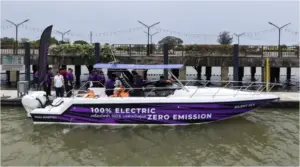
The California CORE Project has been particularly instrumental in bridging the financial gap for commercial operators. By subsidizing zero-emission commercial workboats—such as the Vita RIBs currently operating successfully in San Diego, San Francisco, and Newport Beach—the state is proving that electric propulsion is not merely a luxury recreational pursuit, but an economically viable, heavy-duty operational necessity.

Furthermore, regional bodies like the Sacramento Metro Air District are actively working to curb localized emissions on inland waterways, offering grants and infrastructure incentives that make marina electrification a seamless transition rather than an uphill administrative battle.

Future Outlook: The Horizon of Zero-Emission Waterways
As the inaugural Lake Berryessa Electric Boat Festival opens its doors, it marks a critical inflection point for the North American marine market. The convergence of aerospace engineers turned boatbuilders, legacy marine manufacturers embracing electrification, and forward-thinking policymakers signals that the transition away from fossil-fueled combustion engines is no longer a distant vision—it is an accelerating commercial reality.

Events like the Napa festival do more than simply showcase shiny new toys; they build consumer confidence, normalize silent and emission-free cruising, and provide the B2B networking ground necessary to scale dockside charging infrastructure nationwide. As battery energy densities improve, fast-charging networks expand, and regulatory frameworks harmonize, the lakes, rivers, and coastal waters of the United States are well on their way to a cleaner, quieter, and more sustainable future.

Tickets for the Festival are priced at $25 (children enter free), with optional upgrades for the Leadership Summit and VIP on-water demonstration experiences. Attendees and Plugboats readers can utilize the promotional code BOAT10 at checkout for a $10 discount.