



Executive Overview
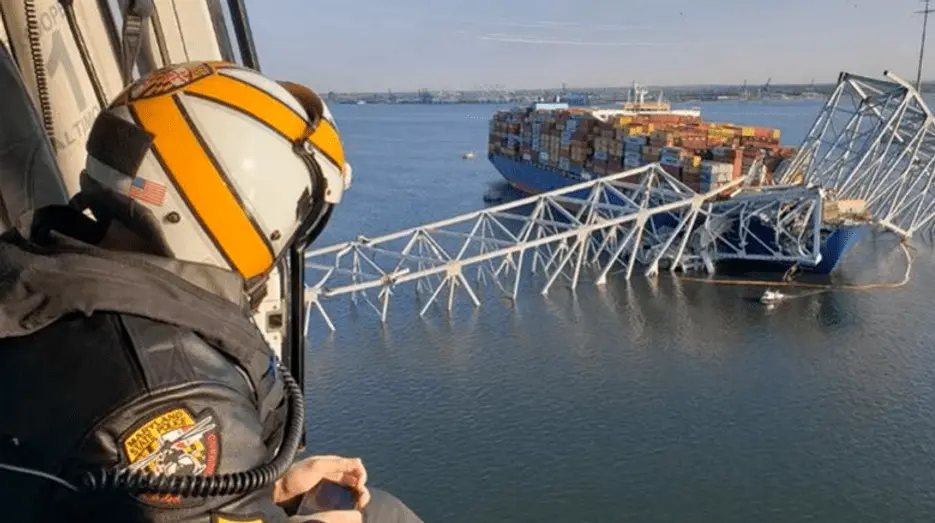
The catastrophic collapse of Baltimore’s Francis Scott Key Bridge on March 26, 2024, served as a grim warning for the global maritime industry. When the 974-foot containership Dali lost propulsion and struck a critical support pier, it did more than destroy a vital highway link and claim six lives; it exposed a profound, systemic mismatch between the colossal scale of modern commercial shipping and the aging, mid-century infrastructure of the United States’ most critical ports.
In response to this disaster, the U.S. Coast Guard convened a high-level Ports and Waterways Safety Act Board of Inquiry. Tasked not with reinvestigating the specific mechanics of the Dali casualty, but rather with evaluating the wider implications for the nation’s Marine Transportation System (MTS), the Board has released a sweeping, highly critical review. The report’s findings are stark: existing risk-assessment tools are severely underutilized, the federal maritime workforce is operating under critical staffing deficits, and U.S. port infrastructure is increasingly vulnerable to catastrophic "allisions"—accidents where a moving vessel strikes a stationary object.
The inquiry paints a picture of a maritime regulatory and operational framework struggling to keep pace with rapid industrial evolution. Over the past two decades, container ship capacities have expanded exponentially, driven by global alliances and the economic efficiencies of mega-vessels. Yet, the deepwater channels, turning basins, and protective bridge fenders of U.S. ports remain largely unchanged from the eras in which they were constructed. This investigative report dissects the Coast Guard’s findings, detailing the structural, bureaucratic, and operational deficits that threaten the economic security and safety of the nation’s waterways.
Detailed Chronology
The Catalyst: The Dali Disaster and Its Immediate Aftermath
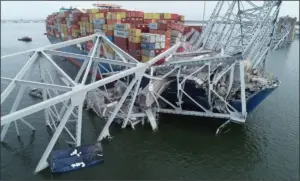
On the cold morning of March 26, 2024, the Singapore-flagged containership Dali departed the Port of Baltimore bound for Colombo, Sri Lanka. As the vessel neared the Francis Scott Key Bridge, it suffered a catastrophic, total loss of electrical power. Drifting out of the navigation channel without steering control or propulsion, the 95,000-gross-ton ship struck Pier 17 of the bridge.
Within seconds, the continuous truss bridge collapsed into the Patapsco River, blocking the shipping channel, halting all vessel traffic to the Port of Baltimore, and killing six construction workers who were on the span. The economic fallout was immediate, disrupting supply chains across the U.S. East Coast and forcing a massive, multi-agency salvage operation to clear millions of tons of steel and concrete from the federal channel.
[March 26, 2024: Dali Allision]
       │
       ▼
[Spring 2024: Board of Inquiry Convened]
       │
       ▼
[Summer–Fall 2024: 11 Port Assessments & Stakeholder Interviews]
       │
       ▼
[Late 2024: Analysis of WAMS & Staffing Deficits]
       │
       ▼
[Early 2025: Public Release of Inquiry Findings]
       │
       ▼
[February 28, 2027: Deadline for Public/Stakeholder Comments]
       │
       ▼
[August 2027: Anticipated Release of Commandant’s Final Action Memo]
Convening the Board of Inquiry
In the weeks following the disaster, the Coast Guard established the Ports and Waterways Safety Act Board of Inquiry. Recognizing that the Baltimore incident was not an isolated anomaly but a symptom of systemic vulnerability, the Board was directed to conduct a comprehensive nationwide diagnostic of maritime infrastructure.
Throughout the remainder of 2024, the Board executed an intensive, data-driven investigative campaign. Rather than relying solely on historical casualty logs, the Board conducted field visits and structured interviews with pilots, port authorities, terminal operators, and Coast Guard personnel across 11 key port regions. These areas included:
- Los Angeles and Long Beach, California
- New York and New Jersey
- Houston and Galveston, Texas
- New Orleans, Louisiana
- The Port of Virginia (Hampton Roads)
- Puget Sound, Washington
- Corpus Christi, Texas
By synthesizing these localized assessments with historical vessel movement data and modern maritime traffic patterns, the Board finalized its comprehensive review, laying bare the gap between modern shipping realities and regulatory oversight.
Supporting Context & Metrics
The Mismatch of Scale: Legacy Infrastructure vs. Modern Megaships
The primary physical hazard identified by the Board is the divergence between the design parameters of historic infrastructure and the physical realities of modern merchant vessels. When bridges like the Francis Scott Key Bridge (completed in 1977) were designed, the average container ship carried fewer than 3,000 Twenty-Foot Equivalent Units (TEUs). Today’s ultra-large container vessels (ULCVs) can carry upwards of 20,000 to 24,000 TEUs, with lengths exceeding 1,300 feet and displacements that dwarf their 20th-century predecessors.
CONTAINERSHIP EVOLUTION VS. INFRASTRUCTURE DESIGN ERA

[1970s Era (Key Bridge Design)]
   Length: ~700–800 ft
   Capacity: 2,500–3,000 TEUs
   Displacement: ~40,000 tons
   ======================================== (Infrastructure Baseline)

[Modern Era (The Dali & Beyond)]
   Length: 950–1,300+ ft  [██████████████████████████████ 160% Increase]
   Capacity: 10,000–24,000 TEUs [██████████████████████████████ 700% Increase]
   Displacement: 100,000–220,000+ tons [████████████████████████ 450% Increase]
This massive increase in tonnage means that the kinetic energy carried by a drifting modern vessel is orders of magnitude greater than what legacy pier protection systems—such as wooden dolphins, small concrete fenders, or basic earthen islands—were built to absorb. The Dali, while large, is far from the largest vessel routinely transiting U.S. harbors.
Systemic Failures in Coast Guard Risk Management
The Board’s report exposes significant internal oversight failures within the Coast Guard’s own risk-management frameworks. Chief among these is the neglect of the Waterways Analysis and Management System (WAMS).
WAMS is a mandatory program requiring the Coast Guard to conduct comprehensive safety and navigation reviews of critical federal waterways at least once every five years. These reviews are designed to identify changing traffic patterns, evaluate the placement and adequacy of aids to navigation, and assess structural risks within the channel.
The Board’s investigation revealed a systemic failure to execute these mandated reviews:
- 41 Captain of the Port (COTP) zones were surveyed across the United States.
- 18 of those 41 zones (44%) had no record of completing a WAMS review for their critical waterways since at least 2015.
- This lapse means that nearly half of the nation’s key maritime channels have been operating for a decade without updated, federally mandated risk assessments, even as vessel sizes and traffic densities increased.
The Staffing Crisis
The failure to perform critical safety reviews is directly linked to a severe personnel shortage within the Coast Guard’s Waterways Management program.
WATERWAYS MANAGEMENT PROGRAM STAFFING CAPACITY

Target Staffing Level:  [████████████████████████████████████████] 100% (Estimated Billets)
Current Active Staff:   [██████████████████████████] 69% (57-Billet Deficit)
Operating with an estimated 31% staffing deficit (equivalent to 57 critical unfilled billets), local sectors lack the personnel, technical expertise, and administrative support required to complete labor-intensive WAMS reports while simultaneously managing day-to-day port operations, marine event permits, and emergency responses. The Board warned that this persistent vacancy rate presents a direct threat to both navigational safety and national security.
Port Stakeholder Risk Perceptions
During the port-by-port reviews, the Board asked local maritime stakeholders to identify their primary "worst-case scenario" hazards. The results highlight a widespread anxiety regarding physical infrastructure:
| Identified Worst-Case Hazard | Number of Port Areas Citing Hazard (Out of 11) | Percentage |
|---|---|---|
| Bridge Allisions | 8 | 72.7% |
| Vessel-to-Vessel Collisions | 7 | 63.6% |
| Major Weather / Natural Disasters | 7 | 63.6% |
| Deepwater Channel Blockages | 5 | 45.4% |
The high ranking of bridge allisions across diverse geographies—from the narrow channels of New York/New Jersey to the sprawling waters of Puget Sound—proves that maritime professionals recognize that the structural vulnerabilities exposed in Baltimore exist nationwide.
Official Statements
The release of the Board of Inquiry’s report has sparked intense discussion among federal regulators, maritime safety advocates, and port operators.
Rear Admiral Wayne Arguin, Assistant Commandant for Prevention Policy and the Chair of the Board of Inquiry, emphasized that the Baltimore tragedy must serve as a catalyst for systemic reform:
"The tragic Key Bridge incident underscores the urgent need to strengthen our approach to port safety and risk management. The Board’s findings and recommendations provide a roadmap to enhance the resilience of our ports and ensure the continued security of the Marine Transportation System."
Independent maritime safety experts have echoed these concerns, pointing out that the Coast Guard’s internal policy fragmentation has long hindered effective safety enforcement. By operating in bureaucratic silos, where vessel inspection, waterway management, and physical infrastructure oversight are handled by disconnected divisions, the agency has struggled to develop a cohesive national risk strategy.
Future Outlook
Implementing the 20 Recommendations
To address these vulnerabilities, the Board of Inquiry issued 20 formal recommendations aimed at modernizing the U.S. approach to waterway safety. The recommendations focus on three core areas:
┌─────────────────────────────────────────────────────────────────────────┐
│                    BOARD OF INQUIRY RECOMMENDATIONS                     │
├──────────────────────────────┬──────────────────────────────────────────┤
│                              │ • Establish a unified USCG risk policy   │
│ 1. Bureaucratic Integration  │ • Build a centralized assessment database│
│                              │ • Break down operational silos           │
├──────────────────────────────┼──────────────────────────────────────────┤
│                              │ • Move to dynamic, risk-based WAMS       │
│ 2. Tool Modernization        │ • Integrate real-time AIS & transit data │
│                              │ • Focus resources on high-consequence zones│
├──────────────────────────────┼──────────────────────────────────────────┤
│                              │ • Fund & fill the 31% staffing deficit   │
│ 3. Workforce Development     │ • Develop specialized training paths     │
│                              │ • Improve retention of technical experts │
└──────────────────────────────┴──────────────────────────────────────────┘
Engineering and Operational Mitigations
Beyond administrative reforms, the report highlights several practical, physical engineering solutions advocated by local harbor pilots and port authorities to mitigate immediate risks:
- Active Tug Escorts: Mandating that ultra-large vessels be accompanied by high-bollard-pull assist tugs not just during docking, but throughout their entire transit of narrow channels and bridge spans.
- Physical Bridge Protection: Constructing robust physical barriers, such as artificial rock islands (sacrificial protective cells) or heavy-duty fendering systems, around vulnerable bridge piers.
- Advanced Telemetry: Installing real-time, high-accuracy sensors to measure currents, tides, wind, and vertical bridge clearances, feeding this data directly to shipboard pilots.
- Targeted Dredging: Expanding turning basins and widening channels to give disabled vessels more room to maneuver or anchor in an emergency.
The Regulatory Road Ahead
The publication of this report is not the final step, but the beginning of a multi-year regulatory process. The Coast Guard has officially opened a public comment period, inviting feedback from maritime stakeholders, port authorities, engineers, and the general public. This comment window will remain open through February 28, 2027.
Following the closure of the comment period, the Coast Guard command will analyze the feedback to draft the Commandant’s Final Action Memorandum. This document will serve as the official policy directive, outlining which of the Board’s 20 recommendations will be formally adopted, funded, and implemented. The public release of this final memorandum is projected for August 2027.
The long timeline reflects the complexity of the task ahead. Retrofitting America’s ports and reforming federal oversight will require billions of dollars in public and private investment, alongside sustained political will. However, as the Board of Inquiry’s report makes clear, the cost of inaction—measured in lost lives, crippled supply chains, and destroyed infrastructure—is far too high to ignore.