





Executive Overview
In a significant escalation of the European Union’s maritime enforcement campaign against Moscow’s economic lifelines, European naval forces have boarded another commercial tanker suspected of operating within Russia’s clandestine "shadow fleet." The operation, carried out in the Mediterranean Sea, marks the sixth such high-seas inspection conducted by EU naval assets in recent months. This surge in physical boarding operations signals a strategic shift by Brussels, moving beyond paper-based financial sanctions toward active, physical interdiction on the high seas to disrupt the flow of illicit Russian oil.
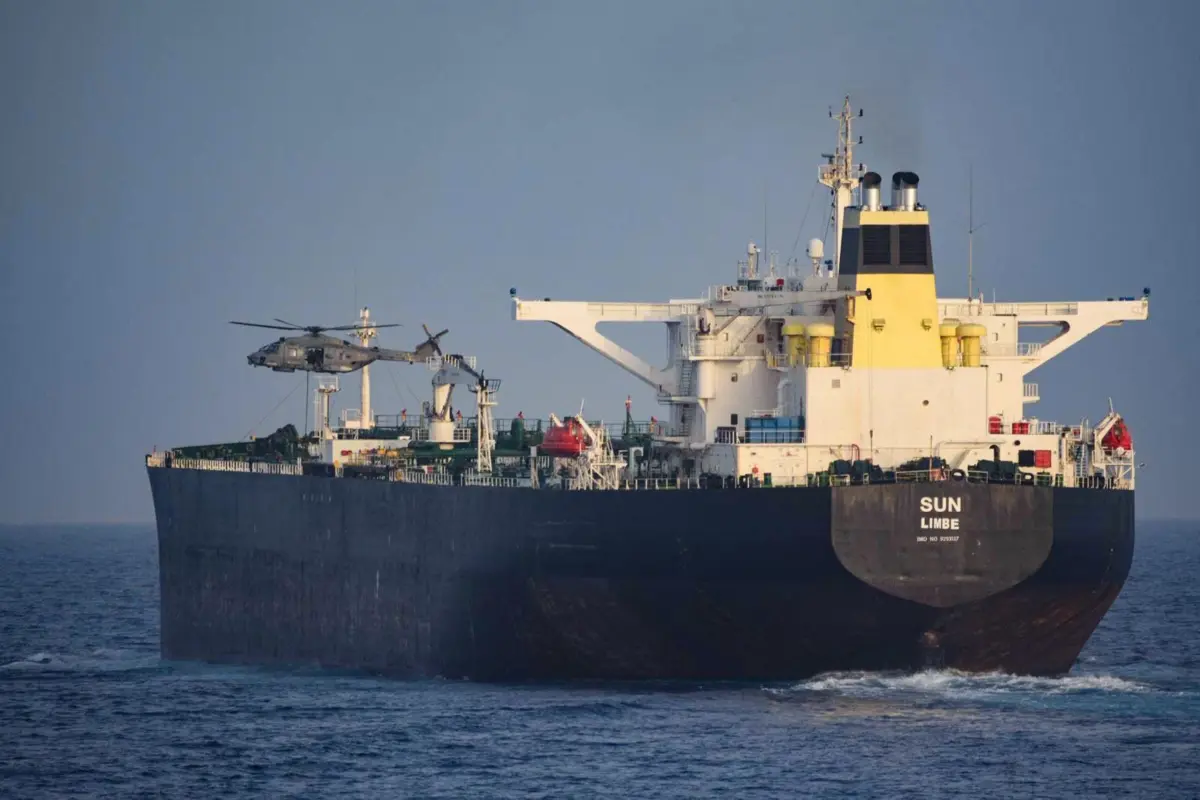
On August 30, the oil tanker Sun was intercepted and boarded by naval personnel operating under the auspices of Operation EUNAVFOR MED IRINI. The boarding was executed under the legal authority of Article 110 of the United Nations Convention on the Law of the Sea (UNCLOS), which governs the "Right of Visit" on the high seas under specific suspicious circumstances—most notably, when a vessel is suspected of flying a false flag or operating without nationality.
The operation underscores a growing determination within the European coalition to choke off the revenues fueling Russia’s ongoing war in Ukraine. According to EU foreign policy chief Kaja Kallas, the Sun was strongly suspected of violating international maritime law by sailing under a fraudulent registration. This latest action highlights a coordinated, legalistic, and increasingly militarized effort by European states to police the global commons and expose the deceptive practices of the shadow fleet.
Detailed Chronology of Recent Naval Interdictions
The boarding of the Sun is not an isolated incident but rather the latest chapter in a structured, intelligence-driven maritime interdiction campaign. Over the past several months, EU naval operations have systematically targeted vessels suspected of hiding behind fraudulent registries or opaque corporate structures.
+---------------------------------------------------------------------------------+
|                    CHRONOLOGY OF RECENT EU NAVAL INTERDICTIONS                  |
+-------------------+------------------+-------------------+----------------------+
| Vessel Name       | Date of Boarding | Naval Operation   | Key Incident Details |
+-------------------+------------------+-------------------+----------------------+
| South Star        | Mid-2024         | Operation IRINI   | Flag-verification    |
|                   |                  |                   | inspection           |
+-------------------+------------------+-------------------+----------------------+
| Toa Payoh         | Early August 2024| Operation IRINI / | Master resisted;     |
|                   |                  | ITS Thaon di Revel| helicopter boarding  |
+-------------------+------------------+-------------------+----------------------+
| Sun               | August 30, 2024  | Operation IRINI   | Flag-verification    |
|                   |                  |                   | in Mediterranean     |
+-------------------+------------------+-------------------+----------------------+
The Interdiction of the Sun (August 30)
While conducting routine maritime surveillance and security operations in the Mediterranean Sea, assets assigned to Operation EUNAVFOR MED IRINI identified the oil tanker Sun. Maritime intelligence databases and real-time tracking anomalies raised immediate red flags regarding the vessel’s claimed registry.
Under the authority of UNCLOS Article 110, an armed boarding team was dispatched to conduct a flag-verification inspection. The boarding was executed without reports of physical resistance, and naval inspectors proceeded to audit the vessel’s registration documents, logbooks, and statutory certificates to determine its true nationality.
The Standoff Over the Toa Payoh (Early August)
The boarding of the Sun followed an even more dramatic encounter earlier in August involving the tanker Toa Payoh. This vessel, which had already been formally sanctioned by the European Union for its role in transporting Russian crude, was intercepted in international waters west of the strategic Italian island of Pantelleria.

The Toa Payoh was sailing under the declared flag of Cameroon—a registry frequently flagged by maritime authorities for its high concentration of non-compliant, high-risk vessels. When Operation IRINI forces approached the tanker to verify its registry, the vessel’s master initially refused to cooperate, defying orders to allow the naval team on board.
In response to this non-compliance, the Italian Navy escalated the tactical response. Military personnel were inserted directly onto the deck of the tanker via helicopter from the Italian Navy’s state-of-the-art Multipurpose Combat Ship, the frigate ITS Thaon di Revel. Faced with a heavily armed helicopter-borne boarding team, the crew relented, and the flag-verification inspection was completed without further incident.
The Case of the South Star
Prior to these events, Operation IRINI successfully executed a similar flag-verification mission aboard the sanctioned tanker South Star. Like the Sun and the Toa Payoh, the South Star had attracted the attention of Western intelligence agencies due to inconsistent Automatic Identification System (AIS) transponder transmissions, rapid changes in registered ownership, and discrepancies in its declared flag state. The boarding verified that the vessel was operating in violation of standard international registration protocols, validating the EU’s intelligence-led targeting model.
Supporting Context & Metrics: The Mechanics of the Shadow Fleet
To understand the significance of these naval boardings, one must analyze the anatomy of Russia’s "shadow fleet" (sometimes referred to as the "ghost fleet"). Following the invasion of Ukraine in February 2022, the G7, the European Union, and allied nations imposed a series of unprecedented sanctions, including a $60-per-barrel price cap on Russian seaborne crude.
To bypass these restrictions, Moscow assembled a massive, decentralized fleet of aging, poorly maintained tankers. Operating outside the jurisdiction of Western maritime services, these vessels rely on systemic deception to transport crude oil to buyers in Asia, the Middle East, and Africa.
Deceptive Shipping Practices (DSPs)
The shadow fleet relies on several key tactics to evade detection and maintain operational continuity:
- Flag-Hopping and False Flags: Vessels frequently change their registration (flag) between obscure or lenient registries—such as Cameroon, Gabon, Eswatini, and Comoros—often within a span of weeks. In extreme cases, like that of the Sun, tankers operate under "false flags," flying the flag of a nation without actually being registered in its books, or sailing with no valid nationality at all.
- Opaque Ownership Structures: Ships are owned by shell companies with no physical offices, often registered in jurisdictions with minimal transparency laws, such as the Marshall Islands, Liberia, or Dubai. These companies are frequently dissolved and reconstituted under new names to evade sanctions listings.
- AIS Spoofing and Dark Operations: Tankers routinely disable their Automatic Identification System (AIS) transponders—a practice known as "going dark"—or manipulate their GPS coordinates ("spoofing") to hide their presence at Russian oil terminals or during illicit Ship-to-Ship (STS) transfers.
- Substandard Insurance: Standard maritime commerce relies on Protection and Indemnity (P&I) clubs based in the UK, Europe, or Japan to cover environmental and third-party liabilities. Shadow fleet vessels operate with unverified, state-backed Russian insurance or no insurance at all, posing catastrophic environmental risks to coastal states.
+----------------------------------------------------------------------------------+
|                    ANATOMY OF A SHADOW FLEET TANKER                              |
+-------------------+--------------------------------------------------------------+
| Characteristic    | Standard Operating Method                                    |
+-------------------+--------------------------------------------------------------+
| Age of Vessel     | Typically 15+ years; near or past typical retirement age     |
+-------------------+--------------------------------------------------------------+
| Registry/Flag     | "Flags of convenience" (e.g., Gabon, Cameroon, Comoros)      |
+-------------------+--------------------------------------------------------------+
| Insurance         | Lacks Western P&I club coverage; relies on unrated insurers  |
+-------------------+--------------------------------------------------------------+
| Navigation        | Frequent AIS disabling; deceptive ship-to-ship transfers     |
+-------------------+--------------------------------------------------------------+
The Legal Leverage: UNCLOS Article 110
The transition from administrative sanctions to physical naval inspections is made possible by a precise application of international maritime law. Under the United Nations Convention on the Law of the Sea (UNCLOS), the high seas are open to all states, and a warship of one nation generally has no jurisdiction over a merchant vessel flying the flag of another.
However, Article 110 (Right of Visit) provides critical exceptions. A warship is legally justified in boarding a foreign merchant ship if there are reasonable grounds for suspecting that:
- The vessel is engaged in piracy;
- The vessel is engaged in the slave trade;
- The vessel is engaged in unauthorized broadcasting;
- The vessel is without nationality (stateless); or
- The vessel, though flying a foreign flag or refusing to show its flag, is, in reality, of the same nationality as the warship.
By focusing on "false flag" operations and statelessness, EU naval forces have found a robust legal mechanism to board, inspect, and document shadow fleet tankers without violating international law or initiating direct diplomatic conflicts with legitimate flag states.
Repurposing Naval Mandates
The geopolitical shift has forced the EU to creatively repurpose its existing naval missions:
- Operation EUNAVFOR MED IRINI: Established in 2020, IRINI’s primary mandate was to enforce the United Nations arms embargo on Libya. However, because the mission operates in the Mediterranean—a primary transit corridor for Russian oil departing Black Sea ports—the EU expanded its authority earlier this year to conduct flag-verification boardings under UNCLOS Article 110.
- Operation ATALANTA: Originally deployed as a counter-piracy mission in the western Indian Ocean and Horn of Africa, ATALANTA has similarly been granted expanded authority to challenge suspected shadow fleet vessels transiting the Red Sea and Gulf of Aden.
Official Statements and Diplomatic Posturing
The geopolitical weight of these maritime operations is reflected in the statements of senior European leaders, who view the shadow fleet not merely as a regulatory challenge, but as an active national security threat.
EU foreign policy chief Kaja Kallas was unequivocal in linking the naval boardings to the broader geopolitical conflict in Eastern Europe:
"Illegal oil sales from shadow fleet ships are a critical lifeline for Russia’s war in Ukraine, and we’ll continue to cut them off. The boarding of the Sun is a testament to our resolve. We will not allow deceptive maritime practices to fund aggression on European soil."
Kallas also confirmed that these high-seas interdictions are part of a highly coordinated strategy, noting that the boarding of the Sun was the sixth such operation carried out by EU naval forces in recent months.
The diplomatic pressure is also being felt by flag registries that have historically turned a blind eye to shadow fleet activities. European maritime authorities have initiated direct dialogues with countries like Cameroon and Gabon, warning them that allowing Russian-linked shell companies to use their flags to bypass international sanctions could result in secondary sanctions or blacklisting by European ports.
Future Outlook & Strategic Implications
The acceleration of naval boardings in the Mediterranean signals a new, more volatile phase in the economic war of attrition between Russia and the West. As the EU refines its tactics, several key trends are likely to shape the maritime security landscape:
1. Escalation of High-Seas Friction
The incident involving the Toa Payoh, where Italian special forces had to be inserted via helicopter, highlights the potential for tactical miscalculations or violent escalation. As shadow fleet masters receive stricter instructions from their Russian handlers or corporate owners to resist inspection, future boarding operations could face active resistance, potentially leading to armed standoffs in international waters.
2. Legal Precedents and Geopolitical Precedent-Setting
The EU’s aggressive use of UNCLOS Article 110 is being closely watched by other maritime powers. If the EU successfully establishes that suspected sanction-evading behavior constitutes "reasonable grounds" to suspect statelessness or false-flagging, other nations may adopt similar aggressive boarding strategies in other contested waterways, such as the South China Sea or the Persian Gulf.
3. Structural Adaptation of the Shadow Fleet
In response to physical interdictions in the Mediterranean, Russia’s shadow fleet is expected to adapt its transit routes. This may involve:
- Rerouting tankers through longer, more costly routes around the Cape of Good Hope, bypassing the Mediterranean entirely.
- Increasing the use of sovereign-protected vessels (such as those flying the Russian flag itself), which enjoy sovereign immunity and cannot be boarded under Article 110 without risking a direct act of war.
- Consolidating ownership under state-owned enterprises that are more resilient to individual vessel seizures.
4. Impending Policy Decisions
The strategic direction of this campaign will be heavily influenced by diplomatic discussions among EU member states. During the meeting of EU defense ministers in Ireland, the shadow fleet and the expansion of naval interdictions were placed at the top of the security agenda. Ministers are expected to debate whether to expand the geographic scope of Operation IRINI and ATALANTA, allocate more high-end naval assets (such as frigates and aerial surveillance drones) to the mission, and establish a centralized European maritime intelligence hub dedicated solely to tracking shadow fleet anomalies.
As autumn approaches, the waters of the Mediterranean are set to remain a primary battleground in the economic conflict. With European navies actively boarding tankers and Russia desperate to maintain its energy revenues, the battle for maritime compliance has moved firmly from the desks of Brussels regulators to the rolling decks of tankers on the high seas.