






Executive Overview
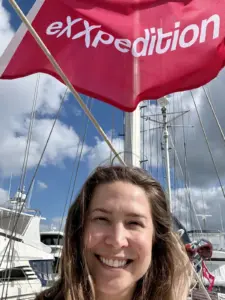
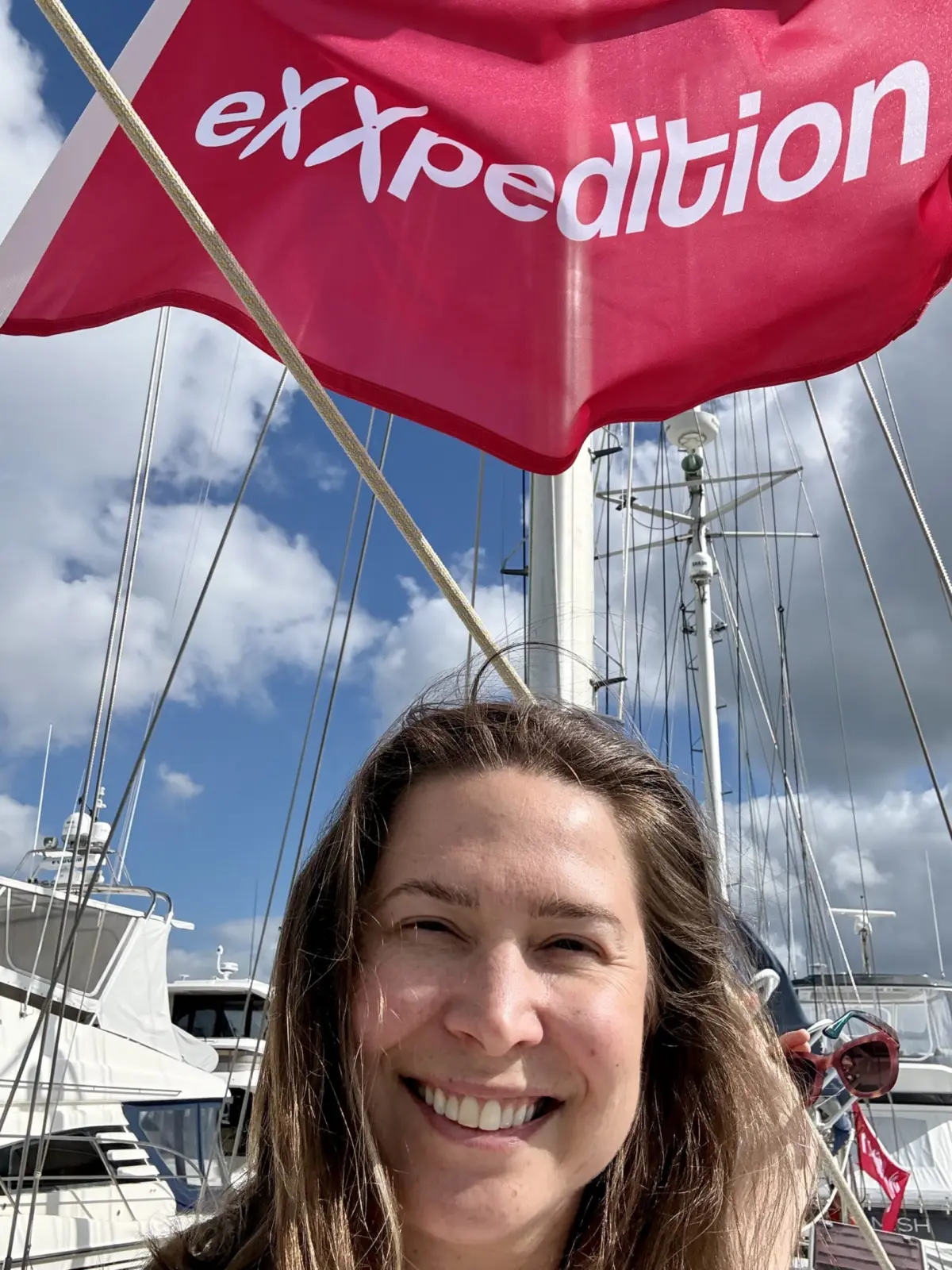
For over a decade, Dr. Britta Baechler, Director of Ocean Plastics Research at the Ocean Conservancy, has studied the silent invasion of plastic pollution from the controlled environment of a laboratory. Her work has involved analyzing hundreds of samples, reviewing dense analytical data sets, and mapping the complex pathways that synthetic polymers take once they slip from human hands into the biosphere. Yet, earlier this year, Dr. Baechler made a profound shift: she traded her stationary lab coat for a dynamic lifejacket, boarding the 70-foot research vessel Wind Shift to participate in the first leg of eXXpedition’s South Pacific voyage.
Running from April 27 to May 6, the expedition traversed the waters from Auckland, New Zealand, to the picturesque Bay of Islands. However, the mission was far from a leisurely coastal cruise. Aboard the vessel was an all-female crew of 12 specialists, intentionally assembled to represent a diverse matrix of high-level expertise—including structural engineering, circular economy systems design, sustainable fashion, robotics, and advanced plastics research.
This multi-disciplinary task force was united by a single, sobering mission: to chart the invisible migration of microplastics from terrestrial human centers into remote marine environments. By combining city-street surveying with ocean-surface trawling and remote beach cleanups, the crew gathered critical empirical data to track the lifecycle of plastics. Their findings underscore a troubling global reality: synthetic debris respects no geographical boundaries, permeating even the most protected, isolated ecosystems on Earth.
Detailed Chronology: Ten Days Aboard the Wind Shift
Setting Sail from Auckland
The voyage commenced in the bustling metropolitan heart of Auckland. Before casting off into the Tasman Sea and the Hauraki Gulf, the crew engaged in localized field research. Equipped with measuring tapes and specialized sampling gear, the researchers walked city blocks to evaluate how urban environments act as primary launchpads for micro-debris. Street-level surveys revealed a pervasive layer of urban litter—weathered fragments, single-use food packaging, and discarded film—destined to be swept into storm drains and, ultimately, out to sea.
Traversing the Hauraki Gulf to Aotea Great Barrier Island
As the Wind Shift cleared Auckland’s harbor and headed toward Aotea Great Barrier Island—a renowned sanctuary boasting some of New Zealand’s most pristine and heavily protected coastlines—the crew deployed ocean-surface sampling equipment. Using manta tow nets, which feature long, cone-shaped fine-mesh netting designed to skim the upper layer of the water column, the researchers captured seawater samples for immediate onboard analysis.
Despite the perceived remoteness of the Hauraki Gulf, the net contents told a recurring, disheartening story. Plastic was everywhere. The ocean’s vastness provided no buffer against the steady, creeping tide of synthetic pollution.
Beach Audits on Remote Shores
Upon arriving at a secluded, otherwise pristine stretch of coastline on Aotea Great Barrier Island, the researchers partnered with the local environmental NGO Sustainable Coastlines. Together, they conducted exhaustive beach audits and cleanups.
The items recovered from the sand mirrored what the crew had mapped days earlier on the asphalt of Auckland: weathered bottle caps, degraded packaging fragments, industrial plastic pellets (nurdles), and tangled pieces of commercial fishing gear. These were the mundane artifacts of modern human civilization, broken down by wave action and ultraviolet radiation, yet virtually indestructible on a molecular level.
Science on a Rolling Deck
One of the expedition’s most formidable logistical challenges occurred below and on deck: processing microplastic samples while navigating open ocean swells. Dr. Baechler noted that sorting microscopic plastic particles from krill-laden seawater samples under a stereomicroscope aboard a rolling, pitching sailing vessel is an endeavor that tests both scientific precision and inner ear equilibrium.
Working through bouts of seasickness and moments of exhilaration, the crew meticulously cataloged their findings. The predominant pollutant discovered throughout these offshore samples was remarkably consistent: microplastic fibers. Invisible to the casual observer and often no thicker than a single human strand of hair, these microscopic threads represented the vast majority of microplastic pollution harvested from waters miles away from any major human settlement.
Supporting Context & Metrics: The Mechanics of Microplastic Pollution
To truly grasp the significance of the eXXpedition findings, one must examine the broader metrics of plastic production and degradation. Plastics do not simply biodegrade; instead, through photo-oxidation and mechanical friction, macro-plastics fracture into increasingly smaller pieces known as microplastics (particles smaller than 5 millimeters) and nanoplastics.
The Hidden Threat of Microfibers
While fragments from degraded bottles and packaging are common, microplastic fibers represent an insidious, largely overlooked vector of pollution. These synthetic fibers originate from a variety of everyday sources, including weathered ropes, degraded cigarette filters, wet wipes, and—most prominently—synthetic textiles such as polyester, nylon, and acrylic.
The fashion and textile industries are major contributors to this crisis. Modern apparel is heavily reliant on plastic-derived threads. Every time a consumer washes a load of synthetic clothing, the mechanical agitation inside the washing machine causes thousands of tiny fibers to break free from the fabric.
- The Laundry Factor: Scientific studies cited by environmental groups indicate that a single standard load of laundry can release up to 18 million microfibers into wastewater systems.
- Infrastructure Gaps: While municipal wastewater treatment plants capture a significant percentage of these fibers, millions still slip through secondary filtration stages and are discharged directly into rivers, estuaries, and oceans. Once airborne or waterborne, these fibers disperse globally, eventually settling into deep-sea sediments or entering marine food webs.
Why Land-Based Solutions Matter
The eXXpedition model highlights a critical paradigm shift in environmental science: cleaning up beaches, while vital for aesthetic and immediate wildlife protection, is a downstream defense mechanism. The true battle against plastic pollution must be fought upstream. Stopping plastics at the source requires a three-pronged approach:
- Aggressive Policy Reform: Implementing legislative mandates that require manufacturers to design textiles and products with end-of-life recovery in mind.
- Infrastructure Investment: Upgrading global municipal waste management and stormwater filtration systems.
- At-Source Consumer Interventions: Deploying accessible, highly effective capture technologies before wastewater ever leaves residential and commercial buildings.
Official Statements and Perspectives
Reflecting on the grueling yet transformative ten-day journey, Dr. Baechler emphasized the human element underpinning the global ecological crisis.
"I have been studying plastic pollution for more than a decade. I’ve analyzed hundreds of samples in labs, pored over data, and spent years thinking hard about where plastics go once they leave our hands and enter the environment," Dr. Baechler shared. "And here’s where it took me! I was thrilled to have the opportunity to join the first leg of eXXpedition’s voyage in the South Pacific… trading my lab coat for a lifejacket to study microplastics at sea."
The collective expertise of the all-female crew proved vital in contextualizing the data. By bringing together professionals from circular economy strategy, robotics, structural engineering, and sustainable fashion, the team approached marine sampling not just as an ecological observation exercise, but as a multi-disciplinary diagnostic challenge.
"The plastic pollution crisis is a human problem, and solving it requires all of us," Dr. Baechler noted. "The courage and dedication of the women I shared those 10 days with is something I won’t forget. Going to sea, doing the science, and pushing through discomfort to collect data that matters was not easy. We were seasick some days and exhilarated others. Despite that fact, we showed up for it fully, every day."
Highlighting the emotional and psychological weight of confronting pollution in ostensibly pristine waters, she added: "In my lab research, I have found microplastic fibers time and time again, but there’s something even more sobering about hand-picking them out of a seawater sample collected from pristine-looking waters. It was a good reminder of why understanding where plastic comes from, how it moves, and where it ends up is so critical to addressing the problem at its roots."
Future Outlook & Actionable Solutions
The insights gathered from the 2026 South Pacific eXXpedition serve as vital empirical fuel for ongoing advocacy and policy initiatives. Rather than succumbing to environmental despair—a common hazard when witnessing the ubiquitous spread of synthetic debris—the scientific community is leveraging these data points to advocate for systemic change.
The Immediate Technological Solution: Washing Machine Filters
While systemic infrastructure overhauls take years to legislate and construct, there is an immediate, highly effective, and affordable technological intervention available right now to combat microplastic fibers: washing machine microfiber filters.
Analogous to the lint traps found in household clothes dryers, these specialized external or integrated washing machine filters capture microfibers within a tightly woven mesh before the greywater is discharged from the appliance. Field studies and technical evaluations demonstrate that installing these filters can immediately reduce the discharge of synthetic microfibers from household laundry by roughly 90%.
Policy and Public Engagement
Environmental organizations like the Ocean Conservancy are utilizing data from expeditions like Wind Shift to lobby lawmakers for mandatory microplastic fiber filtration requirements in new residential and commercial construction, as well as in washing machines manufactured moving forward.
Coinciding with initiatives like Plastic Free July®, researchers are urging the public to turn awareness into political action. Citizens are encouraged to contact their elected officials to demand legislative frameworks that hold textile manufacturers and appliance makers accountable for microfiber pollution.
As Dr. Baechler concluded upon her return to dry land:
"My biggest takeaways from this experience? People are remarkable. Our ocean is remarkable. And our ocean is worth fighting for, including from 70 feet of sailing vessel in the South Pacific, staring down a microscope with a pair of tweezers and a queasy stomach."
Through rigorous science, interdisciplinary collaboration, and targeted regulatory solutions, the path toward a cleaner, plastic-free ocean remains within reach—provided society acts upstream before the tide becomes insurmountable.