







Executive Overview
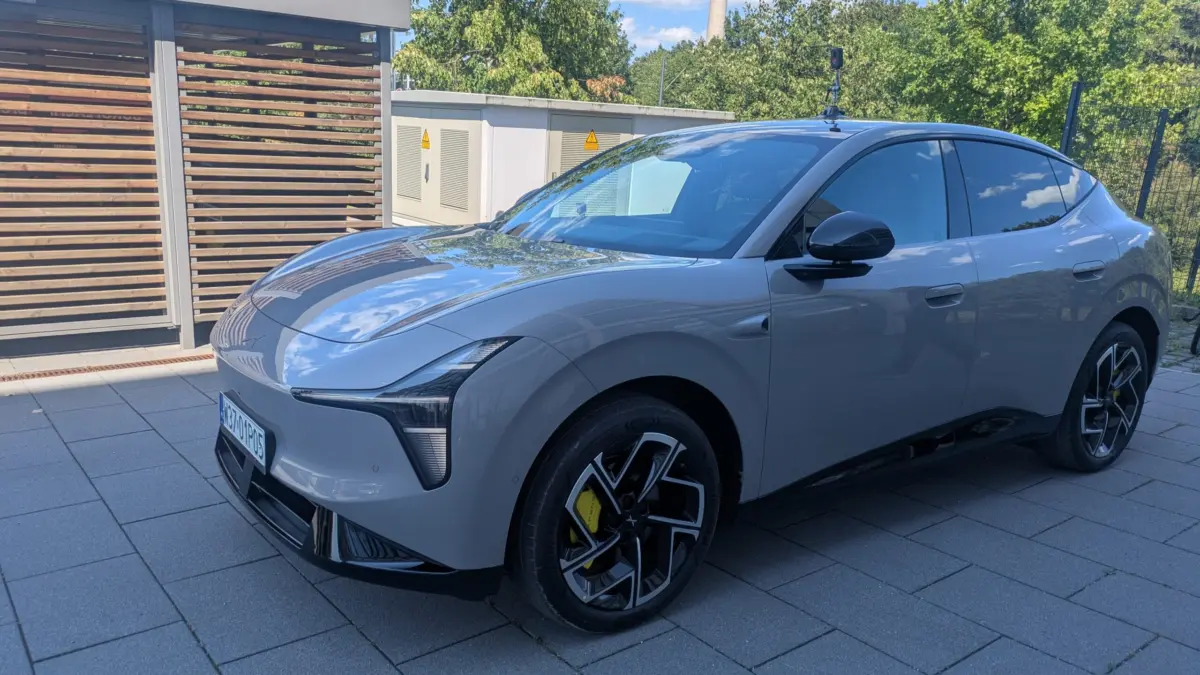
The next major evolution of physical artificial intelligence is rapidly taking shape, driven by a series of aggressive technological advancements and strategic corporate moves from Chinese EV and tech pioneer XPENG. Recent announcements trace a clear arc of development across multiple fronts: the maturation of the IRON humanoid robotics platform, the rollout of the groundbreaking VLA 2.0 (Vision-Language-Action) intelligent driving architecture, and a broader corporate pivot that increasingly mirrors a high-margin technology licensing firm rather than a traditional automotive manufacturer.
While heavy investments in research and development (R&D) and aggressive global expansion have weighed on the company’s immediate bottom line, they are laying the foundational tracks for an "AI Flywheel." By tackling the most complex and intractable problems in physical AI first—such as local real-time spatial-temporal reasoning, localized large language models (LLMs), and multi-chip hardware orchestration—XPENG is positioning itself to capture significant market share not only in electric mobility, but also in automated transport and embodied robotics.
This deep dive explores XPENG’s latest financial health, the mechanics of its VLA 2.0 version 6.3.0 software update, its monumental robotics funding milestone, and the overarching strategy that separates its local-compute philosophy from Western cloud-dependent competitors.
Financial Health & Strategic Pivot: Becoming a Technology Powerhouse
Q2 Financial Performance: Revenue, Margins, and R&D Spend
XPENG’s Q2 financial results offer a revealing window into a company transitioning from a volume-focused carmaker into a vertically integrated AI and technology ecosystem. Revenue climbed to $2.91 billion, marking an 8.0% year-over-year increase and a staggering 51.5% surge compared to the first quarter. More impressively, the company’s overall gross margin hit 20.7%, a substantial leap from 17.3% in the previous year and outpacing competitors like Tesla, which posted a gross margin of 16.8% over a comparable timeframe.
A closer look at the data, however, reveals a nuanced operational shift. Vehicle-specific gross margins dipped to 12.1% (down from 14% a year prior), a compression largely attributable to upfront costs associated with launching a wave of new global models. The impressive overall gross margin was instead buoyed heavily by service revenues—most notably, lucrative technical R&D services supplied to the Volkswagen Group as part of their high-profile strategic partnership.
The Cost of Innovation
This technology-first orientation carried a cost to the bottom line, with XPENG posting a net loss of $200 million for the quarter. This red ink was driven almost entirely by a 35% year-over-year expansion in R&D expenditures, alongside increased administrative and selling expenses. The latter were fueled by aggressive global market entries, such as the high-profile July L03 model launch in Munich, Germany.

While these expenditures impact short-term profitability, they reflect a deliberate long-term strategy. XPENG is investing heavily in the infrastructure required to scale its physical AI systems globally, betting that upfront R&D and marketing investments will yield disproportionate returns as new vehicle models ramp up and its proprietary software stacks find broader commercial adoption.

VLA 2.0 Version 6.3.0: The Technological Leap in Autonomous Driving
Over-the-Air Rollout and Hardware Synergy
On Thursday, XPENG detailed its first major upgrade since the commercial introduction of VLA 2.0, slated for an over-the-air (OTA) rollout in the coming weeks. Developing intelligent driving systems that are simultaneously safe, reliable, and lightning-fast requires navigating severe engineering constraints regarding latency, compute power, and thermal/electrical consumption. Crucially, XPENG’s updates are engineered to run effectively on existing customer hardware rather than requiring entirely new physical platforms.
Ultra and Ultra SE vehicle trims will receive the new-generation VLA 2.0 update in September, while Max trims equipped with a single in-house Turing chip will receive a tailored "VLA Lite" update. Older vehicle models utilizing dual NVIDIA Orin chips are also scheduled for system updates later in the year.
4D Temporal Perception and "Infini-VLA"
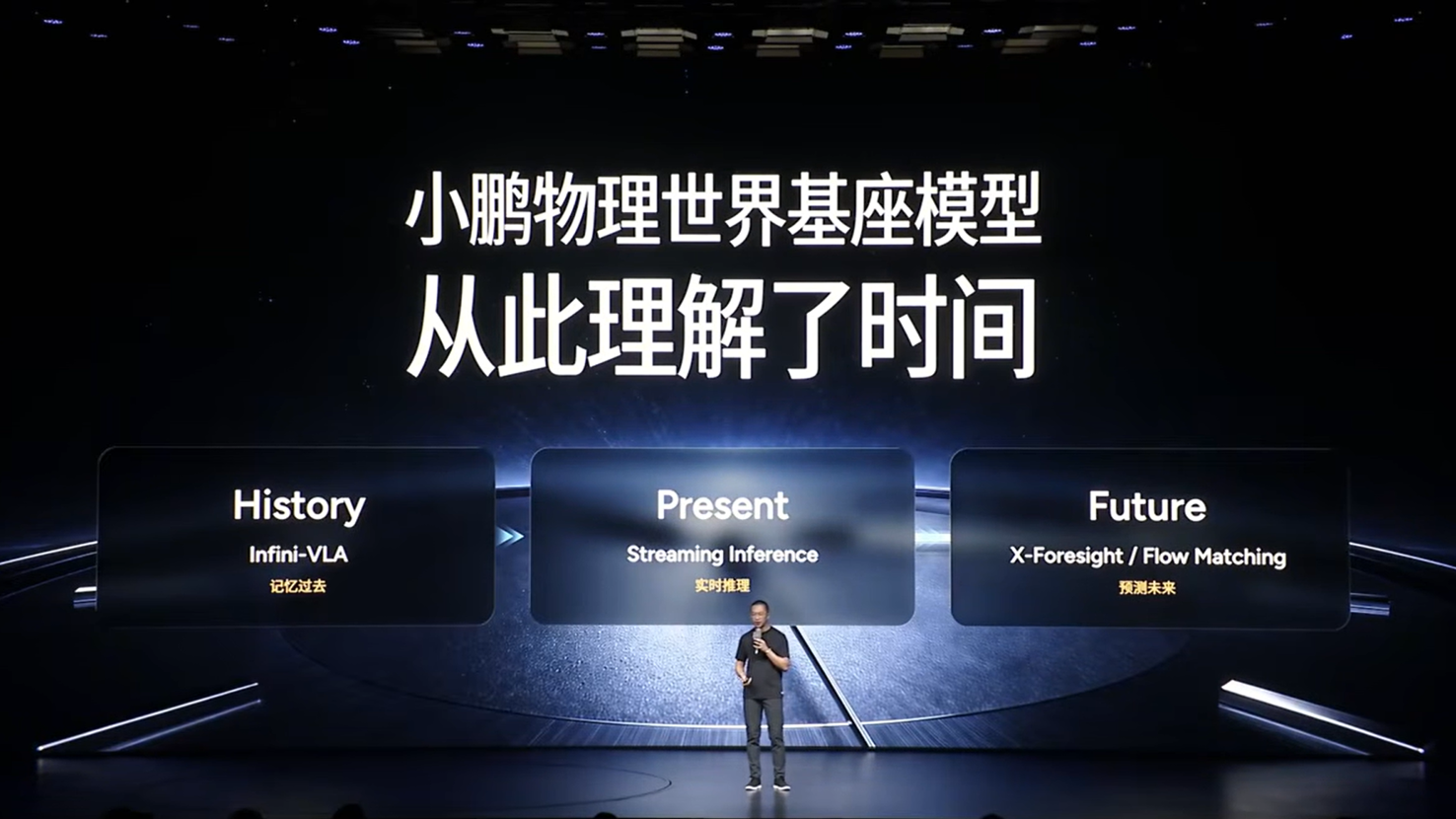
Traditional autonomous systems often struggle with the dynamic flow of time, treating the environment as a rapid sequence of static snapshots. XPENG’s updated VLA 2.0 model incorporates 4D temporal perception, factoring in historical context to predict future trajectories.
The underlying architecture, dubbed Infini-VLA, supports infinitely long historical timelines during decision-making. However, through empirical testing, XPENG determined that maintaining a historical memory window of 30 seconds is optimal; extending beyond this threshold yields diminishing returns for standard driving scenarios while unnecessarily taxing computing resources.
Streaming Inference and X-Foresight
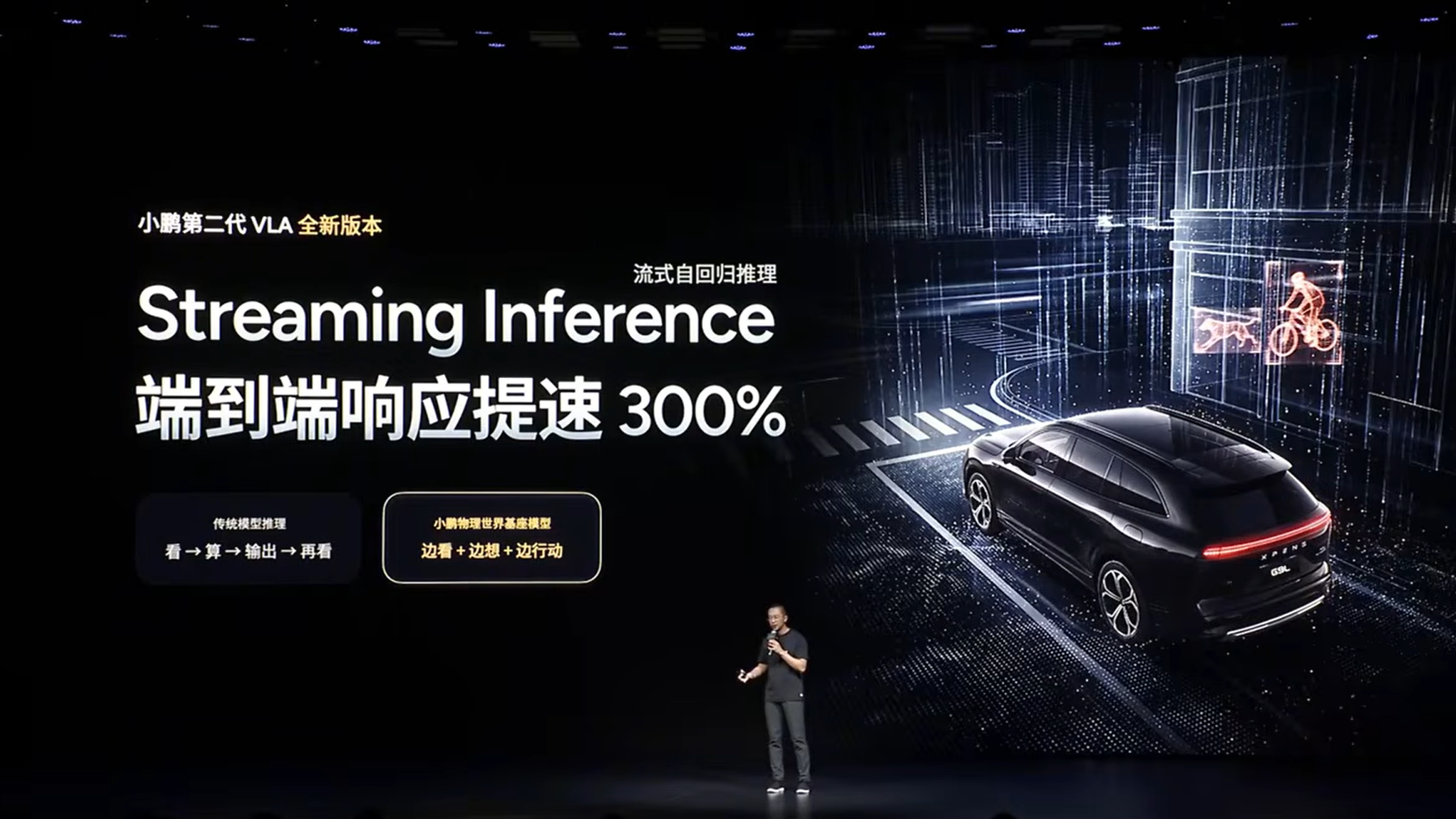
Because a moving vehicle cannot pause to process its environment, XPENG implemented Streaming Inference. This capability enables the vehicle to perceive, think, and output trajectory tokens simultaneously and continuously, reducing latency and boosting response speeds by a claimed 300%.
Complementing this is X-Foresight, a feature first teased in June that now goes public. Utilizing historical data, X-Foresight infers and predicts up to 6 seconds into the future (though technically capable of supporting up to 21 seconds) to provide "proactive reasoning." Paired with Flow-Matching—a mechanism that converts sensor data into multiple potential future paths to select the statistically safest and most efficient route—these systems combine to deliver a reported 20x improvement in overall safety performance.
Multi-Chip Architecture and HybridViT
XPENG’s hardware strategy relies on its custom-developed Turing chips, each boasting an impressive 750 TOPS (Tera Operations Per Second)—surpassing the total computing power found in Tesla’s HW4 suite.
- Chip 1: Dedicated to core intelligent driving.
- Chip 2: Expands advanced autonomous capabilities.
- Chip 3: Dedicated entirely to local voice control and natural language communication.
- Chip 4 (Robotaxi Configurations): Reserved as a dedicated hardware redundancy safety layer for driverless operations.
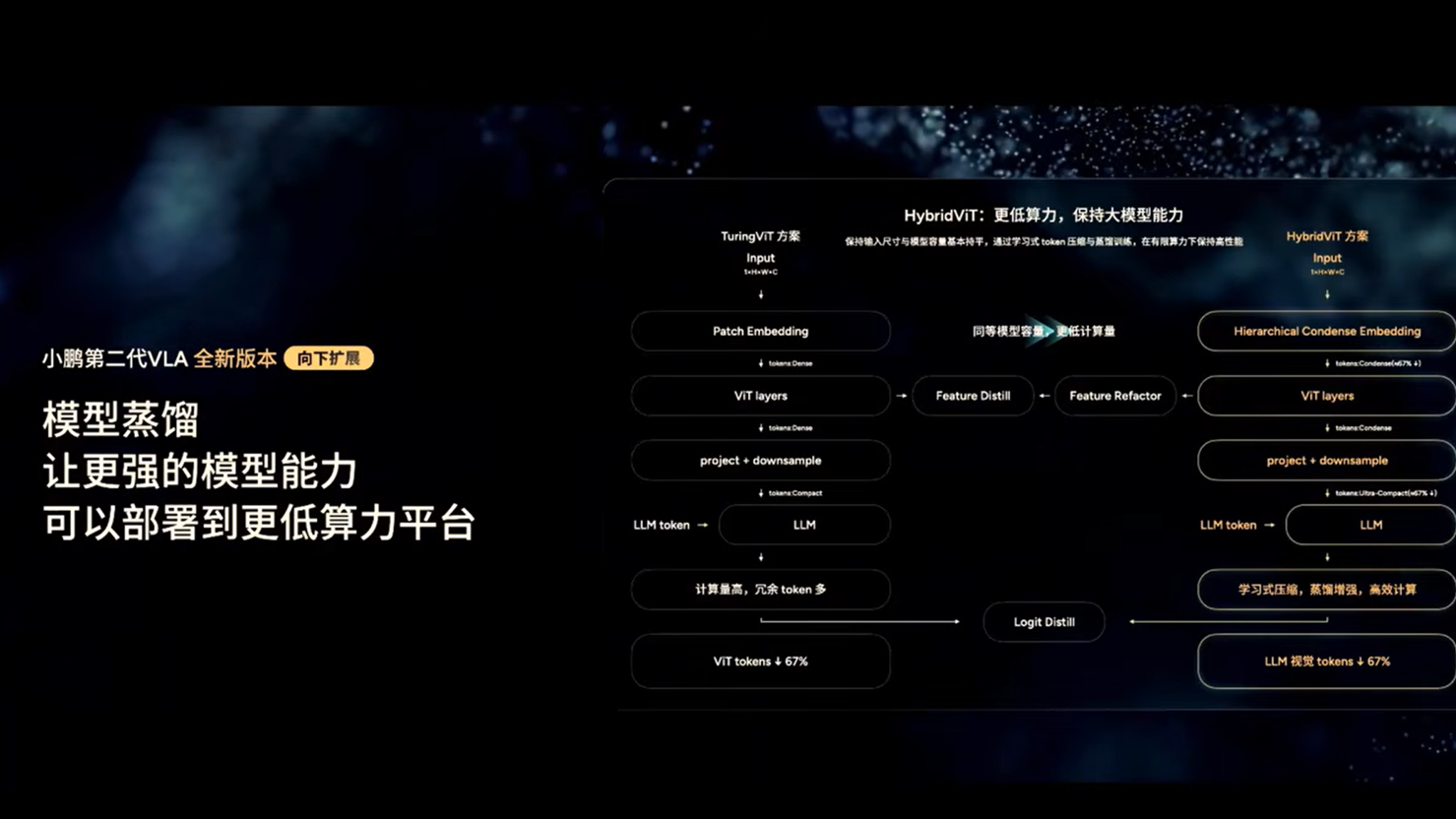
For vehicle configurations featuring only a single Turing chip, XPENG developed HybridViT. Rather than simply trimming features or halving network parameters, XPENG redesigned the underlying neural network architecture to streamline processing needs while retaining as much of the dual-chip model’s core intelligence as possible, ensuring a consistent user experience across different price tiers.
Master Agent and Localized LLMs
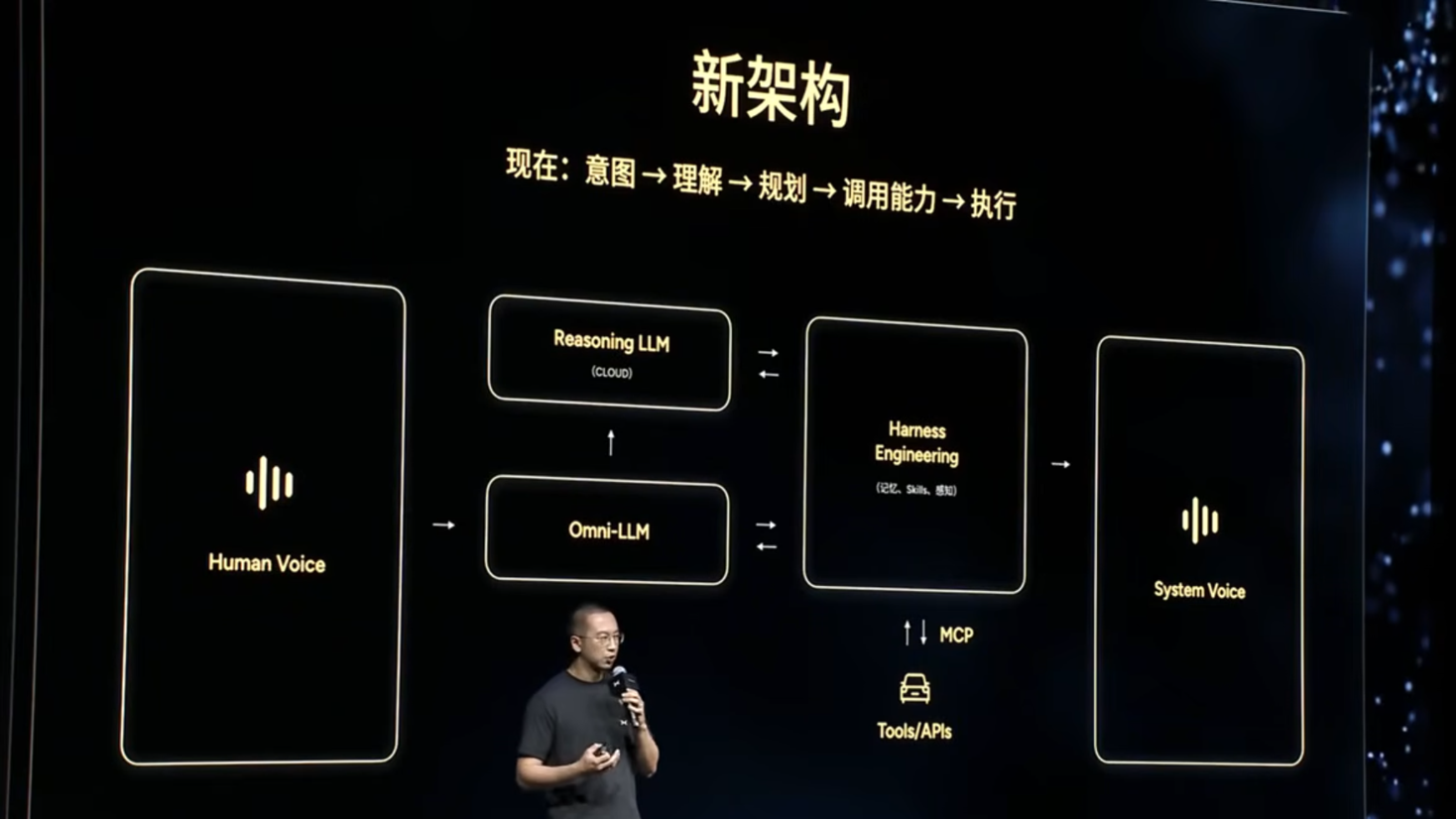
One of the most striking user-facing developments in VLA 2.0 version 6.3.0 is Master Agent, powered by an "Omni multimodal model" that transforms in-car voice interaction into a conversational robot. Running locally via a dedicated Turing chip, the system interprets user intent within the context of the surrounding environment without requiring rigid, pre-set voice commands.
Drivers can converse naturally—such as asking the vehicle to locate a hard-to-pronounce restaurant based on cuisine type or instructing it to pull over safely next to a "big black building in the neighborhood." This localized processing approach achieves a generation rate of over 20 tokens per second for its integrated XLLM architecture. By executing large language model inferencing locally rather than routing queries through massive, power-hungry cloud data centers, XPENG avoids the latency, privacy, and regulatory hurdles that plague centralized architectures.
Robotics Infusion: Dogotix Secures Record Funding
Parallel to its automotive advancements, XPENG’s robotics division, operating under the entity Dogotix, secured a staggering $900 million in private financing, valuing the subsidiary at $6.3 billion. According to XPENG, this represents the largest single-round private financing ever recorded in China’s embodied AI sector.
Commercial Deployment Timeline
- 2026: Deployment of the humanoid robot IRON across XPENG retail stores to provide sales and customer support.
- 2027: Official commercial deliveries to external enterprise customers within the retail and service sectors, with monthly manufacturing capacities scaling into the thousands to meet projected demand.
Strategic Investors and Ecosystem Potential
Among the strategic investors participating in the funding round were tech giants Alibaba and Tencent. Given that Alibaba and Tencent command China’s digital commerce and daily transaction infrastructure through Alipay and WeChat Pay, the inclusion of these stakeholders hints at deep integration for IRON in commercial customer service, hospitality, and retail environments.
While Dogotix will no longer operate as a wholly owned subsidiary, XPENG maintains controlling stake and management oversight. Crucially, the robotics division shares the same foundational software and AI infrastructure as XPENG’s vehicle lineup. Using the corporate metaphor of an iceberg, XPENG emphasizes that 95% of the underlying infrastructure—including perception models, reasoning engines, and edge-case solvers—is shared across its automotive and robotics platforms, maximizing the return on its heavy R&D outlays.
The AI Flywheel and Global Scalability
Solving the "Unknown Unknowns"
XPENG’s overarching engineering philosophy centers on tackling the most difficult challenges in physical AI first. By building a complete, vertically integrated AI ecosystem from the ground up, the company believes that solving foundational edge cases naturally makes subsequent development phases more efficient. This iterative loop feeds the AI Flywheel:
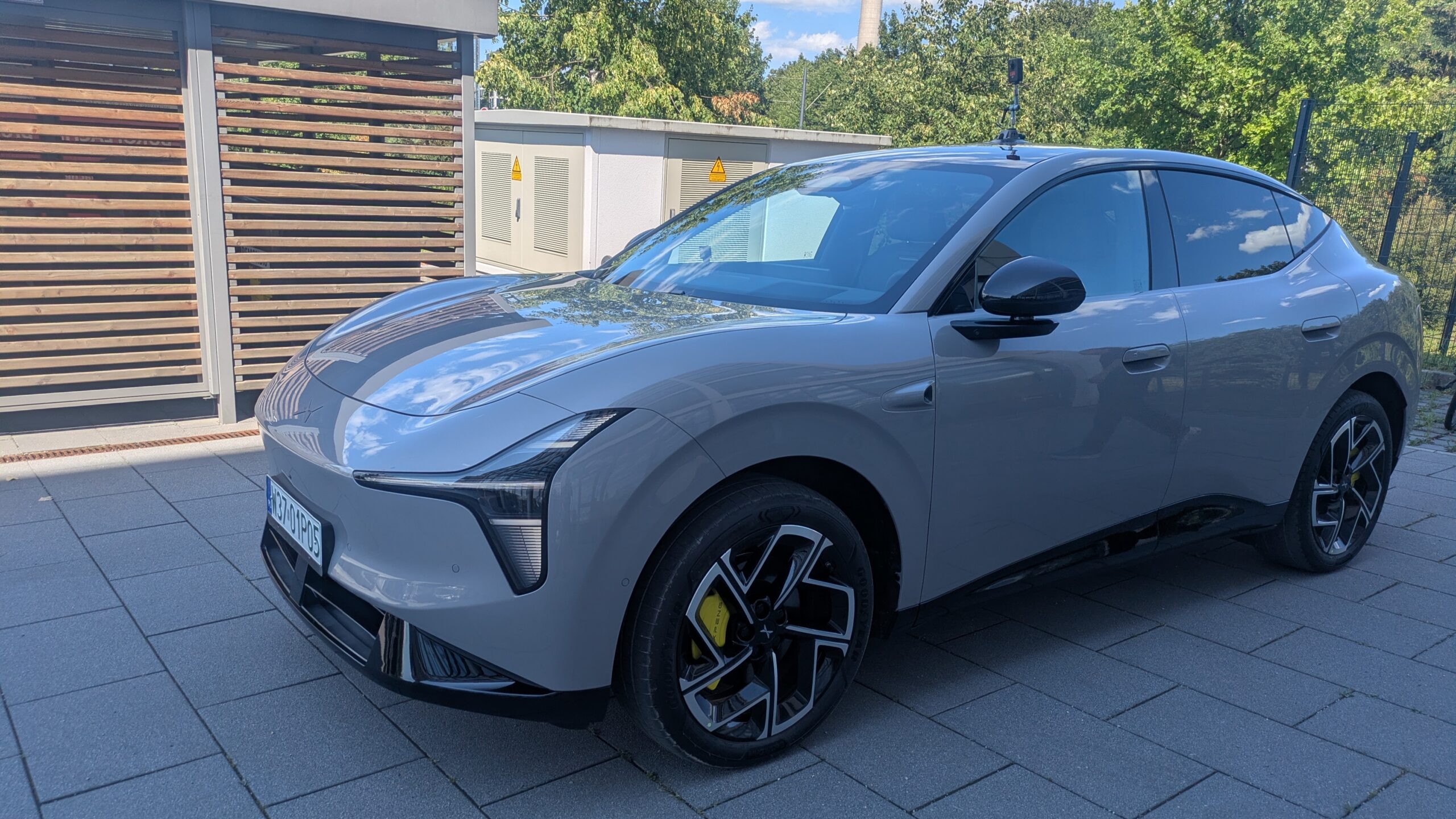
- Better vehicles and robots deployed in the wild gather expansive real-world data.
- Training data scales rapidly, recently surpassing 110 million video clips alongside a 290% increase in daily simulation models generated via X-World.
- Refined software models address complex edge cases—such as navigating active construction zones or boarding and exiting maritime ferries.
- Enhanced capabilities drive broader commercial adoption, feeding more data back into the system.
Regulatory Readiness and Global Expansion
By prioritizing efficient, locally running AI models that do not rely on constant cloud connectivity, XPENG is uniquely positioned to clear international regulatory hurdles. As global markets move toward harmonized frameworks like the United Nations DCAS (Driver Control Assistance Systems) regulations, XPENG’s localized processing architecture enables seamless deployment across diverse regulatory jurisdictions without exposing sensitive operational data to cross-border privacy conflicts.
Future Outlook
XPENG stands at a pivotal crossroads. While its near-term financial statements reflect the heavy costs of global expansion and aggressive R&D, the company is on the verge of converting long-term technological investments into diversified revenue streams.
Moving forward, XPENG’s growth will likely be propelled by three distinct pillars:

- Accelerated EV Adoption: Consumer demand driven by industry-leading, non-subscription intelligent driving features.
- Technology Licensing: Deepening partnerships with legacy automotive giants like the Volkswagen Group, expanding VLA licensing globally.
- Embodied AI Commercialization: The market entry of the IRON humanoid robot, which promises high-margin lifetime revenue streams spanning hardware sales and software upgrades.
As these physical AI systems move from testing grounds to global highways and retail storefronts, XPENG’s audacious bet on full-stack, local-compute autonomy is poised to redefine the competitive landscape of the global technology and automotive sectors.