






Executive Overview
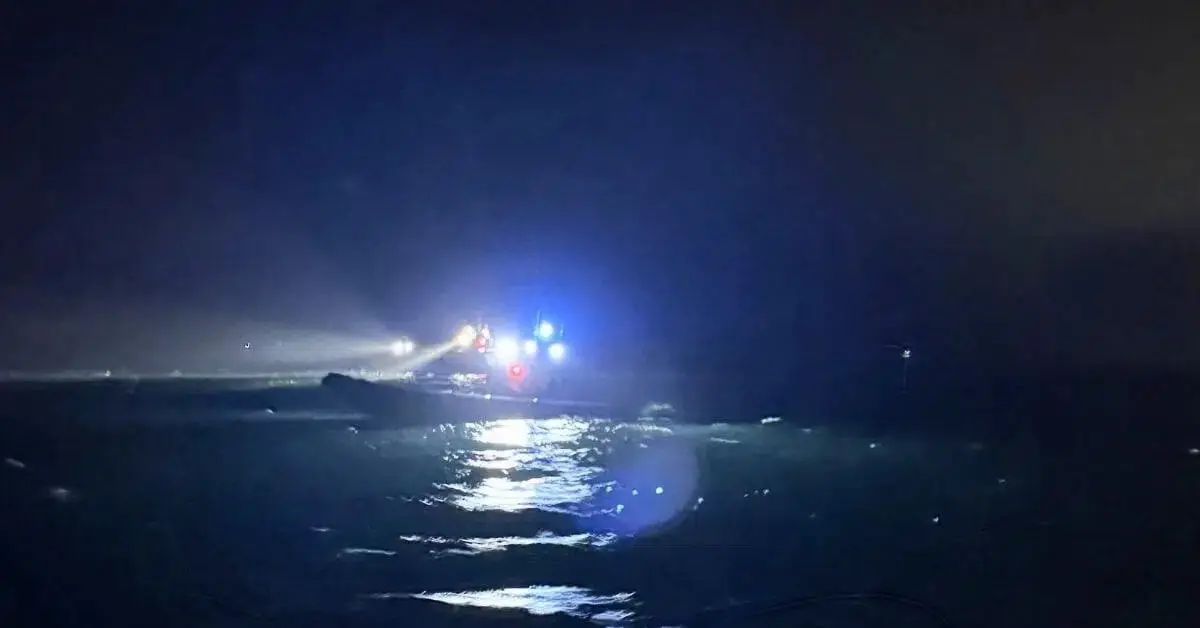
In a legal development that has sent shockwaves through the Northern European maritime community, Swedish prosecutors have formally filed criminal charges against both the master of the Norwegian cargo vessel Misje Verde and the state-assigned pilot. The charges stem from a devastating collision on July 28, 2024, in the Hakefjord waterway near Tjörn, Sweden, which resulted in the sinking of a recreational motorboat and the tragic deaths of two passengers—an adult and a child.
The indictments, announced by Senior Prosecutor James von Reis, charge both the Norwegian captain and the Swedish pilot with causing death through negligence (vållande till annans död), causing bodily injury through negligence (vållande till kroppsskada), and negligence in maritime traffic (vårdslöshet i sjötrafik). Both defendants have firmly denied any criminal wrongdoing.
What elevates this case from a standard maritime casualty investigation to a highly significant legal precedent is the prosecution of the marine pilot. Historically, maritime law and international conventions dictate that the vessel’s master retains ultimate responsibility for the safe navigation of the ship, with pilots acting in an advisory capacity. However, Swedish authorities have taken the unusual step of prosecuting the pilot, asserting that his exceptionally active role on the bridge at the time of the collision directly contributed to the disaster.
Aided by high-resolution data from the ship’s Voyage Data Recorder (VDR), investigators rapidly reconstructed the final moments leading up to the collision. The trial is scheduled to begin on September 10, 2024, in a case that could redefine the boundaries of pilot liability and Bridge Resource Management (BRM) protocols globally.
Detailed Chronology
The Pre-Collision Transit
On the afternoon of July 28, 2024, the Misje Verde—a modern, 5,000-deadweight-ton eco-friendly hybrid bulk carrier operated by Norway’s Misje Rederi—was transiting the scenic but congested waters of the Hakefjord, southwest of Gothenburg. The vessel was navigating under compulsory pilotage, a standard safety requirement for large commercial ships traversing the narrow, rock-strewn channels of the Swedish archipelago. On the bridge were the ship’s master and an experienced pilot provided by the Swedish Maritime Administration (Sjöfartsverket).
Traveling in the same direction along the fairway was a 7-to-8-meter cabin motorboat. Aboard the pleasure craft were four holidaymakers: two adults and two children. The smaller vessel was traveling at a significantly slower speed than the commercial bulk carrier, navigating the waters between the picturesque islands of Katten and Lövön.
[Misje Verde (Cargo Ship)] ---> Traveling at higher speed astern

                                        (Overtaking trajectory)
                                       v
[Cabin Motorboat (Recreational)] -> Traveling at slower speed ahead
The Overtaking and Impact
According to AIS (Automatic Identification System) records and GPS tracking, the Misje Verde approached the recreational vessel directly from astern. Under international maritime steering and sailing rules, this placed the cargo ship in an "overtaking" position, legally requiring it to keep clear of the slower vessel ahead.

Despite the clear line of sight and fully operational electronic navigation aids, the bridge team of the Misje Verde failed to alter course or reduce speed. At approximately 14:00 local time, the massive bow of the cargo ship struck the stern of the cabin motorboat.
The physical disparity between the two vessels was catastrophic. The 90-meter cargo ship ran over the fiberglass motorboat, dragging it beneath the ship’s hull. The pleasure craft suffered immediate, severe structural failure, flooded rapidly, and sank to the seabed in approximately 20 meters of water.
Rescue and Recovery Operations
The collision triggered an immediate emergency response from nearby recreational boaters who witnessed the disaster. Good Samaritans rushed to the scene as the motorboat disappeared beneath the surface.
Boaters managed to rescue two survivors—one adult and one child—pulling them from the water before emergency services arrived. However, the remaining two passengers, an adult and a child, could not be saved. Their bodies were later recovered from the wreckage by Swedish search and rescue divers.
Supporting Context & Technical Specifications
To understand how such a collision could occur on a modern vessel equipped with state-of-the-art navigation systems, investigators focused heavily on the ship’s electronic footprint.
| Vessel Specification / Parameter | Details |
|---|---|
| Vessel Name | Misje Verde |
| Vessel Type | Eco-Bulk Carrier (MGO/Battery Hybrid) |
| Operator | Misje Rederi (Norway) |
| Gross Tonnage | Approx. 3,500 GT |
| Length Overall (LOA) | 89.9 meters |
| Collision Date & Time | July 28, 2024 |
| Location | Hakefjord, Sweden (Between Katten and Lövön) |
| Water Depth at Sinking Site | ~20 meters |
| Primary Target of Collision | 7-8 meter recreational cabin motorboat |
The Role of the Voyage Data Recorder (VDR)
The rapid progression of this investigation—from the date of the accident to formal indictments in less than six weeks—is largely attributed to the successful extraction and analysis of the Misje Verde’s Voyage Data Recorder (VDR).
Often referred to as the maritime equivalent of an aircraft’s "black box," the VDR records a continuous stream of critical data, including:
- Bridge Audio: Microphones placed throughout the bridge capture all verbal communications, alarms, and ambient sounds.
- Radar Screen Captures: Exact duplicates of the radar and ECDIS (Electronic Chart Display and Information System) displays viewed by the bridge team.
- VHF Radio Communications: All incoming and outgoing transmissions.
- Engine and Steering Commands: Physical inputs from the helm and throttle.
+------------------------------------------------------------+
|                  VDR DATA EXTRACTION                       |
+------------------------------------------------------------+
| [Bridge Audio]   -> Confirmed division of labor & silence  |
|                     regarding the target.                  |
| [Radar Playback] -> Proved the pleasure boat was a clear,  |
|                     persistent echo on the screens.        |
| [AIS / GPS]      -> Established overtaking geometry and   |
|                     failure to alter course.               |
+------------------------------------------------------------+
The VDR playback provided prosecutors with irrefutable evidence that the pleasure boat was not an "invisible" target. It was clearly plotted as a radar echo on the bridge displays well before the impact. Despite this electronic visibility, neither the master nor the pilot acknowledged the target or took evasive action, pointing to a profound failure in situational awareness.
Regulatory Framework and COLREGs Violations
The prosecution’s case is built upon the International Regulations for Preventing Collisions at Sea (COLREGs), the universally accepted rules of the road for maritime traffic. The indictment focuses on two critical COLREGs rules:
Rule 5: Look-out
"Every vessel shall at all times maintain a proper look-out by sight and hearing as well as by all available means appropriate in the prevailing circumstances and conditions so as to make a full appraisal of the situation and of the risk of collision."
The prosecution asserts that both the master and the pilot failed to maintain a proper lookout. While the physical structure of a large cargo ship can create blind spots directly in front of the bow, Rule 5 mandates the use of "all available means," including radar and ARPA (Automatic Radar Plotting Aid). The presence of a clear radar target that went completely unnoticed is a prima facie violation of this rule.
Rule 13: Overtaking
"Any vessel overtaking any other shall keep out of the way of the vessel being overtaken."
Rule 13 is absolute: the overtaking vessel bears the sole responsibility to keep clear of the overtaken vessel until it is "finally past and clear." Because the Misje Verde approached the cabin cruiser from astern, the legal burden lay entirely on the cargo ship to alter its course or slow down to avoid the collision.
The Restricted Visibility Debate
Early in the investigation, authorities considered whether heavy rain and localized squalls had severely reduced visibility, which would have triggered Rule 19 (conduct of vessels in restricted visibility) and Rule 35 (sound signals in restricted visibility).
While the Misje Verde had not sounded any fog or restricted visibility signals, the VDR evidence rendered this line of defense largely irrelevant. Because the radar displays clearly showed the target despite any atmospheric interference, the failure to act was deemed a failure of basic lookout duties under Rule 5 rather than an inability to detect the vessel due to weather.
Official Statements
The legal proceedings have drawn sharp focus from maritime legal experts due to the rare decision to prosecute the pilot alongside the master.
Senior Prosecutor James von Reis emphasized the unusual circumstances of the case:
"It is highly unusual for a pilot to be prosecuted for having played a part in a maritime accident involving the vessel being piloted. In this case, the police investigation found that the pilot had assumed a very active role in navigating the vessel and accepted that the master was occupied on the bridge with matters unrelated to the vessel’s navigation, such as maintaining a lookout. It is therefore reasonable that the pilot’s responsibility for the accident should also be examined by a court."
Von Reis further elaborated on the clarity of the evidence recovered from the vessel’s bridge:
"We now know for certain what could be seen in real time on the radar screens on the bridge and what was said by those who were there. The division of responsibilities between the master and the pilot has emerged, and not least the important circumstance that the overtaken and struck pleasure boat was clearly visible as a radar echo on displays on the bridge, information that was missed by both defendants."
Defense representatives for both the master and the pilot have maintained that their clients acted in accordance with standard maritime practices under difficult, highly dynamic coastal transit conditions. They are expected to argue that the recreational vessel’s maneuvers, visibility limitations from the bridge, and environmental factors should mitigate criminal liability.
Future Outlook and Industry Implications
The trial, set to commence on September 10, 2024, is poised to be a landmark case with far-reaching implications for the global shipping industry.
                           [ TRIAL: SEPT 10 ]
                                   |
         +-------------------------+-------------------------+
         |                                                   |
         v                                                   v
[Legal Precedent]                                  [Industry Impact]
Redefining pilot liability vs.                     Stricter Bridge Resource
master's ultimate command.                         Management (BRM) compliance.
Redefining the Master-Pilot Relationship
For over a century, the division of responsibility on a ship’s bridge has remained largely unchanged: the pilot provides local geographical expertise, but the master remains in command and legally responsible for the vessel. This trial challenges that traditional hierarchy.
If the Swedish court finds the pilot criminally liable for the collision due to his "active role" in navigation, it could set a precedent where pilots are held to a much higher standard of legal accountability. This may prompt pilotage associations worldwide to review their liability insurance, operational guidelines, and standard contracts.
Heightened Focus on Bridge Resource Management (BRM)
The accident highlights a classic failure of Bridge Resource Management. BRM is designed to prevent single-point failures on the bridge by ensuring clear communication, mutual double-checking of navigation data, and a shared situational awareness.
The VDR’s revelation that a clear radar target was missed by both highly trained professionals suggests a breakdown in bridge communication. The maritime industry will likely use the findings of this trial to revise training regimens, emphasizing the need for active challenge-and-response protocols between masters and pilots.
Recreational and Commercial Co-existence
As commercial vessels grow larger and coastal recreational boating increases, the safety of shared waterways like the Gothenburg archipelago remains a pressing concern. The outcome of this trial will undoubtedly fuel ongoing discussions regarding speed limits, mandatory AIS transponders for smaller pleasure craft, and the creation of designated, segregated lanes for commercial traffic to prevent future tragedies in restricted coastal waters.