








Executive Overview
When travelers seek out the monumental majesty of California’s ancient trees, their compasses almost invariably point toward the Sierra Nevada and the heavily trafficked pathways of Sequoia National Park. Yet, nestled along the rugged San Mateo County coast lies a monumental, lesser-known alternative that rivals its more famous inland counterparts in sheer botanical awe: the Pescadero Creek Complex. At the heart of this sprawling 8,000-plus-acre green space is Pescadero Creek County Park—a thickly wooded, fog-kissed sanctuary of towering coast redwoods (Sequoia sempervirens), lush fern-lined canyons, and miles of tranquil, uncrowded trails.
Far from the bumper-to-bumper traffic and crowded vista points characteristic of major national parks, Pescadero Creek County Park offers a profound, immersive wilderness experience just a short drive from major metropolitan hubs. Located roughly an hour and twenty minutes south of San Francisco and two hours north of Monterey, the park is an easily accessible yet deeply secluded escape. Spanning ancient old-growth groves and recovering second-growth timberlands, the park stands not only as a monument to ecological resilience—having survived intensive historical logging and the persistent pressures of real estate development—but also as a case study in modern forest stewardship.
Through ongoing restoration initiatives, rigorous conservation policies, and community-based educational programming, Pescadero Creek County Park represents a masterclass in how regional county parks can successfully safeguard fragile ecosystems while offering the public a serene, deeply personal connection to nature. This comprehensive report examines the park’s historical trajectory, its diverse ecological tapestry, the specifics of its trail networks, and the visionary preservation efforts securing its future.
Detailed Chronology: From Industrial Timberland to Protected Sanctuary
The breathtaking tranquility experienced by modern hikers traversing the shaded loops of Pescadero Creek County Park masks a turbulent, industrialized past. To understand the resilience of the forest today, one must trace the chronological evolution of the Pescadero Creek watershed from indigenous stewardship to aggressive commercial exploitation, and ultimately, to legislative salvation.
Pre-Colonial Era and Early Logging
Long before the arrival of European settlers, the Pescadero Creek basin was managed and inhabited by indigenous peoples who relied on the rich coastal resources, abundant wildlife, and old-growth timberlands. The towering coast redwoods held immense ecological and spiritual significance, thriving in the moisture-laden microclimate created by Pacific fog cycles.
By the mid-to-late 19th century, however, the arrival of European and American settlers catalyzed a dramatic shift in the landscape. The advent of the California Gold Rush and the subsequent building boom in San Francisco created an insatiable demand for lumber. Because coast redwoods are exceptionally straight-grained, rot-resistant, and easy to work with, the redwood forests of the Santa Cruz Mountains—including the Pescadero Creek watershed—became prime targets for industrial logging operations.
For decades, steam donkeys, crosscut saws, and logging railroads tore through the region. Massive old-growth trees that had stood for millennia were felled to supply timber for building expansion across the San Francisco Bay Area. Logging camps and mills sprouted up throughout the canyons, leaving behind a scarred landscape littered with logging debris, heavy machinery remnants, and denuded hillsides.

The Threat of Development and Legislative Intervention
As the industrial timber era waned in the mid-20th century, the landscape faced a new, equally perilous threat: suburban and commercial real estate development. With the post-war population boom in the Bay Area, developers eyed the sprawling, timber-rich canyons of the Pescadero watershed for residential subdivisions and recreational property conversions.
Had these plans materialized, the remaining stands of old-growth redwoods—including the magnificent groves preserved in Heritage Grove—would likely have been clear-cut and parceled out. However, growing environmental consciousness in California during the late 1960s and 1970s galvanized local conservationists, community groups, and local government bodies to push back against unchecked development.
A pivotal turning point arrived with the passage of statewide legislative measures and local policy shifts, most notably the implementation of Proposition 13 and subsequent county-level protective designations. These legal instruments effectively halted non-park-related development, steering the land toward public acquisition. Over subsequent decades, San Mateo County systematically stitched together the Pescadero Creek Complex—incorporating Pescadero Creek County Park, Sam McDonald Park, Memorial Park, and Heritage Grove—to forge a unified, protected contiguous wilderness spanning thousands of acres.
Modern Restoration and Ecological Revival
Today, the chronology of Pescadero Creek County Park has entered a restoration phase. Recognizing that historical logging left the forest choked with heavy fuel loads of dead and down timber—which both heighten wildfire risks and inhibit understory wildlife habitats—San Mateo County Parks initiated comprehensive forest health and restoration programs. Spanning hundreds of acres, these modern interventions utilize selective thinning, controlled burns, and debris management to restore natural ecological cycles, paving the way for a healthier, more resilient forest for generations to come.
Supporting Context & Metrics: Flora, Fauna, and Visitor Dynamics
Pescadero Creek County Park is much more than a collection of tall trees; it is a complex, biodiverse biome operating within a delicate coastal microclimate. Analyzing the park’s metrics reveals a rich ecological tapestry that rivals larger, more celebrated federal parks.
Botanical Diversity and Structural Metrics
While the coast redwood (Sequoia sempervirens) is indisputably the crown jewel of the park—frequently scaling heights in excess of 200 feet with trunk circumferences exceeding 40 feet—the forest floor and canopy support a remarkably diverse array of flora. Unlike the homogenous groves sometimes found in other regions, Pescadero Creek features a rich mix of understory and canopy species, including:
- Wax myrtle
- Tan oak
- Pacific madrone
- California bay laurel
- Big leaf maple
- Canyon live oak
- Coast live oak
- Knobcone pine
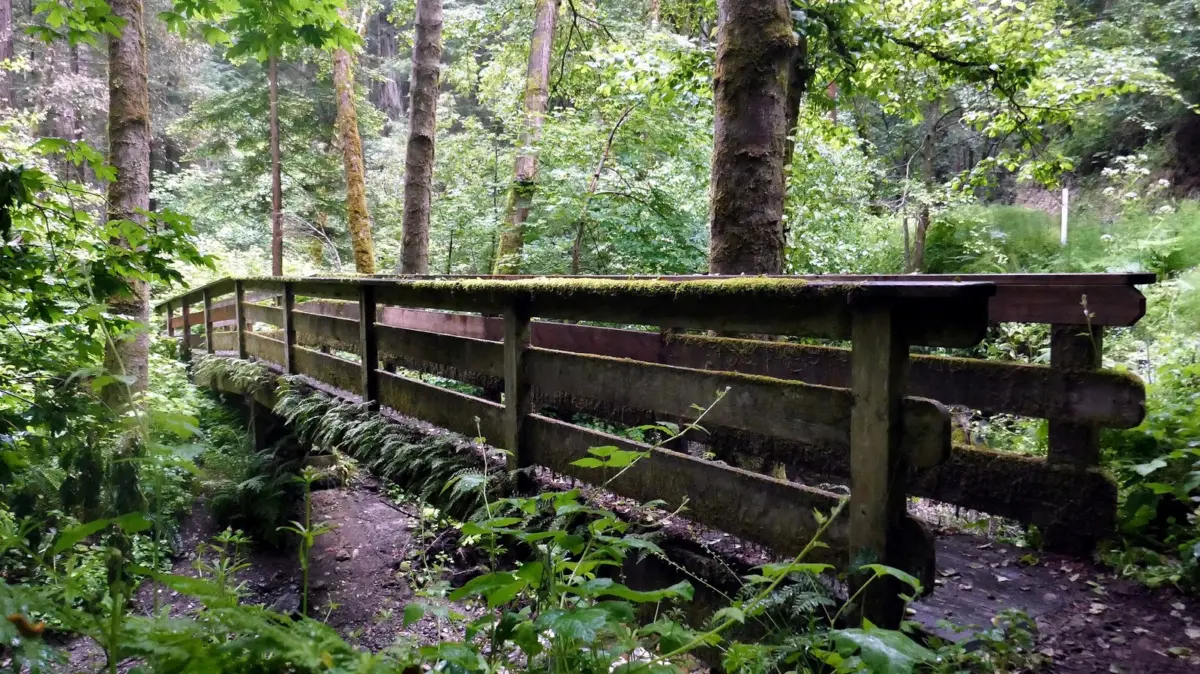
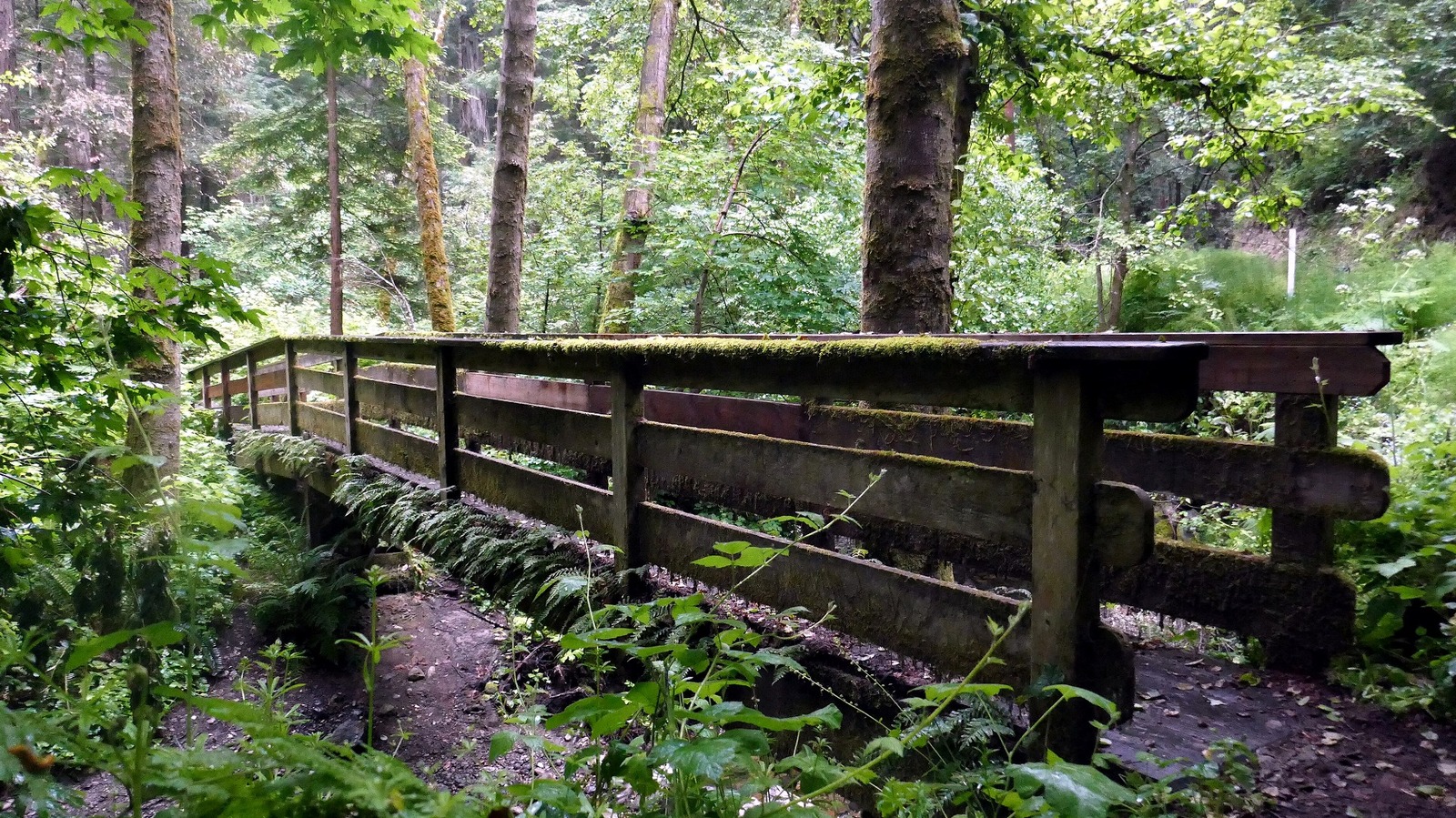
These species create layered canopy structures that capture coastal fog, precipitating "fog drip" down to the forest floor. This natural irrigation system sustains lush undergrowth consisting of sword ferns, redwood sorrel, and huckleberry bushes. These botanical dimensions mirror those found at California’s oldest state park, Big Basin Redwoods State Park, located just over an hour away.
Wildlife Habitats and Carbon Sequestration Metrics
Ecologically, the park functions as a vital carbon sink. Coast redwoods are among the most efficient carbon-sequestering organisms on Earth, pulling massive quantities of carbon dioxide out of the atmosphere and storing it in their dense, fire-resistant heartwood for centuries.
This lush habitat supports a diverse menagerie of endemic wildlife. Visitors traversing the trails frequently encounter or hear:
- Western gray squirrels scampering across mossy nurse logs
- Great horned owls perched silently in the upper canopy
- Steller’s jays flashing brilliant blue plumage against the green backdrop
- California newts navigating damp forest floors during seasonal migrations
Visitor Metrics and Crowd Dynamics
To truly appreciate Pescadero Creek County Park, one must look at visitor density statistics relative to other California landmarks. While the broader collection of San Mateo County parks draws approximately 3 million visitors annually—many channeled from the nearby coastal foodie haven of Pescadero—the heavy congestion seen at premier national parks is notably absent here.
By comparison, Sequoia National Park and Kings Canyon routinely log over 2 million annual visitors concentrated in relatively narrow, high-impact corridors. Pescadero Creek County Park, by contrast, absorbs its visitors across more than 8,000 acres and 26 miles of meticulously maintained trails. The result is a profoundly quiet, uncrowded outdoor recreation experience where solitude is the norm rather than the exception.
Official Statements and Educational Stewardship
The preservation of Pescadero Creek County Park extends far beyond passive land conservation; it actively engages the surrounding community through immersive educational programs that foster environmental literacy and outdoor leadership.
Institutional Stewardship and Policy
San Mateo County Parks management emphasizes that the health of the Pescadero Creek Complex depends on active community engagement and science-based management. According to county park planning documents, current forest health restoration projects are designed to "increase the overall biological diversity and resilience of the watershed by systematically mitigating the legacy impacts of 19th-century timber harvesting." Park officials stress that removing excess dead and down woody debris is critical not only for reducing catastrophic wildfire risks but also for opening up vital microhabitats for amphibians, ground-nesting birds, and understory flora.
The Loma Mar Program and FieldGuides
Education is deeply embedded in the park’s operational philosophy. Organizations operating within and adjacent to the park leverage its pristine environment to teach the next generation of environmental stewards.
The renowned Loma Mar Program anchors its curriculum on the foundational pillars of "adventure, self-discovery, and environmental stewardship." Rather than relying solely on traditional classroom instruction, the program immerses students directly into the redwood ecosystem. Participants learn ecological cycles through interactive field songs, team-building exercises, and guided hiking expeditions through old-growth groves.
Similarly, FieldGuides utilizes the park as an outdoor laboratory for local youth, focusing on bushcraft skills and empirical scientific exploration. Students learn everything from the complex aquatic ecology of Pescadero Creek’s water-borne organisms to traditional, non-digital navigation techniques. These immersive educational initiatives bridge the gap between human recreation and ecological preservation, ensuring that visitors leave with a profound respect for the natural world.
Future Outlook: Trails, Conservation, and Sustainable Recreation
Looking ahead, Pescadero Creek County Park stands as a shining example of how regional public lands can balance high-demand recreational use with rigorous ecological conservation. The park’s extensive trail network—spanning 26 miles of well-marked, diverse routes—offers a roadmap for sustainable outdoor access.
Navigating the Trail Network
Reviewers and seasoned hikers consistently praise the park’s trail infrastructure. As noted by frequent visitors on outdoor platforms, the park features "great trail signs! They are all numbered so it makes it hard to get lost. The trails are in nice condition and yet there are no crowds."
Key routes cater to varying skill levels while showcasing different facets of the park’s recovery and ancient history:
- The Pescadero Creek Loop: A thickly wooded, 6-mile route that leads hikers past an exceptionally gigantic old-growth redwood specimen while offering tangible reminders of the past via historical logging equipment left behind from previous eras. The survival of these massive titans serves as a powerful testament to the necessity of preservation.
- The Tarwater Trail Loop: Spanning approximately 5 miles, this trail immerses visitors in second-growth redwoods that are actively replenishing the forest canopy, creating a robust, multi-layered habitat for an expanding population of woodland species.
- The Brook Trail Loop: A more challenging, strenuous hike that rewards visitors with elevated vantage points offering glimpses of the Pacific Ocean, before plunging downward into lush, cathedral-like redwood canyons. As described by outdoor publication HillTromper, navigating these deep canyons is an experience where "even when you know they are coming, the size of the redwoods shocks; a new discovery over and over again."
The Road Ahead
As San Mateo County continues to refine its conservation frameworks, trail maintenance protocols, and educational outreach partnerships, Pescadero Creek County Park is positioned to remain a sanctuary of quiet reflection. While iconic federal parks like Sequoia will always command global attention, regional gems like Pescadero offer a vital antidote to modern over-tourism.
By safeguarding ancient canopies, actively healing damaged watersheds, and welcoming hikers, equestrians, and students alike onto its serene pathways, Pescadero Creek County Park ensures that the majestic silence of the California redwoods will endure for generations to come. Visitors planning a trip are encouraged to check current park status and occasional seasonal updates directly through the County of San Mateo Parks department to ensure seamless access to this coastal treasure.