



Executive Overview
From July 8 to July 11, the crystalline waters of Port Hercule in the Principality of Monaco transform once again into the global crucible for zero-emission marine technology. The 13th annual Monaco Energy Boat Challenge (MEBC)—hosted by the prestigious Yacht Club de Monaco (YCM)—convenes over 50 competing teams, hundreds of brilliant university innovators, electric boat manufacturers, and alternative fuel experts from more than 20 countries across four continents.
Since its inception in 2014, the MEBC has grown in tandem with the electric vehicle revolution on land, effectively serving as the vanguard for technological breakthroughs reshaping commercial, leisure, and competitive water transit. Over the years, the event has acted as a launchpad for 1,825 innovators representing over 30 countries and every continent save Antarctica.

Far more than a simple regatta, the MEBC operates on a dual mandate: it is simultaneously a high-stakes competitive arena pushing prototype vessels to their structural and thermal limits, and an essential industry think-tank challenging the commercial yachting sector to abandon fossil fuels. By pairing aggressive on-water trials with the Advance Yachting Technology Conference and the Alternative Fuels and Sustainable Yachting Conference, Monaco establishes itself not just as a playground for luxury, but as the moral and technical capital of sustainable maritime navigation.
Detailed Chronology: Day-by-Day Event Breakdown
The 2026 MEBC schedule is rigorously designed to test every facet of modern alternative marine propulsion—from raw speed and endurance to energy management, autonomous maneuvering, and real-world range.

Wednesday, July 8: The Grand Parade and E-Boat Rally
The four-day event commences with the iconic Grand Parade, where every competing vessel across all classes processes through the harbor. This visual spectacle is immediately followed by the E-Boat Rally, sending entries from the Open Sea and SeaLab classes on a scenic tour of the YCM harbor before they venture out into the open Mediterranean. Navigating past the architectural marvel of the Oceanographic Museum of Monaco—perched dramatically on the cliffs near the Prince’s Palace—the rally tests low-speed handling and reliability in real coastal conditions.
Thursday, July 9: Qualifying, Speed Records, and Autonomous Trials
The competitive intensity escalates rapidly on Thursday, featuring trials that push both student-built prototypes and commercial electric vessels to their absolute limits:

- Energy Class Qualifying Laps: University teams navigate timed laps within Port Hercule to determine starting grid positions, showcasing the raw efficiency and agility of their custom powertrains.
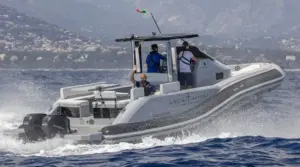
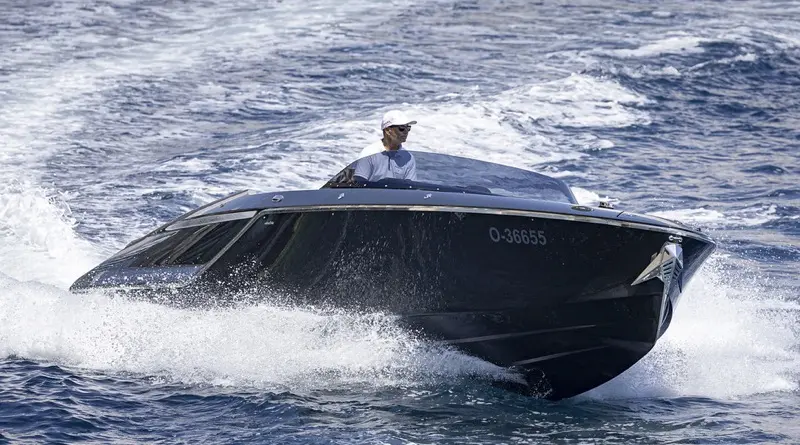
- YCM Speed Record: Inspired by the historic shores where YCM hosted its first international powerboat contest in 1904, this spectacular event runs along the Monaco coastline. Boats complete two 500-meter runs combined into a single one-kilometer timed result. Last year, the Frauscher × Porsche 850 Fantom—utilizing the same electric motor architecture as the Porsche Macan EV—shattered expectations with a blistering speed of 49.84 knots (92.3 km/h / 57.35 mph). This year, its successor, the Frauscher × Porsche 790 Spectre, enters the fray alongside challengers from Explomar, Taiga, Evoy/Vita, WIA Yachts, Weenav, and ZeroJet.
- SeaLab Manoeuvrability: A technical precision-handling trial inside the harbor, grading prototypes on agility, steering responsiveness, and low-speed control.
- AI Class Docking and Fleet: Autonomous vessels face two distinct challenges. In Docking, boats approach and berth entirely without human intervention, testing perception and spatial control. In Fleet, multiple autonomous vessels share active waters, executing dynamic path planning and collision avoidance in real time.
Friday, July 10: Endurance, Long-Distance Runs, and Technical Stamina
While sprint races captivate spectators, Friday’s events prioritize the engineering realities of range, energy conservation, and system reliability:
- Energy Class Endurance Race: Operating over the YCM Speed Record course, student teams must complete the maximum number of laps within a strict timeframe using only a single battery charge or hydrogen tank. This event directly addresses consumer demands for extended range in electric recreational craft.
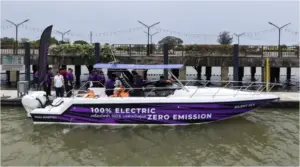
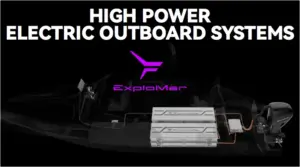
- Open Sea and SeaLab 16 Nautical Mile Race: A grueling offshore test taking boats from Monaco to Ventimiglia, Italy, and back. This cross-border run measures true real-world energy management and durability. Last year delivered a nail-biting finish when an A/XE from Evoy-Vita and Axopar was overtaken in the final moments by the NRGX 6.3 RIB, powered by Explomar’s WAVE 300 (220 kW) electric outboard system.
- AI Class Figure of 8: Autonomous craft navigate a continuous figure-eight layout, evaluating advanced path-planning algorithms, tight turning radiuses, and dynamic obstacle handling.
Saturday, July 11: Championship Knockouts and the Grand Finale
The final day culminates in intense head-to-head battles, crowning the overall champions of the 13th edition:

- Open Sea Manoeuvrability: Final precision challenges testing the real-world harbor handling of commercial electric watercraft.
- SeaLab Endurance: The definitive stamina test for multi-disciplinary maritime prototypes, merging hydrodynamic efficiency with continuous high-output discharge.
- AI Class Slalom: High-speed serpentine navigation through floating buoys, serving as the ultimate test of real-time object detection and reactive algorithmic steering.
- Energy Class Championship: The emotional crescendo of the week. All 26 university teams compete in a head-to-head knockout tournament inside the main harbor. Navigating multiple tight markers, the winner is frequently obscured until the final 25 meters. The raucous cheers from quayside student comrades embody the infectious passion of the entire event.
Supporting Context & Metrics: Infrastructure and Innovations
The YCM E-Dock and Aqua superPower Infrastructure
A critical bottleneck for the adoption of electric boating has long been shore-side charging infrastructure. Addressing this directly, the Yacht Club de Monaco—in partnership with global marine fast-charging leader Aqua superPower—operates the YCM E-Dock. Commissioned in 2023, this specialized eco-pontoon can simultaneously recharge up to 20 electric boats.
Featuring flexible solar panels integrated into its roof structure, the installation utilizes Aqua’s high-power marine charging infrastructure (Aqua 200 HPC) paired with Kempower Satellite technology. Delivering both AC and DC fast-charging capabilities, this facility represents the largest public marine fast-charging installation on a single pontoon globally, eclipsing even the temporary infrastructure deployed for the Paris Olympics sailing events.

Professional Conferences: Driving Industry Decarbonization
The MEBC recognizes that student innovation must be matched by corporate transformation. To bridge this gap, the event hosts two dedicated industry symposia:
- Advance Yachting Technology Conference (Thursday, July 9): Gathers superyacht builders, naval architects, designers, and supply-chain executives. Discussions focus on integrating clean propulsion architectures while optimizing onboard energy efficiency and leveraging digital transformation to reduce hotel loads on luxury vessels.
- Alternative Fuels and Sustainable Yachting Conference (Friday, July 10): Now in its 7th year, this seminar series provides objective, data-driven analysis of alternative marine fuels—including green hydrogen, methanol, ammonia, and advanced biofuels—examining empirical research, regulatory frameworks, and real-world commercial viability.
Official Statements and Industry Insights
The philosophy underpinning the Monaco Energy Boat Challenge is encapsulated by its dual identity as both a sporting competition and an urgent industry call to action.

"While the ‘Challenge’ in Monaco Energy Boat Challenge refers directly to the on-water competitions, it is fundamentally a challenge issued to the global maritime and yachting industry to engineer solutions that preserve our planet, while confronting the environmental realities we all face," notes event coordination literature.
The event’s academic focus has yielded a legacy of excellence, most notably dominated by the University of Bologna. Through its Alma Mater Studiorum teams, Bologna has captured four of the past five Energy Class championship titles, earning a reputation as the undisputed powerhouse of the student competition. Yet, as new academic contenders from across Europe, Asia, the Americas, and the Caribbean converge in 2016, the competitive landscape has never been more fiercely contested.

Future Outlook: The Horizon of Zero-Emission Boating
The trajectory of the Monaco Energy Boat Challenge mirrors the broader maturation of the sustainable marine sector. What began a decade ago as a novelty showcase for university garage projects has evolved into a sophisticated testing ground for commercial entities. Companies such as Frauscher, Porsche, Taiga Motors, Evoy, Vita, ZeroJet, and Explomar now view the MEBC not merely as a marketing exhibition, but as an essential proving ground for high-voltage propulsion architectures, hydrofoiling hulls, and advanced energy-recovery systems.
As international maritime bodies tighten emissions regulations and consumer appetite for silent, vibration-free, fossil-free cruising accelerates, the innovations demonstrated in Port Hercule will inevitably transition from experimental prototypes to mainstream production. The 13th edition of the MEBC proves that the transition away from fossil fuels on water is no longer a distant ideal, but an unfolding reality engineered by the brightest minds of the next generation.
Complete 2026 Competing Teams Directory
Energy Class (University Teams)
- WANNSEA – Germany: Technische Universität Berlin
- URPM RACING – Puerto Rico: University of Puerto Rico at Mayaguez
- UNIVERSITY OF BOLOGNA – Italy: Alma Mater Studiorum – University of Bologna
- TEAM SEA SAKTHI – India: Kumaraguru College of Technology
- TAMEO ENSTA – France: École nationale supérieure de techniques avancées Paris
- POLYBOAT NANTES – France: École polytechnique universitaire de Nantes Université
- POLITO H2FLY – Italy: Politecnico di Torino
- PHYSIS POLIMI – Italy: Politecnico di Milano
- NÉRÉIDES UTT – France: Université de Technologie de Troyes
- MESSINA – Italy: Università degli Studi di Messina
- MARINEROB-UPV – Spain: Universitat Politechnica de Valencia
- INNOBOAT BIZKAIA – Spain: Bilbao School of Engineering, University of the Basque Country
- HYDROVINCI – France: École Supérieure d’Ingénieurs Léonard de Vinci
- HYDROGADZ – France: École Nationale Supérieure d’Arts et Métiers
- HAINAN UNIVERSITY – China: Hainan University
- EXOCET POLYTECHNIQUE – Canada: Exocet Polytechnique Montréal
- ELETTRA UNIGE – Italy: Università di Genova
- ELECTRA TIDE – France: EIGSI École d’ingénieurs généralistes, La Rochelle
- DTU FLOAT FORWARD – Denmark: Danmarks Tekniske Universitet
- CAMBRIDGE UNIVERSITY RIVIERA RACING – UK: Cambridge University
- ADRIA RACING – Croatia: Association of Applied Technical Sciences
OpenSea XPerience (Commercial & Prototype Craft)
- ZEROJET SPARK 330
- ZEROJET SOUTHERN PACIFIC CLUB 590
- ZEROJET OC350
- ZEROJET HIGHFIELD E330
- WNRG TECH
- WIA ELECTRIC YACHTS
- WEENAV
- VITA SEAL
- VALKAMA WATERCRAFTS AAvE
- TAIGA MOTORS
- FRAUSCHER X PORSCHE 790 SPECTRE
- EXPLOMAR POLAND
- EXPLOMAR GERMANY 65
- AS LABRUNA SRL ARCISTRATEGA
- AB ZEROJET
SeaLab Class (Alternative Energy Prototypes & Foiling Craft)
- TU DELFT HYDRO MOTION TEAM: Delft University of Technology – Netherlands
- TECNICO SOLAR BOAT: Instituto Superior Técnico – Portugal
- SWISS SOLAR BOAT: École Polytechnique Fédérale de Lausanne – Switzerland
- SURGE METHANOL FOILING TEAM TWENTE: University of Twente – Netherlands
- RED WAVE UNIVERSITY OF BOLOGNA: Alma Mater Studiorum – University of Bologna – Italy
- HYDROGEN FUEL RACING: University of Glasgow – United Kingdom
- H2-WATT: Heriot-Watt University – United Kingdom
- ALAQUA: Y-H2O (Shenzhen) Technology Co. – China
Artificial Intelligence Class (Autonomous Maritime Systems)
- WANNSEA – AI CLASS: Technische Universität Berlin (TU Berlin) – Germany
- UGENT SAILING: Ghent University – Belgium
- UANTWERP SOLAR BOAT TEAM: University of Antwerp – Belgium
- TSB: Instituto Superior Técnico – Portugal
- TGM: Technologisches Gewerbemuseum Institute of Technology – Austria
- TAMEO AI: École nationale supérieure de techniques avancées Paris – France
- POWERGOATS: Poznan University of Technology – Poland
- FEUP ACADEMIC SOLAR TEAM: Faculdade de Engenharia da Universidade do Porto – Portugal
- AGH SOLAR BOAT: AGH University of Kraków – Poland
- ADRIA AUTONOMOUS: Association of Applied Technical Sciences – Croatia