




Executive Overview
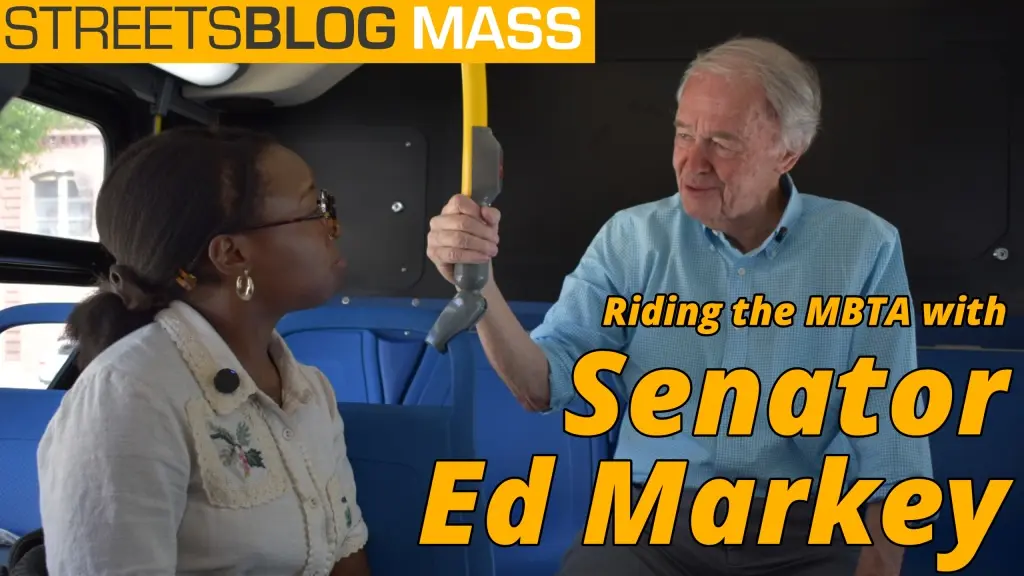
Washington, D.C. — Decades of institutional experience grant few lawmakers the panoramic view of American legislative evolution that Sen. Ed Markey (D-Mass.) possesses. Having first walked the halls of Congress as a U.S. Representative in the mid-1970s, Markey has witnessed the transformation of federal policymaking from an era of sweeping bipartisan infrastructure packages to today’s hyper-partisan legislative gridlock. Yet, during a wide-ranging, mobile interview conducted aboard a bus earlier this week with StreetsblogMASS, the veteran senator made a striking concession: the old playbook no longer works.
For generations, federal transportation policy in the United States has been dominated by the asphalt-and-concrete lobby—prioritizing massive interstate expansions, vehicular throughput, and sprawling highway projects that slice through urban and rural communities alike. Speaking candidly to StreetsblogMASS Editor Christian MilNeil and reporter Meghan Volcy, Markey argued that Democrats and progressive policymakers must fundamentally recalibrate how they approach mobility, climate, and community infrastructure.
"Democrats have to try. They have to work hard. They have to fight harder," Markey stated during the interview. "It’s a transition that we have to make. It doesn’t happen by accident. You have to have people who are worried to put themselves on the line."
This candid assessment comes at a critical juncture in Markey’s political career. As he faces a formidable intra-party challenge from U.S. Rep. Seth Moulton in the upcoming Massachusetts Democratic primary, Markey is leaning heavily into his progressive credentials on climate and transit equity. Moreover, his realization that meaningful investments in non-highway infrastructure are dead on arrival in a Republican-controlled Congress underscores the profound structural barriers facing sustainable urban planning in America today.
This article explores Markey’s evolving stance on federal transit, the shifting political dynamics in Washington and Massachusetts, the hard data surrounding active transportation and public transit funding, and what the future holds for communities fighting to reshape their public rights-of-way.
Detailed Chronology: From the Highway Era to the Quest for Multimodal Equity
The Mid-20th Century Foundation: Paving the Nation
To understand Sen. Ed Markey’s frustration with modern federal transportation spending, one must look back at the legislative architecture that built modern America. The passage of the Federal-Aid Highway Act of 1956 under President Dwight D. Eisenhower launched the largest public works project in U.S. history: the Interstate Highway System. For decades, federal transportation policy was overwhelmingly synonymous with highway construction. Billions of dollars from the Highway Trust Fund flowed preferentially into automobile-centric infrastructure, often at the direct expense of urban neighborhoods, minority communities, and robust public rail networks.
When Markey first arrived in Congress in 1976, this automobile-first hegemony was virtually unquestioned. While environmental consciousness was beginning to take root—marked by the passage of foundational environmental laws in the early 1970s—transportation dollars remained heavily tilted toward rubber tires and combustion engines.
The Legislative Evolution: Incremental Reforms
Over his decades in the House and later the Senate, Markey witnessed incremental shifts in federal policy. The Intermodal Surface Transportation Efficiency Act (ISTEA) of 1991 and its successors (TEA-21, SAFETEA-LU, MAP-21, and the FAST Act) slowly introduced provisions for "congestion mitigation," "air quality improvement," and modest funding set-asides for bike and pedestrian infrastructure.
However, these programs historically received only a fraction of the funding allocated to major highway expansion. Even under the landmark Infrastructure Investment and Jobs Act (IIJA) passed in 2021, which provided historic investments in public transit and passenger rail, traditional highway formulas continued to dominate overall spending allocations, frustrating transit advocates who argued the funding distribution failed to match climate urgency.
The 2026 Mobile Interview: A Modern Reckoning
Against this historical backdrop, Markey’s remarks aboard the StreetsblogMASS bus carry deep weight. Conducted as part of an ongoing dialogue regarding Massachusetts and national transit futures, the interview highlighted the growing disconnect between what contemporary communities demand and what the federal apparatus delivers.
Markey acknowledged that the traditional legislative bargaining—where infrastructure bills were cobbled together through logrolling and bipartisan compromise—is broken. In an era where Republican congressional leadership prioritizes fiscal restraint mixed with localized highway spending while blocking broader federal climate and transit initiatives, Markey admitted that getting progressive transit priorities through a GOP-led House is practically impossible.
Instead, the senator argued for a grassroots-up strategy. Rather than waiting for bipartisan consensus in Washington, progressives must be willing to stake their political capital on transformational projects that directly benefit everyday citizens: accessible public transit, protected bike lanes, and pedestrian-first streetscapes.
Supporting Context & Metrics: The State of American Transit and Active Infrastructure
To contextualize Markey’s policy prescriptions, it is essential to examine the empirical realities of American transportation systems, funding mechanisms, and safety statistics.
The Funding Disparity: Highways vs. Public Transit
Despite growing urbanization and the existential threat of climate change, federal funding structures remain structurally biased toward motor vehicles. According to data from the Federal Highway Administration (FHWA) and the Bureau of Transportation Statistics:
- The Highway Trust Fund Balance: The vast majority of federal gas tax revenues—which have remained stagnant at 18.4 cents per gallon for gasoline and 24.4 cents per gallon for diesel since 1993—are dedicated to highway maintenance and expansion.
- Capital Investment Disparities: While recent federal packages like the IIJA injected billions into Amtrak and urban transit agencies, ongoing operational funding for public bus and rail systems remains precarious, heavily reliant on local and state tax revenues that fluctuate with economic cycles.
- Active Transportation Share: Pedestrian and bicycle infrastructure historically accounts for less than 3% of total federal transportation spending, despite walking and biking accounting for a meaningful percentage of all daily trips and a disproportionate share of traffic fatalities.
The Public Safety Crisis on U.S. Roads
Markey’s observation that citizens "don’t want more highways. They want more affordable public transportation, safer roads, safer ways in which they can be riding their bikes" is backed by alarming public safety data.
- Pedestrian Fatalities: According to the National Highway Traffic Safety Administration (NHTSA), pedestrian deaths in the United States have surged over the past decade, reaching a four-decade high with over 7,500 pedestrians killed annually.
- The Vulnerable Road User Epidemic: Communities across Massachusetts and the broader United States have increasingly demanded "Complete Streets" policies—road designs that prioritize safety for pedestrians, cyclists, and transit riders over raw vehicular speed. Traditional highway-centric design often prioritizes throughput, resulting in wider lanes, higher speed limits, and increased risk for non-motorized road users.
The Political and Geographic Landscape of Massachusetts
Markey’s transit advocacy resonates strongly within his home state, where transportation debates routinely dominate local headlines. From the ongoing modernization and financial challenges facing the Massachusetts Bay Transportation Authority (MBTA) to regional rail expansion projects like East-West Rail, Massachusetts voters are acutely aware of the intersection between transit reliability and economic vitality.
However, Markey’s policy focus also serves as a key differentiator in his upcoming primary battle against U.S. Rep. Seth Moulton. Moulton, a Marine Corps veteran representing Massachusetts’ 6th Congressional District, launched a high-profile challenge against Markey in the Democratic primary. While Moulton has also positioned himself as a champion of modern infrastructure—particularly high-speed rail—the primary contest has forced both candidates to articulate distinct visions for how to deliver progressive results in an increasingly hostile federal legislative environment.
Official Statements & Perspectives
The debate over federal transportation priorities has drawn commentary from various stakeholders across the political and advocacy spectrums.
Sen. Ed Markey (D-Mass.)
Emphasizing the need for a paradigm shift in political courage, Markey noted:
"Democrats have to try. They have to work hard. They have to fight harder. It’s a transition that we have to make. It doesn’t happen by accident. You have to have people who are worried to put themselves on the line… Because that’s what the communities want. They don’t want more highways. They want more affordable public transportation, safer roads, safer ways in which they can be riding their bikes."
Transportation Advocacy Groups
Local and national urban planning advocates have long echoed Markey’s sentiments, pointing out that expanding highway capacity typically induces more traffic congestion rather than alleviating it—a phenomenon known in transportation economics as "induced demand."
In statements responding to the StreetsblogMASS interview, transit equity advocates praised Markey for acknowledging the limitations of working within a gridlocked, conservative-led legislative chamber while urging federal lawmakers to find creative executive and legislative pathways to bypass obstructionism. Groups like the Tri-State Transportation Campaign and MassBike have consistently argued that federal grants should be tied strictly to carbon reduction and Vision Zero safety metrics rather than traditional expansion metrics.
Congressional Opposition and Fiscal Conservatives
Conversely, fiscal conservatives and Republican congressional leaders maintain that federal transportation dollars should focus heavily on foundational infrastructure maintenance—principally repairing aging bridges, interstate highways, and freight corridors that form the backbone of interstate commerce. Opponents of increased federal spending on urban bike lanes and light rail argue that such projects are best left to municipal and state governments rather than being heavily subsidized by federal taxpayers residing in rural or suburban areas.
Future Outlook: Navigating the Road Ahead
As the legislative horizon unfolds, Sen. Ed Markey’s candid remarks point to several critical questions regarding the future of American mobility and governance:
- The Viability of Bipartisan Infrastructure Deals: With polarization at an all-time high, the traditional model of crafting massive, multi-year transportation bills via broad bipartisan consensus faces severe headwinds. If Markey’s assessment holds true—that progressive priorities cannot pass a Republican-led Congress—lawmakers may increasingly pivot toward creative funding mechanisms, state-level experimentation, and executive branch rulemaking through the Department of Transportation.
- The 2026 Massachusetts Primary Dynamics: The immediate political test for Markey lies in next Tuesday’s primary against Rep. Seth Moulton. The outcome will signal whether Massachusetts Democratic voters prioritize Markey’s decades of entrenched progressive leadership, particularly on climate and transit, or favor generational change.
- The Paradigm Shift in Local Communities: Regardless of federal legislative gridlock, municipal leaders across the country are continuing to transform their streets. Driven by grassroots demand for safer neighborhoods, cities are implementing protected bike lanes, pedestrian plazas, and bus rapid transit (BRT) networks independently of federal highway funding.
Ultimately, Markey’s interview serves as both a sobering diagnosis of Washington’s current legislative paralysis and a passionate call to action. For a veteran lawmaker who has spent nearly five decades in Congress, the realization that "we have to fight harder" signals that the battle for the future of American transportation is no longer just about paving roads—it is about fundamentally reimagining how people move through their world.