






Executive Overview
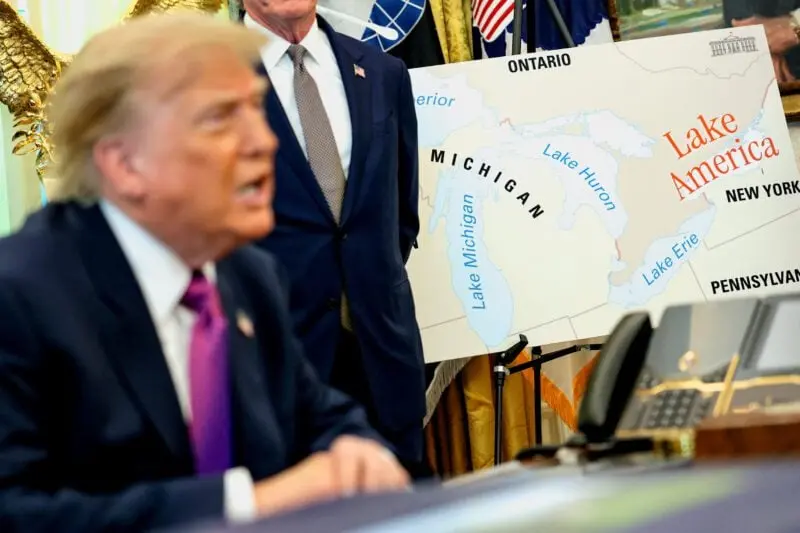
In an unprecedented fusion of cartographic assertion and trade diplomacy, President Donald Trump signed Executive Order 14420 on Thursday, directing all federal agencies of the United States government to rename Lake Ontario as "Lake America." The directive represents a sharp escalation in an already volatile trade dispute between Washington and Ottawa, weaponizing geographical nomenclature to project American hegemony over shared international waters.
The executive order mandates the Department of the Interior and the U.S. Board on Geographic Names (BGN) to formally retire "Lake Ontario" from all federal maps, contracts, and official databases, replacing it with the new nationalized designation. Interior Secretary Doug Burgum has been allocated a strict 30-day window to execute these changes within the Geographic Names Information System (GNIS).
EXECUTIVE ORDER 14420: KEY MANDATES
┌────────────────────────────────────────────────────────────────────────┐
│  • Primary Target: Rename "Lake Ontario" to "Lake America"             │
│  • Execution Window: 30 Days (Directative to Secretary Doug Burgum)    │
│  • Scope: All U.S. Federal Maps, Contracts, Treaties, and Databases    │
│  • Core Justification: Hydrological volume, USCG icebreaking dominance │
└────────────────────────────────────────────────────────────────────────┘
While the mandate is legally binding for U.S. federal entities, it carries no international authority. Lake Ontario is a transboundary body of water shared with the Canadian province of Ontario, home to major Canadian metropolitan centers, including Toronto. Canadian authorities, led by Ontario Premier Doug Ford, have swiftly rejected the designation, declaring that Canada will continue to use the historic name.
This move mirrors a previous administrative action taken in January 2025, when the Trump administration ordered the federal renaming of the Gulf of Mexico to the "Gulf of America." By targeting Lake Ontario, the administration is leveraging the Great Lakes’ complex ecological and economic framework to signal its willingness to dismantle bilateral norms amid a collapsing trade relationship.
Detailed Chronology
The transition of "Lake America" from a rhetorical threat to official federal policy unfolded rapidly over the course of a single week, catalyzed by the sudden breakdown of bilateral trade negotiations.
CHRONOLOGY OF THE ESCALATION
┌────────────────────────────────────────────────────────┐
│ Late August: Collapse of U.S.-Canada Trade Talks       │
├────────────────────────────────────────────────────────┤
│ Tuesday: Trump floats "Lake America" concept online    │
├────────────────────────────────────────────────────────┤
│ Wednesday: Trump warns Canada "to teach them a lesson" │
├────────────────────────────────────────────────────────┤
│ Thursday: Executive Order 14420 signed by President    │
├────────────────────────────────────────────────────────┤
│ Sept 8: Target date for Canadian retaliatory tariffs    │
├────────────────────────────────────────────────────────┤
│ Jan 1: Deadline for threatened 50% automotive tariffs  │
└────────────────────────────────────────────────────────┘
The Trade Breakdown and Tariff Volley
The diplomatic friction peaked in late August when high-level trade negotiations between Washington and Ottawa collapsed. In the immediate aftermath, the United States imposed punitive tariffs of up to 50% on approximately $20 billion worth of Canadian imports.
Ottawa quickly prepared a counter-response, announcing retaliatory tariffs of equal value on U.S. goods, scheduled to take effect on September 8. Additionally, the White House threatened to impose a devastating 50% tariff on Canadian-manufactured passenger vehicles, trucks, and automotive components starting January 1, a move that would severely disrupt the highly integrated North American automotive supply chain.

The Rhetorical Pivot
On Tuesday, President Trump introduced the concept of renaming the lake via social media, linking geographical recognition directly to economic cooperation:
"The United States is giving serious consideration to changing the name of Lake Ontario to Lake America in that we don’t expect to be doing much business with Ontario any longer."
On Wednesday, the President amplified his rhetoric during a press briefing, characterizing the naming dispute as a corrective measure against Canadian trade practices:
"It is time to teach Canada you can’t do this anymore."
The Executive Decree
On Thursday, the threat was codified with the signing of Executive Order 14420. The document directs the Department of the Interior to purge "Lake Ontario" from the federal lexicon. It establishes a 30-day countdown for the updating of international aviation charts, maritime navigational aids, and geological surveys managed by federal agencies such as the National Oceanic and Atmospheric Administration (NOAA) and the United States Geological Survey (USGS).
Supporting Context & Metrics
The administration’s justification for Executive Order 14420 rests on a mix of maritime contributions, ecological funding, and a novel hydrological interpretation of state sovereignty.
The Volume and Bathymetric Argument
The executive order introduces an unusual geographic defense for the renaming, arguing that the United States possesses a de facto claim to the majority of the lake’s water due to the underwater topography (bathymetry) of the basin.
The order states:
"With the deepest parts of the Lake’s waters lying within United States territory, the United States claims most of the Lake’s volume."
LAKE ONTARIO / AMERICA HYDROGRAPHIC PROFILE
┌──────────────────────────────────────┬──────────────────────────────────┐
│ Parameter                            │ Value / Metric                   │
├──────────────────────────────────────┼──────────────────────────────────┤
│ Maximum Depth                        │ 802 feet (244 meters)            │
│ Deepest Basin Location               │ South-Central (U.S. Territory)   │
│ Average Depth                        │ 283 feet (86 meters)             │
│ Total Volume                         │ 393 cubic miles (1,640 km³)      │
│ Shoreline Length (including islands) │ 712 miles (1,146 km)             │
└──────────────────────────────────────┴──────────────────────────────────┘
While the international boundary line bisects the lake relatively evenly from east to west, the deepest trench of the lake—reaching a maximum depth of 802 feet (244 meters)—lies within the southern, U.S.-controlled sector of the basin. The White House uses this bathymetric profile to claim that a greater percentage of the lake’s physical volume resides within U.S. borders, justifying a unilateral name change.
Icebreaking and Infrastructure Contributions
The administration also highlights the unequal distribution of maritime maintenance costs on the Great Lakes. Executive Order 14420 emphasizes that the United States Coast Guard (USCG) maintains nine of the eleven active icebreaking vessels operating across the Great Lakes system, keeping critical shipping lanes open during winter.
Additionally, the document points to the Great Lakes Restoration Initiative (GLRI) and other federal programs, noting that Washington has invested nearly $4 billion over the past decade to combat invasive species, remediate toxic sediments, and restore wetland habitats.
GREAT LAKES MARITIME ASSETS & FUNDING (PAST DECADE)
┌──────────────────────────────────────┬──────────────────────────────────┐
│ Metric                               │ U.S. Share                       │
├──────────────────────────────────────┼──────────────────────────────────┤
│ Active Icebreakers on Great Lakes    │ 9 out of 11 Vessels (81.8%)      │
│ Environmental Restoration Funding    │ ~$4.0 Billion USD                │
│ Key Port Gateways Supported          │ Oswego, NY & Sackets Harbor, NY  │
└──────────────────────────────────────┴──────────────────────────────────┘
The Strategic Value of the St. Lawrence Seaway
Lake Ontario serves as the eastern gateway of the Great Lakes-St. Lawrence Seaway System, a crucial maritime corridor connecting midwestern industrial hubs to the Atlantic Ocean. The basin supports the transit of critical bulk commodities, including:
- Iron Ore and Steel: Essential for the Midwestern manufacturing and automotive sectors.
- Agricultural Yields: Vast quantities of grain exported from both the American Great Plains and the Canadian Prairies.
- Construction Materials: Heavy shipments of cement, stone, and limestone.
By renaming the lake, the administration seeks to project ownership over this vital trade corridor, which connects historical U.S. ports like Oswego and Sackets Harbor, New York, to global shipping networks.
Official Statements
The signing of Executive Order 14420 has drawn sharp, contrasting reactions from Washington, Ottawa, and regional authorities.
The United States Administration
White House officials defended the executive order as a justified assertion of American economic and environmental leadership. A senior administration official stated:
"For decades, American taxpayers have quietly funded the lion’s share of environmental protection, search-and-rescue, and icebreaking operations that keep these waters safe and navigable. Under President Trump’s leadership, we are ending the era where the United States carries the burden without receiving the recognition. If Canada wishes to enjoy the benefits of our shared waterways, they must negotiate fairly on trade."
The Canadian Government
In Canada, political leaders across federal and provincial levels rejected the renaming. Ontario Premier Doug Ford dismissed the executive order, emphasizing the province’s historical connection to the lake:
"The President can call it whatever he likes on his own maps, but to the people of Ontario and Canada, it will always be Lake Ontario. We have a shared history, a shared ecosystem, and a shared economy. Unilateral declarations do not change geography, nor do they change our resolve to stand up for Ontario’s workers and industries in this trade dispute."
A spokesperson for Global Affairs Canada added:
"The Government of Canada remains committed to the co-management of our transboundary waters under the framework of the Boundary Waters Treaty of 1909. We will continue to collaborate with our state and local partners in the United States to protect the Great Lakes, while strongly defending our economic interests against unfair and counterproductive trade measures."
Future Outlook
The implementation of Executive Order 14420 introduces several administrative, legal, and economic challenges that will unfold over the coming months.
POTENTIAL IMPACT PATHWAYS
┌────────────────────────────────────────────────────────────────────────┐
│  • Cartographic Divide: Bifurcated mapping systems (U.S. vs. Global)   │
│  • Legal Disputes: Challenges to federal shipping contracts           │
│  • Treaty Friction: Potential strain on the Boundary Waters Treaty     │
│  • Supply Chain Risks: Tariff deadlines on Sept 8 and Jan 1            │
└────────────────────────────────────────────────────────────────────────┘
Cartographic and Bureaucratic Fragmentation
The immediate challenge lies within federal cartography and data systems. Over the next 30 days, Secretary Doug Burgum and the U.S. Board on Geographic Names must update thousands of digital maps, maritime charts, and geographic databases.
This creates a bifurcated cartographic environment:
- U.S. Federal Agencies (NOAA, FEMA, National Park Service, FAA) will be legally required to label the body of water "Lake America" in all official documents, weather forecasts, and navigation charts.
- International Organizations, including the International Hydrographic Organization (IHO), the United Nations, Canadian agencies, and private mapmakers like Google Maps and National Geographic, are highly likely to retain "Lake Ontario" to maintain clarity.
This division could introduce confusion for international shipping vessels, commercial pilots, and search-and-rescue teams operating across the international boundary line.
Lessons from the "Gulf of America" Precedent
The practical limits of this renaming policy are highlighted by the January 2025 executive order targeting the Gulf of Mexico. While U.S. federal agencies adopted the "Gulf of America" designation internally, the international community, including Mexico and Latin American trade partners, largely ignored the change. Private cartographers continue to print "Gulf of Mexico" on commercial maps, suggesting that "Lake America" may face a similar fate outside of U.S. government agencies.
Legal and Treaty Implications
Environmental and legal experts have raised concerns regarding the impact of the name change on bilateral agreements, particularly the Boundary Waters Treaty of 1909. This treaty governs the joint management of the Great Lakes through the International Joint Commission (IJC).
A unilateral name change by one signatory could complicate the drafting of future environmental accords, joint water-quality agreements, and shipping regulations, especially if Canadian officials refuse to sign treaties containing the name "Lake America."
Economic Consequences of the Trade War
The renaming of the lake is ultimately a symbolic component of a larger trade conflict. If negotiations do not resume, the implementation of Canadian retaliatory tariffs on September 8, followed by the proposed 50% U.S. tariffs on Canadian automotive exports on January 1, could disrupt cross-border supply chains.
In this environment, "Lake America" serves as a highly visible reminder of the administration’s willingness to challenge long-standing bilateral norms to achieve its economic goals.