



Executive Overview
Freshwater ecosystems across Denmark and the broader European continent face a slow, compounding ecological crisis. Decades of agricultural runoff, industrial discharge, and urban wastewater have fundamentally altered the chemical composition of inland water bodies. Even as stringent modern regulations curb contemporary nutrient inputs, a silent legacy persists at the bottom of these aquatic systems: nutrient-rich, historic sediment layers. These benthic deposits continually cycle phosphorus and nitrogen back into the water column, fueling perpetual cycles of toxic algal blooms, plunging oxygen levels, severe biodiversity loss, and significant emissions of greenhouse gases such as methane and carbon dioxide.
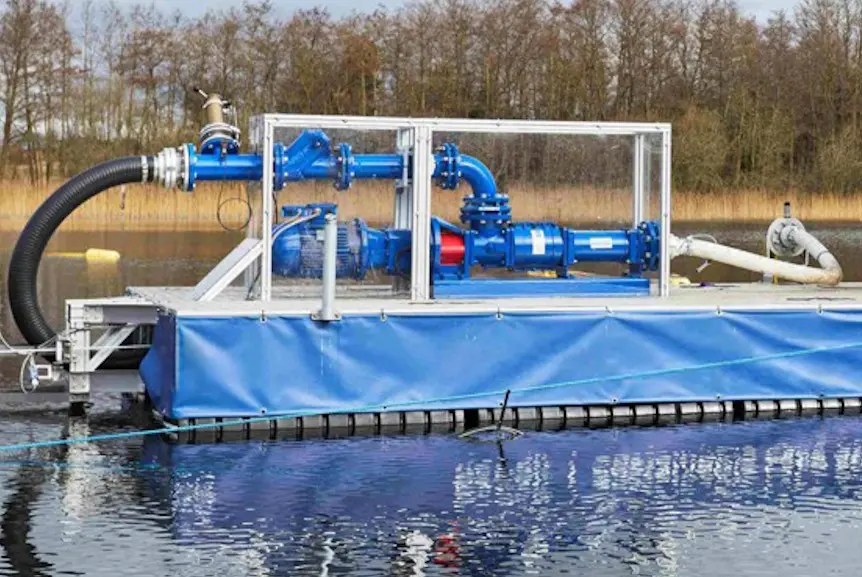
To break this vicious ecological feedback loop, the Innovation Fund Denmark has awarded a substantial grant of DKK 22.1 million (approximately $3.4 million) to a cutting-edge initiative known as the RESTORE project. Headed by Professor Kasper Reitzel from the Department of Biology at the University of Southern Denmark (SDU), this multi-year endeavor aims to pioneer, scale, and validate a transformative sediment-removal technology. At the heart of the RESTORE initiative is a purpose-built, highly targeted robotic dredging system colloquially known as the "Lakebot" (or søbot in Danish).
Unlike conventional, heavy-handed dredging techniques that disrupt entire aquatic ecosystems, uproot native flora, and destroy micro-habitats, the Lakebot is engineered for precision, gentleness, and high efficiency. Building directly upon a successful 2024 prototype test conducted in Lake Ormstrup, the project will transition from small-scale trials to full-scale operations across three distinct Danish lakes. Beyond merely cleaning water bodies, RESTORE embodies a circular economy paradigm: the extracted, phosphorus-laden sediment will not be treated as a waste product, but rather processed and safely recycled as a valuable agricultural fertilizer.
This comprehensive report examines the technological mechanics of the Lakebot, the ecological stakes of European freshwater degradation, the chronological path of the RESTORE project, and the broader implications for environmental engineering, capital dredging, and agricultural sustainability.
Detailed Chronology: From Lake Ormstrup Prototype to National Implementation
The journey toward the RESTORE project is rooted in years of academic research, field trials, and technological iteration led by the University of Southern Denmark’s aquatic biology teams. Understanding the project’s current trajectory requires tracing the critical milestones that have brought Danish freshwater restoration to the brink of a technological revolution.
The Legacy Problem and Early Research
For decades, traditional lake management focused almost exclusively on stopping the inflow of pollutants from upstream sources. While legislative frameworks such as the European Union’s Water Framework Directive (WFD) successfully forced municipalities and agricultural sectors to reduce nitrogen and phosphorus runoffs, limnologists—scientists who study inland waters—noticed a puzzling phenomenon. Many lakes failed to recover. Water clarity remained poor, and summer algal blooms persisted unabated.
Researchers like Kasper Reitzel identified the culprit: internal loading. Decades of accumulated organic matter and phosphorus had settled into the benthic mud. This sediment acted as a chemical time bomb. During warm summer months, when bottom waters became depleted of oxygen, chemical reactions released bound phosphorus back into the water column, fueling internal eutrophication entirely independent of current surface runoff. Traditional dredging methods—using massive cutter-suction dredges or mechanical draglines—were often too expensive, highly disruptive to delicate benthic ecosystems, and logistically unfeasible for medium-to-small lakes. A fundamentally new approach was desperately needed.
The 2004–2024 R&D Phase and the Lake Ormstrup Breakthrough
The conceptual framework for the Lakebot began taking shape through iterative laboratory testing and small-scale field trials at SDU. Researchers realized that removing only the uppermost, highly reactive layer of sediment—rather than digging deep channels—could effectively strip the lake of its internal phosphorus engine without causing catastrophic turbidity spikes.
This theoretical model transitioned into physical reality in 2024, when Reitzel and his research collective deployed an early prototype of the Lakebot in Lake Ormstrup. The trial was designed to test the maneuverability, suction efficiency, and immediate ecological footprint of the robotic unit. Operating in shallow, sensitive waters, the prototype successfully skimmed nutrient-dense surface sediments with minimal disturbance to the surrounding aquatic flora and fauna.
The success of the Lake Ormstrup trial served as the proof-of-concept required to secure institutional backing. Buoyed by these promising empirical results, the research team spent late 2024 and 2025 refining the technology, enhancing its autonomous navigation systems, optimizing its sediment-separation mechanics, and forging partnerships with municipal authorities, industrial engineering firms, and agricultural stakeholders.
August 2026: The Innovation Fund Denmark Grant and the Launch of RESTORE
The formal realization of this multi-year groundwork arrived in August 2026, when the Innovation Fund Denmark announced its investment of DKK 22.1 million into the newly christened RESTORE project. This substantial infusion of capital transformed RESTORE from a promising academic pilot into a nationally significant, full-scale industrial and ecological demonstration project.
With funding secured, the timeline for the next phase of the project has been aggressively mapped out:
- Phase 1 (Late 2026): Engineering optimization of the second-generation Lakebot, integrating advanced sonar mapping and AI-driven sediment-depth sensors to differentiate between benign deep soil and reactive surface muck.
- Phase 2 (2027–2028): Full-scale deployment and sediment extraction across three carefully selected Danish lakes representing diverse hydrological and ecological profiles.
- Phase 3 (2028–2029): Comprehensive multi-year monitoring programs, data synthesis, environmental impact assessments, and the establishment of regulatory frameworks for scaling the technology commercially across Europe.
Supporting Context & Metrics: The Science of Eutrophication and Sediment Dynamics
To fully grasp the significance of the RESTORE initiative, one must examine the biophysical mechanics of lake eutrophication and the specific challenges associated with modern capital and maintenance dredging in inland waters.
Eutrophication: The Silent Killer of Inland Waters
Eutrophication is the process by which a body of water becomes overly enriched with minerals and nutrients, inducing excessive growth of plants and algae. While this can be a natural geological aging process over millennia, human activities (anthropogenic eutrophication) have accelerated this timeline by orders of magnitude.
When excess nitrogen and phosphorus enter a lake:
- Algal Blooms: Phytoplankton populations explode, turning the water a turbid green or brown.
- Light Deprivation: Dense surface mats of algae block sunlight from reaching submerged aquatic vegetation (macrophytes). Without light, these plants die, removing crucial habitats for fish and macroinvertebrates.
- Hypoxia and Fish Kills: When the massive algal blooms inevitably die off, bacterial decomposition consumes vast quantities of dissolved oxygen in the water column. The resulting hypoxic (low-oxygen) or anoxic (zero-oxygen) conditions lead to massive fish kills and the suffocation of benthic organisms.
- Greenhouse Gas Production: Under anoxic conditions in the sediment, microbial communities thrive on decomposing organic matter, producing large volumes of methane ($CH_4$) and nitrous oxide ($N_2O$)—greenhouse gases with global warming potentials vastly exceeding carbon dioxide ($CO_2$).
The Limitations of Conventional Dredging
For decades, municipal authorities attempting to combat eutrophication turned to traditional dredging. However, conventional marine dredging equipment is ill-suited for the delicate ecologies of inland lakes:
- High Ecological Disruption: Heavy cutter-suction dredges churn up vast clouds of fine sediment, smothering fish gills, burying spawning grounds, and releasing toxic pore-water into the wider water column.
- Excessive Costs: Transporting heavy machinery, setting up massive dewatering basins, and managing high volumes of mixed water and soil make traditional projects economically prohibitive for smaller municipalities.
- Loss of Habitat: Indiscriminate digging alters the bathymetry (depth contours) of lakes, often destroying shallow littoral zones that are vital for amphibian and bird breeding.
Enter the Lakebot: Precision Engineering for Aquatic Healing
The RESTORE project’s søbot (Lakebot) is specifically engineered to overcome these limitations. Operating on a lightweight, modular catamaran or tracked platform, the Lakebot functions like an underwater vacuum cleaner combined with a precision surgical tool.
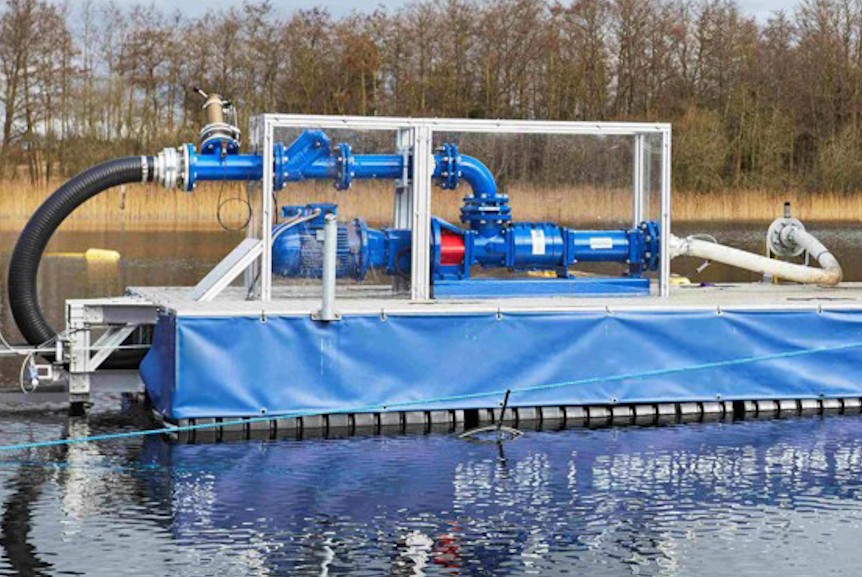
Key technical advantages of the Lakebot include:
- Targeted Suction Profiles: Equipped with specialized low-shear suction heads, the device skims only the top 5 to 20 centimeters of fluff and loose organic sediment where labile phosphorus is concentrated, leaving the stable, consolidated mineral soils untouched.
- Real-Time Turbidity Control: Integrated acoustic Doppler current profilers and optical turbidity sensors allow the operating system to dynamically adjust pump suction speeds, preventing sediment resuspension and downstream drift.
- Low Energy Footprint: Designed to operate on electric power—potentially tied to shore-based green energy grids or onboard battery packs—the Lakebot minimizes the carbon footprint traditionally associated with diesel-powered dredge fleets.
The Circular Economy: Turning Muck into Fertilizer
One of the most innovative aspects of the RESTORE project is its commitment to resource recovery. Dredged lake sediment is frequently treated as a hazardous waste or relegated to low-value landfill disposal due to concerns over heavy metals or organic contaminants. However, agricultural runoff-derived sediment is fundamentally rich in phosphorus—a finite, globally critical element essential for food production, much of which is currently imported into Europe as mined phosphate rock.
Through RESTORE, the extracted sediment will undergo processing, dewatering, and chemical stabilization. By stripping out potential contaminants and concentrating the reclaimed phosphorus, the project aims to create a safe, certified organic-mineral soil conditioner or fertilizer. This closes the nutrient loop: phosphorus that washed off agricultural fields and polluted the lakes is recovered and safely returned to the agricultural sector, reducing Europe’s reliance on imported mined fertilizers and mitigating circular waste challenges.
Official Statements and Stakeholder Perspectives
The launch of the RESTORE project has garnered widespread attention from academic institutions, environmental agencies, and technological partners across Scandinavia.
Professor Kasper Reitzel of the University of Southern Denmark’s Department of Biology, who is leading the initiative, emphasized the urgent need for scalable innovation:
"Lakes are among the most heavily impacted ecosystems we have in Denmark and across Europe. For years, we have successfully reduced the external loading of nutrients from land, but our lakes remain trapped in a historical legacy of internal pollution. Phosphorus accumulated in the sediment continues to cycle year after year, perpetuating poor water quality, biodiversity loss, and greenhouse gas emissions. With the backing of Innovation Fund Denmark, RESTORE allows us to move beyond passive waiting and actively heal these systems using a gentle, circular technology that respects the delicate balance of aquatic life."
Representatives from Innovation Fund Denmark highlighted the project’s alignment with national and European green transition goals:
"The RESTORE project represents a textbook example of mission-driven research. It bridges fundamental biological science with advanced robotic engineering and commercial circular economy principles. By solving a complex environmental challenge—internal lake loading—while simultaneously securing valuable phosphorus resources for agriculture, Professor Reitzel’s team is demonstrating how Danish innovation can deliver scalable solutions to global ecological crises."
Environmental engineers collaborating with SDU on the development of the Lakebot prototype noted that the transition from small-scale testing to full-scale deployment in three diverse Danish lakes will provide an unprecedented dataset for aquatic restoration:
"Monitoring three distinct water bodies before, during, and after sediment removal will give us the rigorous empirical evidence required to prove that robotic, low-impact dredging is not just a niche academic experiment, but a commercially viable standard for lake management throughout the European Union and beyond."
Future Outlook: Implications for Environmental Engineering and European Water Policy
As the RESTORE project moves into its active operational phases, its implications extend far beyond the borders of Denmark. The success of the Lakebot and the associated sediment-recycling framework could establish a new benchmark for ecological engineering across the globe.
Scaling Across the European Union
Under the European Union’s Water Framework Directive, member states are legally obligated to achieve "good ecological status" for all surface waters. Yet, thousands of lakes across Central and Northern Europe continue to fall short of these targets primarily due to historical internal nutrient loading. Traditional remediation techniques—such as chemical dosing with aluminum salts to bind phosphorus, or biomanipulation (adjusting fish stocks)—often offer only temporary relief.
If RESTORE successfully demonstrates that full-scale, robotic sediment removal can permanently reset a lake’s nutrient balance while remaining cost-effective and ecologically benign, municipal authorities across the EU will have a powerful new tool in their regulatory toolkit. The methodology developed at SDU could easily be adapted for lakes in Germany, Sweden, the Netherlands, and beyond, opening substantial commercial markets for environmental technology and marine engineering firms.
Transforming Capital and Maintenance Dredging
The dredging industry is undergoing a philosophical shift. Historically focused on navigation depth (keeping shipping lanes and ports open), the sector is increasingly pivoting toward environmental remediation, ecological enhancement, and climate adaptation.
The engineering principles behind the Lakebot—precision robotics, real-time turbidity mitigation, low energy consumption, and minimal physical footprint—point the way forward for the broader dredging sector. As environmental regulations tighten and public tolerance for habitat destruction diminishes, heavy mechanical dredging in sensitive inland and coastal waters will face mounting scrutiny. Technologies that prioritize minimal disturbance and maximum resource recovery will define the next generation of marine infrastructure development.
Agricultural Resilience and Phosphorus Security
The circular economy model championed by RESTORE addresses a geopolitical vulnerability as much as an ecological one. Europe possesses virtually no native phosphate rock mines and remains heavily dependent on imports from geopolitical hotspots and volatile global commodity markets. By safely extracting, processing, and recycling phosphorus from inland lake sediments back into agricultural rotations, projects like RESTORE contribute directly to European strategic autonomy in food production while simultaneously cleaning up the natural environment.
Conclusion
The University of Southern Denmark’s RESTORE project, fueled by DKK 22.1 million from Innovation Fund Denmark and led by Professor Kasper Reitzel, marks a watershed moment in freshwater ecology. By replacing blunt, destructive dredging methods with the surgical precision of the Lakebot—and by transforming toxic sediment burdens into valuable agricultural resources—RESTORE offers a beacon of hope for damaged aquatic ecosystems. As the project rolls out across three Danish lakes in the coming years, the eyes of the European environmental community will be fixed on Denmark, watching a silent technological revolution breathe new life into our inland waters.