






Executive Overview
In an era defined by stringent environmental regulations, urban congestion, and the constant pressure to optimize supply chain efficiency, intermodal logistics has emerged as the definitive battleground for modern ports. At the heart of Europe’s maritime trade, the Port of Hamburg is witnessing a quiet yet profound logistical transformation. The Hamburg Container and Chassis Repair Company (HCCR)—a specialized subsidiary of Hamburger Hafen und Logistik AG (HHLA)—is successfully spearheading a major expansion in the rail transport of empty containers.
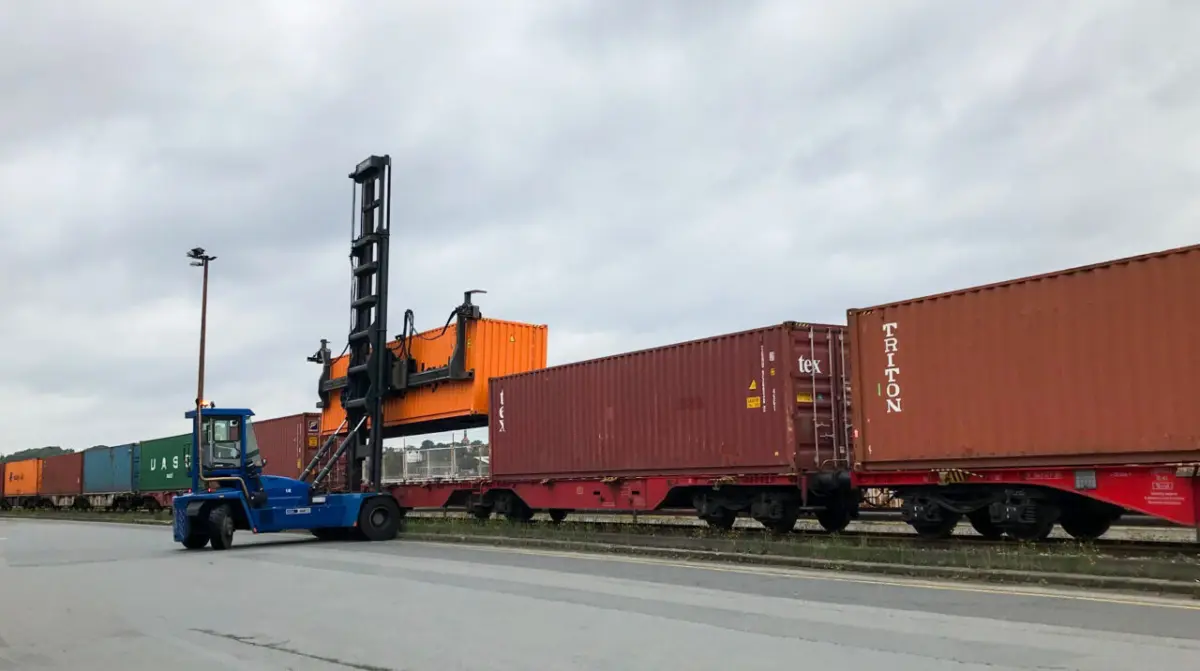
By leveraging advanced intermodal infrastructure and strategic hinterland connections, HCCR moved approximately 20,000 Twenty-Foot Equivalent Units (TEUs) by rail from its primary depot on Altenwerder Damm to inland destinations throughout 2025. This impressive volume is projected to grow substantially through 2026. This anticipated growth is driven primarily by an increasing number of major shipping lines, freight forwarders, and container leasing companies choosing to consolidate their empty inventory at the HCCR facility for direct loading onto high-capacity block trains.
The strategic pivot toward rail is not merely an operational convenience; it represents a vital recalibration of port-hinterland logistics. By transitioning thousands of container movements off regional motorways and local port roads, HCCR is directly addressing the dual crises of highway congestion and carbon emissions. The facility’s modern infrastructure—capable of accommodating massive, 720-meter-long block trains carrying up to 100 containers simultaneously—positions HCCR as a pioneering model for sustainable logistics in European port operations.
This comprehensive report examines the operational mechanics, strategic milestones, environmental implications, and economic drivers behind HCCR’s rail expansion, offering an authoritative look at the future of container logistics in Northern Europe.
Detailed Chronology: From Decommissioning to Intermodal Excellence
The success story of HCCR’s rail integration is built upon a foundation of careful long-term planning, infrastructure restoration, and calculated capital investment. To understand how the facility achieved its current throughput of 20,000 TEUs annually, it is essential to trace the chronological evolution of the Altenwerder Damm site and its associated rail infrastructure.
The Era of Decline and Dormancy
Decades ago, as road freight expanded rapidly and regional highway networks scaled up to meet the demands of post-reunification European trade, rail sidings within secondary depots across European ports were frequently sidelined. The prevailing economic sentiment favored the apparent flexibility of heavy goods vehicles (HGVs) over the rigid scheduling of rail freight.
At the HCCR depot on Altenwerder Damm, this shift resulted in the progressive decommissioning of the site’s dedicated railway siding. For years, the tracks lay dormant, overgrown, and disconnected from the active switching yards of the port. Container movements entering and leaving the depot were handled exclusively by diesel-guzzling trucks, contributing to local traffic bottlenecks and increasing the port’s carbon footprint.

The 2015 Turning Point: The Reactivation Initiative
Recognizing that the long-term viability of container logistics would inevitably demand more sustainable, high-capacity transport modes, HHLA and HCCR management initiated a strategic review of the Altenwerder Damm facility in the mid-2010s. The core realization was clear: relying entirely on road transport for empty container positioning was becoming economically and environmentally unsustainable.
In 2015, HCCR took the critical first step by officially recommissioning the long-dormant railway siding. This initial phase involved clearing the tracks, repairing signaling interfaces, and establishing operational protocols with local rail infrastructure managers. While modest in its initial scope, the 2015 reactivation laid the essential groundwork for what would eventually become a high-volume intermodal hub. It proved that rail could be successfully reintroduced into the operational workflow of a specialized container repair and depot facility without disrupting ongoing repair and storage activities.
The 2022 Full Refurbishment: Scaling Up for the Future
Following years of steady utilization and mounting proof-of-concept data, HCCR secured the necessary backing to execute a comprehensive, state-of-the-art modernization of the entire siding infrastructure. Completed in 2022, this multi-million-euro overhaul transformed the aging rail asset into a modern, high-performance intermodal terminal interface.
The 2022 refurbishment included:
- Track Bed Reinforcement: Upgrading the sub-base and laying continuous welded rails capable of supporting heavier axle loads and high-frequency train operations.
- Switchgear Modernization: Installing automated, computerized switching systems to streamline the entry and departure of freight locomotives and rolling stock.
- Extended Siding Capacity: Expanding the operational length of the tracks to seamlessly accommodate the modern European standard for freight efficiency—the 720-meter block train.
Since the completion of this refurbishment, cargo volumes handled via the rail siding have experienced a steady, exponential upward trajectory, culminating in the milestone figures recorded throughout 2025 and projected for 2026.
Supporting Context & Metrics: Operational Mechanics and Market Dynamics
To fully appreciate the significance of HCCR’s rail expansion, one must examine the specific mechanics of empty container logistics. In global maritime trade, empty containers are often viewed as a logistical nuisance—costly to store, cumbersome to reposition, yet absolutely critical to maintain global trade flows. Imbalances in trade mean that industrial regions constantly require empty units to load export goods, while import hubs frequently find themselves overflowing with surplus boxes.
The Economics of Empty Container Repositioning
When a shipping line discharges loaded containers at the Port of Hamburg, those boxes are eventually emptied at distribution centers and retail hubs across Europe. The empty containers must then be collected, inspected, cleaned, repaired if damaged, and repositioned where exporters need them.
Traditionally, this collection and repositioning process relied heavily on drayage trucks running short- to medium-haul routes between inland facilities and port terminals. However, as road congestion worsened and driver shortages plagued the transport sector, trucking empty containers over hundreds of kilometers became financially burdensome and environmentally problematic.
HCCR’s terminal on Altenwerder Damm bridges this gap by acting as a central consolidation hub. Instead of dispatching dozens of individual trucks to haul small batches of empty containers across Germany, freight forwarders and leasing companies now consolidate these units directly at the HCCR depot.
Infrastructure Metrics and Efficiencies
The technical specifications of the modernized HCCR rail facility highlight its operational capacity:
- Train Length Capability: Up to 720 meters. In the European rail network, 720 meters is the benchmark length for maximum operational efficiency, allowing locomotives to haul full-length freight consists without breaking loads down into smaller segments.
- Consist Capacity: A single block train departing the facility can carry up to 100 TEUs in a single journey.
- HGV Equivalent Replacement: By moving 20,000 TEUs annually via rail—with numbers continuing to climb—HCCR is effectively removing thousands of heavy truck journeys from the road each year.
The Southern Germany and Austria Supply Chain Corridor
The primary destinations for the block trains departing from the Altenwerder Damm depot are the major industrial heartlands of southern Germany and Austria. This geographic focus is far from accidental.
Southern Germany and Austria are home to some of Europe’s most export-intensive industrial sectors, most notably the automotive industry and its sprawling network of tier-one parts suppliers. These manufacturers require a constant, highly reliable supply of certified, high-quality empty containers to pack automobile parts, machinery, and finished vehicles destined for global markets via the Port of Hamburg.
Before these containers are loaded onto the block trains, every single unit undergoes rigorous inspection and, where necessary, professional repair at HCCR’s specialized facilities. Once the trains arrive in southern Germany and Austria, the pristine empty containers are immediately dispatched to manufacturing plants. After being packed with high-value export goods, the loaded containers make the return journey back through the Port of Hamburg, seamlessly integrating into worldwide liner services.
Official Statements: Industry Leadership Speaks
The strategic shift toward intermodal empty container logistics at HCCR has drawn praise from maritime and logistics leaders across Germany. The initiative is widely viewed as a textbook example of how port infrastructure can adapt to contemporary ecological and economic pressures without sacrificing operational throughput.
Jens Gutsch, Managing Director of HCCR, emphasized the broader systemic benefits of the rail expansion during a recent briefing on the company’s logistics initiatives:
"By shifting the transport of empty containers to rail, we are relieving pressure on road traffic in the Port of Hamburg and on German motorways. At the same time, we are making an important contribution to reducing emissions and strengthening the sustainability of the connection between the Port of Hamburg and its hinterland."
Gutsch’s remarks underscore a fundamental reality of modern European port management: growth can no longer be achieved by simply adding more trucks to the tarmac. With urban expansion surrounding major port zones and strict European Union decarbonization mandates looming over the transport sector, maximizing rail modal share is an absolute operational necessity.
Industry analysts have similarly lauded HHLA and HCCR for their foresight. By investing in the unglamorous yet essential sector of empty container repair and repositioning, the subsidiary has carved out a highly defensible market niche that delivers value to shipping lines while fulfilling corporate social responsibility (CSR) and environmental, social, and governance (ESG) targets.
Future Outlook: Scaling Intermodal Logistics Beyond 2026
As the logistics sector looks ahead to 2026 and beyond, the trajectory for HCCR’s rail operations points definitively upward. Several macro-level trends suggest that the demand for consolidated rail transport of empty containers will only accelerate in the coming years.
Regulatory Pressures and Decarbonization Mandates
The European Union’s Green Deal and various national climate action plans are systematically tightening the regulatory noose around carbon-intensive transport modes. Measures such as expanded toll systems for heavy diesel trucks, stricter particulate emissions standards, and the phased implementation of the EU Emissions Trading System (ETS) for maritime and transport sectors are making road freight increasingly expensive.
Rail transport, by contrast, benefits from significantly lower carbon emissions per ton-kilometer, especially as Germany’s national rail network (Deutsche Bahn) and private rail operators increasingly source electricity from renewable generation. For shipping lines and leasing companies seeking to decarbonize their Scope 3 supply chain emissions, routing empty container repositioning through HCCR’s rail-connected depot is a highly effective, measurable mitigation strategy.
Mitigating Labor Shortages and Road Congestion
The European logistics market continues to grapple with a severe shortage of qualified truck drivers, an issue exacerbated by an aging workforce and structural challenges within the long-haul transport industry. By consolidating container flows onto 720-meter block trains, HCCR provides a resilient alternative that is far less vulnerable to labor disruptions on the highways.
Furthermore, the Port of Hamburg frequently experiences peak-hour traffic congestion around its major container terminals. Bypassing local roads entirely by loading containers directly onto railcars within the secure perimeter of the Altenwerder Damm facility minimizes gate turnaround times and insulates supply chains from terminal-gate bottlenecks.
Expanding Service Offerings and Digital Integration
Looking forward, HCCR is exploring further enhancements to its rail logistics ecosystem. Plans are underway to optimize terminal turnaround times through advanced digital slot-booking systems, automated container tracking, and closer real-time data integration with major rail freight operators and terminal managers within the Port of Hamburg.
By combining physical infrastructure modernization—such as the 720-meter siding capacity—with smart digital logistics, HCCR is ensuring that its Altenwerder Damm facility remains competitive, agile, and fully equipped to handle the evolving demands of global trade well into the next decade.
Conclusion
The ongoing expansion of rail transport for empty containers by the Hamburg Container and Chassis Repair Company (HCCR) represents a masterclass in strategic port logistics. Through targeted infrastructure investments—highlighted by the reactivation and subsequent full-scale refurbishment of the Altenwerder Damm rail siding—HCCR has successfully transformed an underutilized industrial asset into a high-capacity intermodal powerhouse.
Handling approximately 20,000 TEUs annually and poised for continued growth in 2026, HCCR is proving that sustainability and operational efficiency are not mutually exclusive. By linking its specialized depot directly to the industrial centers of southern Germany and Austria via 720-meter block trains, the company is slashing highway congestion, reducing carbon emissions, and streamlining the complex choreography of empty container repositioning.
As regulatory pressures mount and the demand for resilient, green supply chains intensifies, HCCR’s pioneering rail strategy serves as a compelling blueprint for ports across Europe and the wider world.