









Executive Overview
In the modern architecture of global trade, few supply chain arteries match the scale, velocity, and sheer economic gravity of the Houston Ship Channel. A newly released comprehensive economic impact study, conducted by the premier maritime and transportation consulting firm Martin Associates and commissioned by Port Houston, reveals a staggering reality: marine cargo activity along this vital corridor generated an astonishing $986.9 billion in total U.S. economic value and sustained 3.53 million jobs in 2025.
To put these figures into perspective, the Houston Ship Channel has transcended its traditional identity as a regional port facility. It now stands as an irreplaceable pillar of North American commerce, bridging domestic manufacturers, global energy producers, inland logistics networks, and everyday consumers. From raw petrochemical feedstock to high-value retail containerized imports, the channel functions as an industrial engine whose momentum dictates the financial health of businesses across all 50 states and reaches nearly every single county within the state of Texas.
The newly published findings paint a picture of extraordinary post-pandemic resilience and rapid expansion. Comparing the latest data to Martin Associates’ preceding benchmark report, the total economic value supported by maritime activity along the channel has surged by $98.4 billion between 2022 and 2025. Concurrently, employment supported directly and indirectly within the Lone Star State skyrocketed by 345,755 positions—a remarkable 22 per cent increase.
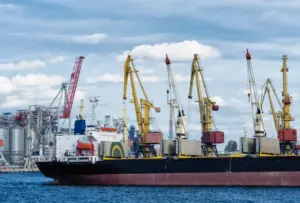
As global supply chains navigate persistent geopolitical volatility, shifting trade routes, and evolving environmental regulations, the Houston Ship Channel continues to break historical records. Propelled by strategic capital investments, infrastructure modernization across eight public terminals and more than 200 private industrial facilities, and an unrivaled network of maritime service providers, the port complex is cementing its status as a cornerstone of America’s economic security.
Detailed Chronology: The Evolution of a Maritime Superhighway
The story of the Houston Ship Channel is one of relentless adaptation. Historically rooted in the energy and agricultural dominance of the American South, the channel has systematically evolved into a diversified global multi-cargo gateway.
The Foundation of Modern Growth (2022 Benchmark Era)
To understand the magnitude of the 2025 findings, one must look back at the trajectory set during the 2022 Martin Associates assessment. At that juncture, global supply chains were reeling from pandemic-induced bottlenecks, port congestion, and unprecedented swings in consumer demand. Despite these systemic shocks, the Houston Ship Channel demonstrated remarkable fortitude, handling surging container volumes driven by the explosive growth of e-commerce, sustained energy exports, and population influxes across the U.S. Sunbelt.
During the 2022 study cycle, the channel’s national economic contribution was already immense, but the post-pandemic economic recovery catalyzed a wave of regional investment. Port Houston, alongside private terminal operators, accelerated capital improvement projects. These initiatives included channel deepening and widening programs (collectively known as Project 11), ultra-large container ship (ULCS) handling upgrades, crane acquisitions, and intermodal yard expansions designed to eliminate friction points along the waterfront.

The 2025 Milestone: Reaching New Heights
By 2025, these strategic investments began yielding exponential dividends. The Martin Associates study captured a fully operational, modernized channel capable of absorbing higher cargo throughput with enhanced velocity.
- National Impact Growth: Total economic value generated nationwide rose by 9 per cent, while total supported jobs grew by 5 per cent compared to the 2022 baseline.
- Intrastate Dominance: Within Texas, the economic acceleration was even more pronounced. State and local tax revenues generated by port and maritime activities climbed an astonishing 47 per cent over the three-year period, reflecting heightened commercial activity, property values, corporate expansions, and income generation linked directly to maritime trade.
- Operational Synergy: The 2025 data encapsulates the collaborative output of more than 1,000 distinct firms operating along the channel. This ecosystem spans deep-sea vessel operators, pilots, tugboat fleets, freight forwarders, rail networks, longshore labor, warehousing and distribution centers, and heavy manufacturing plants.
This chronological leap highlights a fundamental truth about modern logistics: ports are no longer passive points of transfer. They are proactive economic catalysts whose capacity directly dictates how fast regional and national economies can grow.
Supporting Context & Metrics: Unpacking the Numbers
The Martin Associates methodology goes beyond superficial cargo tonnage metrics, utilizing a sophisticated input-output economic model to trace how every dollar spent at the port ripples through the broader economy. The metrics uncovered in the 2025 study offer a granular look at how maritime trade translates into tangible prosperity.
The Texas Economic Footprint
For the State of Texas, the Houston Ship Channel is more than an asset—it is a foundational pillar of macroeconomic stability.
- GDP Contribution: Marine cargo activity directly and indirectly supported $537.7 billion in annual economic value within Texas borders. This figure accounts for a staggering 18.5 per cent of the entire state’s Gross Domestic Product (GDP).
- Geographic Reach: The economic benefits of the channel are not isolated to the immediate Houston metropolitan area. According to the report, maritime activities reached 98 per cent of all Texas counties, injecting capital, supporting local businesses, and sustaining supply chains in rural agricultural communities as well as urban manufacturing centers.
- Job Creation: Public and private facilities along the channel supported 1.89 million jobs within Texas. These are not limited to dockworkers; they encompass trucking fleets navigating interstate highways, rail operators hauling petrochemicals to the Midwest, administrative logistics coordinators, and industrial plant workers whose facilities rely on imported raw materials or export finished goods.
- Public Coffers: The fiscal impact on state and local governments reached $15.6 billion in tax revenue. These funds directly support public education, emergency services, road maintenance, and municipal infrastructure across Texas communities.
The National Economic Ripple Effect
While Texas serves as the physical epicenter, the economic gravitational pull of the Houston Ship Channel extends across all 50 states.
- National Value: The $986.9 billion in total U.S. economic value illustrates that manufacturing plants in the Midwest, agricultural exporters in the Great Plains, and retail distribution hubs on the East Coast are structurally intertwined with Houston’s maritime efficiency.
- National Employment: The 3.53 million jobs supported nationwide represent a vital cross-section of the American labor force. Every container offloaded at Port Houston’s public terminals—such as Barbours Cut or Bayport—sets off a chain reaction of employment spanning warehousing, inland freight forwarding, wholesale trade, and retail sales.
Diverse Industrial Ecosystem
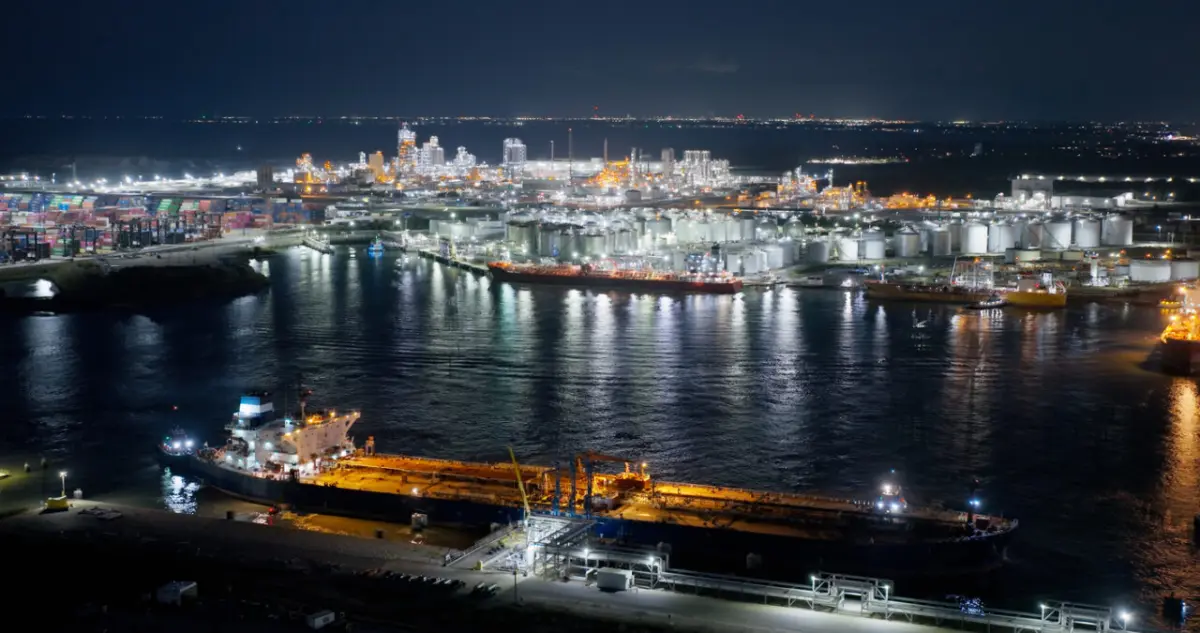
The study evaluated economic impacts generated across eight public terminals managed by Port Houston, alongside more than 200 private industrial docks lining the 50-mile waterway. This dual structure—combining public container handling with private bulk, breakbulk, and liquid energy facilities—creates a diversified economic shield.
While containerized consumer goods reflect the health of retail spending, private facilities handling petrochemicals, crude oil, steel, and agricultural commodities anchor the industrial backbone of the United States. This unique diversification ensures that even if one sector experiences cyclical downturns, others sustain overall employment and revenue generation.
Official Statements: Perspectives from Industry Leaders
The release of the Martin Associates study prompted widespread acclaim from civic and business leaders who recognize the Houston Ship Channel as an indispensable national treasure.
Charlie Jenkins, CEO of Port Houston, emphasized the broad geographic reach and systemic importance of the corridor:
"The Houston Ship Channel is one of the country’s most important economic corridors, and these findings demonstrate its impact far beyond our region. Manufacturers, energy producers, businesses, and consumers across the country depend on this critical gateway to move products."
Jenkins’ remarks underscore the reality that modern supply chains are deeply interconnected. A disruption in Houston is felt instantaneously on assembly lines in Detroit, retail shelves in Chicago, and agricultural distribution centers in Kansas.
Echoing this sentiment, Steve Kean, President and CEO of the Greater Houston Partnership, highlighted how the channel has evolved far beyond its historical roots:
"Houston has long been one of the world’s leading energy gateways, and the impact of the Houston Ship Channel today extends far beyond any single industry. Businesses across the country rely on the Houston region to move raw materials, finished goods, and energy products.
The report’s findings underscore the Houston Ship Channel’s role as an economic engine for our region and one of the nation’s most important strategic assets."
These perspectives capture a shared consensus among regional stakeholders: maintaining the operational excellence, environmental sustainability, and physical capacity of the Houston Ship Channel is a matter of paramount national interest.
Future Outlook: Navigating the Horizon of Global Trade
As Port Houston and its industry partners look beyond 2025, the imperative is clear: proactive planning and continuous investment are essential to sustain growth and manage escalating cargo volumes. Recent operational milestones—such as Port Houston posting record-breaking container volumes through the first half of 2026—demonstrate that demand shows no signs of slowing down.
Infrastructure and Capacity Expansion
To accommodate larger vessels and increasing cargo densities, ongoing engineering marvels like Project 11 remain central to the port’s future. Widening and deepening the Houston Ship Channel will ensure safe, two-way traffic for modern container ships and tankers, reducing transit times and mitigating bottlenecks. Furthermore, investments in zero-emission rubber-tired gantry (RTG) cranes, automated gate systems, and expanded rail sidings will enhance terminal throughput while reducing the environmental footprint of port operations.
Environmental Stewardship and Sustainability
Looking ahead, the economic viability of the Houston Ship Channel is inextricably linked to environmental stewardship. Port Houston has committed to ambitious sustainability targets, including achieving carbon neutrality, electrifying cargo-handling equipment, and implementing shore power for vessels at berth. By balancing aggressive economic growth with rigorous ecological responsibility, the port aims to future-proof its operations against tightening federal and international emissions regulations.
Workforce Development
Sustaining 3.53 million jobs nationwide and nearly 1.9 million jobs in Texas requires a continuous pipeline of skilled maritime and logistics professionals. Collaborative initiatives between Port Houston, local labor unions, vocational institutions, and universities will be vital in training the next generation of crane operators, logistics data analysts, marine engineers, and supply chain managers.
Conclusion
The 2025 Martin Associates economic impact study serves as both a scorecard of past success and a strategic roadmap for the future. Generating nearly $1 trillion in economic value, the Houston Ship Channel has solidified its standing as an economic titan. For manufacturers seeking reliable export routes, businesses importing vital components, and millions of American workers whose livelihoods depend on seamless global trade, the Houston Ship Channel remains open for business—larger, more efficient, and more vital than ever before.