





Executive Overview
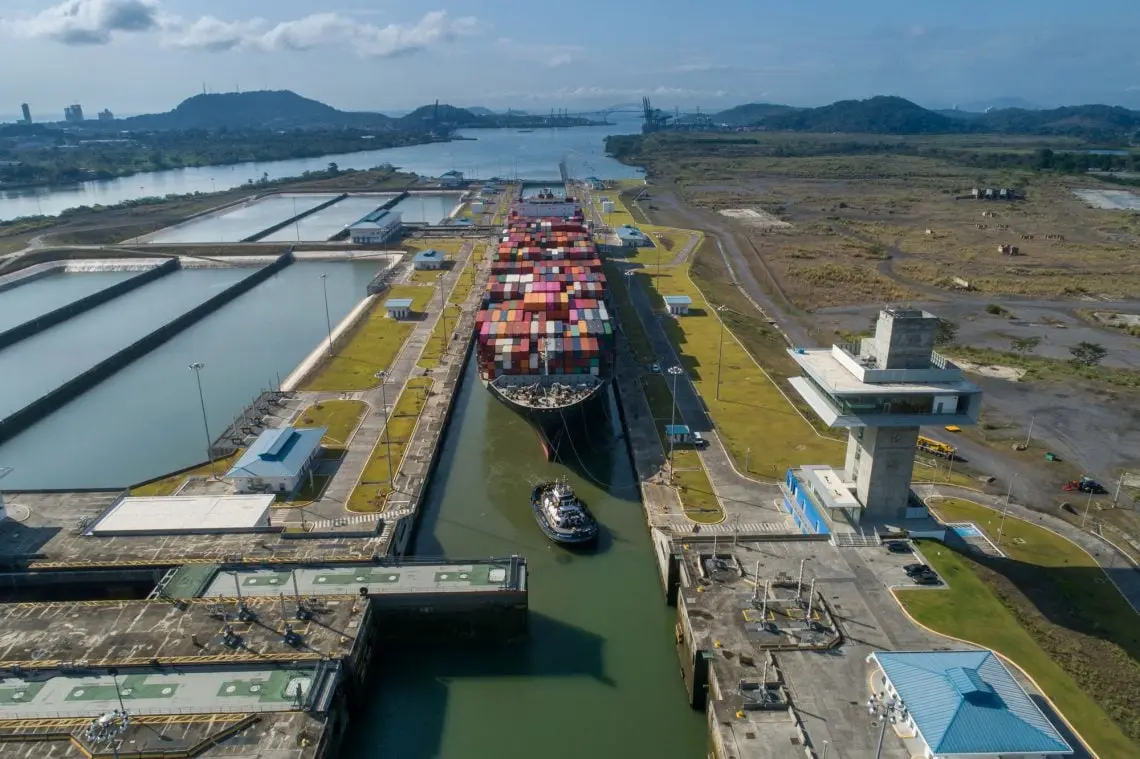
The global maritime supply chain is confronting a volatile new paradigm at the Panama Canal. Driven by a combination of severe climate-induced capacity constraints, escalating geopolitical tensions, and an influx of unscheduled vessels, the cost of securing transit through this vital interoceanic highway has shattered historical precedents. Recent auction data reveals that desperate shipping operators are paying up to $5.3 million for a single unreserved transit slot—a staggering escalation that far exceeds the standard transit fees and underscores the extreme premium now placed on maritime predictability.
According to Ricaurte Vásquez, the Administrator of the Panama Canal Authority (ACP), the share of vessels arriving at the canal without a pre-booked reservation has surged from a historical baseline of 10% to between 20% and 25%. This influx of unscheduled traffic has triggered intense bidding wars. In peak instances, up to 18 vessels have competed via live auction for a single open slot.
This bottleneck is not occurring in a vacuum. It represents the convergence of several macroeconomic and environmental pressures: the lingering hydrological fallout of the historic 2023 El Niño drought, which forced the ACP to slash daily transits, and ongoing geopolitical conflicts—most notably the Red Sea crisis involving Iran-backed Houthi forces—which have compromised alternative global trade corridors like the Suez Canal. As the ACP prepares to implement further transit adjustments, shipping alliances are undergoing radical restructuring. Some, such as Ocean Network Express (ONE), have taken the drastic step of canceling established service routes altogether.
Detailed Chronology: From Hydrological Crisis to the $5.3 Million Bid
To understand the current crisis, one must trace the operational and environmental shifts that have reshaped the Panama Canal’s transit policies over the past two years.
[Late 2023: Historic El Niño Drought]
       │
       ▼
[Early 2024: ACP Restricts Daily Transits & Implements Auction System]
       │
       ▼
[Spring 2024: Auction Prices Rise to ~$385,000 (Up from $135,000 baseline)]
       │
       ▼
[Summer 2024: Red Sea Crisis Diverts Global Shipping to Panama]
       │
       ▼
[August 2024: Unscheduled Arrivals Hit 25%; Bidding Wars Explode to Record $5.3M]
The Hydrological Catalyst of 2023
The origin of the current bottleneck lies in the unprecedented drought of 2023. Characterized by a severe El Niño weather pattern, the region experienced its lowest rainfall in over seven decades. This severely depleted Gatun Lake, the freshwater reservoir that feeds the canal’s lock systems and provides drinking water to much of Panama’s population.
Because each vessel transit through the Panamax and Neopanamax locks flushes millions of gallons of freshwater into the oceans, the ACP was forced into a defensive ecological posture. Daily transits, which historically averaged 36 to 38 vessels, were progressively choked down, reaching a low of just 18 transits per day in late 2023. Draft limits were also reduced, forcing large container ships to carry less cargo to prevent grounding.
The Policy Pivot of 2024
In response to the backlog of vessels waiting in anchorages on both the Pacific and Atlantic sides, the ACP restructured its booking framework. In early 2024, the authority formalised its daily transit auction system and introduced the Long-Term Slot Allocation System (LoTSA). LoTSA was designed to inject predictability into the market, allowing high-volume, scheduled operators to purchase transit slots up to a year in advance.

However, this system left a significantly reduced inventory of slots for spot-market operators and non-scheduled vessels—primarily dry bulk carriers, liquefied petroleum gas (LPG) tankers, and liquefied natural gas (LNG) carriers.
The Escalation of Auction Prices
As spot-market availability contracted, the pricing for the remaining unreserved slots experienced exponential growth:
- Pre-Crisis Baseline: Prior to the escalation of global geopolitical tensions and severe draft restrictions, a standard spot-market auction slot typically cleared between $135,000 and $140,000.
- Spring 2024 (March–April): As draft restrictions persisted and global shipping demand rebounded, average auction prices climbed to approximately $385,000.
- Late Summer 2024: The market entered hyper-inflation. In a matter of weeks, back-to-back records were shattered. An auction slot cleared at $4.6 million, only to be surpassed days later on a Monday when an unidentified operator paid an unprecedented $5.3 million simply to bypass the queue.
This $5.3 million fee is paid in addition to the standard transit tolls, which themselves can run into the hundreds of thousands of dollars, making a single passage through the isthmus one of the most expensive single operational transits in maritime history.
Supporting Context & Metrics: The Mathematics of Bottlenecks
The astronomical spike in auction prices is directly correlated with a dramatic imbalance in supply and demand metrics within the canal’s daily operations.
The Surge in Unreserved Arrivals
According to ACP Administrator Ricaurte Vásquez, the primary driver of the price spikes is the sheer volume of operators arriving without prior bookings.
"We are facing a significant number of vessels coming without reservation," Vásquez noted in an interview with maritime outlet gCaptain. "One of the lessons we learned from the previous El Niño event was that everyone must come and book. So those who do not have a reservation wait, and most of them are the ones who pay high prices in order to get the auction slot."
This behavioral shift is reflected in the operational data. Unreserved arrivals have more than doubled, climbing from their historical average of 10% of daily traffic to between 20% and 25%.
Bidding Density: Neopanamax vs. Panamax Locks
The intensity of the competition is illustrated by the average number of bidders participating in each daily auction.
| Time Period | Lock Type / Category | Average Bidders per Slot | Peak Bidders for a Single Slot |
|---|---|---|---|
| Pre-Crisis Baseline | Standard Daily Auction | 2 – 3 | — |
| Oct 2023 – Mar 2024 | Panamax Locks | ~2 | — |
| Apr 2024 – Aug 2024 | Panamax Locks | >8 | 18 (May Peak) |
| May – June 2024 | Neopanamax Locks | ~4 | — |
| July 2024 | Neopanamax Locks | ~8 | — |
| August 2024 | Neopanamax Locks | ~6 (Average) | 15 (August Peak) |
This surge in bidding density highlights how desperate ocean carriers have become. At its peak in May, 18 distinct shipping lines competed for a single Panamax slot. By August, the larger Neopanamax locks—which accommodate giant container ships and massive LNG carriers—saw up to 15 bidders fighting for a single opening.
Neopanamax Lock Auction Bidders (May - August):

May/June: ▨▨▨▨ (4 average)
July:     ▨▨▨▨▨▨▨▨ (8 average)
August:   ▨▨▨▨▨▨ (6 average / Peak of 15)
The Allocation Framework
To manage this demand, the ACP maintains a highly structured, tiered allocation system:
- The LoTSA System: Long-term, high-volume container lines lock in their transits months in advance.
- Reserved Slots for Specialized Segments: Three auction slots are strictly reserved daily to accommodate highly volatile, short-notice segments, specifically LNG and LPG vessels.
- The Auction Safety Valve: Canceled bookings are immediately rolled into the daily auction pool. This mechanism can dynamically inject an additional 3 to 5 slots per day into the market, depending on cancellations, providing a critical safety valve for unscheduled vessels.
Official Statements and Geopolitical Friction
The extreme pricing at the canal has caught the attention of international policymakers, cargo owners, and heads of state, sparking discussions about the fair valuation of public maritime infrastructure.
The ACP’s Market-Driven Defense
Faced with questions regarding the sustainability and fairness of multi-million dollar transit surcharges, Ricaurte Vásquez has maintained a firm, market-first stance. He emphasizes that the ACP is not arbitrarily raising prices, but is rather allowing the open market to clear excess demand.
"We have communications with everyone," Vásquez stated, addressing inquiries regarding international scrutiny. "We have the local press releases. We have international press releases. These are vessels that did not have a slot. They came and waited, and when the slot opened, they bid for it, and they bid against each other. We do not set prices; the market sets the price."
Political Backlash from the United States
This market-driven pricing model has historically drawn ire from Washington. Former U.S. President Donald Trump has previously criticized the Panama Canal’s fee structures, characterizing them as "exorbitant" and a "ripoff," and going so far as to suggest that the United States should seek greater control over the waterway, which it constructed and operated until the 1999 handover.
Despite these political undercurrents, the ACP has remained steadfast in its commitment to transparency, publishing auction clearing prices and participation metrics to demonstrate that the process is governed by fair, non-discriminatory bidding rules.
The Carrier Retaliation: Route Cancellations and Surcharges
For major ocean carriers, these astronomical auction prices present an unsustainable financial choice: pay millions of dollars to maintain schedules, wait in anchorage for days or weeks (burning fuel and incurring charter-hire costs), or bypass the canal entirely.
Many carriers have chosen to pass these costs directly to cargo owners by implementing "Panama Canal Surcharges," which add hundreds of dollars per container to shipments transiting the route. Others are taking more drastic structural measures.
Ocean Network Express (ONE), a major Japanese container shipping consortium, recently took the significant step of eliminating three established vessel strings that rely on the Panama Canal, redirecting those assets to alternative routes.
Vásquez confirmed that he met with senior ONE executives to discuss these route cancellations.
"They understand the situation," Vásquez said. "They have to redeploy. They have to deliver cargo on time, and they have to do whatever they need to do. We have rules and regulations that apply to everyone, and then we sit with them and say, okay, how about if you do A, B, and C? You can bring a larger vessel. You can do transferring at this place. The slots are available, so you look at what you want to schedule. Being transparent on options is critical to us."
Future Outlook: The September Cut and Long-Term Global Supply Chain Realignments
The immediate outlook for the Panama Canal suggests that the pressure on auction prices will intensify before it stabilizes.
The Looming September Cuts
With further transit restrictions scheduled for September, the supply of available slots is projected to contract yet again. As these cuts take effect, the baseline number of daily transits will shrink, inevitably driving the remaining unreserved slots into even higher price brackets. Industry analysts warn that the $5.3 million record set in August could soon be surpassed as the peak shipping season approaches.
The Red Sea Factor
The situation in Panama is exacerbated by the ongoing geopolitical crisis in the Middle East. The Bab-el-Mandeb Strait and the Red Sea—the gateway to the Suez Canal—remain highly dangerous for commercial shipping due to persistent drone and missile attacks from Yemen.
Consequently, hundreds of vessels that would normally transit the Suez Canal are being diverted. While many are taking the long route around Africa’s Cape of Good Hope, adding 10 to 14 days to their voyages, others are opting to route through the Panama Canal, further compounding the demand on the Central American isthmus. As long as the Red Sea remains volatile, the Panama Canal will face heightened demand that its freshwater-dependent system cannot easily accommodate.
[Geopolitical Crisis in Red Sea] ──> [Suez Canal Traffic Avoidance]
                                              │
                    ┌─────────────────────────┴────────────────────────┐
                    ▼                                                  ▼
       [Route Around Cape of Good Hope]                    [Route to Panama Canal]
       (Adds 10-14 days transit time)                      (Triggers bidding wars)
Long-Term Infrastructure and Strategic Alternatives
In the long term, the Panama Canal Authority is exploring multi-billion dollar infrastructure projects to secure its operational future. These include the construction of a new reservoir on the Indio River, which would divert additional freshwater into Gatun Lake to sustain transits during future drought cycles. However, this project is estimated to take at least five years to complete and requires complex negotiations with local communities and legislative approval.
In the interim, the shipping industry is undergoing a structural realignment:
- The Rise of Land Bridges: Shippers are increasingly utilizing U.S. West Coast ports and transporting cargo eastward via intermodal rail—a modern "land bridge"—to bypass the canal entirely.
- Vessel Upsizing: As suggested by Vásquez, carriers are consolidating cargo onto larger Neopanamax vessels to maximize the volume of goods moved per transit slot, reducing the total number of transits required.
- Regional Transshipment: Ocean carriers are increasingly leveraging transshipment hubs on either side of the canal, discharging containers on the Pacific side to be transported via the Panama Canal Railway to the Atlantic side, avoiding the physical transit of the vessel itself.
The multimillion-dollar bidding wars at the Panama Canal are a symptom of a deeply interconnected global trade network operating at its absolute limits. As climate volatility and geopolitical strife continue to challenge traditional shipping corridors, the ability to secure passage through these choke points will remain a costly strategic battleground for the foreseeable future.