



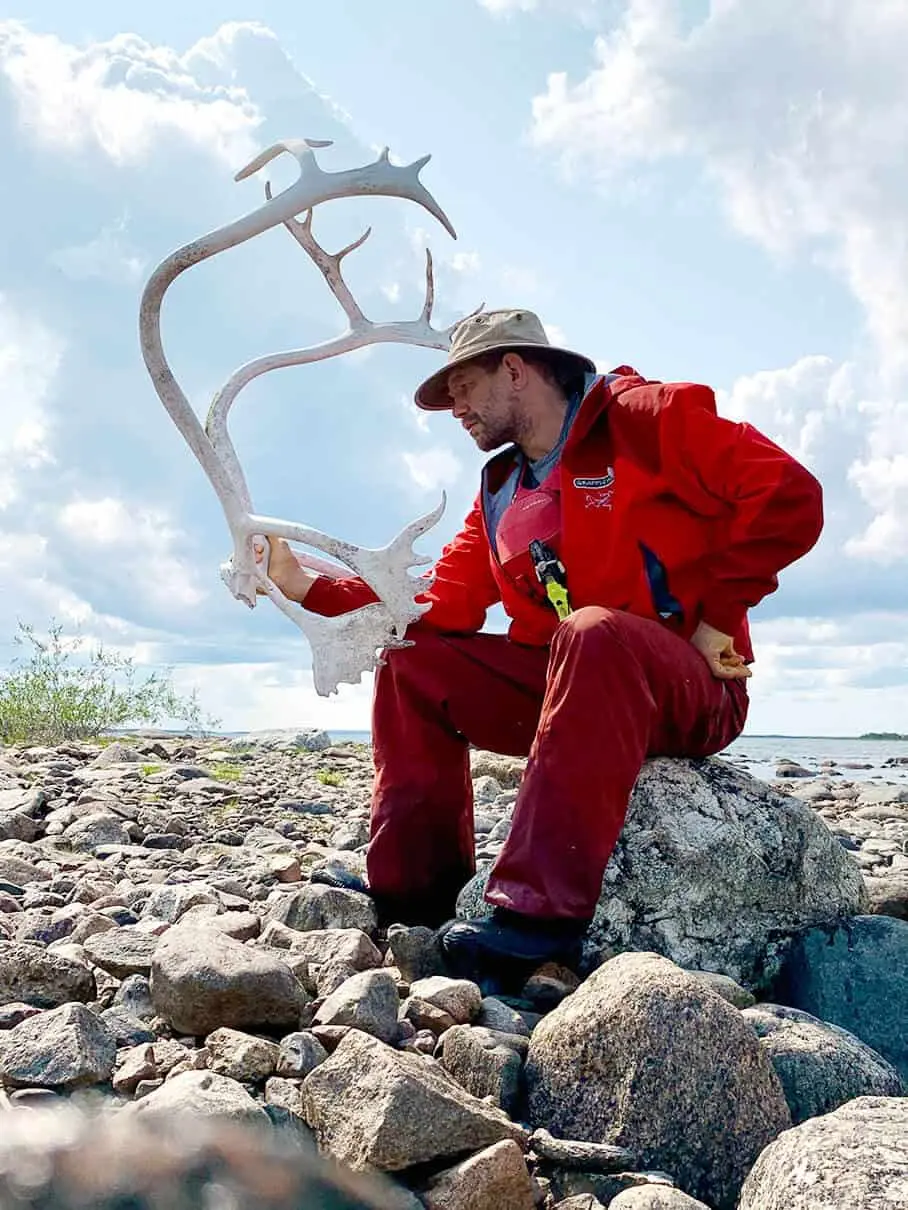
On the precipice of oblivion, when mortality presses hard against the edges of consciousness, the human mind often retreats to its most cherished sanctuaries. For Stephan Kesting—a veteran firefighter, martial arts instructor, and lifelong wilderness voyager—that sanctuary was the unforgiving, breathtaking expanses of the Canadian subarctic.
A decade-long battle with polycystic kidney disease (PKD) had reduced Kesting’s life to a grueling cycle of clinical interventions, profound exhaustion, and crushing mental fog. At his lowest ebb, his kidney function plummeted to a mere 12 percent. Stripped of the physical vitality that defined his existence, Kesting faced the ultimate reckoning. Yet, even as he was wheeled into an operating room in 2019 to receive a life-saving organ transplant from his brother, his thoughts drifted northward—toward the boreal forests, rushing rapids, and silent tundras that he feared he might never see again.
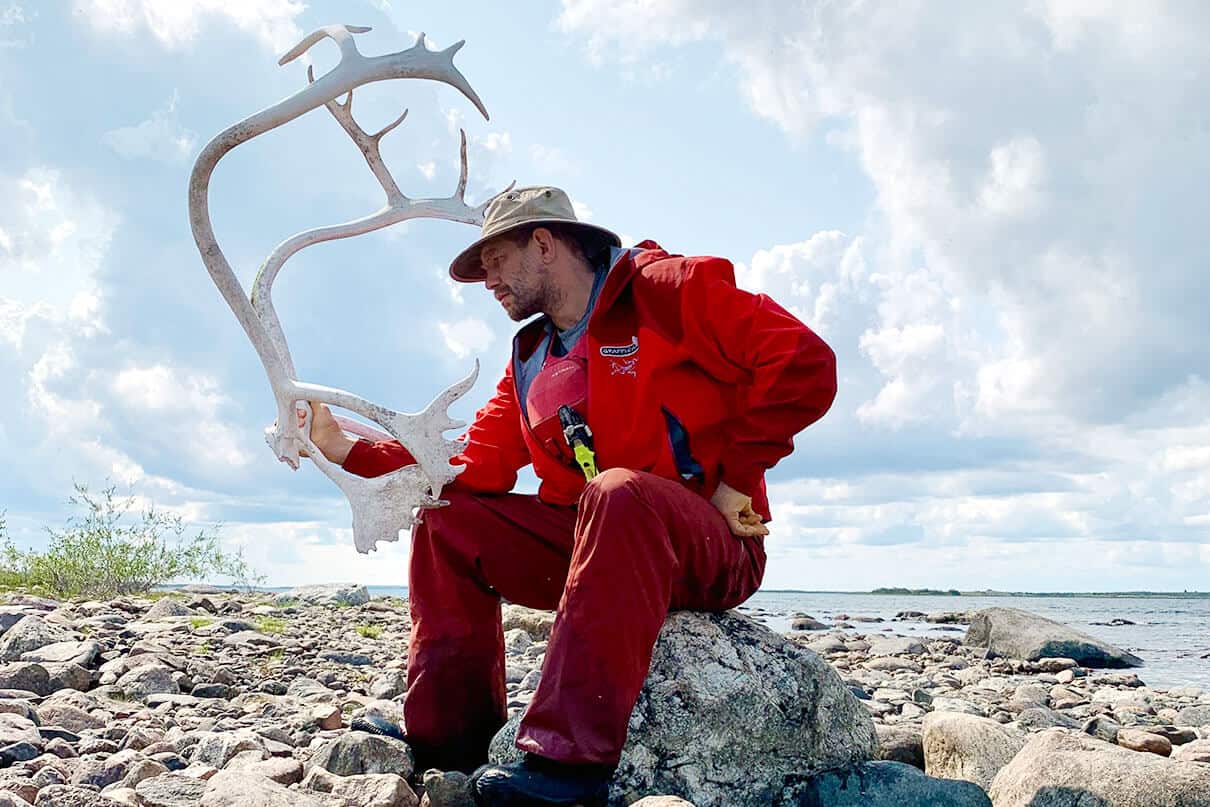
Four years post-surgery, Kesting transformed that haunting mirage into reality. He embarked on a grueling, 42-day, 1,000-mile solo expedition spanning from northern Saskatchewan into the tundra of Nunavut. The journey tested every fiber of his newly restored body, throwing him headfirst into flash floods, raging wildfires, and chilling encounters with subarctic wildlife. Documented in his recent book, Perseverance, Kesting’s odyssey is far more than a tale of extreme outdoor survival. It is an intricate exploration of rebirth, the processing of trauma, and the paradoxical realization that even the most solitary wilderness journey is fundamentally sustained by a vast, invisible web of human community.
Detailed Chronology: From the Operating Table to the Tundra
The Shadow of Illness and the Gift of Life
For years, polycystic kidney disease acted as a slow-moving thief in Kesting’s life. What began as minor physical limitations gradually snowballed into debilitating fatigue. Short walks left him gasping for air; cognitive cloudiness hampered his ability to write and teach.
"It was like a musician losing his hearing, or a painter losing the use of his hands," Kesting reflects.
As his renal function dwindled toward total failure, the threat of mortality loomed large. The 2019 transplant surgery, made possible by his brother’s selflessness, offered a second chance at life. In the operating room, moments before the anesthesia took hold, Kesting made a silent promise to himself. The operation became a dividing line: behind it lay years of clinical confinement; ahead of it lay the untamed North.
During a long, cautious physical rehabilitation, the idea of an epic northern expedition transformed from a pipe dream into a non-negotiable objective. Every training session, every cardiovascular milestone, and every ounce of strength regained was consciously funneled toward a singular goal: conquering 1,000 miles of rugged Canadian wilderness.

Day One: Disaster on the Water
The expedition began with an immediate, heart-stopping reality check. On the very first day of his six-week solo trek through the Canadian subarctic, Kesting capsized his canoe. The violent spill completely soaked his gear, though the true extent of the catastrophe did not reveal itself until the following morning.
Water had seeped into his waterproof containers, reducing his essential navigation maps to soggy tatters.
"It was a disaster," Kesting admits. Ahead lay 42 days of grueling physical labor—navigating complex rapids, executing exhausting portages, and battling upstream currents—all without the foundational tool of cartography.
Rather than succumbing to panic, Kesting adopted a fierce new mantra: No more mistakes. The early catastrophe proved paradoxically beneficial, stripping away any complacency. "It was a really useful experience to be knocked down a peg or three right at the beginning of the trip," he notes. "It made me super cautious. I was mortified. It really forced me to refocus."
Navigating the Elements and the Wilderness
As the weeks progressed, Kesting settled into the rhythmic, meditative, yet perilous routine of subarctic travel. For a staggering 26-day stretch of the journey, he encountered no other human beings. In this total isolation, the physical demands of the trail consumed his daily consciousness.
"It’s not like you’re sitting there thinking lofty thoughts about the meaning of life 24 hours a day," Kesting explains. "You’re thinking: Are the waves getting a bit more choppy? Should I go left or right here? What’s happening with those clouds over there? I’m hungry. I need sunscreen."
This hyper-focus on the immediate present acted as a psychological buffer, allowing him to quietly process the profound trauma of his near-death experience. The wilderness, however, refused to let him grow comfortable. The landscape offered constant, high-stakes reminders of human fragility. Over the course of the 1,000 miles, Kesting was forced to race advancing wildfires, narrowly avoided being trampled in his tent by a panicked caribou herd, and survived an uncomfortably close encounter with an inquisitive bear.
Supporting Context & Metrics: The Anatomy of a Subarctic Expedition
To fully comprehend the magnitude of Kesting’s accomplishment, one must examine the raw metrics and contextual realities of high-latitude solo wilderness travel:
- Duration: 42 days of continuous travel through remote northern terrain.
- Distance Covered: Approximately 1,000 miles (approx. 1,600 kilometers) from the boreal forests of northern Saskatchewan into the barrens of Nunavut.
- Isolation Span: A continuous 26-day stretch without encountering another human being.
- Physical Toll: Kesting completed the expedition roughly 20 pounds lighter than when he set out, reflecting the relentless caloric deficit of subarctic travel.
- Medical Baseline: Post-transplant recovery pitted against extreme exertion, where a drop of merely 5 percent in kidney function during his illness would have meant organ failure and death.
The Myth of Absolute Solitude
Perhaps the most profound takeaway from Kesting’s journey was the shattering of the romanticized "lone wolf" archetype. While the expedition was physically performed by one man in a vast wilderness, Kesting quickly realized that true absolute isolation is an illusion.
"There was me out in the bush, but who’s enabling that?" he asks rhetorically. The infrastructure of his survival was built on the shoulders of others: his brother, who donated the kidney; his current wife and ex-wife, who managed family life and kept his children grounded at home; the global search-and-rescue networks tied to his emergency satellite communicator; and the historical trails mapped out centuries prior by Indigenous peoples and early explorers.
"You can do a solo trip, but you’re not really solo," Kesting concludes. "It connects you to the wider world."
Official Statements & Personal Reflections
Throughout interviews and reflections penned in his book Perseverance, Kesting has been remarkably candid about the psychological mechanics of his journey and the broader lessons it holds for everyday people who dream of epic adventures.
On Facing Mortality:
"There was a ton of fear, because I didn’t know if I would survive and what I would recover. It was terrifying. One of those things [clarified by mortality] was to finally make good on that trip I’d been thinking about for decades—kind of like a big middle finger to death—assuming I survived."
On the Reality of Solitary Travel:
"If there was a larger goal of the expedition that I didn’t expect, it was processing the experience of mortality that had been driven home so emphatically… If my kidney function had dropped another five percentage points, I would have been dead."
On Democratizing Extreme Adventure:
When people look at Kesting’s feat—emerging from organ failure to conquer 1,000 miles of arctic wilderness—they frequently react with protective disbelief: “I could never do something like that.”
Kesting pushes back firmly against this self-limiting belief:
"They’re right in the moment, but they’re wrong at the scale of years. Skills like campcraft, river reading, first aid, navigation and natural history aren’t learned overnight. It’s a long checklist. You just gradually work at checking it off. It’s totally possible for people to do this. It just needs to be accumulated a little bit at a time."
Future Outlook
Stephan Kesting’s return from the Barren Lands marked the close of one chapter, but it established an enduring blueprint for resilience. By confronting the literal wilderness after conquering a biological one, he redefined the boundaries of what is possible following chronic organ failure.
In the wake of Perseverance and his successful expedition, Kesting continues to advocate for kidney disease awareness, organ donation, and the pursuit of lifelong physical challenges. His journey serves as a powerful reminder that catastrophic setbacks—whether a ruined map on day one of a canoe trip or total organ failure on an operating table—do not dictate the final destination. With meticulous preparation, incremental skill-building, and a deep appreciation for the community that underpins our greatest achievements, the most daunting horizons remain within our reach.