




EXECUTIVE OVERVIEW
For generations, the psychology of travel operated on a predictable, linear hierarchy. A prospective traveler would first select a destination—perhaps drawn by the romance of a European capital, the tropical promise of a Southeast Asian beach, or the historic allure of an ancient city. Only after the geography was locked in would they look at the calendar, scout local attractions, book accommodations, and arrange itineraries.
Today, that entire paradigm has been violently upended.
The order of operations has completely flipped: the show, the match, the championship final, or the music festival comes first. The trip assembles itself entirely around that singular, immovable date on the calendar. The event is no longer an ancillary activity added to a vacation; the event is the vacation. The physical destination has become secondary, serving merely as the backdrop or vessel required to host the moment.
This behavioral shift marks one of the most structural transformations in modern tourism history. It is no longer driven by isolated, seasonal anomalies or the rare blockbuster tour of a once-in-a-generation artist. Instead, entertainment-driven travel has hardened into a permanent, high-velocity pillar of global mobility. According to Q1 2026 data from Trip.com Group, entertainment-driven travel registered as one of the conglomerate’s fastest-growing categories, surging an astonishing 74% year-over-year.
As hundreds of thousands of hyper-mobilized fans cross borders, continents, and oceans for a ninety-minute headlining set or a ninety-minute championship match, a massive logistical and economic puzzle has emerged. The core dilemma facing destination marketing organizations (DMOs), hospitality giants, local entrepreneurs, and live entertainment executives is no longer how to attract visitors, but who captures the immense wealth that arrives with them.
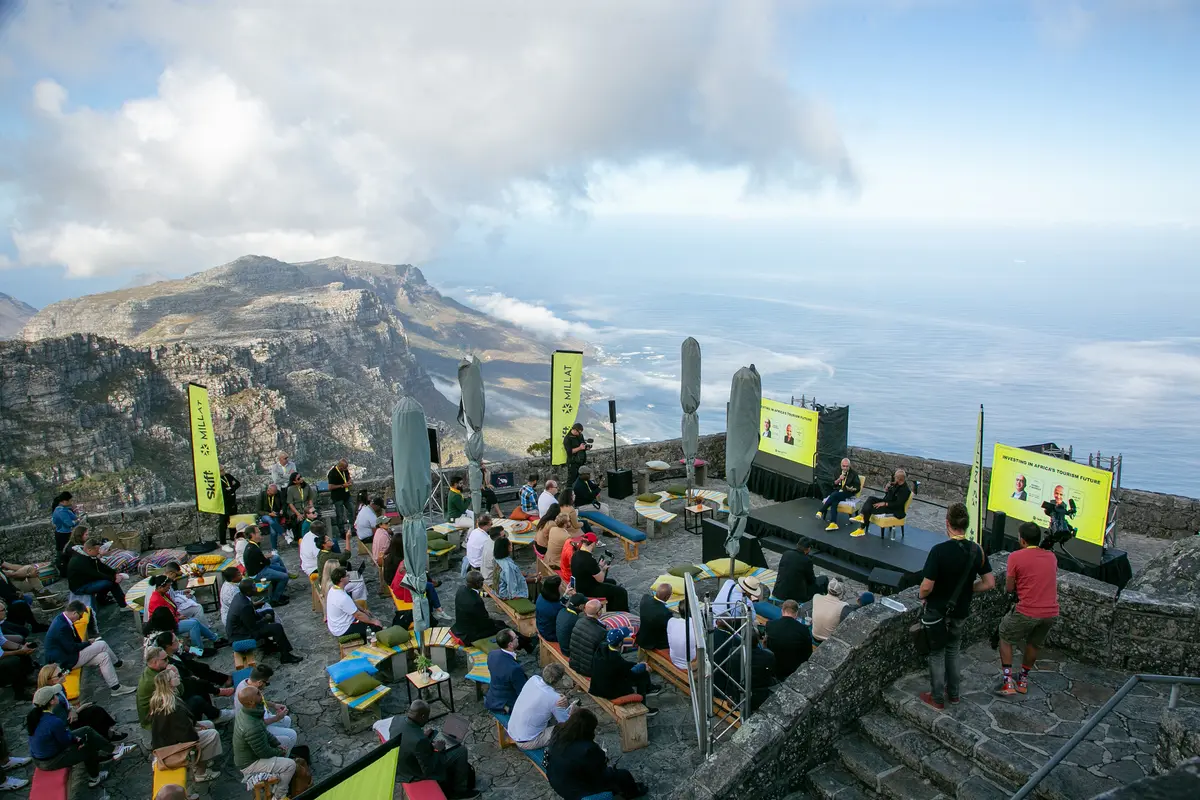
To dissect this high-stakes landscape, industry leaders are converging on the upcoming Skift Live Tourism Summit—presented in partnership with Live Nation—to establish a new operational playbook for the business of the live economy.
DETAILED CHRONOLOGY: THE EVOLUTION OF EVENT-DRIVEN TRAVEL
To understand how we arrived at this hyper-concentrated era of tourism, it is vital to trace the evolution of how live entertainment and human mobility converged over the past decade.
Phase 1: The Incidental Add-On (Pre-2018)
Historically, live events—concerts, theater productions, and domestic sporting events—were locally consumed goods. While destination cities always enjoyed tourism bumps from major international fixtures like the Olympics or the FIFA World Cup, routine touring acts relied almost entirely on local and regional audiences. Travel for a concert was largely limited to hardcore super-fans willing to drive a few hours over a state line. For the broader travel industry, concerts were viewed as ancillary perks that hotels might market locally, but they rarely factored into macro-tourism forecasting or international flight route planning.
Phase 2: The Festival Boom and Experiential Shift (2018–2020)
The first crack in the traditional travel model arrived with the democratization of global music festivals (e.g., Coachella, Tomorrowland, Primavera Sound). These multi-day cultural happenings proved that younger demographics were willing to travel further—frequently booking flights and securing boutique accommodations—if the curation was strong enough. However, these movements were still largely tied to fixed-location festival grounds rather than touring headliners. The industry viewed festivals as niche tourism verticals rather than a foundational threat to traditional holiday planning.
Phase 3: The Post-Pandemic Rebound and Pent-Up Catharsis (2021–2023)
As global lockdowns lifted, consumer psychology underwent a profound philosophical pivot. Confined populations placed a newly minted premium on experiential spending over material accumulation. This philosophical shift collided with the return of live events, creating an unprecedented explosion of demand. Consumers who had saved capital during isolation were suddenly willing to spend heavily on live entertainment.
Phase 4: The Megatour Phenomenon and the Compression of Demand (2023–2025)
The tipping point arrived with a series of historic global tours—most notably Taylor Swift’s Eras Tour and Beyoncé’s Renaissance World Tour. These were not merely concerts; they were massive economic engines that proved fans would cross international boundaries in droves.
Crucially, this era exposed a major structural flaw in traditional destination management: tour routings and championship venues compressed hundreds of thousands of international visitors into hyper-specific 48-to-72-hour windows. Rather than enjoying a steady, predictable stream of seasonal tourists, cities were subjected to sudden, violent surges of demand that overwhelmed local infrastructure, inflated hotel rates, and exposed systemic vulnerabilities in transport and hospitality networks.
Phase 5: The Structural Normalization of Fandom Travel (2026 and Beyond)
Today, the dust has settled on the initial post-pandemic frenzy, revealing a permanent architectural change in travel demand. Fandom has formally evolved from an occasional hobby into an aggressive travel trigger. Global platforms, airlines, and hospitality brands are no longer treating live events as marketing stunts; they are redesigning their core booking engines, loyalty programs, and inventory bundling to align seamlessly with tour routing schedules and sporting calendars.
SUPPORTING CONTEXT & METRICS: THE ECONOMICS OF FANDOM
The numbers underpinning the live tourism economy are staggering, forcing economists, tourism boards, and hospitality executives to completely recalibrate their financial models.
The Rise of the Fandom Trigger
Recent research highlighted by Skift underscores a fundamental shift in consumer intent: more than 70% of global travelers now report they are significantly likelier to plan a trip around a live event than they were five years ago. Music, sports, and cultural festivals have effectively weaponized consumer devotion, turning emotional attachment into immediate physical movement.
However, this movement operates entirely on the event organizer’s calendar, not the destination’s seasonal roadmap. When a major soccer final or stadium tour is announced, the timeline is unyielding.
Where the Money Goes: Breaking Down the Spend
When a live moment triggers a journey, capital fans out across a complex web of stakeholders: venues, promoters, ticketing platforms, hotel chains, restaurants, and retail outlets. Yet, a central friction point of the modern live economy is that these parties do not capture the value in equal measure.
During the height of Taylor Swift’s Eras Tour, economic impact studies revealed that individual fans spent an average of $1,300 per show directly within the host city on hotels, fine dining, local retail, and transit.
More importantly, Skift Research indicates that 84% of event tourists actively explore beyond the confines of the event venue itself. This means the overwhelming majority of the financial windfall spills out into the broader destination economy—into local coffee shops, independent boutiques, museums, and neighborhood restaurants.
The primary strategic challenge facing every host city is no longer whether they can fill their hotel rooms on a concert weekend, but whether local businesses and municipal operators are structurally positioned to retain that spending, or if it simply leaks out to corporate intermediaries, online travel agencies, and short-term capital extractors.
+--------------------------------------------------------------------------+
|                     THE LIVE TOURIST SPEND ECOSYSTEM                     |
+--------------------------------------------------------------------------+
|  [ Event Ticket: Primary/Secondary Promoters & Ticketing Platforms ]     |
+--------------------------------------------------------------------------+
|  [ Accommodations: Global Hotel Chains & Short-Term Rentals ]            |
+--------------------------------------------------------------------------+
|  [ The 84% Spillover Effect: Beyond-the-Venue Spending ]                 |
|    ├── Local Dining & Gastronomy                                         |
|    ├── Independent Retail & Merchandise                                  |
|    ├── Municipal Transit & Ridesharing                                   |
|    └── Cultural Attractions & Sightseeing                                |
+--------------------------------------------------------------------------+
OFFICIAL STATEMENTS & INDUSTRY INSIGHTS
As stakeholders grapple with these shifting economic tides, industry leaders and institutional researchers are sounding the alarm on the need for operational modernization.
"The order has flipped. A traveler once chose a destination and then looked for things to do inside it. Now the show, the match, or the festival comes first, and the trip assembles itself around that fixed date on the calendar. The moment is the reason for the journey, and the place is whatever the moment happens to require."
— Skift Editorial Insights
The implications for Destination Marketing Organizations (DMOs) are profound. For decades, DMOs operated under the assumption that their primary mandate was destination branding—selling the inherent beauty, culinary heritage, or historical value of a city to encourage leisure travel. Today, branding takes a back seat to operational readiness.
"Winning live demand is an operational test far more than it is a marketing one," notes leading hospitality analysts. Live tourism concentrates immense economic activity into dangerously short, intense windows. These windows strain local transport infrastructure, spike consumer prices, and leave destination economies dangerously exposed if a headline act cancels or a match is relocated.
Furthermore, tourism boards must address the quality of visitation, not just the volume. Skift Research highlights a crucial long-term metric for destinations: a traveler who returns three times with modest spending habits typically delivers significantly more cumulative lifetime value—and directs more capital to locally owned, independent businesses—than a single, high-spending first-time visitor who never returns.
This finding illustrates the stark difference between a destination that merely survives its biggest weekend events and one that successfully compounds them into long-term economic resilience.
FUTURE OUTLOOK: TURNING FLEETING MOMENTS INTO DURABLE ECONOMIES
Looking toward the remainder of the decade and beyond, the winners in the global tourism landscape will be those who refuse to treat live events as one-off windfalls.
1. Integration of Infrastructure and Booking Pathways
The industry’s most forward-thinking players are already tearing down traditional silos. Airlines, global hotel groups, and cruise lines are increasingly partnering with live entertainment agencies to bundle access to events directly into travel packages. Simultaneously, ticketing giants and travel super-apps are merging their user interfaces into unified booking paths, allowing a consumer to secure a concert ticket, a flight, and a hotel room in a single, frictionless digital transaction.
2. DMOs as Cultural Co-Producers
Destination marketing organizations are evolving into active partners within the live entertainment supply chain. Rather than passively waiting for tour schedules to drop, progressive cities are working proactively with promoters, sports leagues, and festival organizers years in advance. They are designing extended cultural programming—such as city-wide restaurant weeks tied to festival dates, public art installations themed around major tours, and integrated public transit passes included with event admission—to ensure that visitors extend their stays beyond the initial 48-hour window.
3. The Skift Live Tourism Summit: Setting the Agenda
It is against this high-stakes backdrop that the Skift Live Tourism Summit, presented in partnership with Live Nation, has become the essential gathering place for the industry.
By bringing destination leaders, hospitality executives, airline strategists, and live entertainment moguls into the same room, the summit aims to answer the questions that define the future of mobility: How do we capture the value? How do we protect local infrastructure from volatile demand shocks? And how do we forge permanent partnerships between the live industry and the cities that host them?
As fandom continues to rewrite the map of human movement, the cities and brands that master this operational pivot will not only survive the rush of the mega-tour—they will build durable, compounding economies that thrive long after the final encore has faded.