The automotive paradigm is undergoing a quiet, fundamental shift. For over a century, the calculus of vehicle ownership and replacement was governed by mechanical decay: worn piston rings, failing transmissions, ruptured timing belts, and the creeping rot of corrosion. In the internal combustion engine (ICE) era, hitting 100,000 miles (approx. 160,000 kilometers) was a psychological and physical milestone that signaled it was time to let a car go before maintenance bills outstripped residual value.
Today, the rise of the Battery Electric Vehicle (BEV) has upended these traditional timelines. Modern EVs are mechanically simpler, boasting a fraction of the moving parts of their ICE counterparts. They are heavily rust-proofed, require no oil changes or exhaust replacements, and feature thermal management systems that protect their energy stores. Yet, as the pioneer generation of mass-market EVs—such as the early Tesla Model 3s—crosses the seven-year mark and accumulates upwards of 180,000 kilometers, owners are once again facing the question: When is the right time to trade in an electric car?
Interestingly, the answers no longer point to mechanical failure, catastrophic battery degradation, or out-of-warranty engine explosions. Instead, the decision-making process for seasoned EV owners has evolved into a complex matrix dictated by ergonomic shifts, software ecosystem updates, evolving battery chemistries, and simple personal convenience. Through the lens of long-term owners, industry commentators, and serial EV upgraders, this deep-dive investigates why drivers are trading in their aging electric vehicles, and what the shifting landscape of the Australian and global EV markets reveals about the future of motoring.
Detailed Chronology: The Life Cycle of a Pioneer EV
To understand the modern EV replacement cycle, one must trace the trajectory of early adoption. Consider a standard case study: a 2017 Tesla Model 3 that has logged over 180,000 kilometers (approx. 112,000 miles) over seven years of service. In traditional automotive terms, this vehicle should be approaching the twilight of its economic utility.
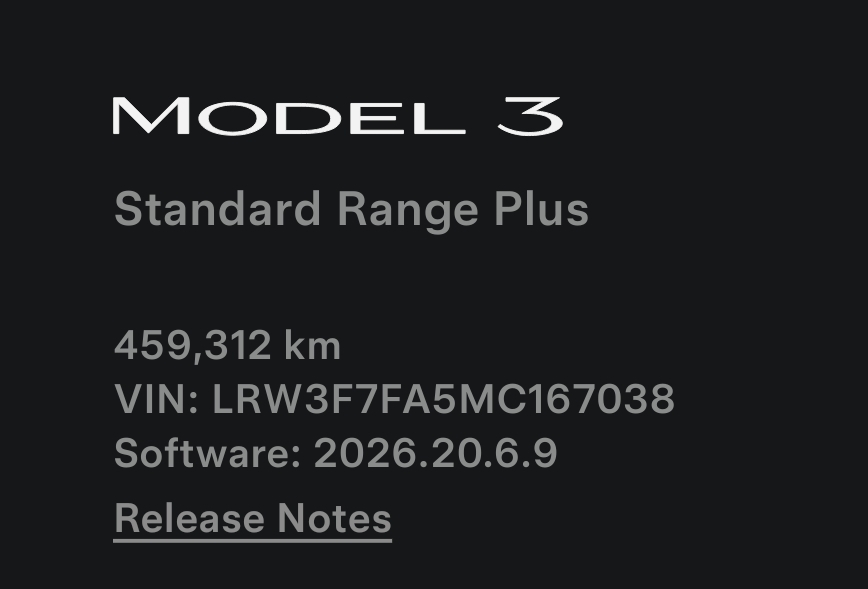
Yet, empirical evidence from the field paints a radically different picture. Rather than succumbing to terminal mechanical decline, these vehicles demonstrate remarkable durability. Conversations with high-mileage drivers and commercial operators—such as Uber drivers and fleet managers pushing past 500,000 kilometers—reveal that powertrain longevity is rarely the catalyst for a trade-in. Nathan Merritt of Ride4U, a seasoned Model 3 owner, notes that he anticipates keeping his vehicle up to 700,000 kilometers before considering a replacement.
Battery degradation—long the primary bogeyman weaponized by anti-EV "FUD" (Fear, Uncertainty, and Doubt)—has also proven to be a non-issue for the vast majority of drivers. Long-term telemetry across multiple high-mileage Model 3s consistently shows a plateaued capacity loss of roughly 10% after nearly 200,000 kilometers. Once the battery management system navigates the initial cyclical settling period, the rate of degradation slows to a near-imperceptible crawl.
If batteries do not spontaneously die at warranty expiration, and mechanical components do not self-destruct, why are owners letting go of cars like the Model 3? The catalyst is often intensely personal rather than mechanical: the aging of the driver. As early adopters age alongside their vehicles, ergonomic realities set in. The low-slung stance of a performance sedan, which requires dropping down into the cabin and navigating tight door apertures, becomes less appealing for aging joints. This exact realization drives many seasoned owners away from sedans and toward crossover SUVs like the Tesla Model Y, which offer higher seating positions, superior ground clearance, and easier rear-seat ingress and egress for family members.
Furthermore, technological iteration plays a role. While over-the-air (OTA) software updates can keep an older vehicle’s infotainment system feeling fresh for years, hardware bottlenecks—such as Tesla’s transition from Hardware 3 (HW3) to advanced hardware suites capable of running advanced autonomy stacks—create a natural inflection point for tech-forward drivers wanting to experience next-generation features.
Supporting Context & Metrics: Chemistry, Comfort, and Changing Paradigms
The modern BEV marketplace is no longer a monolith dominated by a single manufacturer. As legacy automakers and aggressive new market entrants flood the sector—particularly in regions like Australia—consumers are evaluating trade-ins based on specialized criteria: battery chemistry safety, cabin comfort, and total cost of ownership depreciation curves.
Battery Technology: LFP vs. NMC
A critical discussion point among veteran EV circles centers on battery chemistry. Early-generation and performance-oriented EVs frequently utilized Nickel Manganese Cobalt (NMC) chemistries, prized for high energy density and punchy delivery. However, the market has increasingly shifted toward Lithium Iron Phosphate (LFP) batteries for standard-range applications due to their thermal stability, superior safety profiles, and ability to be charged to 100% daily without accelerated degradation.
For brand-conscious buyers, trading in an older vehicle often represents an opportunity to upgrade to safer, more robust LFP or blade-battery architectures. As Don, an advocate of BYD’s offerings and a prospective buyer of the new Atto 3 EVO, points out, battery technology remains a primary filtering metric for discerning consumers:
"Battery technology, for me anyway, is still a major contributing factor, along with some better creature comforts to better accommodate the older body… Other newer entries into the market are still offering NMC battery technology in well-equipped vehicles, which, for me, is not an option I would be comfortable with."
Depreciation Realities
Another pillar of the modern trade-in debate is financial management. In the ICE era, cars were occasionally viewed as investments or assets that held idiosyncratic value based on engine type or manual transmission rarity. In the EV landscape, vehicles are correctly categorized as advanced consumer technology—much like smartphones or high-end laptops.
Just as a consumer does not expect a seven-year-old mobile phone to appreciate in value, an electric car depreciates predictably over time. Because Tesla and several other BEV manufacturers intentionally iterate slowly on exterior styling to avoid artificial obsolescence, these cars maintain a cleaner visual baseline, but they remain subject to rapid technological progress. Savvy owners, such as serial EV trader Neil Warner, consciously rotate through vehicles every few years to insulate themselves against the steepest curves of depreciation while continually operating within manufacturer warranty safety nets.
Official Statements & Industry Perspectives
To capture the diverse motivations governing the modern EV upgrade cycle, CleanTechnica canvassed multiple experienced owners and automotive commentators. Their insights highlight a fragmented yet converging set of motivations for trading up.
The Autonomous Horizon: Arthur Hunt on FSD (Supervised)
For tech enthusiasts, advanced driver-assistance systems represent a primary catalyst for upgrading. Arthur Hunt, a vocal advocate of Tesla’s Full Self-Driving (FSD) (Supervised) suite, detailed his transition from an aging 2020 Tesla to a newer iteration:
"Our first 2020 Tesla was still performing well after 110,000 km. However, the HW3 hardware would not support FSD (Supervised) so we upgraded and have enjoyed the full FSD experience. It is also much safer… There are also some minor enhancements such as self-opening and closing boot lid, and a heat pump for cabin heating which is more efficient."
Hunt also highlighted the real-world utility of modern autonomous features, recounting an incident where his vehicle successfully navigated to a destination, identified a vacant parking spot, and executed a reverse-angle park autonomously—underscoring how generational technological leaps make newer models compelling.
The Serial Upgrader’s Journey: Neil Warner’s Fleet Evolution
Neil Warner provides a masterclass in the deliberate, strategic rotation of electric vehicles, having transitioned from a Tesla Model 3 Long Range Dual Motor (M3 LRDM) to a Tesla Model Y Performance (MYP), and subsequently to a Polestar 4 Long Range Dual Motor (P4 LRDM).
Model 3 to Model Y Performance:
While the initial Model 3 was efficient and performant, its urban ride was notably harsh, rear passenger room was constrained, and its low 140mm ground clearance presented daily challenges with steep driveways and high curbs. Furthermore, its traditional sedan boot aperture limited bulky cargo utility. Upgrading to the Model Y Performance resolved these pain points through a higher seating position (plinths), increased ground clearance (157mm), wider door openings for elderly relatives, and a practical hatchback configuration with vastly superior cargo volume.
Model Y Performance to Polestar 4:
Seeking a unique aesthetic, a quieter cabin, and supreme interior luxury without committing to a traditional boxy SUV, Warner transitioned to the Polestar 4 Coupe SUV. Featuring a generous 166mm ground clearance, a refined one-pedal driving mode, a comprehensive 5-year vehicle warranty, and extended service intervals (every two years or 30,000 km), this move illustrates how maturing EV markets allow buyers to tailor their next vehicle to hyper-specific lifestyle preferences.
Future Outlook: The Evolving Paradigm of EV Ownership
As the global electric vehicle fleet matures, the traditional rules of automotive obsolescence are being rewritten. The decision to trade in an EV is no longer forced upon the consumer by mechanical failure or catastrophic engine wear. Instead, it has become a lifestyle choice governed by four distinct pillars:
Ergonomic Adaptation: As demographics shift, vehicle architectures must accommodate changing physical needs, favoring higher crossover and SUV stances over low-slung sedans.
Technological Velocity: The pursuit of safer battery chemistries (such as LFP), higher-efficiency thermal management (heat pumps), and advanced autonomy suites (FSD Supervised) continually pulls consumers toward newer showrooms.
Strategic Financial Management: Rotating vehicles within strategic windows allows owners to maximize warranty protection while enjoying state-of-the-art engineering.
Ecosystem Maturation: With legacy brands and international challengers (like BYD and Polestar) offering differentiated interior luxuries and refined driving dynamics, buyers are no longer locked into a single technological ecosystem.
Ultimately, the choice to trade in a battery electric vehicle is a celebration of an industry moving at breakneck speed. Whether passing a beloved high-mileage Model 3 down to the next generation of the family or stepping into a luxury coupe-SUV, today’s EV owners are navigating a bright, highly flexible electric future where the car adapts to the driver—not the other way around.