



Executive Overview
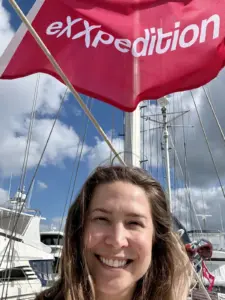
For over a decade, Dr. Britta Baechler, Director of Ocean Plastics Research at Ocean Conservancy, has operated as a terrestrial scientist. Her professional life has been defined by the controlled environments of laboratories, the meticulous aggregation of data sets, and the intellectual heavy lifting required to track anthropogenic refuse from urban centers to remote ecosystems. Yet, theoretical constructs of plastic migration can only illuminate so much of a planetary crisis. Driven by a desire to bridge the gap between microscopic analysis and macro-scale reality, Dr. Baechler recently traded her lab coat for a lifejacket, embarking on a ten-day, all-female scientific voyage across the South Pacific.
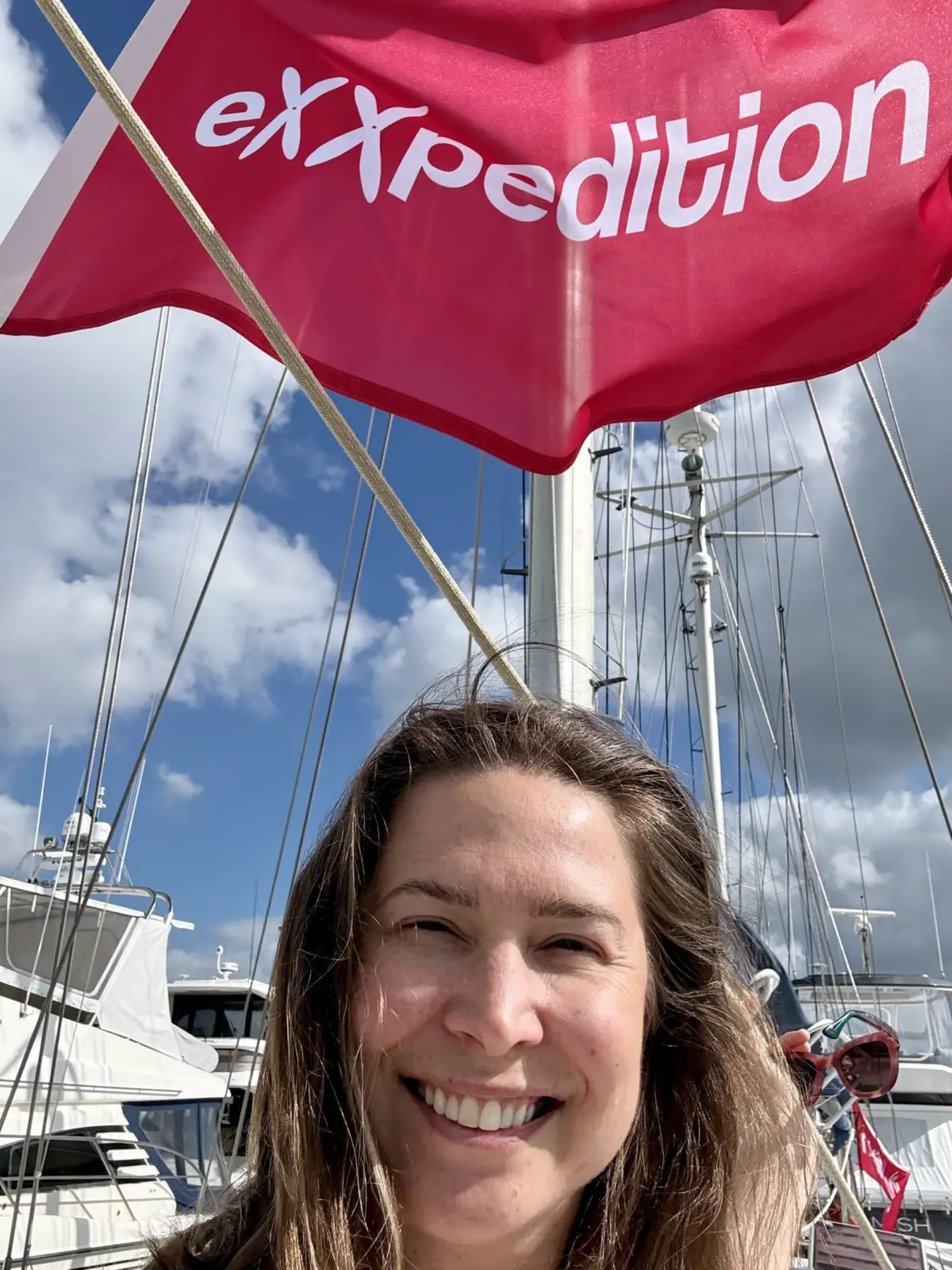
Aboard the 70-foot research vessel Wind Shift, Dr. Baechler joined the inaugural leg of the 2026 eXXpedition voyage, which ran from April 27 to May 6. Sailing from Auckland, New Zealand, to the picturesque Bay of Islands, a multidisciplinary crew of 12 women—representing fields as diverse as structural engineering, sustainable fashion, circular economy strategy, and robotics—confronted the reality of marine plastic pollution firsthand.
The expedition utilized a dual-pronged methodology: collecting ocean surface-water samples via manta tow nets while underway, and executing rigorous shoreline audits and urban street surveys upon landfall. The findings reaffirm an uncomfortable truth of the Anthropocene: synthetic polymers recognize no geographic boundaries. From the bustling pavements of Auckland to the protected shores of Aotea Great Barrier Island, microplastics and weathered debris pervade every stratum of the environment.
This deep dive examines the operational chronology of the eXXpedition voyage, the empirical realities of marine microplastic pollution, the structural policy solutions required to stem the tide, and the urgent imperative for systemic reform.
Detailed Chronology of the Voyage
Departure from Auckland: Urban Footprints and Land-to-Sea Pathways
The voyage commenced on April 27, 2026, in Auckland, New Zealand. Before casting off into the Hauraki Gulf, the crew established a baseline for their research by conducting urban street surveys. Using measuring tapes, field equipment, and visual censuses, the researchers mapped the accumulation of litter along municipal corridors. This urban phase was not merely incidental; it served as a crucial data-gathering exercise to trace the genesis of marine debris. Plastics discarded on city streets are inexorably mobilized by wind and stormwater runoff, eventually finding their way into estuaries, coastal shelves, and the open ocean.
The all-female guest crew—whose moniker “eXXpedition” deliberately highlights the XX chromosome to spotlight female leadership in historically male-dominated scientific domains—brought specialized lenses to the urban audit. Structural engineers evaluated how urban architecture traps litter, while circular economy experts analyzed the packaging lifecycles of consumer goods scattered across the sidewalks.
Crossing the Hauraki Gulf to Aotea Great Barrier Island
Departing Auckland’s urban sprawl, the Wind Shift navigated eastward across the Hauraki Gulf toward Aotea Great Barrier Island. Despite its status as one of the most remote and rigorously protected stretches of New Zealand’s coastline, the island offered a sobering lesson in the ubiquity of marine debris.
Working in collaboration with Sustainable Coastlines, a prominent local environmental NGO, the crew landed on an isolated beach to execute a comprehensive marine litter audit and cleanup. The exercise yielded an unsettling inventory of modern consumerism: weathered bottle caps, fragmented food packaging, industrial nurdles (plastic pellets), and tangled commercial fishing gear. Stripped of their original branding and degraded by ultraviolet radiation and wave action, these materials demonstrated how durable synthetic polymers persist indefinitely, breaking down into increasingly hazardous fragments rather than biodegrading.
The Open Ocean and Manta Trawl Operations
Leaving the shelter of the coast, the Wind Shift ventured into open waters, where the mission shifted to active sea-surface sampling. Utilizing manta tow nets—specialized, long, cone-shaped mesh nets towed alongside the vessel—the crew skimmed the upper layers of the water column to capture floating particulate matter.
For Dr. Baechler, processing these samples presented an immediate physical challenge. Sorting microscopic plastic fibers from krill-laden seawater under a stereomicroscope aboard a pitching 70-foot sailboat is an exercise in extreme resilience. Seasickness, shifting horizons, and the delicate mechanics of fine-tipped tweezers tested the crew’s endurance. Yet, beneath the microscope lens lay the empirical core of the expedition: an overwhelming abundance of microplastic fibers.
Supporting Context & Metrics: The Microplastic Crisis
To comprehend the significance of the eXXpedition data, one must examine the broader metrics governing global plastic pollution and the specific mechanics of microfibers.
The Ubiquity of Microplastic Fibers
Among all the particulate pollutants identified in the South Pacific samples, microplastic fibers dominated. Defined as synthetic filaments measuring less than 5 millimeters in length—and often no thicker than a human hair—these fibers are the most pervasive form of microplastic pollution in the global environment.
While some microfibers originate from the breakdown of larger macro-plastics, such as degraded ropes, weathered fishing nets, and discarded cigarette butts, the vast majority trace their origins to synthetic textiles. Modern clothing relies heavily on petrochemical-derived fibers like polyester, nylon, acrylic, and spandex. Every time garments manufactured from these materials are washed, mechanical agitation and thermal stress cause them to shed microscopic threads.
Scale of the Laundry Leakage
The statistical metrics surrounding laundry discharge are staggering:
- Per-Load Emissions: A single conventional household load of laundry can release up to 18 million microfibers into wastewater systems.
- Wastewater Treatment Evasion: While municipal wastewater treatment plants capture a significant percentage of these fibers in sewage sludge, millions still bypass filtration systems, flowing directly into rivers, estuaries, and oceans.
- Atmospheric Transport: Microfibers are so lightweight that they become airborne, circulating globally via wind currents and depositing on pristine snowpacks in the Arctic and remote oceanic gyres alike.
Finding these synthetic filaments floating in seemingly pristine waters miles away from the nearest human settlement underscores a fundamental reality: the ocean is the ultimate sink for human industrial output. Mitigation cannot rely solely on beach cleanups; it requires upstream interventions at the manufacturing and domestic levels.
Official Statements and Perspectives
Reflecting on the emotional and intellectual weight of the expedition, Dr. Baechler emphasized the profound shift that occurs when theoretical knowledge meets empirical observation.
"I have been studying plastic pollution for more than a decade. I’ve analyzed hundreds of samples in labs, pored over data and spent years thinking hard about where plastics go once they leave our hands and enter the environment," Dr. Baechler noted. "And here’s where it took me! I was thrilled to have the opportunity to join the first leg of eXXpedition’s voyage in the South Pacific… trading my lab coat for a lifejacket to study microplastics at sea."
Dr. Baechler’s reflections underscored the psychological dimension of conducting fieldwork in remote environments:
"In my lab research, I have found microplastic fibers time and time again, but there’s something even more sobering about hand-picking them out of a seawater sample collected from pristine-looking waters. It was a good reminder of why understanding where plastic comes from, how it moves and where it ends up is so critical to addressing the problem at its roots."
The collaborative spirit of the all-female crew served as a powerful testament to interdisciplinary problem-solving. As Dr. Baechler observed:
"The plastic pollution crisis is a human problem, and solving it requires all of us. The courage and dedication of the women I shared those 10 days with is something I won’t forget. Going to sea, doing the science and pushing through discomfort to collect data that matters was not easy. We were seasick some days and exhilarated others. Despite that fact, we showed up for it fully, every day."
Future Outlook: Systems-Level Solutions and Policy Action
The data harvested during the eXXpedition South Pacific voyage is not intended to languish in academic journals; it is designed to fuel systemic change. Addressing a planetary crisis of this magnitude requires a multi-tiered strategy encompassing policy reform, improved product design, and targeted technological interventions.
1. Upstream Product Redesign and Legislation
Cleaning up coastlines, while vital for local ecosystem health and animal welfare, is fundamentally a remedial measure. Ocean Conservancy advocates for comprehensive legislative frameworks that hold plastic producers accountable for the entire lifecycle of their goods. This includes implementing extended producer responsibility (EPR) laws, phasing out problematic single-use plastics, and mandating circular design principles across the global manufacturing sector.
2. The Immediate Solution: Washing Machine Filters
While systemic industrial overhaul takes years to legislate and implement, immediate, highly effective technological interventions exist for the single largest source of aquatic microfibers: laundry.
Research demonstrates that installing aftermarket or factory-fitted washing machine microfiber filters can capture roughly 90% of microfibers before wastewater leaves the home. Operating on the same mechanical principle as household dryer lint traps, these tightly woven mesh filters intercept synthetic filaments during the wash cycle.
Mandating these filters in new washing machines through municipal and national building and appliance standards represents one of the most cost-effective, immediate actions governments can take to slash marine microplastic loads.
3. Mobilizing Citizen Advocacy
Scientific discovery must be paired with civic engagement. Initiatives like Ocean Conservancy’s advocacy campaigns during Plastic Free July provide direct pathways for individuals to influence environmental policy. By urging elected officials to mandate microplastic fiber filters in residential and commercial washing machines, citizens can translate scientific findings into legislative victories.
Conclusion
The 2026 eXXpedition voyage from Auckland to the Bay of Islands demonstrated that empirical science is most potent when paired with direct observation and interdisciplinary collaboration. Dr. Britta Baechler’s transition from the laboratory bench to the deck of the Wind Shift reinforced an enduring truth: our ocean is remarkable, complex, and desperately worth fighting for.
Armed with rigorous data, high-resolution water samples, and an unwavering commitment to systemic reform, the scientific community and global advocates possess the roadmap needed to turn the tide on plastic pollution. Through a combination of individual action, technological adoption—such as laundry filtration—and robust international policy, we can halt the flow of plastics from land to sea, protecting our marine ecosystems forever and for everyone.