




Executive Overview
Saint Lucia is making a profound and innovative statement at the intersection of art, marine conservation, and cultural autonomy. The Eastern Caribbean island nation is currently developing an unprecedented three-part underwater sculpture corridor designed to visually articulate the island’s rich history, diverse culture, and vibrant heritage beneath the turquoise surface of the Caribbean Sea.
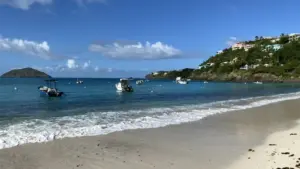
Commencing with a heavily anticipated, high-profile national exhibition on August 29 and 30, the project’s inaugural phase focuses on a dedicated Dive Park located at Anse La Verdue, near the historic west-coast fishing village of Canaries. Following this dry-land public showcase, these bespoke artistic works will be permanently submerged to establish a dynamic, living marine attraction.
Unlike conventional tourism installations conceived exclusively by outside entities for international consumption, this initiative is deeply rooted in local empowerment. Developed through conceptual contributions from local artists and community creatives, the project champions local ownership and self-representation.
Tourism Minister Ernest Hilaire has framed the initiative as a testament to national storytelling, allowing Saint Lucians to define how their history and resilience are memorialized.
When fully realized, the project will expand beyond the initial Dive Park to encompass a Snorkel Park and a Conservation Park. Together, these installations will weave a continuous narrative corridor that complements Saint Lucia’s already celebrated underwater ecosystems—spanning thriving coral reefs, dramatic marine walls, historical shipwrecks, and world-class snorkeling spots—while charting a transformative new course for the island’s marine tourism sector.
Detailed Chronology: From Concept to Submersion
The genesis of Saint Lucia’s underwater sculpture corridor represents a meticulous planning process that bridges community engagement, fine art exhibition, and marine engineering. While the precise installation timeline for the subsequent parks remains under wraps, the unfolding timeline of the first phase highlights a deliberate strategy to honor local stakeholders before introducing the works to the international diving community.
Phase One: Grassroots Ideation and Concept Development
Long before the physical sculptures took shape, the project began as a series of community dialogues across Saint Lucia. Recognizing the historical significance of the island’s west coast—particularly areas like Canaries, which has long served as a quiet creative enclave for Saint Lucian artists—organizers invited local sculptors, historians, and community creatives to pitch conceptual ideas.
The goal was to move past generic tropical imagery and instead focus on deep-seated themes of heritage, identity, and environmental stewardship.
The August 29–30 National Exhibition
Representing a rare and fleeting opportunity for the public, the upcoming August 29–30 exhibition serves as the bridge between land and sea. For two days, the entire collection destined for the Anse La Verdue Dive Park will be displayed on dry land.
This gives Saint Lucians and island visitors a rare window to inspect the fine details of the sculptures up close, understand the ideological frameworks informing the artists, and appreciate the craftsmanship before the pieces undergo their radical ecological transformation.
Once this exhibition concludes, the works will be transported to the waters off Canaries. There, they will begin their long-term residency on the seafloor, gradually evolving from static artistic objects into living artificial reefs colonized by corals, sponges, and marine life.
The Future Expansion: Snorkel and Conservation Parks
Following the integration of the Anse La Verdue Dive Park, the government plans to roll out the remaining two components of the corridor: the Snorkel Park and the Conservation Park.
While detailed specifications regarding the exact number of sculptures, individual artist credits, and structural layouts for these secondary phases have yet to be publicly released, their inclusion points to a phased master plan.
This multi-tiered approach ensures that the underwater corridor remains accessible to a broad demographic of visitors—accommodating both advanced SCUBA divers and casual snorkelers—while deliberately carving out space for environmental rehabilitation and marine life preservation.
Supporting Context & Metrics: The Evolution of Caribbean Submerged Art
Saint Lucia’s ambitious undertaking does not exist in a vacuum; rather, it enters a growing and successful lineage of underwater art installations across the broader Caribbean and Latin American regions. By blending ecological restoration with cultural storytelling, the island is leveraging a proven tourism model while adding a distinctly local, sovereign twist.
Regional Precedents and Inspiration
The global phenomenon of underwater sculpture parks largely traces its modern roots back to the Caribbean. Most notably, British sculptor Jason deCaires Taylor helped pioneer the medium with the establishment of the Molinere Underwater Sculpture Park off the coast of Grenada. Installed primarily on sandy seabeds, Grenada’s statues not only created a visually arresting subterranean gallery but also functioned as artificial reefs, drawing tourist foot traffic away from fragile, natural coral ecosystems.
Similarly, Mexico’s Caribbean coastline is home to MUSA (Museo Subacuático de Arte), situated between Cancun and Isla Mujeres. Spanning hundreds of permanent monumental sculptures, MUSA proved that large-scale submerged art could handle high volumes of marine tourism while serving as an effective conservation tool.
More recently, destinations like The Bahamas have introduced contemporary underwater sculpture installations to enrich their aquatic tourism portfolios.
Saint Lucia’s Established Marine Ecosystem
While these regional projects validate the concept, Saint Lucia enters the arena with an already world-renowned marine tourism infrastructure. The island’s leeward (western) coast is legendary among divers and snorkelers alike.
From the dramatic marine drop-offs of the Soufrière Marine Management Area (SMMA) to the vibrant coral gardens found right off the beach at resorts like Anse Chastanet, the island has long prioritized high-end underwater exploration.
What distinguishes Saint Lucia’s new three-park corridor from its regional peers is the hyper-focus on a unified cultural narrative. While parks like Grenada’s Molinere or Cancun’s MUSA frequently lean into ecological allegory, modern art, or general human history, Saint Lucia’s corridor is explicitly engineered to reflect the unique historical trials, cultural triumphs, and indigenous heritage of the Saint Lucian people.
Official Statements: The Philosophy of Ownership
At the heart of the Saint Lucian underwater sculpture initiative is a steadfast commitment to cultural sovereignty. During preliminary briefings regarding the project, government officials have emphasized that the parks are designed to serve as both economic drivers and profound cultural touchstones.
Minister Ernest Hilaire on National Ownership
Tourism Minister Ernest Hilaire crystallized the overarching philosophy of the initiative during ministerial press briefings, offering a perspective that separates this project from standard tourism developments:
"Most importantly, this is a project about ownership."
Minister Hilaire elaborated that the primary objective has never been simply to manufacture another glossy attraction designed to tick boxes for foreign travelers. Instead, the administration sought to ensure that Saint Lucians retain total agency over how their history, struggles, and triumphs are packaged and presented to the world.
By empowering local creatives to spearhead the conceptualization of the sculptures, the government has bypassed the risk of cultural tourism exploitation—where external entities dictate local narratives for commercial gain.
Furthermore, Hilaire noted that the installation is meant to cultivate a profound sense of stewardship. When visitors swim among the sculptures, they are expected to absorb themes of resilience and environmental responsibility.
The minister expressed a clear aspiration: that everyone who ascends from the Anse La Verdue Dive Park will carry away not just a memory of a unique dive, but a deeper, empathetic understanding of Saint Lucia’s soul and an acute awareness of the urgent need to protect its fragile marine habitats.
Future Outlook: A New Frontier for West Coast Tourism
The debut of the Anse La Verdue Dive Park marks a definitive turning point for Saint Lucia’s tourism development strategy. For decades, the island’s tourism narrative has been overwhelmingly dominated by iconic terrestrial landmarks—most notably the majestic twin peaks of the Pitons, the lush expanse of the central rainforest reserves, upscale boutique resorts, and world-class culinary traditions.
The creation of the underwater sculpture corridor successfully weaves the island’s marine and cultural identities into a single, cohesive narrative.
Economic and Geographic Diversification
Geographically, the project focuses positive economic energy onto Saint Lucia’s western coastline, specifically elevating the fishing village of Canaries. Known historically as a quiet, picturesque community with deep artistic roots, Canaries is poised to experience a resurgence in community-led tourism.
As dive operators, tour guides, and eco-lodges adjust their itineraries to include the new underwater corridor, local businesses in and around Canaries stand to benefit from the steady influx of culturally curious travelers.
The Ecological Transformation
Beyond the cultural and economic metrics, the long-term success of the project will heavily depend on its ecological footprint. As the sculptures settle into their marine home at Anse La Verdue, marine biologists and conservationists will closely monitor how effectively the artificial structures promote coral recruitment and attract fish populations.
If the subsequent Snorkel Park and Conservation Park follow this same rigorous ecological blueprint, Saint Lucia will successfully demonstrate that mass tourism infrastructure can actively regenerate rather than deplete marine environments.
The Road Ahead
As the calendar ticks down to the August 29–30 national exhibition, anticipation among locals, artists, and international dive enthusiasts is reaching a fever pitch. For the citizens of Saint Lucia, the weekend offers a moment of collective pride—a chance to witness their stories given physical form before those works descend into the deep.
For the global travel community, it signals the dawn of an entirely new way to experience the Caribbean: an immersive, subterranean journey where history, art, and marine conservation converge beneath the waves of Saint Lucia.