





Executive Overview
Seattle is universally celebrated as the "Emerald City," a moniker earned not from the pages of L. Frank Baum’s magical fantasies, but from the breathtaking abundance of urban greenery, dense evergreen canopies, protected greenbelts, and sprawling parks that seamlessly weave through the city’s metropolitan landscape. While iconic destinations like the 230-acre Washington Park Arboretum and the sweeping 534-acre Discovery Park frequently capture the lion’s share of tourist attention, Seattle’s park system harbors a quieter, equally magnificent counterpart: Carkeek Park.
Spanning an impressive 216 acres along the lush western seaboard of Washington on the banks of Puget Sound, Carkeek Park offers an immersive wilderness experience that often feels closer to a national park than a municipal green space. Protected from aggressive urban development by its rugged, hilly ravines, this multifaceted sanctuary has undergone a remarkable metamorphosis over the centuries. Today, it stands as a vital ecological corridor, a less-crowded alternative to Seattle’s bustling central parks, and a treasured haven where visitors can escape the hum of the city to bask in undisturbed nature, panoramic mountain vistas, and thriving local ecosystems.
This comprehensive investigative feature explores Carkeek Park’s rich historical evolution, its unique ecological metrics, its diverse recreational offerings, official preservation perspectives, and the future outlook for one of the Pacific Northwest’s most dynamic natural treasures.
Detailed Chronology: The Many Lives of Carkeek Park
To understand the profound ecological and cultural significance of Carkeek Park, one must trace its journey through time. The landscape we see today has been shaped by thousands of years of indigenous stewardship, pioneer ambition, municipal intervention, and conservation-minded restoration.
Pre-Colonial Era and Indigenous Stewardship
Long before the arrival of European settlers, the dense forests, ravines, and saltwater shores of what is now Carkeek Park were inhabited by local Coast Salish indigenous peoples, specifically ancestors of the Duwamish and Suquamish tribes. The area served as a rich hunting ground, foraging site, and seasonal encampment. The convergence of freshwater streams—most notably Piper’s Creek—with the saltwater of Puget Sound created an abundant nursery for salmon, shellfish, and migratory waterfowl, providing a reliable sustenance hub for the region’s original inhabitants.
Pioneer Homesteads and Early 20th Century Agriculture
As European and American settlers moved into the Pacific Northwest during the mid-to-late 19th century, the landscape began to change. Portions of the watershed were claimed for homesteads, logging, and agriculture. Among the most enduring remnants of this era is Piper’s Orchard, established by early settlers who planted heirloom fruit varieties. During the early 1900s, parts of the property were even utilized to cultivate crops intended to feed animals at the nearby Woodland Park Zoo, illustrating the site’s utilitarian value prior to its formal protection.
The Civilian Conservation Corps and Formal Dedication (1920s–1930s)
As Seattle’s population burgeoned following the turn of the century, civic leaders recognized the urgent need to protect the city’s natural watersheds and topographical features from unchecked real estate development. The rugged, heavily ravined terrain of the Carkeek area made traditional grid-pattern housing construction nearly impossible, preserving its wild character.
In 1929, the property was formally dedicated as a public park, named in honor of Methodist minister and civic leader Morgan J. Carkeek. During the Great Depression of the 1930s, the park benefited significantly from the labor of the Civilian Conservation Corps (CCC). Young men enrolled in the federal relief program built essential infrastructure, cleared trails, stabilized erosion-prone slopes, and constructed early drainage systems that helped preserve the delicate balance of the park’s ravines.
Modern Conservation and Ecological Restoration (Late 20th Century–Present)
As Seattle evolved into a booming technological metropolis, Carkeek Park transitioned from a passive municipal recreation area to a rigorously protected ecological preserve. The late 20th and early 21st centuries saw a massive surge in community-led restoration projects. Local volunteers, environmental nonprofits, and municipal agencies banded together to eradicate invasive plant species, restore degraded wetlands, stabilize Piper’s Creek, and reintroduce native flora. Today, Carkeek stands as a triumph of urban conservation—a testament to what can be achieved when a major city actively prioritizes the preservation of native habitats amidst rapid modernization.
Supporting Context & Metrics: Ecology, Geography, and Infrastructure
Carkeek Park’s enduring appeal lies in its remarkable ecological diversity. While many urban parks offer neatly manicured lawns and structured flower beds, Carkeek preserves an intricate mosaic of distinct natural environments within a compact geographical footprint.
Geographical and Ecological Metrics
- Total Acreage: 216 acres of protected public land.
- Location: Northwest Seattle (approximately a 30-minute drive north from downtown Seattle), nestled directly against the eastern shore of Puget Sound, bordered by residential neighborhoods including Broadview and Greenwood.
- Topography: Features dramatic elevation changes, characterized by steep forested ravines, deep stream valleys, wetland basins, and a dynamic coastal shoreline.
- Ecosystem Classifications:
- Upland Forests: Comprising mature stands of second- and third-growth Douglas fir, western red cedar, and western hemlock.
- Riparian and Wetland Zones: Centered around Piper’s Creek and its various tributaries, providing crucial natural filtration and flood-control infrastructure.
- Intertidal and Marine Zones: Spanning roughly 20 acres of saltwater shoreline, mudflats, and rich tidepools teeming with marine invertebrates.
Flora and Fauna: A Biodiversity Hotspot
Despite being bounded by quiet residential streets, Carkeek Park functions as a biological island in an urban sea. The park’s diverse habitats support an extraordinary range of wildlife.
In the forest canopy and understory, birdwatchers frequently spot barred owls, pileated woodpeckers, and majestic bald eagles soaring overhead. The riparian corridors provide a sanctuary for amphibians, small mammals, and migrating songbirds, which benefit immensely from the Demonstration Garden—a dedicated space designed to showcase native and non-native plants that nourish local pollinators.
Along the saltwater shoreline and intertidal zones, visitors can observe harbor seals and sea lions plying the cold waters of Puget Sound. During low tide, the park’s 20 acres of exposed tidepools reveal a mesmerizing micro-universe of sea stars, anemones, crabs, and mollusks, offering an invaluable educational resource for naturalists of all ages.
The Phenomenon of Piper’s Creek Salmon Run
Perhaps Carkeek Park’s most extraordinary ecological feature is its annual salmon run. Unlike many urban streams where salmon populations have been decimated by industrial runoff and channelization, Piper’s Creek remains one of the few urban waterways in the region where salmon successfully return to spawn.
From October through December, adult chum salmon undertake an awe-inspiring migratory journey, battling their way up from the marine waters of Puget Sound, through the park’s restored creeks, to deposit their eggs. To support this vital natural cycle, the park features an imprint pond where juvenile salmon are reared prior to release. During the peak of the season, environmental programs such as "Salmon Celebration Day" draw crowds, while trained volunteer "Salmon Stewards" line the waterside paths—such as the iconic Piper’s Creek Trail—to educate the public on the delicate lifecycle of Pacific salmon and the importance of watershed conservation.
Official Statements and Perspectives
Managing a 216-acre urban wilderness that experiences high recreational demand while harboring fragile ecological zones requires a delicate balancing act. Officials and environmental stewards emphasize that Carkeek Park must be treated with reverence.
Representatives from Seattle Parks and Recreation emphasize the park’s dual role as both a community recreation hub and a critical environmental education center. In recent public briefings regarding watershed management, municipal park planners highlighted the ongoing success of stream restoration initiatives along Piper’s Creek.
"Carkeek Park represents the gold standard of urban ecological stewardship," noted a senior Seattle Parks planning official. "It proves that nature and a major metropolitan area can coexist, provided we give our watersheds and native forests the institutional protection and community support they require to thrive."
Local conservation groups, including the Friends of Carkeek Park, play an instrumental role in guiding public policy and hands-on maintenance. In statements released ahead of seasonal salmon migrations, volunteer coordinators frequently underscore the importance of responsible recreation:
"When visitors walk the trails of Carkeek, they are walking through a living laboratory," stated a lead volunteer naturalist. "Whether it’s keeping dogs on leashes to protect ground-nesting birds, maintaining a safe distance from harbor seals on the beach, or respecting the salmon during their grueling upstream migration, every visitor plays a direct role in preserving the wild integrity of this sanctuary."
What to Do: Exploring Carkeek Park’s Premier Attractions
For outdoor enthusiasts, Carkeek Park offers a diverse array of activities that cater to hikers, birdwatchers, families, and beachcombers alike. Here is a breakdown of the park’s top experiences:
1. Hiking the Trails
Carkeek features roughly six miles of well-maintained trails. Ranging from flat, leisurely woodland strolls to moderately steep climbs, the trail network utilizes wooden boardwalks and pedestrian bridges to protect sensitive wetland environments from foot traffic erosion.
- Piper’s Creek Trail: The park’s crown jewel route. Spanning approximately 2.5 miles (an easy 60-to-90-minute hike), this trail connects the Eddie McAbee entrance down to the beach. Winding through the heart of the ravine, it showcases mature forests, rushing streams, wetland ecosystems, Piper’s Orchard, and prime viewing spots for the autumn salmon run.
- North Bluff Trail and Ridge Routes: For hikers seeking elevated vantage points, the North Bluff Trail offers stunning filtered peeks out over Puget Sound, while the North Traverse, North Meadow Hillclimb, and Grand Fir loops provide fantastic cardiovascular workouts amidst towering evergreens.
2. Exploring the Historic Piper’s Orchard and Demonstration Garden
Located within the park’s interior, Piper’s Orchard stands as Seattle’s oldest public orchard. Maintained by dedicated heritage fruit enthusiasts, the orchard preserves rare, historic apple and pear varieties planted by early pioneers. Adjacent to the orchard, the Demonstration Garden serves as an educational hub, highlighting sustainable gardening practices, native flora, and pollinator conservation.
3. Beachcombing and Waterfront Recreation
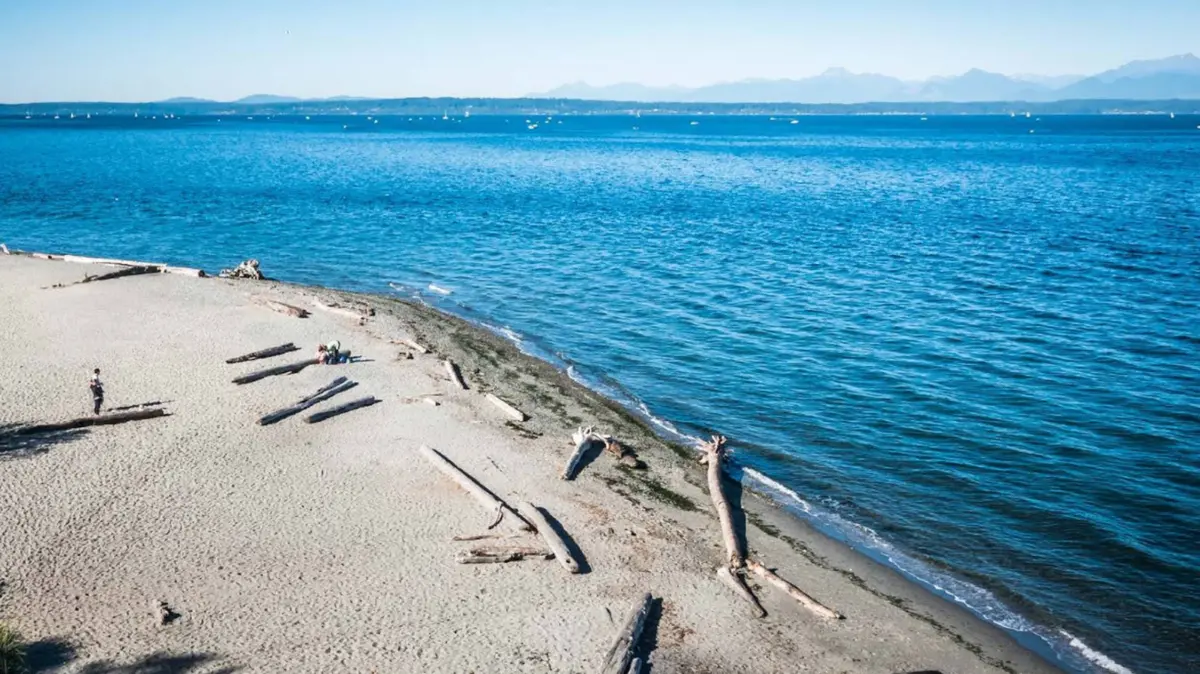
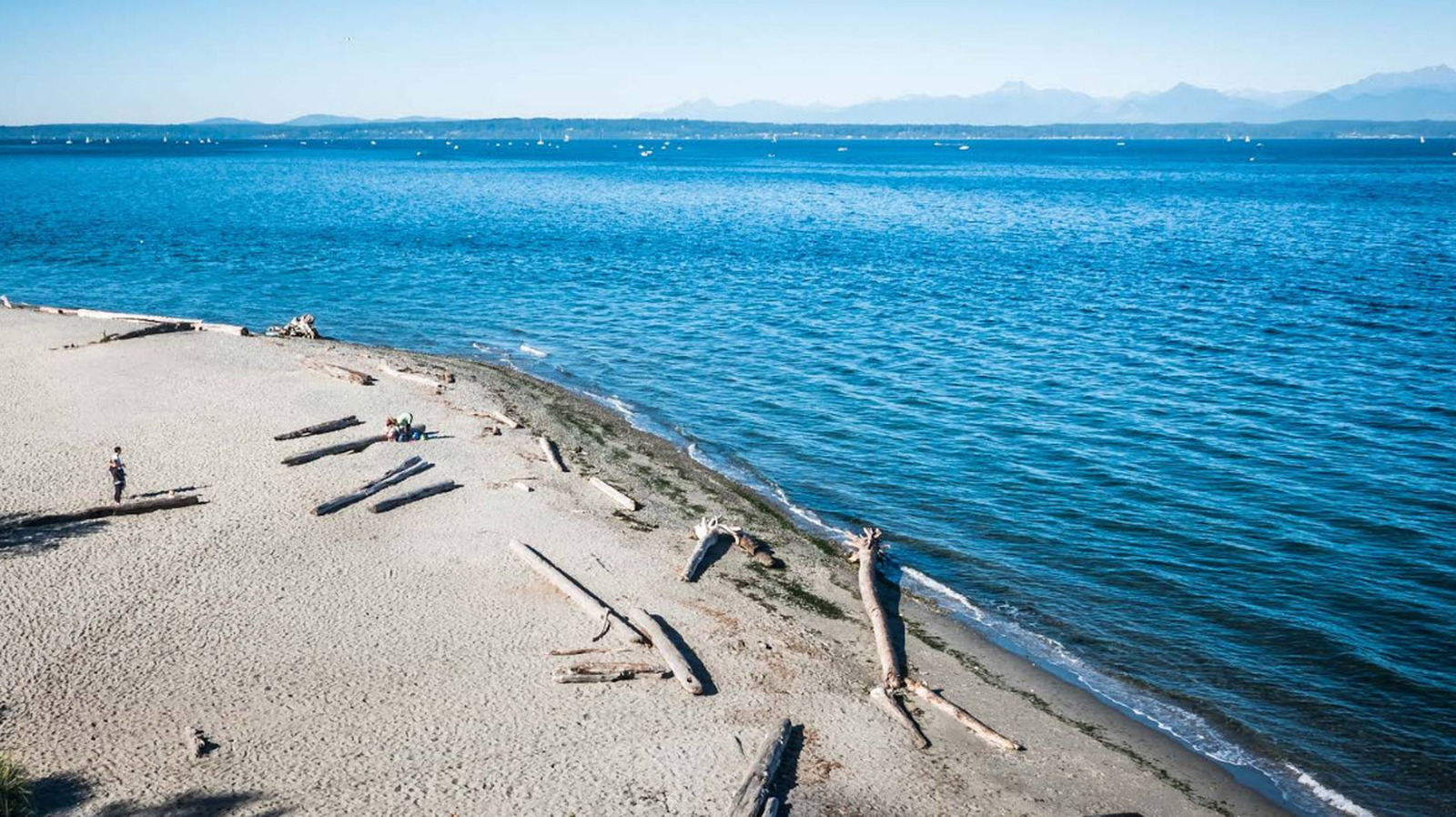
A pedestrian bridge over the active Burlington Northern Santa Fe (BNSF) railway tracks links the upper park bluffs to the rocky shoreline of Puget Sound. (Note: Due to stairs and pedestrian overpasses, the beach access route is not wheelchair accessible).
- Stunning Vistas: The shoreline offers some of the most unobstructed, breathtaking views of the snowcapped Olympic Mountains and the rugged Olympic Peninsula across the deep blue waters of the Sound.
- Tidepool Exploration: During extreme low tides, the beach opens up into a rich maritime playground where visitors can examine tidepools and intertidal marine life.
- Picnicking and Play: The upper bluff features ample parking, picnic tables, restrooms, and a popular children’s playground complete with a salmon-themed slide.
- Swimming Note: Due to frigid alpine water temperatures, strong currents, and fluctuating water quality, swimming is not recommended at Carkeek. Visitors seeking dedicated swimming beaches are advised to visit nearby Magnuson Park. However, kayakers and paddleboarders frequently utilize the beach access (carrying watercraft across the pedestrian bridge) to launch into the Sound on calm days.
Future Outlook: Challenges and Preservation in the 21st Century
As Seattle continues to experience rapid population growth and urban densification, the pressure on municipal green spaces like Carkeek Park will only intensify. Ensuring the long-term health of this 216-acre oasis requires proactive management, forward-thinking policy, and robust community engagement.
Climate Change and Watershed Resilience
One of the primary challenges facing Carkeek Park in the coming decades is the impact of climate change on local hydrology. Increased frequency of severe winter storm events can lead to accelerated stormwater runoff from surrounding urban neighborhoods, threatening to erode the delicate slopes of the ravines, scour Piper’s Creek, and disrupt salmon spawning beds.
In response, municipal authorities and environmental engineers are investing heavily in green infrastructure projects upstream—such as rain gardens, permeable pavement initiatives, and enhanced stormwater retention basins—to slow down water velocity before it reaches the park.
Balancing Recreation with Ecological Preservation
As more residents discover Carkeek Park as a less-crowded alternative to Discovery Park or Green Lake, managing visitor capacity without compromising the fragile ecosystem remains a top priority. Future management frameworks will likely focus on targeted trail maintenance, expanded educational signage, and increased volunteer patrols to ensure that human recreation does not outpace the environment’s carrying capacity.
Furthermore, ongoing partnerships between Seattle Parks and Recreation, regional tribes, and environmental stewardship groups will continue to drive habitat restoration, ensuring that historical resources like Piper’s Orchard and biological treasures like the salmon run are safeguarded for generations to come.
Conclusion
Carkeek Park is far more than a collection of trees, trails, and sandy shores; it is a vital ecological lung for the city of Seattle, a living classroom, and a peaceful sanctuary where the pulse of the wild still beats strongly against the margins of the modern metropolis. Whether you visit to witness the miraculous journey of spawning salmon, comb the tidepools at low tide against the backdrop of the snow-draped Olympic Mountains, or simply lose yourself beneath the ancient boughs of cedar and fir, Carkeek Park remains an irreplaceable jewel in the crown of the Emerald City.