







Executive Overview
In a landmark milestone for South Asia’s maritime and logistics sector, engineering group Cavotec has secured a landmark €5 million ($5.8 million) contract to supply its state-of-the-art MoorMaster NxG automated vacuum mooring system to the Jawaharlal Nehru Port (JNP) in Mumbai, India. This high-profile agreement represents a historic first: the inaugural commercial deployment of automated vacuum mooring technology anywhere on the Indian subcontinent.
Awarded by the Jawaharlal Nehru Port Authority (JNPA), the project is destined for the Gateway Terminals India (GTI) facility, which is strategically operated by global terminal giant APM Terminals. Equipment delivery is officially scheduled for the fourth quarter of 2027.
For decades, traditional vessel mooring has relied on heavy ropes, winches, and human-intensive deck operations. This manual process is not only time-consuming and labor-intensive but also poses significant safety risks to port personnel during high winds, surges, and adverse weather conditions. The introduction of Cavotec’s MoorMaster NxG system eliminates the need for conventional lines entirely. Instead, it uses high-frequency vacuum pads that retract and secure vessels against the quay wall in seconds.
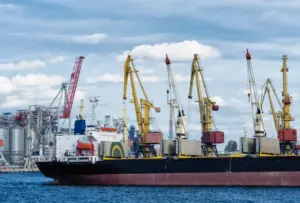
By drastically reducing vessel turnaround times, slashing carbon emissions from idling ships, and setting a new benchmark for workplace safety, this €5 million investment acts as a vital catalyst in India’s ongoing transition toward smart, automated, and sustainable port infrastructure. This comprehensive report examines the technical specifications of the deal, the strategic visions of JNPA and Cavotec, the operational mechanics of automated vacuum mooring, and the broader economic implications for global maritime trade corridors.
Detailed Chronology & Deal Architecture
To understand the significance of this €5 million contract, one must trace the convergence of India’s aggressive port modernization strategies and Cavotec’s long-term commercial push into the Indo-Pacific maritime ecosystem.
The Genesis of India’s Port Automation Push
Over the past decade, the Indian Ministry of Ports, Shipping and Waterways has spearheaded comprehensive modernization initiatives—most notably through the Sagarmala program. Designed to modernize India’s coastline to drive industrial development, Sagarmala has pumped billions of dollars into deep-draft infrastructure, logistics parks, and technological upgrades.
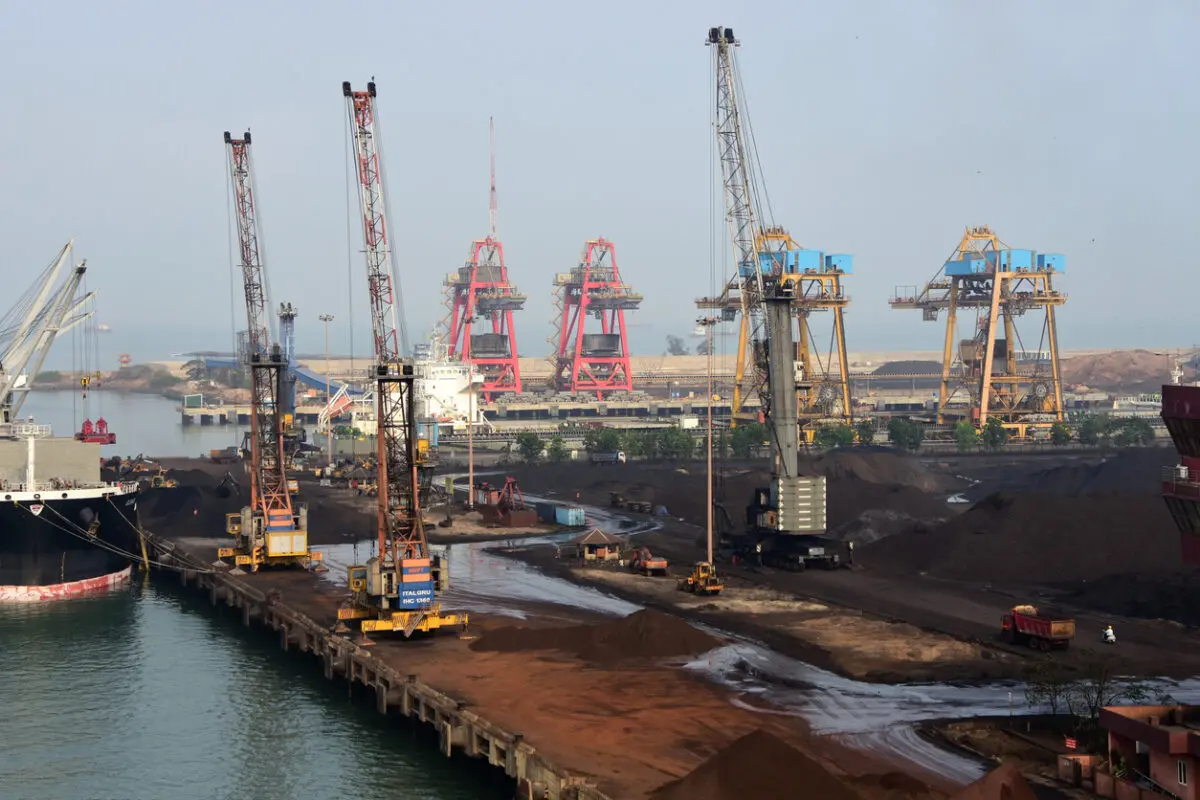
Jawaharlal Nehru Port, situated on the eastern shores of Mumbai Harbour across from Elephanta Island, handles a massive share of India’s containerized cargo. As the nation’s premier container gateway, JNPA has faced mounting pressure to optimize berth capacity, alleviate landside congestion, and digitalize operations to compete with rapidly expanding transshipment hubs across the Middle East and Southeast Asia.

Negotiations and the Selection of GTI Terminal
Discussions between Cavotec and JNPA intensified following a series of technical evaluations aimed at identifying bottlenecks in vessel turnaround times. While landside container handling has seen rapid automation via automated rail-mounted gantry cranes (ARMGs) and Optical Character Recognition (OCR) gates, the ship-to-shore interface—specifically the cumbersome process of mooring and unmooring—remained stubbornly traditional.
The Gateway Terminals India (GTI) facility, a joint venture that handles a substantial volume of JNP’s container throughput under APM Terminals’ operational stewardship, was chosen as the pilot site for the MoorMaster NxG technology. GTI’s high-frequency vessel calls make it an ideal testbed to demonstrate the return on investment (ROI) of vacuum mooring.
Procurement Timeline and 2027 Delivery Horizon
With the contract officially signed, the project timeline is structured around several critical milestones:
- Q1–Q2 2025: Detailed engineering design, quay-wall structural integration studies, and simulation modeling for vessel interaction profiles at the GTI terminal.
- Q3–Q4 2026: Manufacturing of the MoorMaster NxG units, hydraulic power units, and automated control logic systems across Cavotec’s specialized production facilities.
- Q4 2027: Delivery of the hardware to Mumbai, followed by civil works, installation, rigorous commissioning, and comprehensive crew training programs.
- 2028 and Beyond: Full commercial operational launch, serving as a live showcase for other major Indian ports eyeing automation.
Supporting Context & Metrics: The Mechanics of MoorMaster NxG
To fully appreciate why a €5 million investment in mooring technology is generating waves across the global maritime community, one must examine the engineering philosophy behind Cavotec’s MoorMaster NxG and the quantitative metrics defining modern port efficiency.
What is MoorMaster NxG?
MoorMaster is a vacuum-based automated mooring technology that replaces conventional ropes and lines. Vacuum pads—housed in recessed pits along the quay wall or mounted on structural surfaces—extend, attach to a vessel’s hull, and secure the ship in a matter of seconds.
The NxG (Next Generation) iteration represents a massive leap forward in modularity, responsiveness, and data integration. Key technical features include:
- Lightning-Fast Engagement: Ships can be moored and unmoored in seconds, compared to the 30 to 60 minutes typically required for traditional rope-handling procedures involving tugs and mooring gangs.
- Active Vessel Dampening: The system continuously monitors environmental forces (wind, waves, passing currents) and automatically adjusts suction and tension, keeping the vessel rigidly locked in place. This prevents excessive ship movement during loading and unloading.
- Elimination of Snapped Lines: Traditional nylon and wire ropes are subject to extreme tension under heavy swells, occasionally snapping and causing fatal "snap-back" injuries to crew members. MoorMaster entirely eliminates this hazard.
- Zero-Emission Berthing: By holding vessels securely against the dock without running auxiliary engines to fight currents, or by reducing tugboat deployment during docking maneuvers, the system contributes significantly to port decarbonization.
[ Traditional Mooring ]
   - 30-60 minutes per operation
   - High labor dependency (mooring gangs)
   - Safety risks (snap-back hazards, heavy lifting)
   - Vessel movement during swells

[ MoorMaster NxG Automation ]
   - Seconds per operation
   - Zero human ropes-on-deck required
   - Eliminates snap-back risks entirely
   - Active dampening for absolute hull stability
Quantitative Impact on Port Economics
In the high-stakes world of container shipping, time is capital. A single hour saved at berth can mean thousands of dollars in fuel savings, reduced charter costs, and improved schedule reliability for carriers.
At Jawaharlal Nehru Port, the integration of MoorMaster NxG at the GTI terminal is projected to yield measurable improvements across several Key Performance Indicators (KPIs):
- Berth Productivity: By cutting berthing and unberthing times down to a fraction of their current duration, GTI can squeeze extra moves out of every quay crane cycle.
- Vessel Turnaround Time: Faster clearance allows container ships to maintain tighter transit schedules, making JNP a more attractive destination for major global shipping alliances.
- Safety Incidents: The complete removal of human operators from the danger zone of handling heavy lines drastically lowers liability and workers’ compensation claims, fostering a zero-harm workplace culture.
Official Statements & Industry Perspectives
The announcement of this milestone contract has drawn praise from executive leadership at both the Jawaharlal Nehru Port Authority and Cavotec, underscoring the strategic alignment between Indian infrastructure goals and European engineering innovation.
Gaurav Dayal, IAS, Chairperson, JNPA
Emphasizing the transformative impact of the project on national infrastructure, Gaurav Dayal, IAS, Chairperson of the Jawaharlal Nehru Port Authority (JNPA), remarked:
"The introduction of automated mooring at JNPA marks an important step in our journey towards safer, more efficient and technology-driven port operations. By enabling faster and safer berthing and unberthing, this initiative will support improved vessel turnaround and strengthen JNPA’s vision of becoming a benchmark smart and sustainable port."
Mr. Dayal’s statement underscores JNPA’s overarching ambition: transcending traditional cargo-handling roles to become a digitally integrated, sustainable hub capable of matching the top-tier ports of Rotterdam, Singapore, and Shanghai.
David Pagels, CEO, Cavotec
Echoing this sentiment, David Pagels, CEO of Cavotec, highlighted the strategic importance of the Indian market for his company’s global growth trajectory:
"India is an essential market for Cavotec, with significant investments being made in port modernisation and automation. This order is an important reference for us and demonstrates the potential of our MoorMaster technology as the ports in India accelerate their investment."
Pagels’ remarks highlight a broader shift in global maritime supply chains. Equipment manufacturers are increasingly viewing India not merely as a peripheral market, but as a primary testing ground for next-generation port technologies.
Future Outlook: The Domino Effect on Indian Ports
The deployment of Cavotec’s MoorMaster NxG at Jawaharlal Nehru Port is much more than a standalone commercial transaction; it is a watershed moment that is expected to trigger widespread adoption across the subcontinent.
Catalyst for Pan-Indian Port Modernization
India boasts a vast coastline spanning over 7,500 kilometers, supported by 12 major federal ports and over 200 non-major state-managed ports. As trade volumes surge—driven by the Make in India initiative, expanding manufacturing bases, and bilateral free trade agreements—ports face intense capacity constraints.
With JNPA paving the way as the first adopter of automated vacuum mooring, other major ports are likely to reassess their own quay-side infrastructure. Facilities facing severe tidal variations, strong currents, or chronic congestion—such as those along Gujarat’s coastline or India’s eastern seaboard—stand to gain immense operational advantages from similar automated systems.
Alignment with Global Decarbonization Targets
As the International Maritime Organization (IMO) tightens greenhouse gas emission caps for global shipping, ports are under mounting pressure to provide green infrastructure. Shore power (Cold Ironing) and automated vacuum mooring represent the twin pillars of sustainable port operations. By keeping ships stable without auxiliary engine usage and eliminating tug emissions during uncrewed mooring, Cavotec’s technology directly supports port decarbonization mandates.
Furthermore, Cavotec’s broader portfolio—including its recently launched modular battery systems for port cranes—demonstrates that the company is positioning itself as an end-to-end sustainability partner for ports worldwide.
Conclusion: A New Benchmark for South Asian Logistics
The €5 million contract between Cavotec and the Jawaharlal Nehru Port Authority signals the dawn of a new era for Indian maritime logistics. By breaking away from centuries-old manual mooring traditions and embracing cutting-edge vacuum technology at the GTI terminal, JNPA is not only optimizing its own operational efficiency but also setting a new benchmark for ports across South Asia.
As the Q4 2027 delivery date approaches, all eyes will be on Mumbai as this pioneering automation project comes to life, cementing India’s position as a forward-thinking powerhouse in global maritime trade.