









RIYADH / LONDON — In a high-stakes logistical maneuver designed to bypass an aggressive maritime blockade in the southern Red Sea, Saudi Arabia’s state-owned oil giant, Saudi Aramco, has quietly re-engineered its crude export pathways.
Supported by a select group of international shipowners with high risk tolerances, the kingdom is routing massive volumes of crude northward through the Red Sea. This strategy effectively avoids the perilous Bab el Mandeb Strait, where Iran-backed Houthi militants have escalated their campaign against international shipping.
By utilizing a combination of short-haul tanker shuttles, the SUMED (Suez-Mediterranean) pipeline network, and a willingness to send Europe-bound and even Asia-bound cargoes on vastly elongated journeys, Saudi Arabia is successfully insulating its vital oil revenues from regional instability.
This investigative report examines the mechanics of this northern bypass, the international shipping syndicates facilitating it, the economic ramifications of the shift, and the long-term outlook for global energy transit.
Executive Overview
As geopolitical tensions in the Middle East reach a fever pitch, the southern gate of the Red Sea—the Bab el Mandeb chokepoint—has become virtually impassable for many commercial vessels. Following a formal blockade declaration by Yemen-based Houthi militants on July 20, 2026, Saudi Arabia found its primary western export terminal at Yanbu directly threatened. Rather than halting operations or relying solely on heavily defended naval convoys, Saudi Aramco has executed a major strategic pivot.
[Persian Gulf Fields]
         │
         ▼ (East-West Pipeline / Petroline)
   [Yanbu Port] (Red Sea Terminal)
         │
         ▼ (Shuttle Tankers: Sinokor, Dynacom, DHT)
 [Ain Sukhna Terminal] (Egypt)
         │
         ▼ (SUMED Pipeline)
  [Sidi Kerir Port] (Mediterranean Sea)
         │
   ┌─────┴────────────────────────┐
   ▼                              ▼
[European Markets]         [Asian Markets] (via Cape of Good Hope detour)
To sustain its export volumes and stabilize global energy markets, the kingdom has established a "northern bypass" corridor. Tankers owned by prominent maritime firms in South Korea, Greece, and Norway are shuttling crude from Yanbu northward to the Egyptian port of Ain Sukhna. From there, the crude is injected into the SUMED pipeline, transported across Egypt to the Mediterranean terminal of Sidi Kerir, and loaded onto waiting vessels.
While this maneuver secures the oil from Houthi drone and missile strikes in the southern Red Sea, it introduces severe logistical challenges. Most notably, Asian customers—the primary buyers of Saudi crude—must now receive their oil via tankers sailing from the Mediterranean, around the entire continent of Africa, via the Cape of Good Hope. This detour adds thousands of miles and weeks of transit time to every voyage.

Detailed Chronology
The July 20 Blockade and the Yanbu Threat
For decades, the port of Yanbu on Saudi Arabia’s western coast served as a strategic alternative to the Strait of Hormuz. Connected to the eastern oil fields of Abqaiq and Ghawar by the 745-mile East-West Pipeline (Petroline), Yanbu allowed Saudi Arabia to pump up to 5 million barrels per day (bpd) directly to the Red Sea, bypassing potential Iranian blockades in the Persian Gulf.
However, this strategic asset became a vulnerability when Yemen’s Houthi rebels expanded their targeting criteria. Following the Houthi blockade announcement on July 20, 2026, vessels loading at Yanbu and heading south through the Bab el Mandeb were subjected to targeted drone, missile, and waterborne improvised explosive device (WBIED) attacks.
The Emergence of the Shuttle Corridor
Within days of the blockade, ship-tracking data began to reveal a coordinated shift in tanker behavior. Rather than braving the southern passage toward the Gulf of Aden, a fleet of Suezmax and Very Large Crude Carriers (VLCCs) began executing short, rapid voyages entirely within the northern half of the Red Sea.
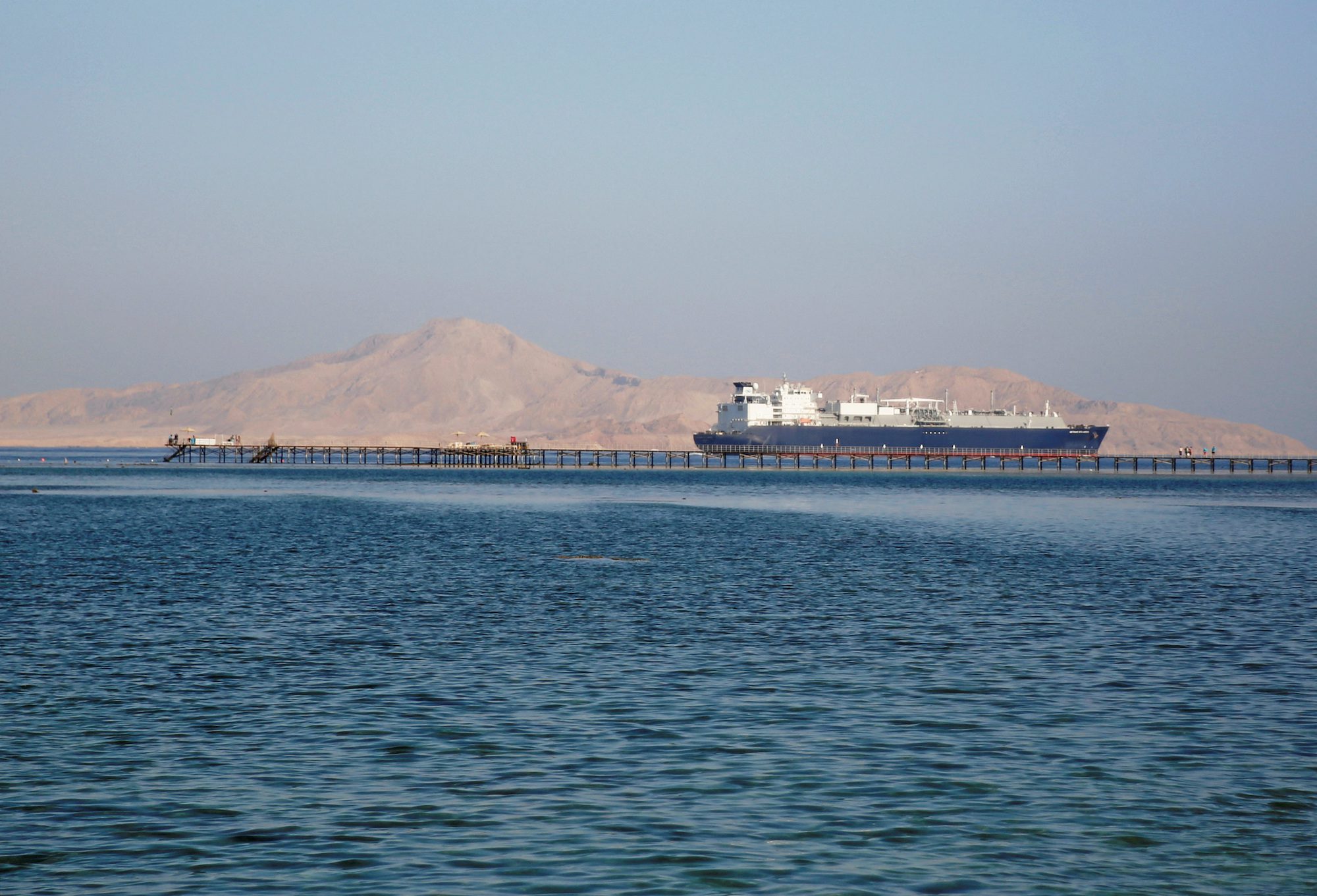
Between late July and late August 2026, vessels controlled by South Korea’s Sinokor Merchant Marine, Greece’s Dynacom Tankers Management, and Norway’s DHT Management AS were identified as the backbone of this shuttle service. These tankers loaded crude at Yanbu, sailed approximately 600 nautical miles north to the Gulf of Suez, discharged their cargoes at the Ain Sukhna terminal, and immediately returned south to Yanbu to repeat the process.
Sustaining the Flow
According to satellite tracking and port agency data compiled by Bloomberg and maritime intelligence firm Kpler, at least four specialized tankers completed multiple round-trips along this northern route within a four-week window. This shuttle operation successfully moved approximately 16.3 million barrels of crude oil out of the immediate conflict zone, demonstrating a highly organized, private-sector response to a state-level security crisis.
Supporting Context & Metrics
The shift in Saudi Arabia’s export strategy is reflected in maritime shipping data, pipeline throughput metrics, and global freight rates.
The Northern Surge in Figures
Prior to the July 20 blockade, Saudi exports via the northern Red Sea were steady but moderate, primarily serving European refineries. Following the blockade, these volumes surged dramatically:
- Export Volume Increase: Saudi crude exports routed through the northern Red Sea rose by approximately 33.3% in the month following the blockade, reaching an average of 1.1 million barrels per day (bpd).
- Shuttle Efficiency: The dedicated shuttle fleet transferred 16.3 million barrels over a 30-day period, utilizing rapid port-turnaround protocols at both Yanbu and Ain Sukhna.
- The Sumed Lifeline: The SUMED pipeline, co-owned by Egypt, Saudi Arabia, the UAE, Kuwait, and Qatar, saw its operating capacity utilized at near-peak levels to handle the sudden influx of northern-bound Saudi crude.
| Metric | Pre-Blockade (Est.) | Post-Blockade (August 2026) | Change (%) |
|---|---|---|---|
| Northern Red Sea Crude Exports | 825,000 bpd | 1,100,000 bpd | +33.3% |
| Volume Transferred via Shuttle Fleet | 0 bpd | ~543,000 bpd (avg) | N/A |
| Average Transit Time (Yanbu to Asia) | ~20 Days (via Bab el Mandeb) | ~42 Days (via Mediterranean & Africa) | +110% |
The Cape of Good Hope Detour: A Logistical Irony
While the northern bypass successfully protects the crude from immediate military threats, it creates a massive logistical detour for shipments bound for Asia—historically the destination for over 60% of Saudi Arabia’s crude exports.
Traditional Route:
Yanbu ──> Bab el Mandeb ──> Indian Ocean ──> Malacca Strait ──> East Asia (Approx. 20 Days)

Northern Bypass Route:
Yanbu ──> Ain Sukhna ──> SUMED Pipeline ──> Sidi Kerir ──> Atlantic Ocean ──> Cape of Good Hope ──> Indian Ocean ──> East Asia (Approx. 42 Days)
This detour has profound implications for the global shipping market:
- Ton-Mile Demand: By more than doubling the physical distance required to deliver a barrel of oil from Saudi Arabia to East Asia, the detour has drastically increased global "ton-mile" demand (the volume of cargo moved multiplied by the distance it travels). This has effectively tightened the global supply of available tankers, driving up charter rates worldwide.
- Fuel and Operating Costs: A standard VLCC routing around the Cape of Good Hope instead of through the Suez Canal/Red Sea corridor incurs an additional $1 million to $1.5 million in fuel (bunker) costs alone, alongside increased crew and maintenance expenses.
- Supply Chain Lag: Refiners in China, Japan, and South Korea must manage a multi-week lag in crude deliveries, forcing them to carry larger inventories or seek alternative sweet and sour grades from West Africa, the US Gulf Coast, or Brazil.
Official Statements and Industry Reactions
The sensitive nature of these operations—occurring at the intersection of international conflict, state-owned energy resources, and private maritime commerce—has kept direct commentary from key players limited.
Market Analysts
Xavier Tang, a senior market analyst at energy intelligence firm Vortexa, highlighted the economic motivations driving private shipowners to participate in this high-risk trade:
"Tanker operators with higher risk tolerance have entered the trade, facilitating shuttle tanker movements between Yanbu and Ain Sukhna so crude supplies can be transported, and Saudi Aramco customers can pick up crude directly at Sidi Kerir instead of Yanbu."
Tang noted that these operators are compensated with premium freight rates, offsetting the increased insurance premiums and operational risks associated with operating in the Red Sea.
Corporate Silence
When contacted for comment regarding their vessels’ participation in the Yanbu-to-Ain Sukhna shuttle service:
- Sinokor Merchant Marine (South Korea) did not respond to inquiries.
- Dynacom Tankers Management (Greece) declined to comment on specific chartering arrangements.
- DHT Management AS (Norway) did not provide an official statement.
Industry insiders suggest this silence is a deliberate security measure. Revealing charter agreements, vessel schedules, or security protocols could make these shipowners and their crews primary targets for Houthi forces, who have demonstrated sophisticated tracking capabilities using open-source AIS (Automatic Identification System) data and regional intelligence networks.
Future Outlook
The establishment of the northern bypass represents a tactical victory for Saudi Arabia and global energy markets, but it remains an expensive and complex temporary solution. Several key factors will shape the future of this energy corridor:
1. Durability of the Shuttle Fleet
The viability of the Yanbu-to-Ain Sukhna corridor depends on the continued willingness of international shipowners to operate in the Red Sea. If Houthi forces acquire longer-range attack capabilities or begin targeting vessels in the northern Red Sea, the war-risk insurance premiums for these shuttles could become cost-prohibitive, forcing Saudi Aramco to rely entirely on the Persian Gulf—and thus the Strait of Hormuz—for its exports.
2. Egyptian Pipeline Infrastructure Capacity
The SUMED pipeline has a nominal capacity of approximately 2.5 million bpd. While currently capable of handling the redirected Saudi volumes, any technical failure, sabotage, or political instability in Egypt could immediately disrupt this pipeline network. This risk highlights the vulnerability of relying on single transit corridors for global energy security.
3. Structural Shifts in Global Oil Flows
If the Red Sea crisis persists, the high costs of the Cape of Good Hope detour may prompt a structural realignment of global oil flows. Saudi Arabia may choose to route more of its crude west to European and North American markets via Sidi Kerir, while Asian refiners permanently shift their procurement toward Atlantic Basin or Russian barrels. Such a realignment would redraw the global energy map, with lasting consequences for OPEC+ market share and geopolitical alliances.
Ultimately, the northern bypass demonstrates Saudi Arabia’s logistical resilience and its ability to mobilize international maritime capital in times of crisis. However, it also serves as a stark reminder of the vulnerability of the world’s energy chokepoints, illustrating how a localized conflict can force global commerce to take the long way home.