








Executive Overview
The rapid integration of autonomous vehicles (AVs) into major metropolitan landscapes has accelerated a complex debate regarding urban space, traffic congestion, and environmental sustainability. At the heart of this friction is a fundamental operational challenge: the phenomenon of "deadheading," wherein robotaxis and ride-hailing fleets drive significant portions of their operating mileage entirely empty while transiting between passenger drop-offs and pick-ups.
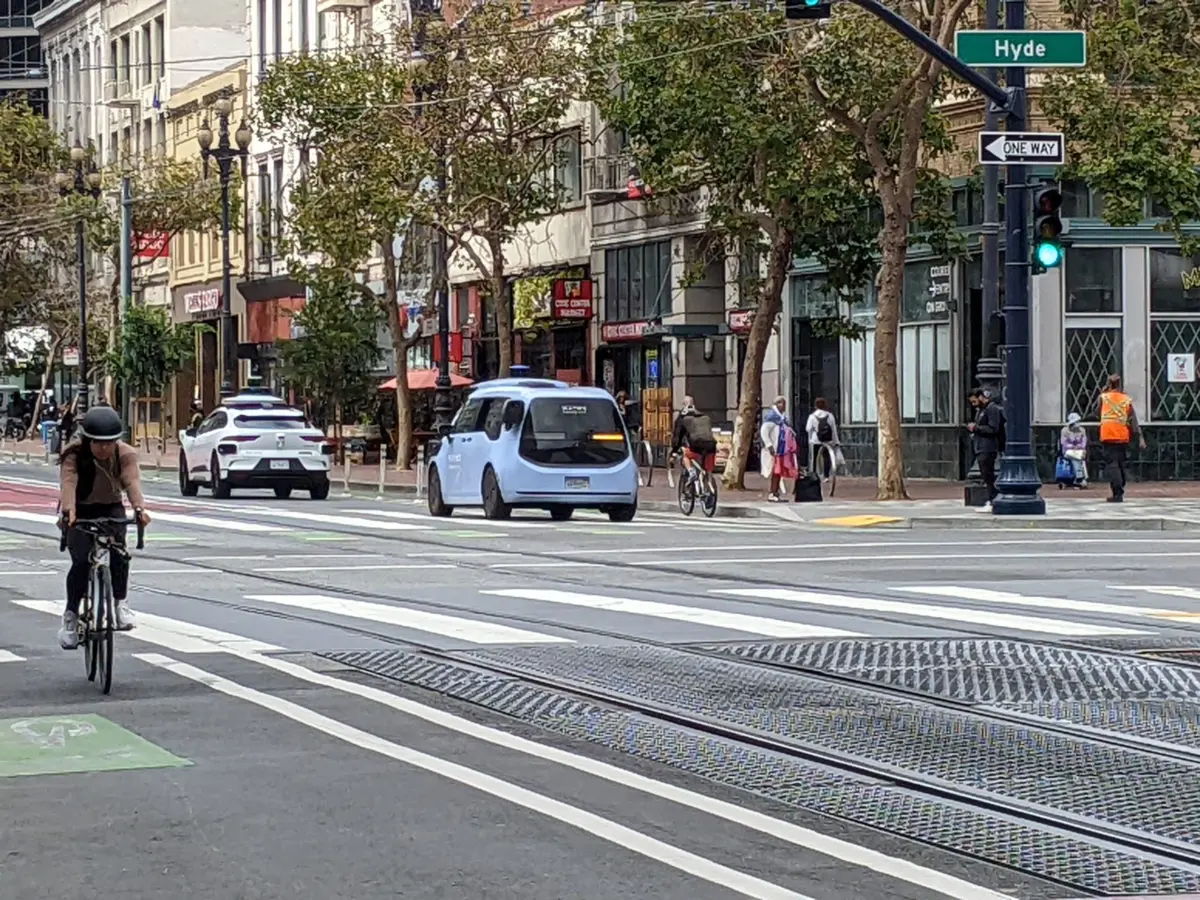
Recent discourse spearheaded by autonomous vehicle operators—most notably articulated by Arielle Fleisher, Waymo’s Policy Development and Research Manager—has attempted to bridge the gap between technological innovation and urbanist ideals. Waymo’s position suggests that the industry shares core goals with urban planners, particularly regarding the reduction of empty vehicle miles traveled (VMT). To mitigate deadheading, AV operators propose "staging": allowing driverless vehicles to park idly at the urban curb between fares rather than continuously circling city blocks.
However, this proposal has met with robust pushback from urban planners, municipal advocates, and transportation experts. Critics argue that the industry’s framing masks deeper economic and spatial questions, such as whether private tech corporations should be granted free or discounted access to scarce public rights-of-way. Furthermore, as municipal leaders grapple with local congestion, regulatory preemption by state agencies, and high-profile operational meltdowns, the debate over AV staging highlights a broader power struggle: Who truly controls the modern city street?
This article investigates the mechanics of the deadheading problem, evaluates the economic and spatial validity of proposed staging frameworks, and explores the systemic governance challenges facing cities like San Francisco as they attempt to manage the autonomous vehicle revolution.
Detailed Chronology and the Genesis of the Staging Debate
The trajectory of the autonomous vehicle debate has evolved rapidly from theoretical trials to dense, urban realities. Understanding the current friction requires examining the sequence of events and arguments that brought the curb-management crisis to the forefront of municipal policy.
The Rise of Autonomous Fleets in Urban Centers
Over the past half-decade, companies like Waymo—a subsidiary of Alphabet Inc.—have transformed commercial thoroughfares in dense cities such as San Francisco, Phoenix, and Los Angeles into living laboratories for autonomous driving technology. As fleet sizes expanded, researchers and city planners began tracking the collateral impacts of these robotaxis on municipal traffic flows. While early debates centered on safety and pedestrian interactions, attention quickly shifted to structural inefficiencies, chief among them being the heavy reliance on empty driving miles.
The Waymo Policy Intervention
Seeking to address growing urbanist criticism, Waymo representatives published policy essays—most notably Arielle Fleisher’s piece titled "Waymo Speaks: We Have More In Common With Urbanists Than You Might Think"—arguing that autonomous fleets can actively support smart-growth principles if cities adapt their regulatory frameworks. Fleisher’s central thesis posited that by permitting AVs to "stage" at the curb during downtime, cities could drastically reduce the circulation of empty vehicles, thereby curbing overall VMT and lowering vehicular emissions.

Academic Modeling and the San Francisco Case Study
To substantiate these claims, Waymo highlighted a university-backed study funded by the company itself. Conducted by researchers at the University of California, Berkeley, and the University of California, Irvine, the study utilized complex microsimulations to model a hypothetical fleet of approximately 1,700 AVs operating within San Francisco.
The findings suggested that a regulatory regime banning staging—thus forcing vehicles to continuously circle city streets while waiting for dispatch—would exponentially increase daily VMT by more than 200,000 kilometers. This simulation served as the cornerstone of the industry’s argument for formalizing curb-staging permits.
Municipal Pushback and Regulatory Flashpoints
The industry’s staging proposal immediately drew skepticism from local transit advocates. Observers noted a glaring premise disconnect: staging is not actually illegal in San Francisco. AV operators already possess the legal latitude to pull over into empty curb spaces between fares, provided they adhere to existing parking regulations and fee structures.
The real operational hurdle facing operators is not municipal prohibition, but rather the acute scarcity of available curb space in high-demand commercial and residential zones. This realization transformed the debate from a technical scheduling problem into a contentious political battle over the privatization of public assets, culminating in increased scrutiny from city leaders following high-profile local disruptions, such as the July 4th Waymo traffic meltdown in San Francisco.
Supporting Context, Metrics, and Economic Realities
To evaluate the validity of AV staging proposals, transportation analysts must dissect the underlying metrics of fleet operations, curb economics, and the true cost of public space.
The Anatomy of the Deadheading Problem
Both human-driven ride-hail networks (such as Uber and Lyft) and autonomous robotaxis share an identical structural flaw: high empty-mile percentages. Industry data indicates that roughly 40 percent of all ride-hail and AV miles are accumulated while the vehicles are empty, shuttling between drop-off zones and subsequent pick-up locations.
While electric AVs eliminate tailpipe emissions, they do not eliminate the broader externalities of vehicular traffic. Even battery-powered cars generate substantial environmental and physical wear through:
- Particulate Pollution: The friction of tires and brakes releases microplastics and heavy metal particles into the urban atmosphere and stormwater runoff.
- Physical Congestion: Every empty vehicle occupies valuable roadway capacity, reducing average transit speeds for buses, freight, and emergency vehicles.
- Infrastructure Degradation: Heavy electric fleets accelerate pavement fatigue and road maintenance requirements.
The Shoupian Framework: Who Pays for the Curb?
A central critique of the industry’s staging proposal centers on the economic principles established by urban planning luminary Donald Shoup in his seminal work, The High Cost of Free Parking. Shoup’s foundational premise is that curb space is a finite, highly valuable public asset that should be efficiently priced to encourage turnover and manage demand.
San Francisco has historically been a pioneer in this domain, implementing dynamic-pricing meter pilots (such as SFpark) to calibrate curb costs based on real-time demand. Yet, Waymo’s policy proposals have notably omitted concrete frameworks for compensating municipalities for sustained curb occupation. Critics argue that allowing one of the world’s most valuable technology corporations to claim prolonged, rent-free access to public rights-of-way directly subsidizes private commercial operations at the expense of local taxpayers.
+-------------------------------------------------------------------------+
                    THE URBAN CURB VALUE EQUATION
+-------------------------------------------------------------------------+
|  Resource Scarcity  |  Curb space is finite; every linear foot occupied  |
|                     |  by an idle AV is unavailable for deliveries,    |
|                     |  transit boarding, or public greening.           |
+---------------------+---------------------------------------------------+
|  Dynamic Pricing    |  Modern urban policy (Shoupian economics) dictates |
|                     |  that valuable public assets must be priced to   |
|                     |  manage demand and prevent congestion.           |
+---------------------+---------------------------------------------------+
|  Private Benefit vs.|  Proposals that grant free or preferential access |
|  Public Burden      |  shift infrastructure maintenance costs to local  |
|                     |  taxpayers while privatizing spatial utility.    |
+-------------------------------------------------------------------------+
Deconstructing the Local Business Claims
Proponents of staging argue that idle AVs parked in commercial districts deliver immense economic value to local businesses. The core economic hypothesis posits that staging zones increase overall curb turnover, allegedly generating eight to ten times the number of potential customer visits compared to a curb space permanently occupied by a privately owned personal vehicle.
Transportation advocates, however, have questioned the logic of this metric. An empty, idling autonomous vehicle parked outside a local storefront does not inherently translate to foot traffic for that specific merchant. The theoretical "turnover" metric measures total vehicle cycling rather than localized commercial patronage. Because an AV stages wherever the nearest available space happens to be—regardless of passenger origins or destinations—treating these empty vehicles as proxies for active consumer visits lacks empirical support.
Furthermore, a critical policy question remains: Are these proposed staging zones intended for exclusive use by AV fleets, or will local residents and delivery drivers retain access? If the spaces are dedicated exclusively to corporate robotaxi fleets, the argument regarding broad public benefit disintegrates entirely. The municipality would no longer be managing a general-use curb, but rather converting shared public infrastructure into private, corporate parking stalls.
Official Statements and Stakeholder Perspectives
The friction between corporate autonomy and municipal governance has elicited strong positions from industry leaders, urban advocates, and elected officials alike.
The Industry Perspective: Efficiency through Managed Staging
Corporate policy advocates maintain that autonomous fleets are vital components of a modern, multi-modal transportation ecosystem. By reducing car ownership rates and providing reliable first-mile/last-mile connections, AVs theoretically decrease the need for sprawling private parking structures.
From Waymo’s viewpoint, staging is a pragmatic compromise. Because deadheading cannot be entirely eradicated under current demand patterns, allowing vehicles to pause locally rather than continuously drive in circles is framed as an environmental necessity. Arielle Fleisher’s policy writings emphasize that proactive municipal collaboration on permitting standards is essential to preventing unnecessary gridlock:
"Deadheading can never be fully eliminated, so the real question is how many empty miles the public should tolerate in exchange for AVs’ benefits."
The Urbanist and Advocate Critique: Equity, Pricing, and Fleet Caps
Conversely, grassroots transportation advocates and urban planners argue that this framing creates a false dichotomy. Critics contend that positioning VMT increases as an unavoidable "tax" for technological progress ignores the foundational policy tools available to cities.
Christopher Kucera, a San Francisco-based climate and transportation advocate, highlights the distributional inequities of the current AV business model:
"The op-ed’s argument reads a bit like an ultimatum… It avoids the more obvious lever for cutting AV-generated VMT: limiting how many AVs are on the road in the first place."
Advocates argue that an equitable approach to curb management must begin with appropriate economic pricing. Even a modest, market-based curb fee for staging would incentivize operators to optimize fleet distribution and reduce empty driving, while simultaneously generating public revenue to offset transportation infrastructure wear-and-tear.
Municipal Leadership and the Regulatory Void
At the municipal level, frustration is mounting over the total lack of local jurisdiction regarding autonomous vehicle operations. Under current California law, city governments in San Francisco and elsewhere possess virtually no legal authority to regulate fleet sizes, operating hours, geographic boundaries, or service deployment. These powers are strictly retained by state entities: the Department of Motor Vehicles (DMV) and the California Public Utilities Commission (CPUC).
This regulatory disconnect was starkly underscored following operational failures, including a significant downtown traffic snarl in San Francisco. In response, municipal leaders—most notably San Francisco Mayor Daniel Lurie—formally petitioned state authorities to enact stricter operational and safety regulations on autonomous fleets. Urban policy experts suggest that granting cities direct local permitting authority over AV staging, fleet density, and right-of-way management is the most logical path forward to balance technological innovation with civic livability.
Future Outlook: Navigating the Autonomous Urban Century
As autonomous vehicle technology matures and commercial deployment expands to new national and international markets, cities face a defining crossroad. The integration of robotaxis into the urban fabric cannot be left entirely to the discretion of private corporations, nor can municipalities afford to adopt a purely obstructionist stance against technological evolution.
Toward Collaborative and Priced Curb Management
The path to a sustainable urban future requires aligning AV operational incentives with public infrastructure goals. Several key policy transformations are likely to shape the coming decade:
- Dynamic Curb Pricing for Commercial Fleets: Cities will increasingly implement digital kerbside management systems, requiring commercial fleets—both human-driven and autonomous—to pay dynamic, real-time rates for passenger loading, unloading, and brief staging.
- Data Transparency and Accountability: Regulatory bodies must mandate open-data sharing agreements, compelling AV operators to provide municipalities with granular, anonymized metrics regarding deadheading rates, VMT accumulation, and curb-utilization patterns.
- Restoration of Local Home Rule: State legislatures must reevaluate preemption laws, empowering local governments to establish enforceable caps on fleet sizes and tailor operating rules to match neighborhood-specific infrastructural capacities.
Conclusion
The debate sparked by Waymo’s staging proposals cuts to the core of urban governance in the 21st century. While autonomous vehicles offer promising efficiency gains and mobility alternatives, they also threaten to externalize significant congestion, environmental, and spatial costs onto the general public.
Solving the deadheading crisis will require more than corporate appeals for complimentary parking; it demands robust public policy, equitable pricing structures, and the restoration of local democratic control over our streets. Only by treating the urban curb as a precious, finite public asset can cities ensure that the autonomous vehicle revolution serves the public good rather than private corporate convenience.