








Executive Overview
In a resounding demonstration of operational resilience and logistical prowess, China’s Ningbo-Zhoushan Port has shattered historical performance metrics by surpassing the 8,000-TEU (Twenty-Foot Equivalent Unit) threshold for sea-rail intermodal transport on two consecutive days. Recording 8,574 TEUs on August 14 and 8,172 TEUs on August 15, the port not only eclipsed its previous single-day transaction records but also cemented its status as a vital nexus in global supply chain logistics.
This historic milestone serves as a critical catalyst for the port’s broader strategic ambitions, ensuring the high-quality completion of its monthly production targets while providing substantial momentum toward its "quarterly red" performance benchmark. Coming in the wake of severe operational disruptions caused by Typhoon White Dolphin, the achievement underscores the sophisticated coordination, adaptability, and hub capacity inherent in Ningbo-Zhoushan’s sea-rail intermodal network. By seamlessly bridging maritime shipping routes with inland rail corridors, the port has once again proven its mettle as an indispensable economic engine capable of maintaining the stability of domestic and international industrial and supply chains under pressure.
Detailed Chronology: Navigating Crisis to Record-Breaking Triumph
The Calm Before the Surge: Structural Preparations
The foundation for the mid-August breakthrough was laid over months of rigorous system-wide optimization. Since the beginning of the year, the management and operational teams at the Ningbo-Zhoushan Port sea-rail intermodal division adopted a dual-pronged strategy aimed at external market expansion and internal efficiency maximization. Recognizing the growing demand for multimodal logistics solutions, the port systematically upgraded its core multimodal operating systems. These technological enhancements were designed to drastically improve collection and distribution turnover efficiency, minimizing dwell times for containers transitioning between railcars and container vessels.
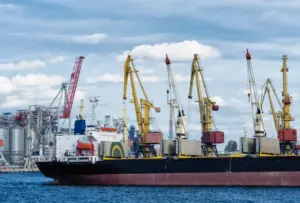
Concurrently, the port’s operational team engaged in intensive route development. By actively seeking favorable policy support, expanding the inland cargo hinterland, and refining the structural layout of the intermodal transport network, the port successfully launched new intermodal routes, increased station coverage, and heightened train frequencies. These proactive measures fortified the logistics channel connecting China’s industrial heartlands with global maritime trade routes, creating a robust framework primed for high-volume execution.
The Crucible: Overcoming Typhoon White Dolphin
The true test of this optimized network materialized unexpectedly with the arrival of Typhoon White Dolphin. Severe meteorological events of this magnitude typically inflict cascading disruptions on port operations, including vessel berthing delays, yard congestion, and temporary suspensions of horizontal transport and rail movements.
Following the dissipation of the typhoon, Ningbo-Zhoushan Port faced an acute logistical crisis. A massive wave of concentrated cargo backlogs converged on the terminals simultaneously, colliding with surging shipping demand from regional manufacturers and global importers. This sudden influx placed unprecedented pressure on the port’s production organization, threatening to create severe bottlenecks that could take weeks to clear.
The Breakthrough: August 14–15, 2024
Rather than succumbing to the post-typhoon congestion, the sea-rail intermodal team initiated an emergency response protocol characterized by hyper-coordinated, cross-sectoral collaboration. The team forged immediate, synchronized communication channels with the Shanghai Railway Bureau, the North No. 1 and North Third Collection Offices, various municipal town offices, individual terminal operating units, and key freight forwarders.

This coalition worked around the clock to dynamically manage railway port and station capacity, ensuring that incoming and outgoing trains were marshaled with optimal precision. Freight flows for sea-rail intermodal containers were meticulously allocated to bypass localized choke points.
The fruits of this intensive coordination materialized on August 14, when the port processed an astonishing 8,574 TEUs via sea-rail intermodal transport—shattering the psychological and operational barrier of 8,000 containers in a single day. Rather than registering as an isolated statistical anomaly, the momentum carried forward into the following day. On August 15, the port recorded a second consecutive day above the milestone, moving 8,172 TEUs. Together, these back-to-back performances redefined the upper limits of the port’s daily operational capacity and converted a post-disaster bottleneck into a historic triumph.
Supporting Context & Metrics: Analyzing the Scale of Success
The Significance of the 8,000-TEU Milestone
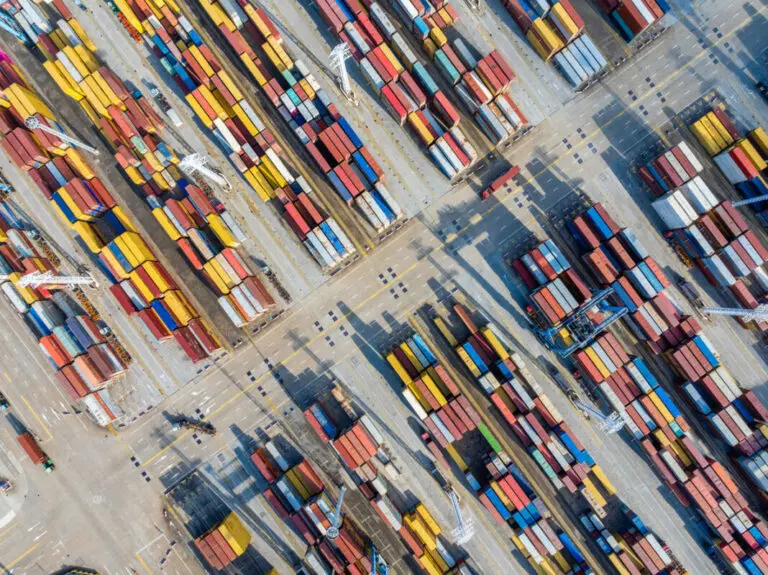
To fully appreciate the magnitude of moving over 8,500 TEUs via sea-rail intermodal transport in a single 24-hour period, one must examine the logistical complexity inherent in multimodal hubs. Unlike pure maritime operations, where containers are moved en masse via mega-containerships, sea-rail intermodal transport requires the constant, synchronized interplay of gantry cranes, rubber-tired gantry (RTG) cranes, internal transfer vehicles, rail-mounted gantry (RMG) cranes, and scheduled freight trains.
Coordinating the transfer of more than 8,500 boxes from maritime vessels to rail platforms—or vice versa—within a single calendar day demands near-flawless execution. It requires precise synchronization between ocean carrier schedules and rail network timetables, ensuring that rolling stock arrives precisely as vessels complete discharge operations, thereby avoiding yard saturation.
Strategic Contribution to the "Quarterly Red" Benchmark
In the context of Chinese industrial and port enterprise management, performance benchmarks are frequently categorized by color-coded targets, with "quarterly red" denoting a period of exceptionally high growth, profitability, and operational outperformance.
The mid-August surge provided an invaluable cushion for the port’s third-quarter Key Performance Indicators (KPIs). By neutralizing the potential production deficits caused by Typhoon White Dolphin within a matter of days, the sea-rail intermodal team ensured that the port remained firmly on track to meet or exceed its overarching corporate objectives. Furthermore, these high-volume days signal to the market that Ningbo-Zhoushan Port possesses significant latent capacity, making it an increasingly attractive option for multinational corporations seeking resilient, disruption-resistant supply chain nodes in the Asia-Pacific region.
Official Statements and Industry Insights
While specific executive soundbites from individual port directors are integrated into the overarching operational narrative, official disclosures from Ningbo-Zhoushan Port Co., Ltd. emphasize that this achievement is the direct result of a calculated, long-term strategic evolution rather than a lucky coincidence.
According to institutional reports released by the port administration, the success of the mid-August operations validates the efficacy of the port’s "internal-external dual-drive" model. Externally, the port has aggressively courted inland manufacturers by offering bespoke logistics packages that combine competitive rail freight rates with guaranteed transit times. Internally, investments in digitalized yard management systems and automated gate operations have compressed processing times, allowing terminal operators to turn equipment faster than ever before.
Logistics analysts and industry experts monitoring the East China maritime sector have pointed to the Shanghai Railway Bureau’s collaboration as a decisive factor. The ability to dynamically adjust train formations and secure additional locomotive power on short notice—especially in the chaotic aftermath of a major meteorological event—demonstrates a profound level of state-enterprise coordination that few global ports can replicate. This synergistic relationship between maritime terminal operators and national railway authorities is increasingly recognized as a core competitive advantage for Chinese ports in the global arena.
Future Outlook: Sustaining Momentum and Expanding Horizons
Scaling the Intermodal Network
Looking beyond the immediate celebration of August’s record-breaking figures, Ningbo-Zhoushan Port is aggressively charting its future course to ensure that such high-volume throughput becomes the operational baseline rather than the exception.
The port’s strategic roadmap for the coming years centers on the continuous expansion of its inland cargo hinterland. By establishing dry ports and intermodal logistics hubs deeper into central and western China, Ningbo-Zhoushan aims to siphon cargo away from competing coastal ports, positioning itself as the primary gateway for international trade originating far from the coastline. This expansion will be supported by ongoing investments in rail infrastructure, including the laying of dedicated freight lines that connect directly to terminal dockyards, thereby eliminating the need for intermediate truck drayage.
Technological Integration and Automation
To handle the anticipated growth in sea-rail intermodal volumes, the port is accelerating its digital transformation initiatives. Future upgrades will focus on the deployment of artificial intelligence (AI) and big data analytics to predict cargo surges, optimize container stacking strategies within yards, and automate the scheduling of railcar loading sequences. By minimizing human error and maximizing the predictive accuracy of resource allocation, the port expects to push its single-day throughput ceilings even higher.
Ensuring Supply Chain Resilience
In an era marked by geopolitical uncertainty, climate change-induced weather anomalies, and persistent vulnerabilities in global logistics networks, the strategic value of ports like Ningbo-Zhoushan cannot be overstated. By continuously fortifying its sea-rail intermodal channels, the port is actively contributing to the stability and security of global supply chains.
The events of August 14 and 15, 2024, will be remembered not merely as a temporary statistical peak, but as a defining moment that showcased the agility, operational maturity, and strategic foresight of the Ningbo-Zhoushan Port. As the port marches toward its future development targets, its proven ability to turn crisis into opportunity ensures it will remain an indomitable titan in the world of international maritime trade and multimodal logistics.