



Executive Overview
As the city of Omaha actively breaks ground and moves forward with its ambitious downtown streetcar line, municipal leaders, urban planners, and residents alike are locking eyes on a fundamental, multi-million-dollar question: How have similar modern streetcar investments panned out in other American cities?
Across the United States, the modern streetcar has experienced a tumultuous renaissance over the past two decades. Promoted by chambers of commerce and real estate developers as a catalyst for economic development, fixed-rail transit has been adopted by a diverse array of mid-sized and large metros. Yet, the track record of these systems is far from uniform. While some cities have struggled with low ridership, sluggish travel times, and crushing maintenance costs, others have discovered a winning formula by combining dedicated rights-of-way, transit-signal priority, and fare-free policies.
This comprehensive investigation examines the national landscape of modern streetcar systems—highlighting critical case studies like Oklahoma City—to evaluate the economic, operational, and structural realities that await Omaha. By looking closely at what works, what fails, and what hidden pitfalls exist beneath the shiny new rails, this report offers a definitive blueprint for evaluating Omaha’s transit future.
Detailed Chronology: The Rise of the Modern American Streetcar
To understand the current crossroads facing Omaha, one must contextualize the broader timeline of the modern American streetcar movement.
The Early 2000s: The Nostalgia and Economic Development Boom
Following decades of post-World War II auto-centric urban planning—which saw the dismantling of most historical streetcar networks in favor of buses and sprawling highway networks—urban cores across the U.S. began seeking revitalization tools at the turn of the 21st century. Portland, Oregon, lit the modern fuse in 2001 with the opening of the Portland Streetcar. It was explicitly pitched not merely as a transit project, but as a real estate development strategy. The idea was simple yet compelling: fixed rails signal permanence to private developers, encouraging high-density, transit-oriented development along a predictable corridor.
The 2010s: Federal Grants and the Rush to Build
Encouraged by early perceived successes in Portland, and later augmented by federal TIGER (Transportation Investment Generating Economic Recovery) grants and small starts funding, a second wave of cities jumped onto the streetcar bandwagon during the 2010s. Municipalities such as Atlanta, Washington, D.C., Kansas City, Cincinnati, and Oklahoma City pushed forward with their own downtown loops.
During this period, planners often prioritized capital cost containment and downtown connectivity over operational speed. Many systems were integrated directly into mixed traffic, sharing lanes with delivery trucks, rideshare vehicles, and regular cars. This fundamental design compromise would soon manifest as a major operational Achilles’ heel for numerous networks.
The COVID-19 Pandemic and the Shift Toward Equity
The onset of the global COVID-19 pandemic in 2020 sent shockwaves through urban public transit systems nationwide. Downtown ridership plummeted as office workers shifted to remote work. Streetcars, which already suffered from a reputation as "toys for tourists" rather than reliable commuter arteries, faced existential threats.
In response, several cities began rethinking their operational models. Systems that relied heavily on farebox recovery found themselves strapped for cash, prompting a radical policy shift: eliminating fares entirely to boost ridership, improve boarding times, and serve working-class populations more equitably.
2026 and Beyond: The Reality Check and Omaha’s Turn
By 2026, the nationwide assessment of streetcars is nuanced. The initial gold-rush mentality has given way to sober, data-driven analysis. Cities are evaluating whether the multi-hundred-million-dollar price tags of laying track and maintaining specialized fleets yield enough public benefit to justify the investment. It is against this backdrop of national soul-searching that Omaha is currently constructing its own downtown line, making the lessons of its predecessors more urgent than ever.
Supporting Context & Metrics: Ridership, Fares, and the Oklahoma City Blueprint
As illustrated by recent operational data, the success of a modern streetcar is heavily dictated by policy choices made after the ribbon is cut. A prime example of this dynamic is the streetcar network in Oklahoma City.
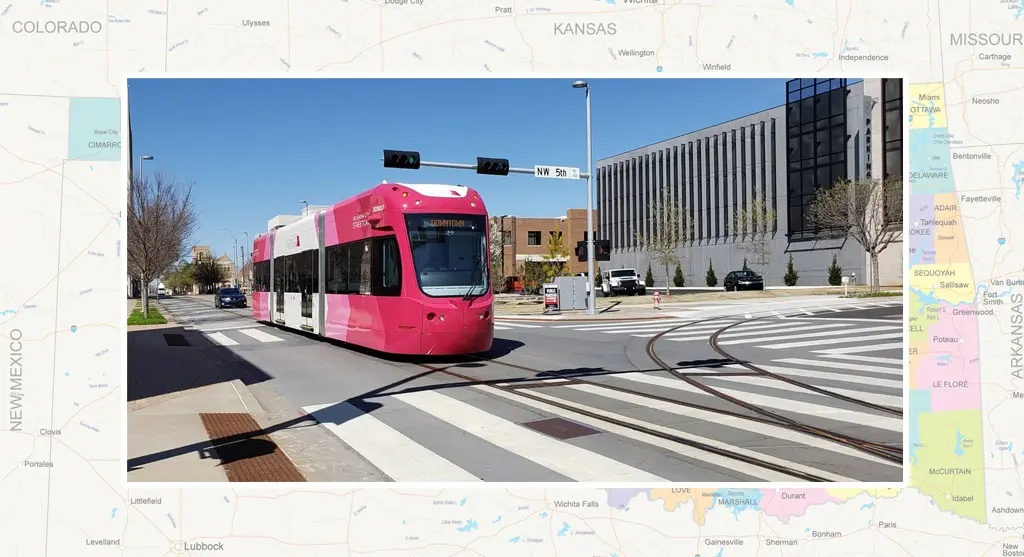
The Oklahoma City Experience: A Case Study in Fare-Free Revitalization
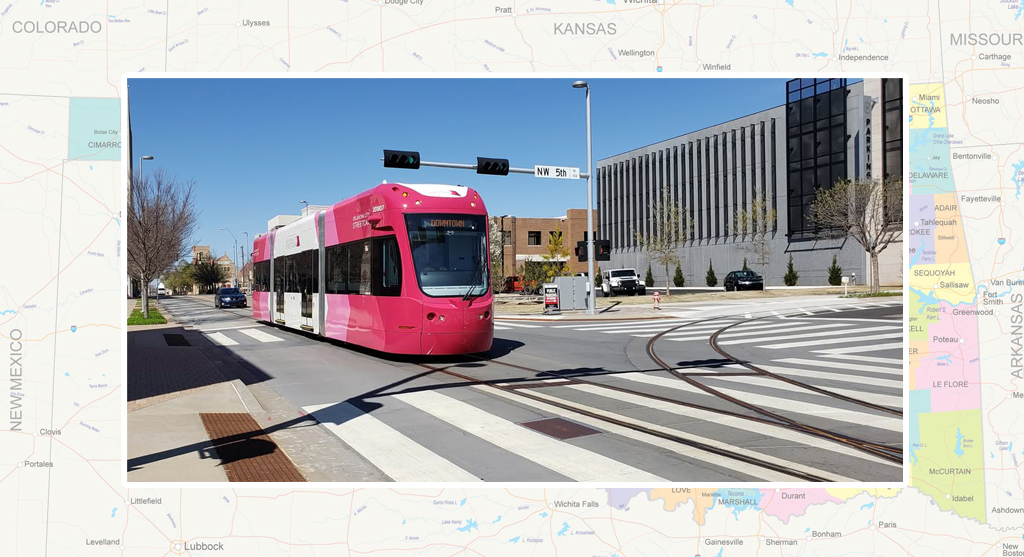
Oklahoma City’s downtown streetcar system initially experienced the classic hurdles familiar to many mid-sized American metros: modest ridership numbers and persistent questions regarding its utility as a daily commuter tool versus a novelty. However, a major turning point occurred when the city, aided by federal relief funds and local funding adjustments, transitioned to a fare-free model.
Data compiled across similar networks—including Kansas City—demonstrates that removing the barrier of fare collection dramatically alters rider demographics and volume. When a streetcar is free:
- Boarding times decrease significantly: Drivers do not have to wait for passengers to fumble with cash, tap cards, or buy tickets at station kiosks.
- Equity increases: The system transforms from a tourist attraction into a vital lifeline for lower-income service workers navigating the urban core.
- Ridership rebounds: Systems that struggled to maintain pre-pandemic numbers often see steady, compounding growth in daily boardings once fares are eliminated.
The Mixed Reviews of Mixed-Traffic Operations
A critical metric across the national streetcar landscape is speed and reliability. Urban transit data consistently shows that streetcars operating in mixed traffic—where they share lanes with regular automobile traffic—suffer from chronic delays.
In cities like Atlanta and Washington, D.C., streetcars frequently get caught behind double-parked delivery vans, garbage trucks, and heavy rush-hour congestion. Because streetcars cannot steer around obstacles, a single stalled vehicle can halt an entire line, cascading delays throughout the corridor.
For Omaha, this metric serves as a stern warning. Urban planning experts emphasize that unless a streetcar line is paired with aggressive parking management, dedicated transit lanes, and robust traffic-signal priority (TSP) systems, it risks becoming an expensive, highly visible version of a standard local bus—minus the flexibility to route around street closures or emergencies.

Economic Development: The Double-Edged Sword
Proponents of Omaha’s streetcar line frequently point to the billions in private development investment that streetcars have purportedly spurred in cities like Kansas City and Cincinnati.
While it is true that fixed-rail lines correlate strongly with dense multi-family residential and commercial real estate construction, economists and urban researchers continue to debate causation versus correlation. Did the streetcar cause the development, or did cities selectively place streetcars in neighborhoods that were already primed for gentrification and private investment? Furthermore, rising land and rent values along streetcar corridors often accelerate displacement and gentrification, raising pressing questions about affordable housing preservation that Omaha leaders must actively address.
Official Statements and Expert Perspectives
As municipalities grapple with the complexities of fixed-rail transit, urban planners, transit advocates, and municipal officials have offered diverse perspectives on the true value proposition of streetcars.
Transit policy analysts at organizations like Streetsblog have long cautioned against viewing streetcars as a silver bullet for urban mobility. In various expert forums, transportation critics have argued that cities often fall victim to the "shiny object syndrome"—spending capital budgets on fixed-rail infrastructure that could have alternatively funded comprehensive, rapid, and flexible Bus Rapid Transit (BRT) networks at a fraction of the cost.
"A streetcar is fundamentally a real estate tool disguised as a transit project," notes one prominent urban planning researcher. "If a city builds a streetcar expecting it to solve deep-seated regional mobility challenges without companion land-use reforms and protected rights-of-way, they will inevitably be disappointed by the ridership returns."
Conversely, local municipal leaders and downtown business associations fiercely defend the investments. Proponents argue that fixed-rail transit creates a psychological permanence that buses simply cannot replicate.
“When a private developer looks at a multi-million-dollar investment in a downtown district, a bus route can be altered or canceled with the stroke of a pen during a budget shortfall,” said a representative from a midwestern urban development council. “Rails in the street tell the market that this corridor is permanent. It provides the long-term confidence required to transform asphalt deserts into vibrant, walkable, mixed-use neighborhoods.”
In Oklahoma City, transit directors have publicly credited their adaptive management strategies—particularly listening to rider feedback and eliminating financial barriers—with stabilizing their system and integrating it seamlessly into the broader fabric of the downtown ecosystem. Officials have stressed that ongoing community engagement and operational flexibility are just as important as the initial engineering blueprints.

Future Outlook: What Omaha Must Do to Succeed
As construction presses forward on Omaha’s downtown streetcar line, the national data offers a clear roadmap of what is required to turn the project into a genuine asset rather than an expensive cautionary tale.
1. Implement Strict Traffic and Parking Management
Omaha must ensure that its streetcar is not choked out by cars. Enforcing strict no-parking zones along the tracks, eliminating curb parking where lanes are narrow, and deploying aggressive towing policies for illegally parked vehicles will be vital to maintaining schedule reliability.
2. Prioritize Transit-Signal Priority (TSP)
To maximize speed and efficiency, Omaha’s traffic engineers must program traffic signals to hold green lights longer or shorten red lights when a streetcar approaches. Giving the vehicle a mechanical advantage over regular traffic helps bridge the performance gap between rail and personal automobiles.
3. Seriously Consider Fare-Free Operations
Following the successful trajectory of cities like Oklahoma City and Kansas City, Omaha should evaluate the long-term fiscal viability of a fare-free model. By eliminating fare collection, the city can dramatically cut down dwell times at stations, lower administrative overhead, and maximize accessibility for all residents, regardless of socio-economic status.
4. Pair Transit with Equitable Housing Policies
Because streetcars inevitably drive up surrounding property values, Omaha municipal leadership must proactively enact inclusionary zoning policies, invest in community land trusts, and protect affordable housing units along the corridor. Ensuring that the streetcar connects people to opportunity without pricing out existing working-class residents is the ultimate benchmark of a successful urban project.
Ultimately, Omaha’s streetcar line is neither a guaranteed utopia nor an automatic failure. It is a powerful tool. How effectively the city wields that tool, learns from the missteps of its national peers, and adapts to the realities of 21st-century urban mobility will determine the legacy of the investment for decades to come.