







Published by the Marine Accident Investigation Branch (MAIB)
August 20, 2026
Executive Overview
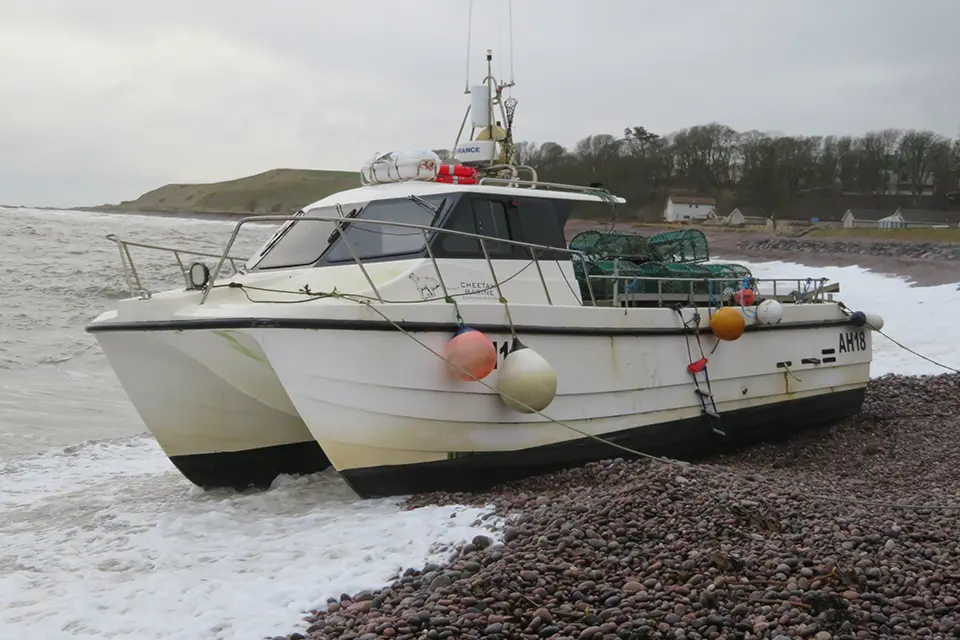
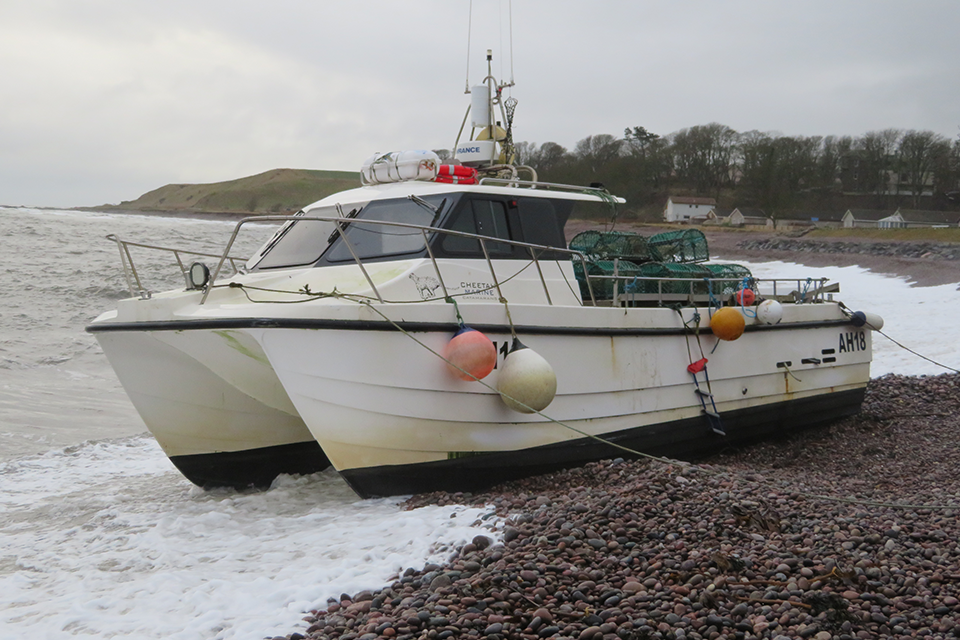
The Marine Accident Investigation Branch (MAIB) has officially released its comprehensive accident investigation report regarding a fatal man-overboard incident involving the lone-operated creel fishing vessel Sea Eagle (AH18). The tragic event, which occurred on December 20, 2025, in the North Sea waters approximately south-east of Montrose, Scotland, culminated in one presumed fatality. Despite an immediate and intensive multi-agency search and rescue (SAR) operation, the fisherman could not be recovered.
This latest report lays bare the inherent and compounding risks faced by single-handed operators within the commercial fishing sector—an industry that consistently ranks among the most hazardous occupations globally. The Sea Eagle incident underscores a grim reality that maritime safety authorities have battled for decades: the extreme vulnerability of fishermen operating without crew support, the mechanical hazards associated with shooting and hauling creels, and the critical margins of error when working alone on a restless sea.

By examining the operational environment, vessel configuration, human factors, and safety management systems, the MAIB report provides a meticulous forensic reconstruction of the final voyage. Furthermore, it outlines pivotal safety recommendations aimed at vessel owners, regulatory bodies, and industry stakeholders. This article explores the findings of the investigation, contextualizes the broader systemic challenges of single-handed inshore fishing in the United Kingdom, and examines the urgent call for cultural and technological shifts to protect marine workers.
Detailed Chronology: The Final Voyage of the Sea Eagle
The Operational Setting and Departure
On the morning of December 20, 2025, conditions off the coast of Montrose presented the typical challenges of a North Sea winter: cold ambient temperatures, a moderate sea state, and limited daylight hours. The Sea Eagle (AH18), a dedicated creel fishing vessel, was prepared for a routine single-handed day trip to haul and bait shellfish traps (creels) deployed in grounds southeast of the Scottish port.
Lone-handed fishing requires a high degree of physical endurance and meticulous time management. The skipper—acting simultaneously as navigator, deckhand, engineer, and safety officer—must execute complex mechanical operations while maintaining continuous situational awareness. The Sea Eagle departed port in the early morning hours, establishing a routine pattern of work that many coastal fishermen replicate daily.
The Critical Incident
While operating in the designated fishing grounds south-east of Montrose, an incident occurred that precipitated the fisherman entering the water. While exact eyewitness accounts are absent due to the lone-handed nature of the operation, the MAIB’s technical analysis of the vessel’s deck machinery, gear configuration, and recovered electronic logs allowed investigators to reconstruct the sequence of events with high fidelity.
It is understood that the vessel was actively engaged in hauling operations when the fatal chain of events was triggered. In single-handed creel fishing, operators frequently work in close proximity to the hauler, coiled ropes (minding the lines), and heavy steel-framed creels moving under tension. A momentary snag, an unexpected surge of the vessel in a trough, or an entanglement with a parting line can drag an operator overboard in fractions of a second—leaving virtually no time to react or activate a manual distress alert.
The Emergency Response
When the Sea Eagle failed to return at its scheduled time and lost routine communication, concerns were raised within the local fishing community and maritime network. HM Coastguard was promptly alerted, initiating a wide-scale search and rescue operation.
The response coordinated multiple assets:
- All-Weather and Inshore Lifeboats dispatched by the Royal National Lifeboat Institution (RNLI) from nearby stations.
- Search and Rescue Helicopters equipped with advanced thermal imaging and night-vision capabilities, sweeping the designated search sector southeast of Montrose.
- Vessels of Opportunity, including local commercial fishing boats and merchant vessels, which rallied to assist in the grid search.
Despite exhaustive air and sea searches covering extensive tidal drift calculations, neither the fisherman nor any definitive trace of survival equipment was located during the initial operational window. The search eventually transitioned to a recovery operation, leaving the maritime community to mourn another loss and turning the focus toward the MAIB’s independent safety investigation.
Supporting Context & Metrics: The Perils of Single-Handed Fishing
To fully appreciate the findings of the Sea Eagle report, one must examine the broader statistical landscape of commercial fishing safety in the United Kingdom and internationally.
The Inshore Fleet and the Lone-Worker Vulnerability
The UK commercial fishing fleet is predominantly composed of small vessels—those under 10 meters in length—with a significant proportion operated by single crew members. Creel (or pot) fishing, targeting crabs, lobsters, and prawns, is a cornerstone of coastal economies around Scotland, providing vital employment in remote and rural communities.
However, economic pressures, rising fuel and equipment costs, and fluctuating catch quotas often incentivize fishermen to maximize productivity by working longer hours under marginal weather conditions. When operating alone, the absence of a "second pair of eyes" removes the primary safety net designed to mitigate human error or sudden accidents.
According to historical data from the MAIB and the Maritime and Coastguard Agency (MCA):
- Man-Overboard (MOB) Fatalities: Falling overboard remains one of the leading causes of death in the commercial fishing industry.
- Survival Windows: In the cold waters of the North Sea during December, water temperatures hover near single digits. Cold water shock causes immediate, involuntary gasping and hyperventilation, followed rapidly by the loss of functional motor skills within minutes. Without immediate retrieval or a functioning Personal Flotation Device (PFD) equipped with a personal locator beacon (PLB), survival times are drastically abbreviated.
- The Wear Rate of Safety Gear: Despite regulatory mandates and safety campaigns, compliance regarding the continuous wearing of PFDs on deck—particularly among solo operators who find bulky gear cumbersome during heavy physical labor—remains a persistent challenge.
Official Statements and Investigation Findings
The publication of the Sea Eagle report brings rigorous analytical scrutiny to bear on the systemic and operational factors that enabled the tragedy.
Key Findings of the MAIB Report
While the detailed technical report (accessible via the official MAIB report link) outlines specific causal chains, the overarching themes of the investigation highlight several critical safety vulnerabilities:
- Deck Layout and Machinery Hazards: The ergonomic design of small fishing vessels often creates tight working spaces where lines under high tension can interact unpredictably with deck equipment. The investigation evaluated how the layout of the Sea Eagle influenced the movement of gear and the operator’s physical exposure to line entanglement.
- Absence of Man-Overboard Detection and Recovery Systems: For a lone operator, falling overboard is theoretically a terminal event unless the vessel is equipped with an automated engine kill-switch tether, a man-overboard alarm linked to prop propulsion cutoff, or an easily accessible re-boarding ladder. The report assesses the presence and utilization of such safety technologies aboard the vessel.
- Risk Assessment and Safe Working Practices: The MAIB emphasizes that formal safety management systems (SMS)—often viewed as bureaucratic red tape by independent fishermen—are actually life-saving tools designed to identify worst-case scenarios and enforce mitigation strategies before casting off.
Regulatory and Industry Reactions
Maritime authorities have continuously stressed that safety culture must evolve from a compliance-driven mindset to an internalized professional standard.
“Every loss of life in the commercial fishing sector sends shockwaves through coastal communities. Operating a vessel alone demands an uncompromising approach to risk management, where every contingency—especially the worst-case scenario of ending up in the water alone—must be engineered against before leaving port.”
— Representative, Marine Accident Investigation Branch (MAIB)
Industry federations, including the Scottish Fishermen’s Federation (SFF) and various safety groups, have reiterated their commitment to disseminating the MAIB’s findings across coastal ports. Workshops, safety clinics, and subsidized safety equipment grants continue to be vital conduits for driving behavioral change among skippers.
Future Outlook: Preventing Future Tragedies
The legacy of the Sea Eagle tragedy must be measured by the concrete improvements it catalyzes within the inshore fishing fleet. As maritime technology advances and regulatory frameworks adapt, several key areas represent the future of single-handed fishing safety.
Technological Innovations in MOB Prevention
The era of relying solely on traditional lifejackets is evolving into an integrated digital safety ecosystem. Key technologies being championed by safety bodies include:
- Automatic Engine Kill-Switches (Wireless Tethers): Systems that instantly cut the vessel’s engine and trigger an alarm if the wearer’s transmitter is submerged or moves beyond a specific perimeter from the helm.
- Personal Locator Beacons (PLBs) and AIS MOB Devices: Compact emergency transmitters integrated directly into PFDs that broadcast precise GPS coordinates to the vessel and surrounding rescue authorities the moment a wearer enters the water.
- Re-Boarding Aids: Mandating accessible, easily deployable boarding ladders or stern ramps that allow a lone fisherman who has fallen into the water to haul themselves back aboard, preventing death by hypothermia or exhaustion within sight of an empty, circling vessel.
Cultural Shift in the Inshore Fleet
Technology alone cannot eliminate maritime risk; it must be paired with a cultural evolution. Training programs for new and veteran fishermen are increasingly emphasizing human factors, fatigue management, and the psychological readiness to halt operations when conditions—or personal exhaustion levels—exceed safe thresholds.
Furthermore, insurance providers, maritime lenders, and safety regulators are exploring frameworks that incentivize the adoption of advanced safety management systems and certified safety gear, aligning financial prudence with the preservation of human life.
Media Enquiries and Further Information
For journalists, researchers, and maritime professionals seeking further details regarding the Sea Eagle investigation or general operations of the Marine Accident Investigation Branch, official communication channels are available:
- Office Hours Media Enquiries: 01932 440015
- Out of Hours Media Enquiries: 0300 7777878
- Direct Document Access: The complete accident investigation report, including exhaustive technical diagrams, safety recommendations, and witness analyses, can be reviewed directly on the official government portal via the MAIB Sea Eagle Report Page.
As the UK maritime sector reflects on the findings of this report, the overarching mission remains resolute: ensuring that every commercial fisherman returns safely to their families at the end of every voyage.