







Executive Overview
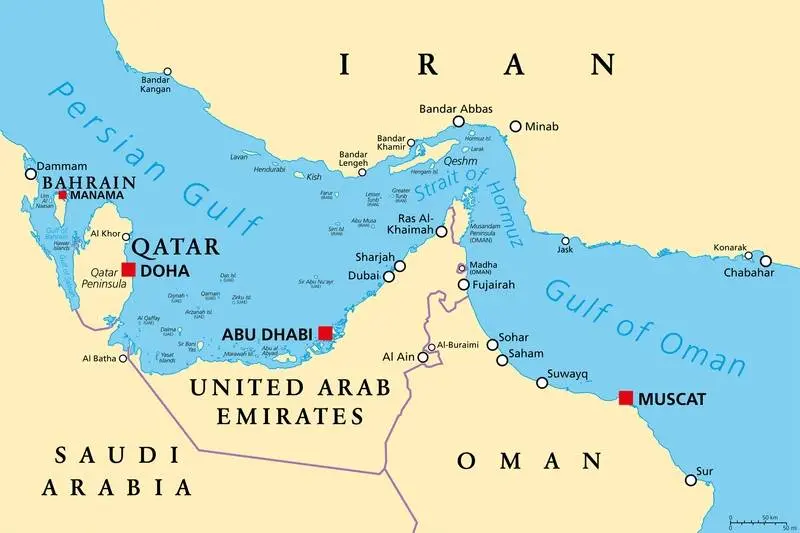
The fragile security architecture of the Persian Gulf has suffered a profound fracture. Following the detection of two Iranian-launched ballistic missiles targeting international maritime traffic, the United Arab Emirates (UAE) has enacted a sweeping, indefinite suspension of all trade, commercial exchanges, and financial transactions with the Islamic Republic of Iran. The military escalation, which occurred on Tuesday, marks the first direct ballistic missile threat reported near Emirati waters since the highly disruptive May 4 strike on the strategic port of Fujairah.
The missile launches occurred immediately after the expiration of a critical 60-day window for U.S.-Iranian peace negotiations, which concluded on Monday without a diplomatic breakthrough. This diplomatic impasse has reignited fears of an unchecked shadow war in the Strait of Hormuz—the world’s most sensitive energy transit corridor—where maritime disruptions have recurred since February.
While the UAE Ministry of Defense confirmed that both missiles splashed down harmlessly into the sea, the political and economic retaliation from Abu Dhabi was immediate and severe. By cutting off all financial and commercial ties with Tehran, the UAE has signaled that it will no longer tolerate threats to its sovereign security or its critical maritime infrastructure.
In response, Tehran has adopted a stance of plausible deniability. Early Wednesday, Iranian Foreign Ministry Spokesperson Esmaeil Baghaei flatly rejected the UAE’s accusations, characterizing them as "baseless." However, the deployment of ballistic weaponry into the busy shipping lanes of the Gulf of Oman has forced regional defense architectures into a state of high alert, raising the specter of a broader kinetic confrontation.
Detailed Chronology of the Escalation
The current crisis is the culmination of a rapidly deteriorating security environment, punctuated by failed diplomacy, military posturing, and swift domestic mobilization.
[Monday] U.S.-Iran Peace Talk Window Expires (No Breakthrough)
   │
[Tuesday Morning] Two Ballistic Missiles Launched from Iran
   │
[Tuesday Midday] UAE Detects Missiles; UAE Interior Ministry Alerts Residents
   │
[Tuesday Afternoon] Missiles Impact Sea; UAE Confirms Safety of Shipping Lanes
   │
[Tuesday Evening] UAE Suspends All Trade, Commercial, & Financial Links with Iran
   │
[Wednesday Early] Iran Foreign Ministry Rejects Accusations as "Baseless"
1. The Diplomatic Collapse (Monday)
The immediate catalyst for the military escalation was the quiet expiration on Monday of a 60-day diplomatic window established to facilitate back-channel peace talks between Washington and Tehran. Aimed at establishing a de-escalation framework for Gulf shipping lanes, the talks dissolved without a breakthrough. The failure of these negotiations removed the diplomatic guardrails that had temporarily suppressed overt hostilities, setting the stage for immediate posturing by regional actors.
2. The Missile Launches and Maritime Target Assessment (Tuesday Morning)
On Tuesday morning, the UAE military’s early warning systems detected the launches of two short-range ballistic missiles originating from southern Iran.

- Targeting: According to assessments conducted by the UAE Ministry of Defense, the trajectory of the missiles was calculated to intercept active commercial shipping lanes.
- Outcome: Both projectiles missed their targets, falling into international waters in the Gulf of Oman. No casualties or physical damage to commercial vessels were reported.
3. Domestic Alerts and Civil Defense Response (Tuesday Afternoon)
The detection of the ballistic trajectory triggered immediate civil defense protocols within the UAE.
- Initial Warning: The UAE government issued emergency alerts to residents via mobile networks, warning of an active missile threat and advising caution.
- All-Clear Broadcast: Once the defense ministry confirmed that the projectiles had landed safely at sea and posed no further threat to the mainland, the Ministry of Interior dispatched a follow-up alert. This message assured the public that the situation was secure and instructed residents to resume normal daily activities.
4. The Economic Decoupling (Tuesday Evening)
Hours after the military incident, the UAE Cabinet enacted a total economic embargo against Iran. Citing an escalation that "undermines regional and international peace and security," the state suspended all:
- Import and export activities;
- Commercial exchanges and transit trade;
- Financial transactions and interbank clearing systems involving Iranian entities.
The embargo is slated to remain in effect "until further notice," representing a historic rupture in the complex, multi-billion-dollar trading relationship between Dubai and Iranian merchants.
5. Tehran’s Denial (Wednesday Morning)
Early Wednesday morning, Iran’s Ministry of Foreign Affairs issued its formal response. Spokesperson Esmaeil Baghaei rejected the UAE’s allegations in their entirety, describing the defense ministry’s statement as "baseless" and attributing the diplomatic fallout to regional misunderstandings and external pressures.
Supporting Context & Metrics: The Geopolitics of the Strait of Hormuz
To understand the gravity of the UAE’s economic and military response, the incident must be viewed through the lens of global energy security and the historical pattern of asymmetric warfare in the region.
       [ Strait of Hormuz Chokepoint ]
                     │
     ┌───────────────┴───────────────┐
     ▼                               ▼
[Global Energy Impact]     [Asymmetric Warfare Tactics]
 - 20-21M barrels/day       - Ballistic missile launches
 - ~20% of global supply    - Limpet mine deployments
 - Vital to Asian markets   - Drone strikes & seizures
The Strategic Value of the Strait of Hormuz
The Strait of Hormuz is the most critical maritime chokepoint in the world.
- Volume: Approximately 20 to 21 million barrels of crude oil, condensate, and petroleum products pass through the strait daily. This represents roughly 20% of global petroleum liquid consumption.
- Liquefied Natural Gas (LNG): The passage is also the primary route for over a quarter of the world’s liquefied natural gas trade, primarily originating from Qatar.
- Vulnerability: At its narrowest point, the shipping lanes in the strait are only two miles wide in either direction, making commercial tankers highly vulnerable to coastal artillery, sea mines, drone attacks, and ballistic missile strikes.
The UAE-Iran Economic Relationship
The decision to suspend trade represents a significant sacrifice for the UAE, particularly for the Emirate of Dubai, which has historically functioned as Iran’s primary economic gateway to the broader world.
| Trade Indicator | Pre-Suspension Status | Impact of Current Embargo |
|---|---|---|
| Re-Export Hub Role | Dubai served as a major global hub for re-exporting goods into Iran, circumventing various Western sanctions. | Completely halted; customs authorities at UAE ports are rejecting all cargo destined for or originating from Iran. |
| Annual Trade Volume | Historically valued between $15 billion and $20 billion annually, driven by electronics, food commodities, and industrial machinery. | Frozen indefinitely, forcing Iranian supply chains to seek costlier alternative routes through Oman or Iraq. |
| Financial Services | UAE-based banks and exchange houses managed significant capital flows and remittances for Iranian expatriates and businesses. | Complete suspension of transactions; assets linked to Iranian financial institutions are subject to enhanced compliance freezes. |
The Shadow War on ADNOC Shipping
The missile launches on Tuesday are part of a broader, months-long offensive targeting maritime assets. UAE authorities have previously accused Iran of conducting sabotage and drone strikes against vessels operated by the state-owned Abu Dhabi National Oil Company (ADNOC) as they transited the Strait of Hormuz and the Gulf of Oman.
While Iran has consistently denied involvement in these maritime operations, the Islamic Revolutionary Guard Corps (IRGC) has repeatedly warned that it reserves the right to intercept, board, or neutralize any vessel transiting the strait that is suspected of aiding Tehran’s adversaries or failing to comply with Iranian maritime protocols.
Official Statements and Rhetorical Analysis
The official rhetoric emerging from Abu Dhabi and Tehran highlights the deep strategic divide and the collapse of mutual trust between the two Gulf neighbors.
The Emirati Stance: Deterrence and Security Sovereignty
In its official dispatch, the UAE Ministry of Defense adopted an uncompromising tone, signaling that its patience with asymmetric provocations has expired:
"The defense ministry affirms its full readiness to deal with any threats and firmly confront anything that aims to destabilize the state’s security."
This statement serves a dual purpose. Domestically, it reassures a highly globalized population and international investor base that the state’s multi-layered air defense network—which includes the U.S.-made Patriot and THAAD systems—is fully operational and capable of neutralizing incoming threats. Internationally, it establishes a clear red line: any threat to maritime commerce will be treated as a direct assault on the national security of the UAE.
The Iranian Denial: Plausible Deniability
In contrast, the response from Tehran, delivered by Foreign Ministry Spokesperson Esmaeil Baghaei, sought to delegitimize the UAE’s claims without engaging in direct military threats:
"The allegations made by the United Arab Emirates are entirely baseless and do not contribute to regional stability."
This denial is consistent with Iran’s long-standing doctrine of plausible deniability. By conducting operations through proxy forces or utilizing asymmetric assets that leave minimal direct forensic footprints, Tehran seeks to project power and deter its adversaries while avoiding the triggering of mutual defense pacts or direct conventional retaliation from the United States and its allies.
Future Outlook and Strategic Implications
The failure of the U.S.-Iran negotiations, combined with the subsequent missile launches and the UAE’s total trade embargo, suggests that the Gulf region is entering a volatile new security environment.
                  [Diplomatic Negotiations Collapse]
                                  │
                  [Missile Incidents & Trade Embargo]
                                  │
     ┌────────────────────────────┼────────────────────────────┐
     ▼                            ▼                            ▼
[Escalated Air Defense]     [Maritime Protection]       [Economic Realignment]
- Deployment of THAAD/      - Multi-national naval      - Permanent shift of
  Patriot batteries           escorts in the Gulf         Iranian capital away
- Enhanced radar sharing      - Increased drone patrols     from Dubai hubs
1. Escalation of the Maritime Shadow War
With diplomatic channels effectively closed, further attacks on commercial shipping are highly probable. Iran may increase its reliance on unmanned aerial vehicles (UAVs), limpet mines, and fast-attack craft to harass shipping, betting that Western powers and Gulf states will remain reluctant to launch a full-scale military response that could trigger a global energy crisis.
2. Reinforcement of Air and Missile Defense Systems
The UAE is expected to accelerate its integration of advanced air defense networks. This will likely involve closer intelligence sharing and radar integration with regional partners and the United States. The threat of ballistic missiles traversing the Gulf will prompt heightened readiness levels for Patriot and THAAD batteries positioned near critical infrastructure hubs, such as Jebel Ali Port, Fujairah, and the oil refineries of Ruwais.
3. Economic Realignment and Sanctions Enforcement
The UAE’s trade embargo will fundamentally reshape the economic landscape of the Persian Gulf. Dubai’s traditional role as an economic safety valve for the Iranian economy is effectively over for the foreseeable future. This decoupling will force Tehran to rely more heavily on clandestine financial networks in other jurisdictions, while the UAE will likely seek to replace lost Iranian trade volumes by deepening economic ties with South Asian and East Asian markets.
4. Pressure for International Maritime Coalitions
As the threat to international shipping lanes escalates, there will be renewed pressure on global powers—including the United States, the United Kingdom, and European Union members—to expand maritime security operations in the Gulf. Naval escort missions for commercial tankers transiting the Strait of Hormuz may once again become a necessity to stabilize global energy markets and prevent shipping insurance premiums from surging to prohibitive levels.