


GARIBALDI, Oregon — In a critical move to safeguard local maritime commerce, commercial fishing fleets, and recreational navigation, maintenance dredging operations along the federal navigation channel near the Port of Garibaldi are officially underway. Scheduled to commence on August 20, 2026, and projected to span nearly three months through early November, the multi-phase project represents a vital infrastructural investment for the Pacific Northwest coastal hub.
Local authorities, port officials, and maritime agencies are coordinating closely to ensure the project stays on schedule while mitigating disruptions to regular waterway users. With substantial quantities of accumulated sediment threatening vessel drafts, this comprehensive dredging campaign aims to restore safe, reliable depths across both the federal channel and the inner boat basin—the latter of which has not seen maintenance dredging in nearly a decade.
Executive Overview
The initiation of dredging operations at the Port of Garibaldi marks the culmination of extensive planning, inter-agency cooperation, and resource sharing. The project’s primary objective is the removal of silt, sand, and other marine sediment deposits that naturally accumulate within the Tillamook Bay entrance channels and local berths. Over time, littoral drift and tidal action deposit substantial sediment loads, progressively narrowing navigable widths and reducing water depths to levels that jeopardize the safe passage of deep-draft commercial vessels and recreational watercraft alike.
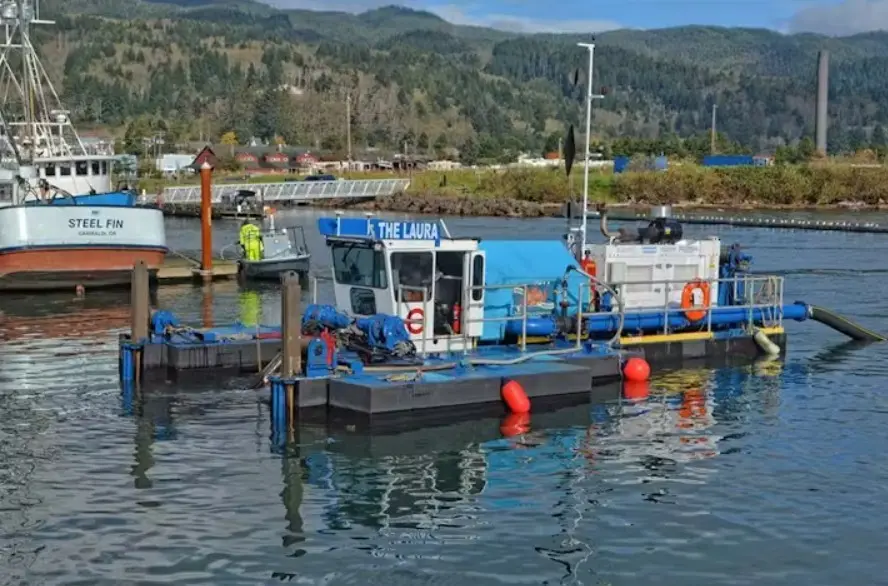
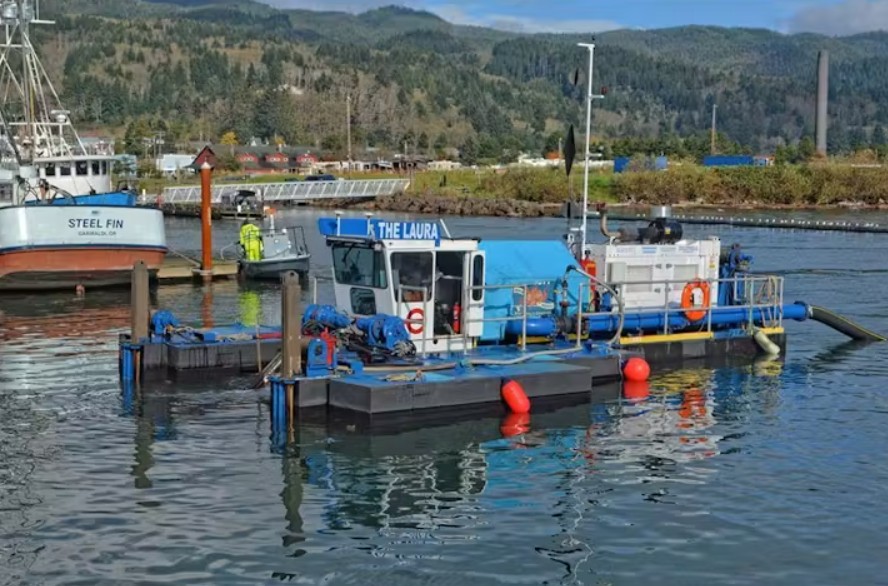
The upcoming operations will be executed using specialized equipment, headlined by the deployment of the state-owned dredging barge. This high-capacity asset is operated by the Port of Coos Bay, showcasing a cooperative regional framework among Oregon’s public ports to share specialized maritime infrastructure.
The maintenance scope is divided into two distinct chronological phases:
- The Federal Navigation Channel Phase: Commencing August 20, focusing on the primary transit corridors leading into the port.
- The Inner Boat Basin Phase: Scheduled to begin after September 15, addressing localized siltation within the interior berths—an area that has remained untouched since 2017.
By addressing both federal and local zones, port management is taking a proactive stance on coastal infrastructure maintenance, ensuring that the Port of Garibaldi remains a viable, competitive engine for the regional maritime economy.
Detailed Chronology and Operational Logistics
Executing a maritime dredging project of this scale requires rigorous logistical planning, synchronization with meteorological and oceanographic conditions, and strict adherence to environmental windows.
Phase 1: The Federal Navigation Channel (Late August – Early November)
Dredging activity officially kicks off on August 20, 2026. Because the operation takes place within a dynamic coastal estuary environment subject to significant tidal fluctuations, work schedules are tightly integrated with the local hydrodynamics. According to operational directives issued by the Port of Garibaldi, dredging will generally take place during the larger ebb tide each day. Ebb tides—periods when the tide flows out toward the ocean—assist in moving loosened sediment and managing the hydraulic loads on the dredge equipment.
Phase 2: The Inner Boat Basin (Mid-September – November)
Beginning September 15, operations will expand to include the interior boat basin. This phase carries high significance for the local charter fishing fleet, commercial fishers, and recreational boat owners who rely on year-round berth access. Because the boat basin was last dredged in 2017, sediment accumulation has had nearly a decade to compound, making this targeted intervention both timely and necessary.
Equipment and Navigational Safety
The primary operational asset for the project is the state-owned dredging barge. Homeported and operated under the management of the Port of Coos Bay, the barge represents a cost-effective, state-supported solution for regional dredging needs that bypasses the prohibitive costs of acquiring commercial contractors for every minor cycle.
Due to the physical footprint of the dredging vessel, its supportive anchors, and the extensive network of floating discharge pipelines required to transport slurry to designated placement sites, navigating the channel requires heightened vigilance. Port authorities have issued strict warnings to all mariners transiting Tillamook Bay and the Garibaldi waterfront.
+-------------------------------------------------------------------------+
|                        PROJECT TIMELINE AT A GLANCE                     |
+--------------------------+----------------------------------------------+
| August 20, 2026          | Commencement of Federal Channel Dredging     |
+--------------------------+----------------------------------------------+
| Daily Operations         | Synchronized with larger ebb tides           |
+--------------------------+----------------------------------------------+
| September 15, 2026       | Initiation of Inner Boat Basin Dredging      |
+--------------------------+----------------------------------------------+
| Early November 2026      | Projected Project Completion                 |
+--------------------------+----------------------------------------------+
Supporting Context and Economic Metrics
To fully understand the urgency and significance of the Garibaldi dredging project, one must examine the economic and geographic realities of Tillamook Bay and its surrounding coastal communities.
The Economic Footprint of the Port of Garibaldi
Nestled along the shores of Tillamook Bay on the rugged Oregon coast, the Port of Garibaldi is a cornerstone of Tillamook County’s maritime economy. The port supports a thriving commercial fishing industry—specializing in Dungeness crab, salmon, and groundfish—along with a robust charter fishing sector and a busy recreational marina.
Maritime supply chains and local seafood processing businesses depend entirely on guaranteed, reliable vessel drafts. When navigation channels shoal, commercial vessels face weight restrictions, reduced operating windows, or complete inability to access docks. This creates a cascading economic impact:
- Delayed Landings: Commercial fishers forced to wait for high tides lose valuable time at sea, missing lucrative market windows.
- Lighter Loads: Vessels must offload catch at alternate, farther ports or carry partial loads, driving up operational overhead.
- Tourism Deficits: Recreational boaters and sport-fishing enthusiasts may bypass Garibaldi in favor of deeper, more accessible ports, hurting local hospitality, marine repair, and retail businesses.
The Challenge of Coastal Sedimentation
Oregon’s coastal ports contend with relentless sedimentation cycles. Heavy winter storms, combined with massive freshwater outflows from local rivers such as the Miami, Kilchis, and Wilson rivers, dump millions of tons of sediment into Tillamook Bay.
Over time, these sediments settle in predictable deposition zones, particularly where high-velocity river currents meet the calmer, tide-dominated waters of the bay and ocean entrance. Without regular maintenance dredging, these sandbars and silt beds reduce navigable depths below authorized federal project dimensions, turning vital waterways into logistical bottlenecks.
Official Statements and Stakeholder Perspectives
The launch of the dredging project has drawn responses from municipal leaders, port administrators, and regional safety advocates who emphasize both the economic necessity of the work and the paramount importance of on-water safety.
Port Administration and Safety Directives
In official notices distributed to local mariners, commercial associations, and the U.S. Coast Guard, port management underscored the physical realities of working within a confined navigational space.
"Boaters are asked to use caution when transiting the area and be aware of the dredge, floating pipeline, anchors, and other equipment in and near the navigation channel," stated a spokesperson for the Port of Garibaldi.
Port officials have urged all vessel operators to monitor marine VHF radio channels for real-time updates regarding dredge movements, to reduce speeds when passing active work zones, and to maintain a wide berth around the state-owned dredging barge and its associated moorings.
Regional Collaboration
The involvement of the Port of Coos Bay highlights a successful model of inter-port cooperation within the state of Oregon. By leveraging the state-owned dredging barge—a resource originally funded to serve multiple Oregon coastal ports facing high contractor costs—Garibaldi is able to execute essential maintenance efficiently. This pooling of public assets ensures that smaller coastal ports, which lack the capital reserves of major deep-water industrial ports, can maintain baseline infrastructure standards critical to the state’s coastal resilience.
Future Outlook: Long-Term Infrastructure Resilience
As the dredging operations get underway on August 20 and push toward their early November completion date, port planners are already looking beyond the immediate scope of the current project to ensure long-term maritime viability.
The Shift Toward Proactive Maintenance
Historically, many smaller ports along the Pacific Coast have operated in a reactive posture regarding sedimentation—waiting until channels reach critical shoaling thresholds before securing emergency funding and dredging assets. However, escalating environmental regulations, shifting funding paradigms, and increasingly severe weather patterns linked to climate variability are forcing a transition toward proactive, data-driven sediment management.
For the Port of Garibaldi, the fact that the inner boat basin has not been dredged since 2017 illustrates the long intervals that can occur between interior maintenance cycles. Port leadership is actively exploring strategies to establish more frequent, predictable dredging intervals. Shorter, routine maintenance campaigns minimize the volume of sediment removed per cycle, reduce environmental disruption, and lower overall long-term expenditures compared to massive, infrequent overhauls.
Environmental Stewardship and Beneficial Use
Modern dredging operations are no longer viewed strictly as excavation tasks; they are increasingly evaluated through the lens of environmental stewardship and sediment management. Planners in Garibaldi and across Tillamook Bay coordinate closely with environmental agencies—such as the Oregon Department of Fish and Wildlife (ODFW), the U.S. Army Corps of Engineers (USACE), and the Department of Environmental Quality (DEQ)—to ensure that dredged material is handled responsibly.
Whenever feasible, clean sandy dredge material removed from navigation channels is designated for "beneficial use," such as nearshore placement to nourish eroding coastal beaches and protect local shorelines from storm surge. This holistic approach aligns navigation maintenance with broader coastal protection and ecological preservation goals.
Conclusion
As the state-owned dredge barge begins its work in the federal navigation channel on August 20, the Port of Garibaldi takes a decisive step toward securing its operational future. While the coming months will require patience and heightened caution from commercial fishers, charter operators, and recreational boaters navigating Tillamook Bay, the temporary inconveniences will yield lasting dividends. By late autumn, restored channel depths and a newly cleared boat basin will ensure that the Port of Garibaldi remains a safe, vibrant, and accessible gateway for Oregon’s coastal maritime economy for years to come.