





Executive Overview
On the evening of August 14, 2025, the tranquil waters of Portsmouth Harbour became the site of a devastating maritime disaster. The rigid inflatable boat (RIB) Peaky Blinder, a high-powered leisure craft, collided violently with navigation beacon 81, a stationary marker standing in the bustling commercial and recreational waterway. The impact was catastrophic, instantly throwing all three occupants—the boat’s owner, who was at the helm, and two passengers—into the cold, unforgiving waters of the harbour.
The human cost of the incident was severe. One passenger was pulled from the water in an unresponsive state and, despite immediate medical intervention, was subsequently pronounced dead. A relentless five-day multi-agency search and recovery operation was required before the body of the boat’s owner was located. Miraculously, the second passenger survived the ordeal, sustaining only minor physical injuries, though the psychological trauma of the event remains profound.
The formal publication of Accident Investigation Report 15/2026 brings national attention back to the inherent dangers of high-speed leisure navigation in congested and complex marine environments. While leisure boating offers freedom and excitement on the water, incidents like the Peaky Blinder allision underscore a persistent vulnerability in small craft safety: the devastating kinetic energy involved when a fast-moving vessel encounters a fixed marine obstacle.

This comprehensive investigative report examines the timeline of the tragedy, explores the structural and systemic safety vulnerabilities highlighted by maritime authorities, details the official responses from regulatory bodies, and charts a course for the vital reforms needed to prevent similar tragedies in Britain’s coastal waters.
Detailed Chronology: The Evening of August 14, 2025
Portsmouth Harbour is one of the busiest and most historically significant maritime hubs in the United Kingdom. Home to a major naval base, commercial ferry terminals, bustling freight traffic, and a thriving community of leisure sailors, the harbour requires constant vigilance, precise navigation, and a thorough understanding of local bylaws and tidal conditions.
Setting Sail
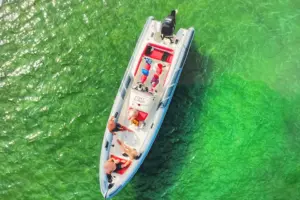
As daylight began to wane on the evening of August 14, 2025, weather and sea conditions within the harbour were reported to be generally favorable for navigation. The Peaky Blinder, a high-performance rigid inflatable boat known for its agility and speed capabilities, departed on what was intended to be a routine evening excursion. At the controls was the owner of the vessel, accompanied by two passengers.
RIBs of this class are popular among leisure boaters due to their powerful outboard engines and responsive handling. However, this same combination of speed and high power-to-weight ratio demands unwavering concentration from the operator, particularly as visibility decreases and lighting conditions transition from dusk to night.
The Impact with Navigation Beacon 81
As the vessel navigated the waters of the harbour, events escalated rapidly. Investigators later determined that the Peaky Blinder was traveling at a significant speed when it veered off course, leading to a catastrophic allision with navigation beacon 81.
In maritime terminology, an allision refers specifically to a moving vessel striking a stationary object, unlike a collision, which involves two moving craft. Navigation beacon 81, a rigid steel and concrete structure designed to guide commercial and leisure traffic safely past hazards, offered no give upon impact. The transfer of kinetic energy was instantaneous and absolute.
Upon striking the beacon, the forward momentum of the Peaky Blinder was halted abruptly. The sudden deceleration acted as a mechanical catapult, violently ejecting all three occupants from the vessel’s seating configuration and hurling them directly into the surrounding water.
Emergency Response and Search Operations
The aftermath of the crash triggered an immediate emergency response from local maritime authorities, rescue services, and the Ministry of Defence police patrolling the naval base. Emergency services converged on the scene to locate the occupants thrown into the dark waters.
Rescuers managed to recover one of the passengers from the harbour. The individual was unconscious and unresponsive. Immediate life-saving efforts, including cardiopulmonary resuscitation (CPR), were administered at the scene and during transit to a medical facility, but lifesaving measures proved unsuccessful, and the passenger was later declared dead.
The second passenger was also recovered from the water. Remarkably, this individual had sustained only minor physical injuries, though they were suffering from severe shock and hypothermia. They were transported to a local hospital for evaluation and treatment.
However, the boat’s owner, who had been driving the vessel at the time of the impact, was not immediately found. This sparked a massive, multi-day search and rescue operation involving helicopters, coastal rescue teams, RNLI lifeboats, and specialist dive units scouring the murky, tide-swept depths of Portsmouth Harbour. Hopes for a positive outcome dwindled with each passing day as the search transitioned from a rescue operation to a recovery mission. Finally, five days after the tragic allision, the body of the owner was recovered from the harbour waters, bringing a sombre closure to the intensive search effort.
Supporting Context & Metrics: The Risks of High-Speed Leisure Navigation
The incident involving the Peaky Blinder is not an isolated event within the broader scope of UK marine safety, but rather part of an ongoing pattern of accidents involving high-speed leisure craft in coastal and estuarial waters.
The Proliferation of High-Performance RIBs
Over the past two decades, the market for rigid inflatable boats has expanded exponentially. Once restricted primarily to military, commercial, and professional rescue applications, modern RIBs are now widely accessible to private owners. Equipped with powerful multi-hundred-horsepower outboard engines, these vessels are capable of achieving high speeds in relatively short periods of time.

This accessibility has democratized access to the water, but it has also created a regulatory and educational gap. Unlike commercial operators, who must adhere to stringent standards of certification, professional training, and safety management systems, private leisure boaters face minimal legal barriers to purchasing and operating high-performance craft. A person can buy a high-speed RIB with no formal navigational qualifications, no mandatory safety training, and no prior experience handling vessels of that power class.
The Physics of Allusions with Fixed Structures
Navigation beacons, channel markers, and breakwaters are essential infrastructure designed to keep vessels safe in confined waters. However, they present a lethal hazard when struck by a vessel moving at speed.
When a rigid boat impacts a stationary steel or concrete pylon, the structural integrity of the vessel fails catastrophically. The abrupt deceleration subjects the human body to massive G-forces. Without adequate restraint systems—which are rarely fitted or used in recreational RIBs—occupants act as unconstrained projectiles within or out of the craft.
Furthermore, ejection into the water while experiencing high-speed trauma significantly increases the risk of drowning. Even if an occupant survives the initial impact without fatal internal injuries, the likelihood of being rendered unconscious, suffering cold-water shock, or inhaling water before rescue is dangerously high.
Regulatory Oversight in Busy Harbours
Busy waterways like Portsmouth Harbour present unique navigational challenges. Managing the coexistence of massive naval warships, deep-draft commercial container vessels, high-speed passenger ferries, and a dense population of recreational boaters requires strict adherence to the International Regulations for Preventing Collisions at Sea (COLREGs) and local harbour bylaws.
Harbour authorities, led by officials such as the King’s Harbour Master, hold statutory responsibilities for safety of navigation within their jurisdictions. However, enforcing speed limits, monitoring erratic behavior, and educating leisure users represent a continuous operational challenge, particularly during peak summer months when the water is crowded with traffic.
Official Statements and Investigation Findings
The publication of Accident Investigation Report 15/2026 by the Marine Accident Investigation Branch (MAIB) marks a critical milestone in understanding the systemic and operational failures that contributed to the Peaky Blinder tragedy.
Statement from the Chief Inspector of Marine Accidents
In his official address accompanying the release of the report, the Chief Inspector of Marine Accidents emphasized the profound gravity of the incident and the urgent need for a cultural shift regarding safety within the recreational boating community.
"The tragic loss of life resulting from the allision of the Peaky Blinder serves as a stark and painful reminder of the unforgiving nature of the marine environment," the Chief Inspector stated. "Operating high-powered leisure craft demands absolute focus, situational awareness, and a rigorous respect for local navigational hazards. Fixed structures such as navigation beacons do not yield upon impact. When speed and navigational error combine, the consequences are invariably devastating. Our investigation has sought to uncover not only the immediate actions that led to this crash, but the wider systemic factors that continue to place recreational boaters at risk on our coastal waters. It is our sincere hope that the lessons identified in this report, and the formal recommendations issued to regulatory and harbour authorities, will drive meaningful improvements in safety standards and prevent similar heartbreak in the future."
The MAIB report meticulously reconstructs the final moments of the journey, analyzing vessel speed, environmental lighting, navigational aids in the area, and the operational status of the craft prior to impact. While the investigation points to human factors as the primary catalyst, it also casts a wider net to examine how oversight, infrastructure awareness, and safety messaging can be enhanced across the broader maritime sector.
Future Outlook: Recommendations and the Path to Safer Waters
Accident Investigation Report 15/2026 does not merely document the past; it lays out a clear roadmap for future preventative action. Recognizing that regulatory frameworks must evolve alongside changes in vessel technology and usage patterns, the MAIB has directed targeted recommendations to key authorities.
Recommendations to the King’s Harbour Master Portsmouth
Local harbour authorities play a frontline role in maintaining the safety of navigation within their defined boundaries. Following the Peaky Blinder investigation, specific recommendations have been directed to the King’s Harbour Master Portsmouth to review and enhance local safety protocols. These measures focus on:
- Improving the visibility and hazard marking of navigational infrastructure in high-traffic zones.
- Enhancing enforcement capabilities and monitoring of vessel speeds within the harbour limits.
- Strengthening educational outreach programs targeted specifically at recreational and high-speed craft operators to raise awareness of local hazards and safe operating practices.
Recommendations to the Secretary of State for Transport
To effect national-level change, the MAIB has also directed critical recommendations to the Secretary of State for Transport. These recommendations address the wider systemic gaps in UK recreational boating safety, including:
- Assessing the adequacy of current regulatory frameworks governing the competency and training of private leisure boat operators.
- Reviewing safety equipment mandates for high-speed open craft, particularly concerning lifejacket usage, kill-cord compliance, and occupant restraint or shock-mitigation seating.
- Supporting nationwide safety campaigns aimed at fostering a culture of risk management and compliance among recreational mariners.
A Call for a Cultural Shift in Recreational Boating
Ultimately, preventing future tragedies like the one that befell the Peaky Blinder requires more than new rules and official recommendations; it demands a fundamental evolution in mindset within the leisure marine community.
Boating offers an unmatched sense of freedom, but that freedom is inextricably linked to personal responsibility. Whether navigating the complex currents of Portsmouth Harbour or exploring coastal waters elsewhere in the UK, every skipper carries the ultimate duty of care for the lives of those on board and the safety of all other water users.
As the maritime community absorbs the findings of Report 15/2026, the legacy of those lost on August 14, 2025, must be a renewed, unyielding commitment to vigilance, respect for the water, and uncompromising safety standards on every vessel that puts to sea.