





EXECUTIVE OVERVIEW
In a media landscape increasingly blurred by the intersections of governance, personal branding, and political theater, U.S. Transportation Secretary Sean Duffy’s new six-episode reality series, The Great American Road Trip, stands out as a masterclass in selective visibility. Premiering on YouTube to substantial online fanfare, the program features corporate backing, unscripted family dynamics, and intermittent culture-war posturing as Duffy, his wife—Fox News personality Rachel Campos-Duffy—and their rotating roster of nine children traverse the nation’s highways.
Yet, as the Duffy family SUV rolls from one American landmark to another, the series suffers from a conspicuous omission: the reality of the communities left in their wake.
Since returning to the White House last year, the Trump administration has embarked on a systematic rollback of federal transportation investments approved under the Biden administration. Under Duffy’s leadership, the U.S. Department of Transportation (U.S. DOT) has instituted sweeping reviews of competitive grants, ultimately freezing or outright canceling at least $77 million in local infrastructure funding. Across cities like Philadelphia, Boston, Missoula, Charleston, and Dallas, projects designed to modernize aging transit fleets, reconfigure dangerous corridors, and expand high-speed rail have been unceremoniously dismantled—often framed by the administration as casualties of an ideological war on "woke" urban planning.
This investigative report examines the dichotomy between Duffy’s prime-time cross-country excursion and the tangible toll his department’s funding cuts have taken on local communities. By tracking the trajectory of the Road Trip alongside the unfulfilled promises of America’s transit landscape, we reveal a troubling paradox: a national transportation policy that champions private-sector autonomy while starving the public infrastructure necessary to keep the nation moving.
I. The Reality TV Facade: Staged Americana Meets Administrative Erasure
The Great American Road Trip is structured as a contemporary homage to traditional American leisure. Featuring heavy corporate sponsorship from brands like Boeing, Chevron, and Toyota, the show’s premise is deceptively simple: a large, tight-knit political family piling into an oversized vehicle to experience the heartland. However, the logistical gymnastics required to film the show—including rotating children in and out of the vehicle because an eight-seat SUV cannot accommodate the entire family at once—mirror the broader logistical failures facing the agency Duffy oversees.
While the episodes are packed with personal confessionals, lighthearted family banter, and detours through political flashpoints, they systematically avoid discussing the condition of the asphalt beneath their tires. This omission is not merely stylistic; it is defensive. Every major destination featured in the series has felt the impact of the U.S. DOT’s aggressive pivot away from multi-modal transportation, pedestrian safety, and public transit.

In May of last year, the U.S. DOT announced comprehensive review procedures for all competitive grants issued during the previous administration. By September, that review culminated in a wave of cancellations that targeted bike lanes, sidewalks, electric vehicle (EV) infrastructure, and mass transit programs under the banner of eliminating administrative waste and rejecting policies deemed incompatible with the current administration’s focus on traditional energy and cultural norms.
II. A Trail of Defunded Projects: From the East Coast to the Mountain West
To understand the real-world impact of the U.S. DOT’s budgetary scalpel, one must examine the specific municipalities that populate the periphery of Duffy’s media campaign—locations where local planning boards and transit agencies have been forced to return to square one.
Philadelphia: The SEPTA Crisis and the High Cost of Delay
The friction between federal oversight and municipal need is perhaps nowhere more acute than in Philadelphia. Since taking office, Duffy has repeatedly locked horns with local officials regarding SEPTA, the region’s vital transit backbone. On October 1, 2025, the U.S. DOT issued an urgent directive ordering SEPTA to pull and inspect its entire aging Silverliner IV commuter rail fleet following a series of onboard fires.
"If changes are not made immediately, it is only a matter of time before SEPTA’s crumbling commuter rail system erupts in flames and kills someone," Duffy wrote in a sharp letter to Pennsylvania Governor Josh Shapiro.
Governor Shapiro pushed back against the unilateral federal pressure, urging Duffy to help secure $167 million from Pennsylvania’s Republican-led legislature for critical repairs—a request the Secretary declined. It was not until ten months after the initial crisis that the U.S. DOT finally announced a modest $13 million grant for the agency, a sum covering less than eight percent of the funding Shapiro identified as immediately necessary. Operating with the oldest fleet of its kind in the nation and facing a daunting $10 billion maintenance deficit without substantive federal backing, SEPTA has been forced to indefinitely defer dozens of essential infrastructure upgrades.
Boston: Roxbury and Mattapan Square’s Lost Vision
During the Boston leg of the Duffy family tour, the primary narrative focus remained fixed on political commentary regarding higher education rather than the millions of dollars withdrawn from local safety initiatives.
Last September, the U.S. DOT canceled a $20 million grant earmarked for three major street safety projects in Roxbury. The initiative included vital pedestrian upgrades, improved lighting, bus stop modernization, tree planting, and electric vehicle charging stations—the latter explicitly cited in the cancellation notice as violating the agency’s preference for traditional energy frameworks.
Just five miles south, a $2 million grant for Mattapan Square, part of the Reconnecting Communities Pilot program designed to repair historical divisions caused by twentieth-century highway construction, met a similar fate. Because the redesign involved reallocating minor portions of vehicular right-of-way to pedestrian and transit uses, Duffy’s agency labeled the project "hostile to motor vehicles" and stripped it of federal backing.
Montana: Highway 200’s Frozen Progress
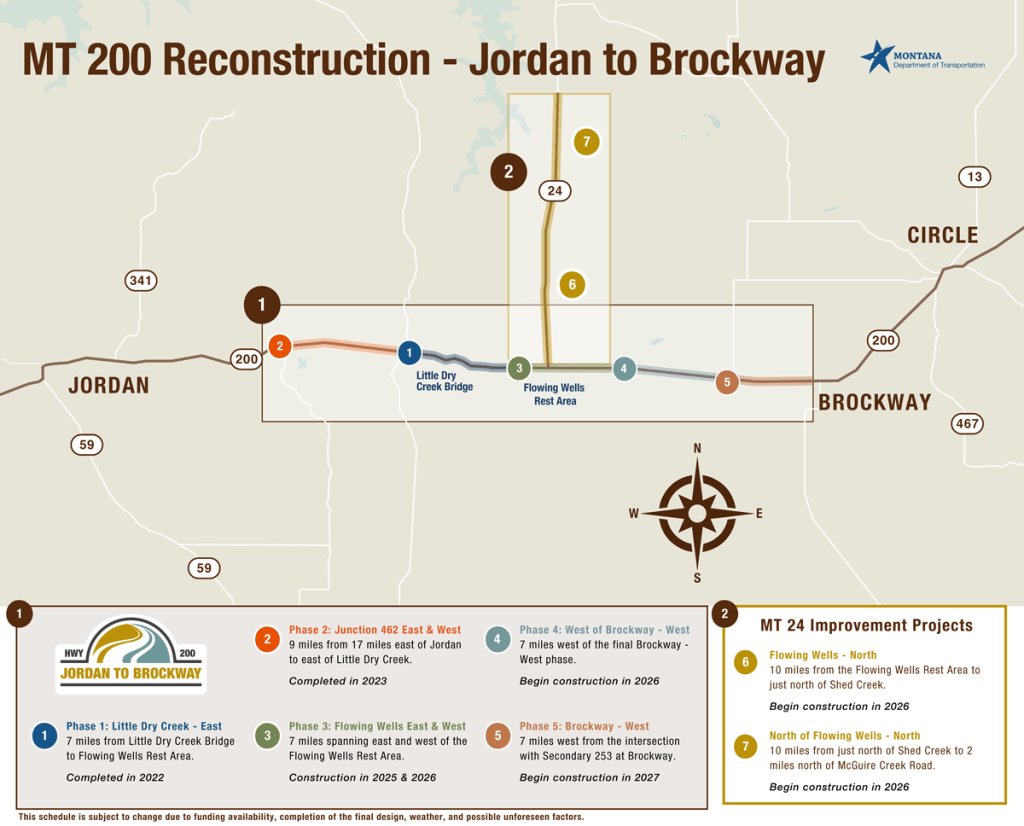
Even scenic mountain getaways in the West have not escaped the administrative freeze. In East Missoula, Montana, a planned $24 million upgrade to Highway 200—designed to introduce much-needed bike lanes, enhanced bus stops, continuous sidewalks, and an improved railroad crossing—was abruptly defunded.
"All of our years of planning, we’re now gonna see dirt move. We’re gonna see some construction. And now we’re back to where we were almost a decade ago where nothing’s happening," lamented Lisa Thomas, an East Missoula Community Council member, in an interview with local station KPAX.
The canceled federal grant had successfully leveraged an additional $6 million in local and state matching funds, leaving the entire regional safety initiative in jeopardy and returning community planners to square one.
III. Corporate Cameos and Transit Roadblocks: Charleston and Texas
As The Great American Road Trip progresses southward and westward, the intersection of corporate sponsorship and federal policy becomes increasingly apparent.
Charleston: Boeing’s Showcase Versus Lowcountry Rapid Transit
In the fourth episode, the Duffy family enjoys a private, behind-the-scenes tour of Boeing’s aircraft manufacturing plant in Charleston, South Carolina, showcasing the tech-heavy 787 Dreamliner fleet. The corporate cameo was hardly accidental; Boeing serves as a premier national sponsor of the reality series.
Yet, absent from any airtime is Charleston’s urgent need for mass transit expansion. The proposed 21-mile "Lowcountry Rapid Transit" system—designed to connect North Charleston to downtown via dedicated lanes, modern stations, and traffic-signal priority for a region growing at triple the national average—remains stalled. The project relies on a projected $374 million contribution from the U.S. DOT’s Capital Investment Grants program. To date, Secretary Duffy has failed to approve a single new funding agreement for the program, threatening the financial viability of an initiative meant to cover nearly 60 percent of the network’s total construction costs.

Texas: Derailing High-Speed Rail
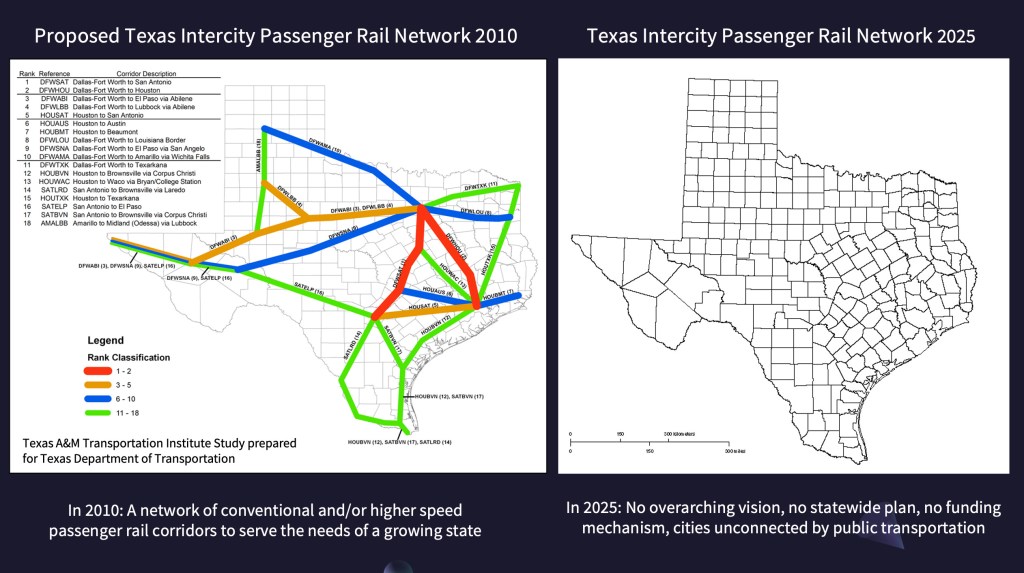
Moving into the Lone Star State, the Duffy family’s itinerary praised the state’s culture while quietly undermining its future transit infrastructure. Last spring, Secretary Duffy terminated an Amtrak grant worth nearly $64 million dedicated to laying the groundwork for a high-speed passenger rail line connecting Dallas and Houston.
The proposed corridor, estimated to cost upwards of $40 billion, would cut travel times between the two booming metropolitan areas to under 90 minutes. With an estimated 50,000 weekly commuters traversing the route, market demand is robust. Nevertheless, Duffy dismissed the project as government waste.
"Underwriting this project is a waste of taxpayer funds and a distraction from Amtrak’s core mission of improving its existing subpar services," Duffy stated in April 2025. "If the private sector believes this project is feasible, they should carry the pre-construction work forward…"
This stance represents a profound irony. The public-private partnership model currently struggling to stay afloat was initially championed and prioritized by the Trump administration itself during its first term. Without federal seed money, regional rail advocates warn that the massive funding deficit may prove insurmountable.
IV. The Autonomous Paradox: Arizona and the Future of Mobility
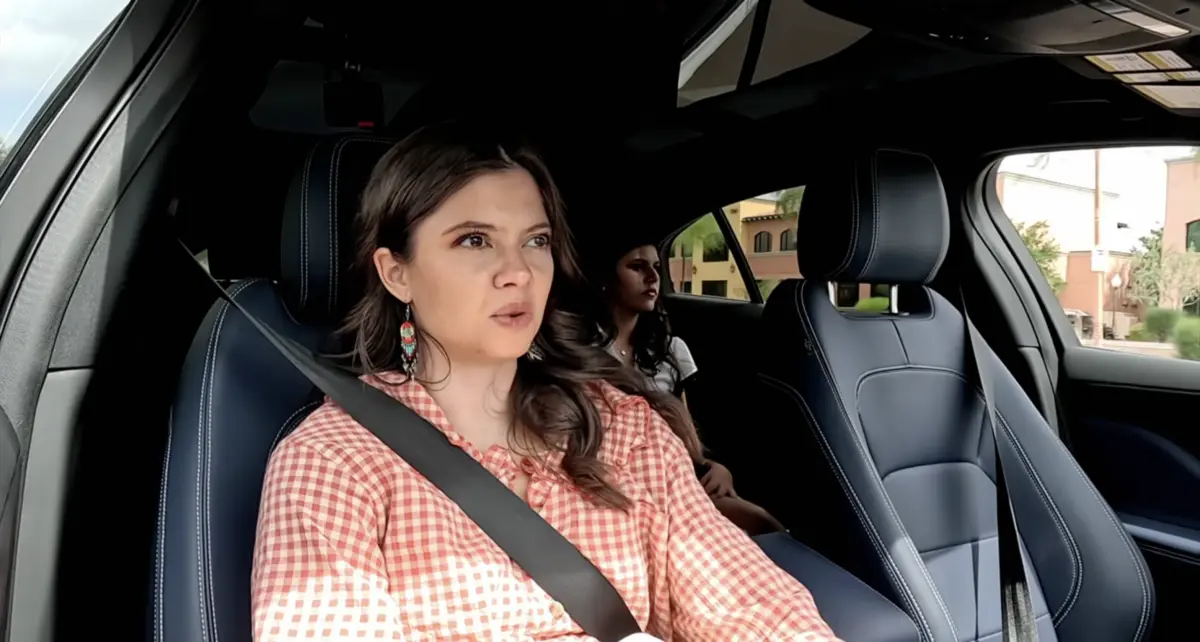
The final leg of the reality tour brings the Duffy family to Phoenix, Arizona, where they participate in an autonomous test drive using a Waymo vehicle—a subsidiary of Google, another prominent show sponsor. Reactions among the family members were notably lukewarm, with 26-year-old Evita Duffy remarking, "It’s weird—I did not like that."
However, the encounter with Waymo representative Suzanne Philion provided Secretary Duffy with a rare platform to acknowledge the devastating human cost of traffic violence in the United States, which claims roughly 40,000 lives annually.
"This will be the first time we actually have a huge impact on saving lives on American roads," Duffy proclaimed on camera.
For safety advocates, the statement struck a discordant note. While embracing autonomous vehicle technology that costs the federal government nothing and enriches private tech and auto interests, Duffy has systematically stripped bike lanes, road diets, pedestrian refuge islands, and speed-camera funding from federal safety manuals. By sidelining traditional, proven infrastructure interventions that actively protect vulnerable road users, the administration appears willing to outsource national traffic safety entirely to corporate innovation while starving municipal governments of the funds required to engineer safer streets.
V. Future Outlook: A Divergent Path for American Mobility
As The Great American Road Trip continues to stream online, the cultural debate surrounding its host encapsulates a deeper ideological split in American infrastructure policy. On one side stands a vision of transit rooted in public-private decentralization, technological automation, and the reduction of federal oversight in favor of traditional vehicular primacy. On the other stands a coalition of local leaders, transit advocates, and congressional lawmakers who argue that modernizing the nation requires sustained public investment in mass transit, pedestrian safety, and multi-modal connectivity.
The nearly $2 billion in total safety and transit funds redirected or canceled under Duffy’s watch leaves a lasting legacy that reality television editing cannot erase. Whether municipal projects in Philadelphia, Boston, Missoula, Charleston, and Texas can survive the current funding drought through private capital alone remains an open question.
What is certain, however, is that as Secretary Duffy crisscrosses the nation celebrating the American landscape on screen, the physical pathways connecting that landscape are facing their most precarious moment in decades. As Duffy noted in the series’ opening monologue, "To love America is to see America." Yet for the communities grappling with canceled grants and crumbling rails, the true test may lie in whether the federal government is willing to help build its future, rather than simply filming its drive.