








Executive Overview
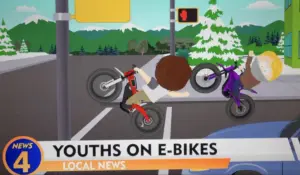
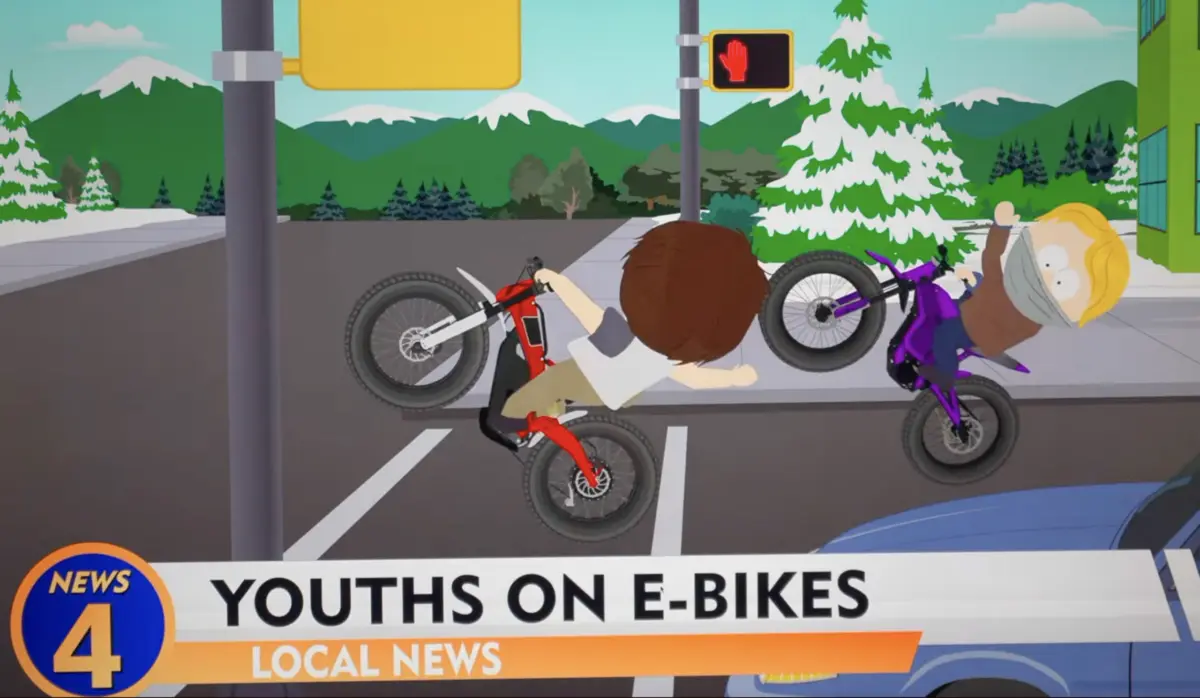
The intersection of modern micro-mobility, cultural satire, and municipal infrastructure has finally caught the attention of South Park creators Trey Parker and Matt Stone. In a recent episode tackling the modern urban landscape, the iconic animated series set its sights on the booming phenomenon of two-wheeled electric transport. Unsurprisingly, the episode features the quintessential demise of Kenny McCormick—this time falling victim to a catastrophic lithium-ion battery fire. Yet, beneath the characteristic crude humor and shock value lies a surprisingly sharp, multi-layered critique of contemporary transportation culture, regulatory blind spots, and public safety concerns.
However, the episode’s release has catalyzed a broader, more serious debate within the cycling community and among urban mobility experts. The core point of contention revolves around a critical misnomer that plagues modern discourse: the conflation of legitimate, pedal-assist electric bicycles (e-bikes) with high-powered, throttle-operated electric motorcycles (e-motos).
While South Park uses its narrative license to lampoon the culture, prominent cycling educator and YouTuber Seth Alvo, creator of the channel Berm Peak, argues that Parker and Stone actually hit on a very real, very dangerous modern crisis. The show’s portrayal highlights the unchecked proliferation of unregulated, high-speed machines masquerading as bicycles. Yet, cycling advocates point out that the show misidentifies the true antagonists of the micro-mobility revolution. While the satirical spotlight shines on lycra-clad "bike dads," the real-world threats are far more systemic, rooted in car-centric legislative frameworks, loophole-exploiting manufacturers, and a lack of coherent public infrastructure.
This deep-dive investigative report examines the cultural impact of the South Park e-bike episode, deconstructs the nuanced breakdown provided by Berm Peak, evaluates the alarming safety metrics surrounding high-voltage micro-mobility, and analyzes the legislative battles shaping the future of our streets.
Detailed Chronology: From Underground Trend to Cultural Phenomenon
To understand how high-speed electric motorbikes became a central target for South Park, one must trace the rapid evolution of urban transportation over the past half-decade.
Phase 1: The E-Bike Boom and the Pedaling Revolution
The modern e-bike revolution began not as a menace, but as a sustainable commuting solution. Designed to bridge the gap between traditional cycling and public transit, Class 1, 2, and 3 e-bikes gained massive traction during the urban shifts of the early 2020s. These vehicles—capped at modest speeds (typically 20 to 28 mph) and requiring varying degrees of human pedal input—promised to reduce urban carbon footprints, alleviate traffic congestion, and make cycling accessible to older or physically constrained commuters.
Phase 2: The Trojan Horse of Import Loopholes
Almost parallel to the rise of legitimate e-bikes came a shadow market. Shady overseas manufacturers, capitalizing on lax customs enforcement and vague federal definitions, began flooding the market with vehicles styled as bicycles but engineered as lightweight dirt bikes. Equipped with functional throttle systems, robust motors exceeding legal wattage limits, and rudimentary "vestigial pedals" included solely to bypass customs classifications, these e-motos quickly gained popularity among demographics looking for cheap, unlicensed thrills—most notably teenagers and delivery workers under immense time pressure.

Phase 3: The Infrastructure Clash and Public Backlash
As these 40-plus-mph machines infiltrated shared pedestrian pathways, suburban sidewalks, and mountain bike trails, public pushback was inevitable. Pedestrians reported near-misses, traditional cyclists grew alarmed at the speed differentials on multi-use paths, and emergency rooms began noting a sharp uptick in high-velocity trauma cases involving young riders lacking proper safety gear.
Phase 4: South Park Enters the Fray
Against this backdrop of rising societal friction, South Park entered the chat. True to form, the show wasted no time in pushing the absurdity of the situation to its logical extreme. By framing the influx of these vehicles as an existential suburban crisis—culminating in Kenny’s fiery, battery-induced demise—Parker and Stone captured the cultural zeitgeist. The episode transformed a niche urban planning debate into mainstream water-cooler conversation, forcing millions of viewers to confront the chaos unfolding on bike paths across America.
Supporting Context & Metrics: Unpacking the Reality Behind the Satire
While South Park treats the situation with absurdity, the underlying data concerning e-motos, battery safety, and regulatory confusion paints a sobering picture.
The Great Nomenclature Confusion
The most significant hurdle in contemporary micro-mobility policy is semantic. Mainstream media outlets and panicked municipal leaders routinely lump all electric two-wheelers under the catch-all term "e-bike." This linguistic laziness has catastrophic policy implications.
A standard Class 1 e-bike weighs roughly 40 to 50 pounds, provides assistance only while the rider is pedaling, and tops out at 20 mph. Conversely, popular e-moto models like the Sur-Ron or Segway Dirt eBike weigh considerably more, possess instant-torque throttles capable of propelling the vehicle past 45 mph without a single rotation of the pedals, and are structurally engineered for off-road motocross use, not multi-use pedestrian pathways.
The Thermal Runaway Threat
The safety hazard that inspired Kenny’s cartoonish demise in South Park—the lithium-ion battery fire—is no laughing matter. Fire departments across major metropolitan areas have reported exponential increases in battery-related structure fires.
- Unregulated Cells: Many budget e-motos utilize uncertified lithium-ion battery packs that lack proper Battery Management Systems (BMS).
- Charging Hazards: Users frequently charge these high-voltage batteries overnight using incompatible aftermarket chargers or store them improperly in tight residential spaces.
- Catastrophic Failure: When compromised, these batteries undergo "thermal runaway," releasing toxic gases and generating intense flames that burn significantly hotter and faster than standard structural fires, making them notoriously difficult for first responders to extinguish.
The "Bike Dad" Strawman vs. Real-World Antagonists
In his detailed video breakdown of the South Park episode, YouTuber Seth Alvo (Berm Peak) points out a brilliant piece of satirical misdirection. The show casts dedicated, lycra-wearing, rule-abiding mountain bikers—colloquially known as "bike dads"—as the bitter enemies of the new vehicular order.
While comedic, Alvo notes that this inverts reality. In the real world, traditional cyclists and e-moto riders are often at odds, but the true architects of the crisis are far removed from local cycling clubs. The real culprits include:
- Car-Brained Policymakers: Municipal and state lawmakers who frequently draft reactionary, broad-brush legislation designed to crack down on illegal e-motos, only to inadvertently outlaw legitimate, sustainable e-bikes.
- Unscrupulous Manufacturers: Importers who game international supply chains, marketing pure electric motorcycles as innocuous "bicycles" to evade consumer protection standards, import tariffs, and vehicle registration requirements.
Official Statements and Expert Perspectives
As the micro-mobility crisis forces legislative bodies to re-evaluate local transit laws, voices from advocacy groups, urban planners, and content creators are shaping the conversation.
Seth Alvo (Berm Peak) on Satire and Reality
Analyzing the cultural resonance of the South Park episode, Seth Alvo observed that Parker and Stone managed to capture the ambient anxiety of modern pathways.
"Trey and Matt have a unique talent for zeroing in on the exact moment a cultural annoyance turns into a full-scale panic," Alvo remarked in his breakdown. "While they got the details wrong for comedic effect—making the spandex-wearing dads the villains instead of the victims of infrastructure neglect—they correctly identified that we have a massive, unmanaged class of high-speed vehicles tearing through spaces meant for pedestrians and traditional bikes."
Urban Planning and Advocacy Groups
Organizations such as Streetsblog and various national cycling coalitions have raised alarms regarding reactionary policy responses. In recent policy briefs, transit advocates have cautioned against blanket bans that penalize low-income commuters, delivery workers, and elderly citizens who rely on legal e-bikes for daily mobility.
"When lawmakers panic, they draft bad laws," noted a representative from a national micro-mobility advocacy coalition. "Conflating a 75-pound electric dirt bike with a 45-pound step-through commuter e-bike is a lazy legislative shortcut. It penalizes green transportation while failing to address the illegal importation of unregistered motor vehicles."
Consumer safety agencies, meanwhile, have doubled down on certification requirements, urging municipalities to adopt strict safety standards—such as UL (Underwriters Laboratories) certifications—to combat the escalating threat of substandard lithium-ion battery packs.
Future Outlook: Navigating the Intersection of Innovation and Regulation
The micro-mobility landscape sits at a dangerous crossroads. Without decisive, intelligent intervention, cities risk sliding into regulatory chaos, marked by heavy-handed bans on one side and lawless, high-speed motorized mayhem on the other.
1. Nuanced Legislation and Clear Categorization
The future of urban transit depends entirely on accurate legal definitions. Lawmakers must decouple electric motorcycles from electric bicycles. This requires:
- Clear enforcement mechanisms for throttle-only vehicles operating in pedestrian zones.
- Mandatory registration, licensing, or age restrictions for high-wattage e-motos that cross the threshold from bicycle to motor vehicle.
- Protection and encouragement for low-speed, class-compliant e-bikes as vital components of green urban transit infrastructure.
2. Infrastructure Adaptation
Cities can no longer pretend that traditional bicycle lanes are sufficient for the modern spectrum of speed differentials. Urban planners must accelerate the development of multi-tiered transit corridors: separating high-speed micro-mobility lanes from traditional pedestrian pathways, much like European cycling capitals have successfully pioneered.
3. Rigorous Safety Standards for Batteries
To eliminate the very real terror of thermal runaway fires highlighted so vividly in South Park, federal trade commissions must crack down on uncertified battery imports. Requiring rigorous UL certification for all lithium-ion cells sold within domestic markets will drastically reduce catastrophic residential fires and protect consumers from dangerous knock-off technology.
Conclusion
South Park may have resolved its e-bike crisis with characteristic animated carnage and the sacrificial death of Kenny, but the real-world implications of the e-moto boom demand sober, sophisticated governance. By moving past reactionary panic, recognizing the distinction between bicycles and motorcycles, and cracking down on negligent manufacturing, society can successfully navigate the future of urban mobility—ensuring that the only place e-motos cause fiery destruction remains safely on the television screen.