








Executive Overview
The Orange County Transportation Authority (OCTA) Board of Directors has taken decisive emergency action, declaring a formal state of emergency along the vulnerable coastal rail line in San Clemente, California. This urgent move empowers transportation officials to aggressively fast-track engineering, contracting, and resource procurement to shield a critical passenger and freight transit link from aggressive coastal erosion and the looming threats of severe autumn and winter weather.
At the center of this multi-million-dollar mobilization is a sweeping sand replenishment and shoreline protection initiative. OCTA plans to place approximately 690,000 cubic yards of beach-compatible sand along targeted stretches of the San Clemente coast, complemented by the construction of an engineered shoreline protection structure and the rehabilitation of existing riprap barriers.
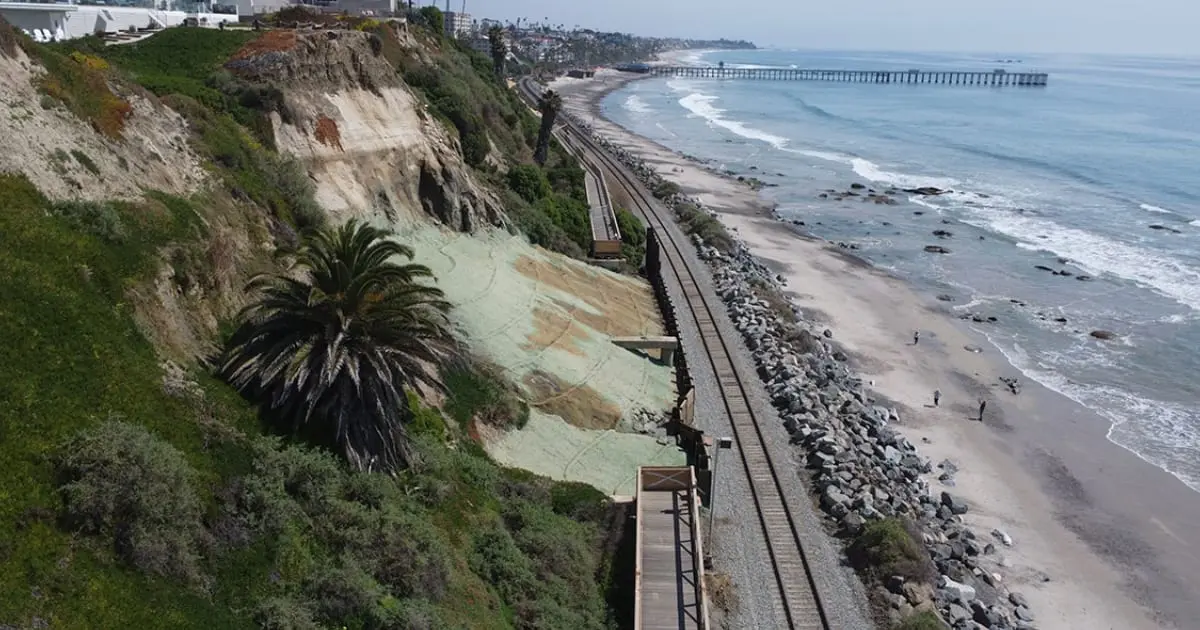
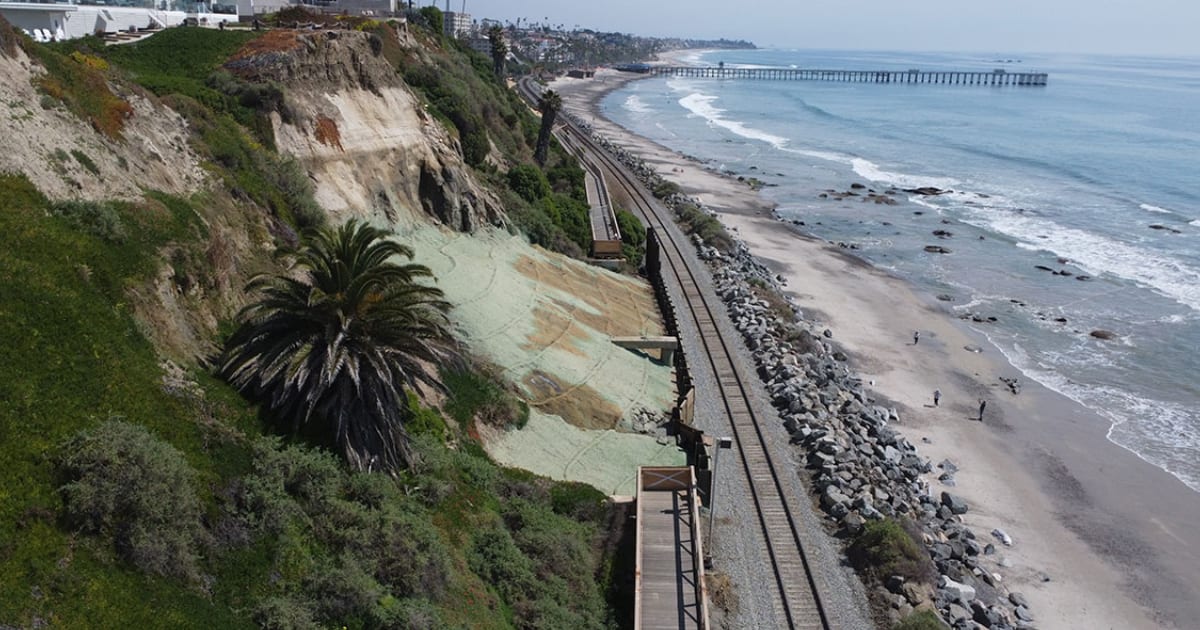
This narrow sliver of rail infrastructure—pinched precariously between towering, unstable sandstone bluffs and the surging Pacific Ocean—is far more than a local convenience. It represents an indispensable anchor of the 351-mile Los Angeles-San Diego-San Luis Obispo (LOSSAN) Rail Corridor, the second busiest intercity passenger rail corridor in the United States. Day in and day out, this pathway accommodates Metrolink commuter services, Amtrak Pacific Surfliner intercity trains, vital freight carriers, and crucial national defense movements.
However, accelerating climate pressures, rising sea levels, and repetitive winter storm surges have repeatedly compromised the trackbed, triggering frequent service suspensions and exposing the fragility of Southern California’s coastal transportation grid. Backed by over $300 million in combined state and federal funding, OCTA’s emergency declaration is designed to cut through bureaucratic red tape, secure scarce marine dredging equipment, and safeguard the corridor before the worst of the seasonal weather arrives.
Detailed Chronology: The Escalating Crisis in San Clemente
The path to OCTA’s emergency declaration is paved with a succession of climate-induced disruptions that have plagued the San Clemente coastline over the past half-decade.
A History of Vulnerability (2021–2024)
Since 2021, the integrity of the San Clemente rail corridor has been severely tested. The region has experienced a relentless cycle of bluff failures, mudslides, and catastrophic loss of protective beach sand. As the natural buffer between the tracks and the ocean dwindled, storm waves began slamming directly against the railroad embankments.
These geological failures have repeatedly severed passenger rail connections between Orange County and San Diego County, forcing tens of thousands of daily commuters and travelers to seek alternative transportation or rely on intermittent bus bridges. Each closure highlighted the acute vulnerability of the infrastructure, prompting a piecemeal series of emergency stabilization efforts, including the installation of temporary steel H-piles, wood lagging, and rock revetments.

The September 2025 Catalyst
The most recent chapter in this ongoing crisis unfolded in early September, when a potent combination of powerful open-ocean swells and abnormally high astronomical tides swept ashore. These aggressive waves aggressively overtopped existing rock barriers, battered the railroad tracks, and accelerated the erosion of already-weakened coastal slopes south of San Clemente State Beach.
The structural battering forced immediate safety interventions. Passenger rail operations along the corridor were temporarily suspended while emergency geotechnical and stabilization crews were mobilized to clear debris, inspect track alignment, and shore up compromised embankments.
State Intervention and El Niño Preparations
Recognizing that San Clemente’s plight was part of a broader, statewide vulnerability, California Governor Gavin Newsom stepped in on September 21, issuing a state of emergency proclamation. This statewide directive was enacted in anticipation of developing El Niño weather patterns, which historically bring heavier precipitation, intensified storm tracks, and severe coastal battering to the California coast.
The Governor’s proclamation underscored the immediate threats facing critical coastal infrastructure—including highways, wastewater treatment plants, and rail networks—and directed state regulatory and environmental agencies to work hand-in-hand with local partners to expedite emergency flood and erosion control measures.
Inspired by the state-level urgency, the OCTA Board of Directors convened to grant sweeping executive authority to CEO Darrell E. Johnson. This authorization allows the agency to bypass standard, time-consuming procurement lags to secure specialized marine contractors, heavy materials, and dredging fleets the moment they become available.
Supporting Context & Metrics: Engineering Against the Elements
Solving the coastal erosion crisis in San Clemente is not merely a matter of dumping rock or sand onto a beach; it is a complex, high-stakes logistical puzzle constrained by geography, environmental regulations, and equipment shortages.
The Scope of the Engineering Solution
To permanently alter the vulnerability of the southern San Clemente coastline, OCTA’s engineering strategy relies on a dual-pronged approach: soft-shore nourishment and hard-shore structural defense.
- Massive Sand Replenishment: OCTA is preparing to place roughly 690,000 cubic yards of sand along targeted segments of the San Clemente coast. The distribution is strategically divided:
- 240,000 cubic yards will be placed along the northern segment stretching between North Beach and Mariposa Point.
- 450,000 cubic yards will be allocated to the southern zone stretching south of San Clemente State Beach.
- Engineered Shoreline Protection: Alongside the sand, crews will construct an engineered shoreline protection structure and thoroughly repair existing riprap revetments. This work will concentrate heavily on a three-quarter-mile stretch south of San Clemente State Beach, where the railroad embankment currently possesses little to no defense against direct wave action.
The Logistical Nightmare: Sourcing and Transporting Sand
Securing nearly 700,000 cubic yards of sand is only half the battle; transporting it to a geography with virtually zero land-side access presents an extraordinary hurdle.
Because the railroad tracks are wedged tightly against steep bluffs on one side and the pounding surf on the other, traditional dump-truck delivery from land is impossible for large-scale operations. Instead, the operation must rely on marine logistics. OCTA has identified the Surfside-Sunset borrow site as a viable, approved source of beach-compatible sand. However, moving this volume of material requires specialized hopper dredges—massive marine vessels capable of scooping or sucking sand from offshore borrow sites, navigating to the San Clemente coast, and pumping the material directly onto the shoreline through floating pipeline networks.
The Scarcity of Specialized Equipment
A major bottleneck facing OCTA’s accelerated timeline is the severe shortage of suitable equipment. The number of large, U.S.-flagged hopper dredges capable of performing complex nearshore marine construction along the California coast is strictly limited. Furthermore, these multi-million-dollar vessels are in high demand nationwide and are frequently booked months, or even years, in advance.
To overcome this constraint, OCTA is executing an aggressive strategy of simultaneous advancement—moving forward with design, environmental permitting, and contractor negotiations concurrently. This ensures that the agency can snap up a dredge vessel and mobilize the moment an unexpected work window opens in a contractor’s schedule.
Regulatory Compliance Amid Emergency
While the emergency declaration empowers OCTA to fast-track its contracting mechanisms, it does not provide an exemption from environmental protection laws. The agency continues to coordinate closely with key regulatory stakeholders, including:
- The California Coastal Commission
- The U.S. Army Corps of Engineers (USACE)
- Various regional water quality and wildlife protection boards
Balancing the urgent need to protect critical infrastructure with the imperative to protect marine habitats and sensitive coastal ecosystems remains a delicate, ongoing dance for project planners.
Financial Framework: Securing the Future
Stabilizing a crumbling coastline does not come cheap. Over the past several years, OCTA has aggressively pursued and secured more than $300 million in combined local, state, and federal funding dedicated exclusively to coastal rail stabilization in Orange County.
These vital capital injections have allowed the agency to transition from reactive, emergency patch-jobs to more robust, comprehensive engineering interventions. Funding has been gathered from various legislative packages, state transportation improvement programs, and federal resilience grants designed to help critical infrastructure adapt to climate change and extreme weather volatility.
Short-Term Defense vs. Long-Term Strategy
While these $300 million investments and the upcoming 690,000-cubic-yard sand placement are critical for keeping the current alignment open, transportation planners readily acknowledge that these are stopgap measures. They protect the existing coastal alignment for the immediate future, buying time while leaders evaluate the long-term viability of the route.
To address the horizon beyond immediate emergency fixes, OCTA recently completed its comprehensive Coastal Rail Resiliency Study. This extensive analysis evaluates potential engineering and structural strategies to protect approximately seven miles of the coastal rail corridor through Dana Point and San Clemente over the next 30 years.
Beyond that three-decade window, a separate, state-led long-term planning initiative is underway to examine more radical alternatives. These could include comprehensive inland tunneling, complete corridor relocation, or other transformative engineering feats to permanently remove Southern California’s passenger and freight lifeline from the ravages of sea-level rise.
Official Statements and Industry Perspectives
The gravity of the San Clemente rail crisis has drawn commentary from top regional transportation leaders, emphasizing both the urgency of the moment and the resilience of the planning teams involved.
Reflecting on the relentless efforts of the past five years, OCTA CEO Darrell E. Johnson highlighted the proactive posture of the agency:
"For the past five years, OCTA has taken all possible steps to speed up work to protect this critical link in Southern California’s transportation system, and it’s important to acknowledge our Board’s leadership in this effort."
Johnson emphasized that the newly granted emergency powers are essential tools for navigating the unpredictable window of weather and equipment availability. By eliminating administrative lag times, OCTA can react with the speed necessary to outpace incoming winter swells.
Transportation analysts and rail advocates have similarly praised the decision, noting that the LOSSAN corridor is simply too vital to the state’s economic vitality and supply chain network to be left vulnerable to chronic closures. With millions of passengers and billions of dollars in freight relying on the corridor annually, the aggressive mobilization in San Clemente is viewed not just as a local public works project, but as a statewide economic imperative.
Future Outlook: What Lies Ahead for San Clemente
As autumn deepens and winter approaches, all eyes in Southern California transportation circles are trained on the San Clemente shoreline.
Over the coming weeks, OCTA staff will provide continuous updates to the Board of Directors as permitting applications clear the final hurdles, marine contractors are locked in, and dredging schedules are confirmed. If weather conditions cooperate and equipment mobilization goes according to plan, residents and commuters could soon see heavy marine vessels operating off the coast, pumping the first waves of the 690,000 cubic yards of sand onto the denuded beaches.
For the commuters boarding Metrolink in Orange County, the vacationers riding the Amtrak Pacific Surfliner down to San Diego, and the freight operators moving goods across state lines, these engineering efforts represent hope for a dependable, uninterrupted future.
While the long-term specter of sea-level rise and accelerated bluff erosion means that the battle for the San Clemente coastline is far from over, OCTA’s decisive emergency action ensures that Southern California’s indispensable rail corridor will continue to weather the storm—both literally and figuratively—for years to come.