









Executive Overview
For years, Ecuador occupied a quiet, often overlooked corner of Latin America’s automotive conversation. Alongside neighbors like Peru and Argentina, the Andean nation was frequently categorized as a regional laggard, struggling to register more than a handful of monthly electric vehicle (EV) sales. As recently as 2023, electric cars represented a microscopic fraction of the national fleet, with market shares hovering near the absolute floor.
Fast forward to late 2026, and that narrative has been entirely rewritten. Ecuador has emerged as the rising star of Latin America’s clean mobility sector. Driven by a potent mix of progressive tax incentives, the elimination of fossil fuel subsidies, and the influx of competitively priced models from both Asian and European manufacturers, the country’s EV sector has exploded.
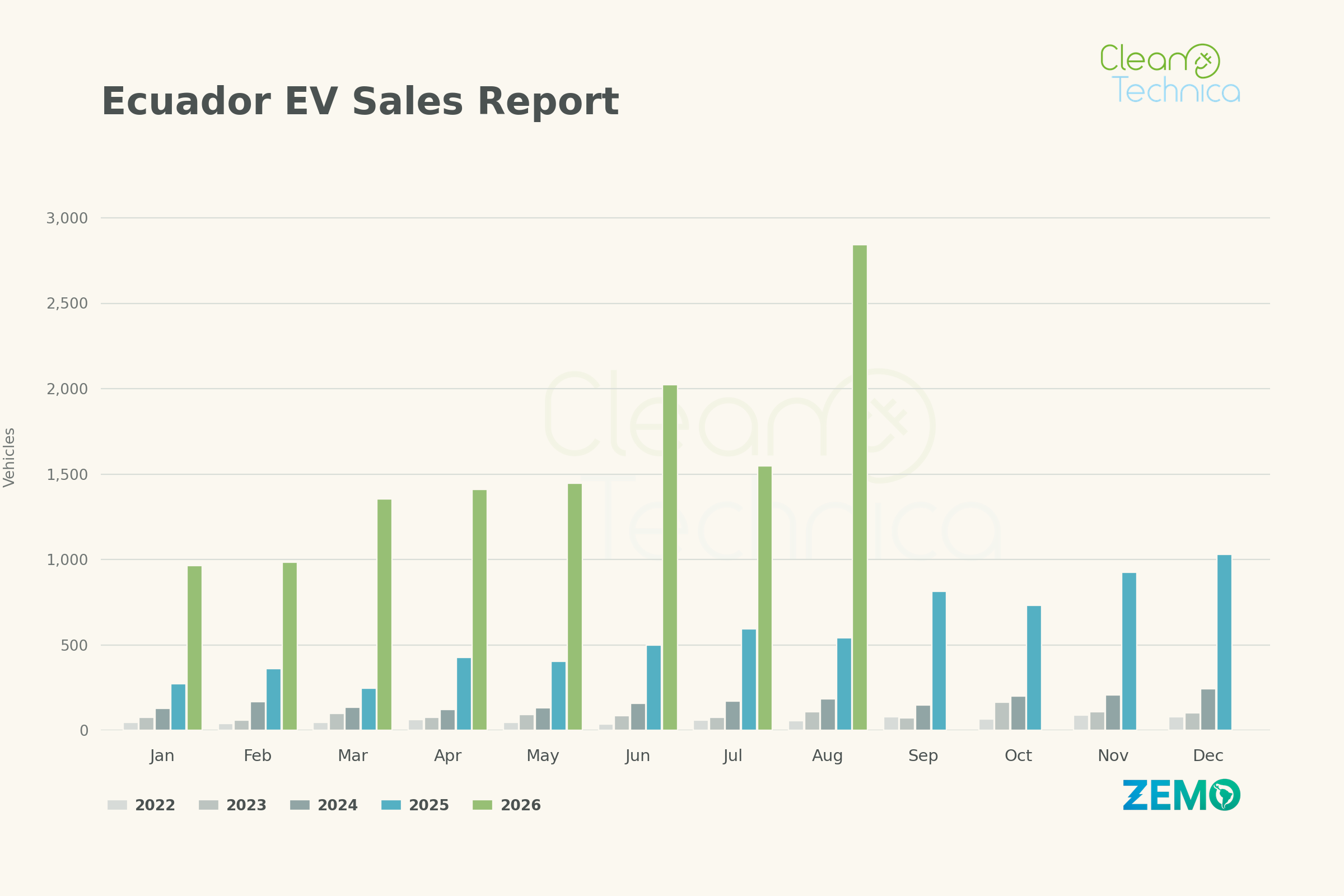
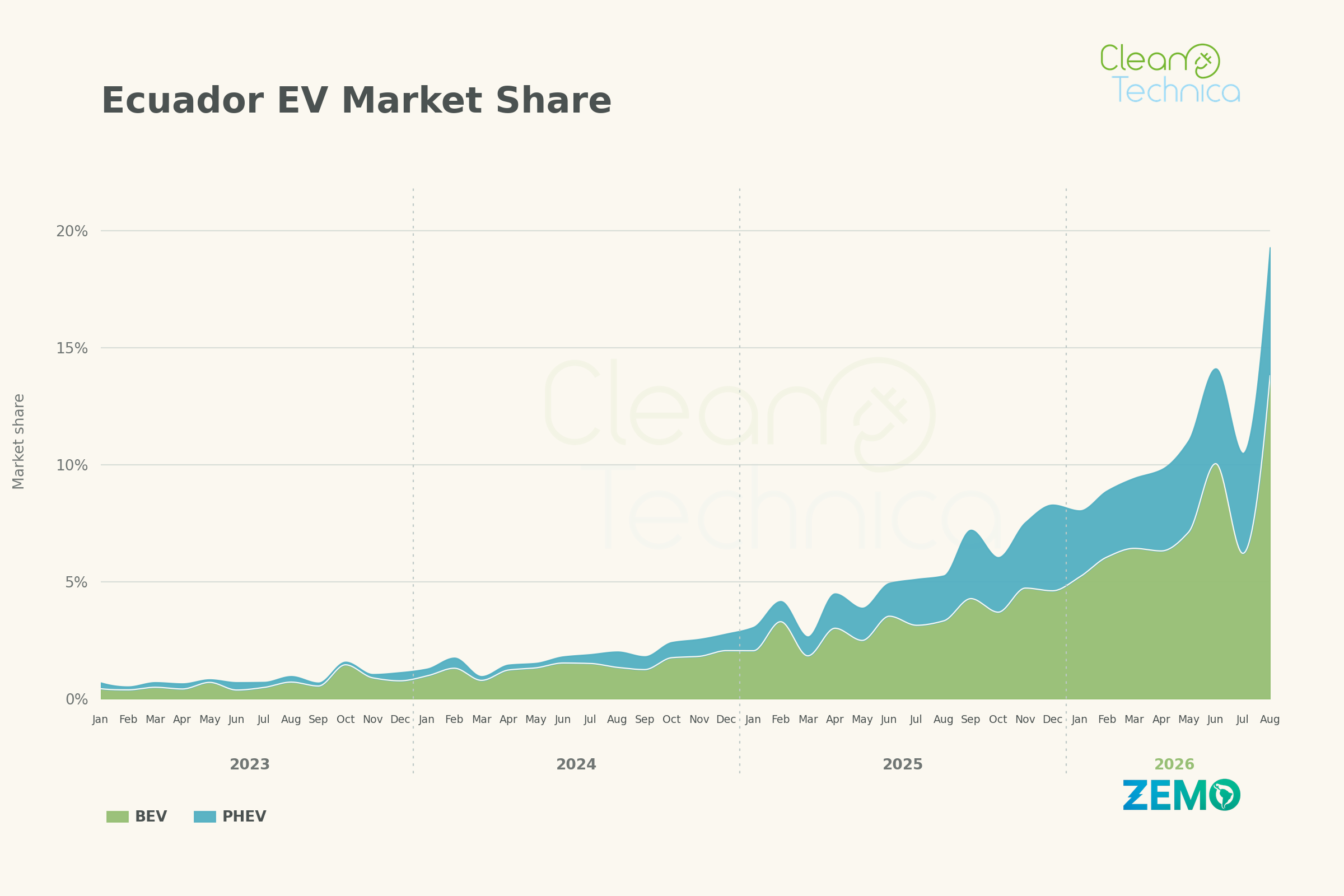
By the first quarter of 2026, battery electric vehicle (BEV) market share had climbed to 6%. By August of the same year, BEVs alone captured an impressive 13.8% of total vehicle sales, while plug-in hybrid electric vehicles (PHEVs) added another 5.5%. Combined, electrified powertrains are now closing in on a staggering 20% market share. With sales volumes surging by upwards of 400% year-over-year, Ecuador is no longer just catching up to its neighbors—it is threatening to overtake Colombia as the third-most advanced EV market in Latin America, transforming a regional success story into a global case study of rapid clean energy adoption.
Detailed Chronology: The Road from Inception to the 2026 Surge
Understanding Ecuador’s current EV triumph requires examining the velocity of its transformation. The turning point did not happen overnight, but the acceleration curve observed throughout 2026 defies traditional automotive forecasting models.
The Humble Beginnings: 2023–2024
Historically, high import costs, a lack of charging infrastructure, and entrenched consumer reliance on cheap fossil fuels kept EV adoption at bay. As late as October 2023, cumulative national sales had only just brushed past the milestone of 100 units. Market share sat stagnant between 2% and 3%, viewed at the time as a monumental achievement for local advocates. During this phase, early market entry was dominated almost entirely by Chinese manufacturer BYD, which commanded upwards of 70% of the nascent market share, effectively acting as the sole evangelist for electric mobility in the country.
The Acceleration Phase: 2025
The tipping point began to materialize through 2025. Despite broader economic headwinds—including localized energy constraints—consumers began looking closely at alternative powertrains. The pivotal policy shift arrived when the Ecuadorian government systematically phased out regressive gasoline and diesel subsidies, exposing drivers to the true cost of internal combustion engine (ICE) operations. Simultaneously, tariff exemptions and targeted tax breaks for eco-friendly imports created a favorable financial ecosystem for prospective EV buyers. By December 2025, cumulative monthly sales comfortably cleared the 1,000-unit threshold.
The Exponential Boom: 2026
The year 2026 will be remembered in industry annals as the breakout era for Ecuadorian e-mobility. Sales figures registered astronomical year-over-year growth, climbing by 276% across the board and peaking with a breathtaking 426% surge in August alone. While earlier tallies focused strictly on BEVs, updated tracking by ZEMO and the Ecuadorian Association of Automotive Companies (AEADE) integrated historical PHEV data stretching back to 2017.
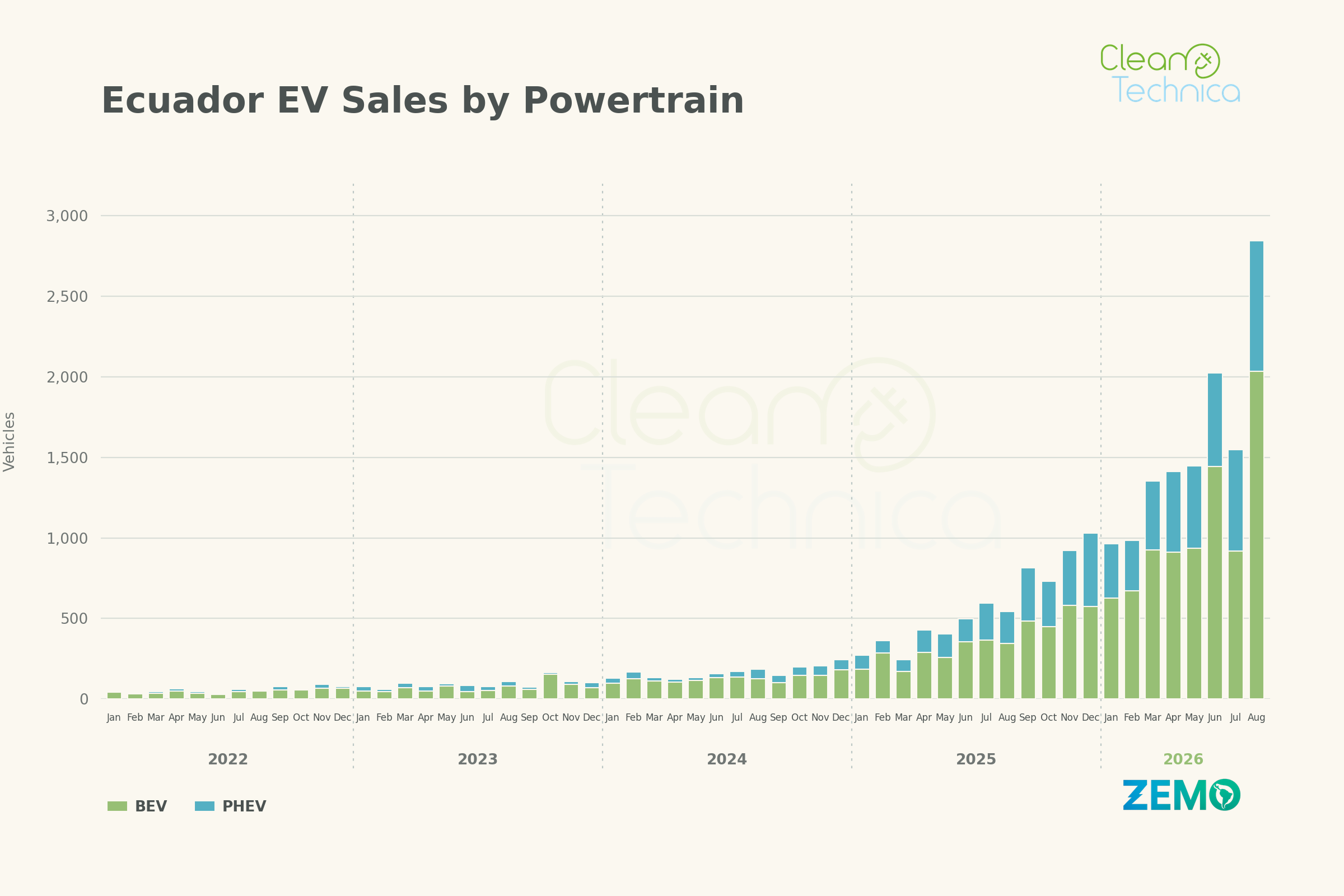
By August 2026, monthly volume approached the 3,000-unit mark. BEVs officially crossed 2,000 monthly sales for the first time in history, while PHEVs contributed over 800 units. Total monthly electrified penetration hit 19.3%, positioning Ecuador on the immediate precipice of the 20% market share club.
Supporting Context & Metrics: Decoding the Data
To fully appreciate the mechanics of Ecuador’s market transformation, one must look beyond the headline growth numbers and dissect the underlying powertrain dynamics, total market interplay, and competitive brand shifts.
Powertrain Breakdown: BEVs vs. PHEVs
Unlike smaller neighboring markets where plug-in hybrids remain marginal or where BEVs command near-monopolies, Ecuador exhibits a healthy, balanced duality. The market maintains roughly a 70/30 split favoring pure battery-electric vehicles over plug-in hybrids.

While BEVs drove the lion’s share of the August 2026 records (capturing 13.8% of total automotive sales), PHEVs proved equally vital by securing 5.5%. This dual-pronged adoption suggests that Ecuadorian consumers are utilizing PHEVs as a pragmatic transitional bridge—appealing to drivers who require long-distance flexibility across the rugged Andean geography while still embracing partial electrification.
Coexisting with an ICE Boom
Curiously, this EV revolution is unfolding concurrently with a broader post-pandemic macroeconomic recovery across the entire automotive sector. Total vehicle sales for fuel-based vehicles (ICEVs, mild hybrids, and full hybrids) have posted record figures through the first eight months of 2026, outperforming any year dating back to 2018 and doubling the sluggish totals seen in 2020.

Unlike markets like Uruguay, where EV adoption actively cannibalizes and reverses combustion vehicle growth, Ecuador is experiencing a rising tide that lifts all boats—for now. Industry analysts project that as EV price parity deepens and charging networks densify, electrified models will begin directly displacing ICE vehicles as early as 2027.
Brand and Model Landscape: Breaking the Monopoly
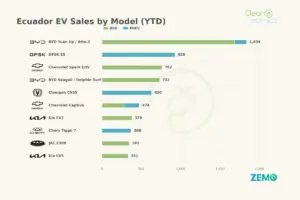
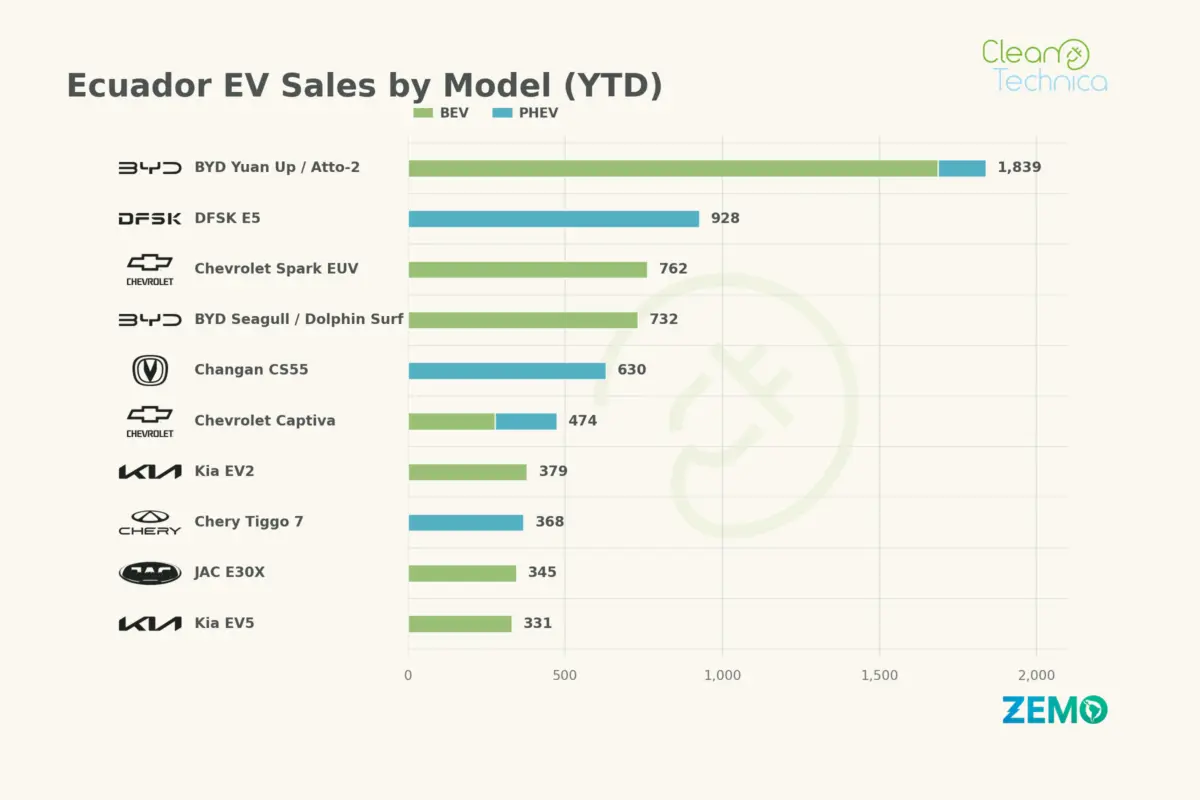
The competitive landscape of 2026 bears little resemblance to the single-brand dominance of previous years. While BYD remains the overall volume leader, its market share has contracted from over 70% in 2024 to below 30% by late 2026, signaling a mature, fiercely competitive marketplace.
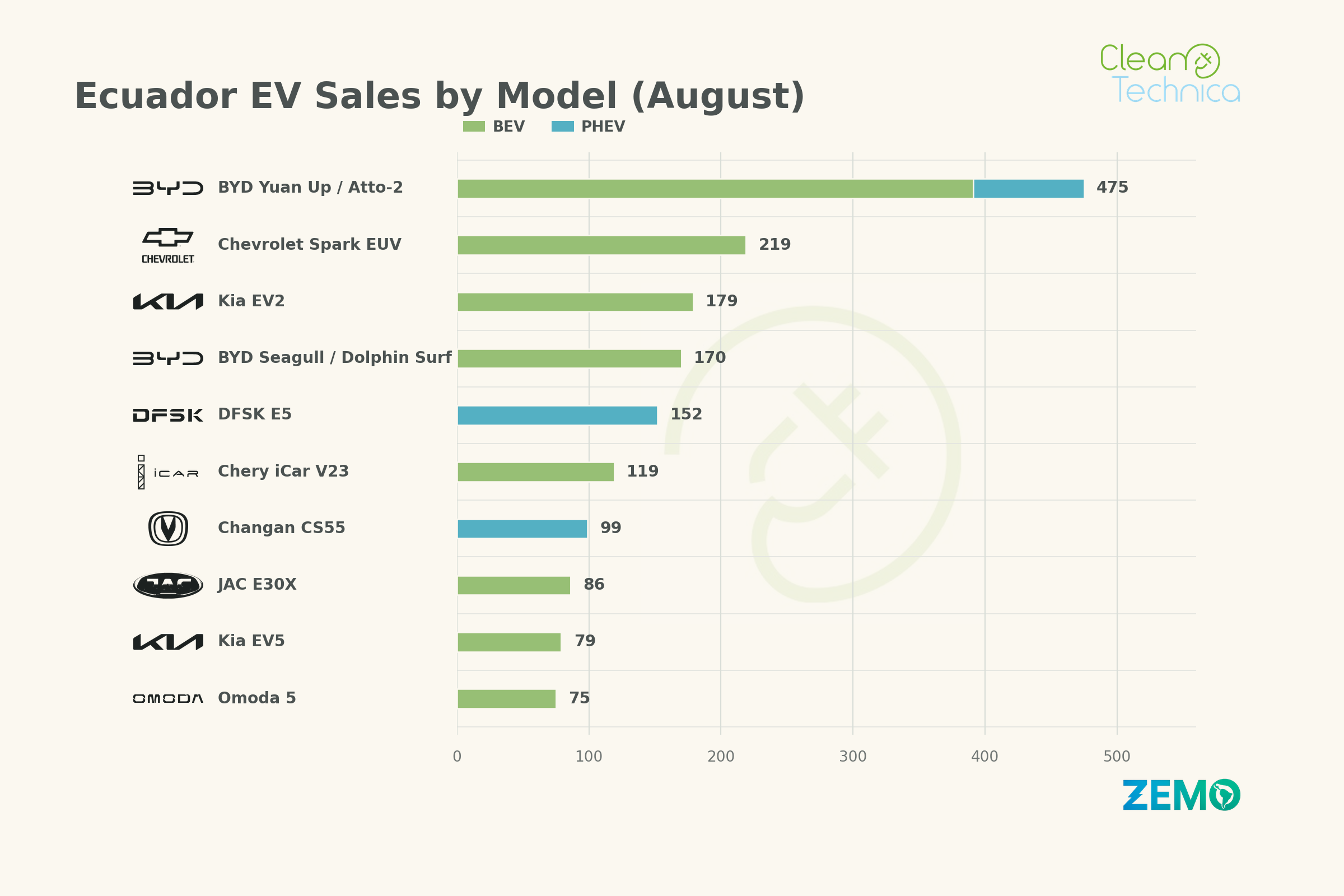
- BYD continues to anchor the market, with the popular BYD Yuan Up leading the individual model charts, closely supported by the affordable BYD Seagull.
- Legacy Automakers Rise: Legacy giants have staged a remarkable comeback. Chevrolet secured the second spot overall, capitalizing on rebranded, highly accessible Chinese electric imports such as the Spark EUV and the Baojun Yep Plus.
- The European Challenger: Kia captured third place brand-wise, driven largely by the surprising, runaway success of the European-built Kia EV2. Manufactured in Slovakia, the EV2 proves that non-Chinese automakers can deliver globally competitive, reasonably priced urban crossovers to developing markets.
- Diversified Segments: Other major players like DFSK (anchored by the E5 plug-in SUV) and Changan hold strong positions in the year-to-date standings, while new entrants like the Chery iCar V23 point toward aggressive diversification.
Official Statements and Industry Insights
Market observers and automotive analysts tracking the Latin American transition emphasize that Ecuador’s success is anchored in structural policy changes rather than fleeting consumer trends.
In statements regarding the macro-environment, trade groups have highlighted the direct correlation between government fiscal interventions and consumer behavior. The deliberate removal of federal gasoline and diesel subsidies—despite temporary relief mechanisms introduced for commercial diesel bus and truck operators responding to shifting geopolitical fuel pressures—fundamentally altered the total cost of ownership (TCO) equation for private vehicle buyers. When combined with comprehensive import duty waivers, driving an internal combustion engine simply ceased to make economic sense for urban commuters and middle-class families.

Furthermore, industry commentators point to the shifting psychological barrier of vehicle pricing. The arrival of purpose-built, sub-$25,000 electric vehicles has democratized clean mobility. Guillermo Hormigo and other regional analysts note that the introduction of models bridging the gap between urban efficiency and utilitarian ruggedness has expanded the target demographic far beyond affluent tech-adopters in Quito and Guayaquil.
Future Outlook: Disruptive Models and Regional Implications
As Ecuador looks toward the horizon, two specific vehicle classes are poised to redefine the market, offering a preview of where the broader Latin American automotive sector is heading.

1. The European Counter-Offensive: Kia EV2
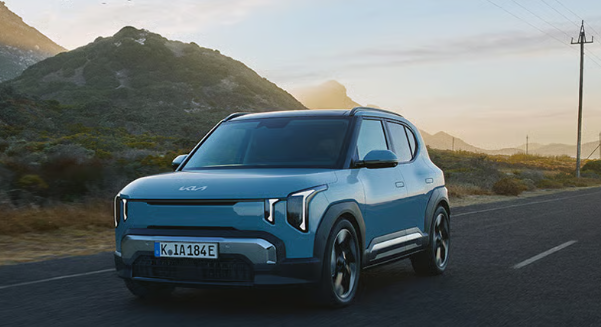
Priced around $23,000, the Slovakian-built Kia EV2 represents a watershed moment. For years, critics argued that legacy European and Korean automakers were incapable of matching the cost structures of Chinese competitors. While the EV2 utilizes globally sourced components—including battery cells likely imported from Asia—its final assembly and engineering demonstrate that traditional automotive powerhouses can recalibrate.
The EV2 matches the footprint and pricing of segment leaders like the BYD Yuan Up while offering comparable range and packaging. Its rapid ascent into the top sales tiers within just three months of availability signals that global manufacturers are finally arming themselves with the right tools to challenge Chinese hegemony in emerging markets.
2. Rugged Electrification: Chery iCar V23
Perhaps the most intriguing development for Ecuador’s unique geography is the entry of purpose-built, rugged electric off-roaders like the Chery iCar V23. Historically, rural areas, mountainous Andean passes, and unpaved regional roads were the exclusive domain of robust ICE vehicles or traditional 4x4s like the Suzuki Jimny.
With a price point hovering around $28,000 for its 4×4 variant, the iCar V23 directly challenges legacy off-roaders while delivering the silent, high-torque benefits of electric propulsion. Designed specifically for utility and off-road capability, the V23 is expected to capture the loyalty of rural workers, small-town merchants, and adventure-seekers in poorly connected provinces.

A Note on Efficiency: Early spec sheets for the iCar V23 have raised eyebrows among analysts, with official figures promising a modest 420 km (261 miles) of NEDC range from a massive 81 kWh battery pack. Given the boxy, unaerodynamic profile of a rugged off-roader, real-world efficiency metrics will be closely watched by consumers to determine whether the utility outweighs the energy consumption.
Conclusion: A New Regional Hierarchy
Ecuador’s journey from the bottom of regional ranking lists to a dynamic, high-growth EV hub is nothing short of extraordinary. Supported by smart fiscal policies, an end to artificial fuel subsidization, and an influx of diversified, affordable vehicle choices, the country has moved past the early-adopter phase.

With market penetration comfortably approaching the 20% threshold, Ecuador is proving that electric mobility is not reserved exclusively for wealthy nations. As the market matures into 2027 and beyond, established powerhouses like Colombia must look closely in their rearview mirrors—because Ecuador is charging hard for the podium.