








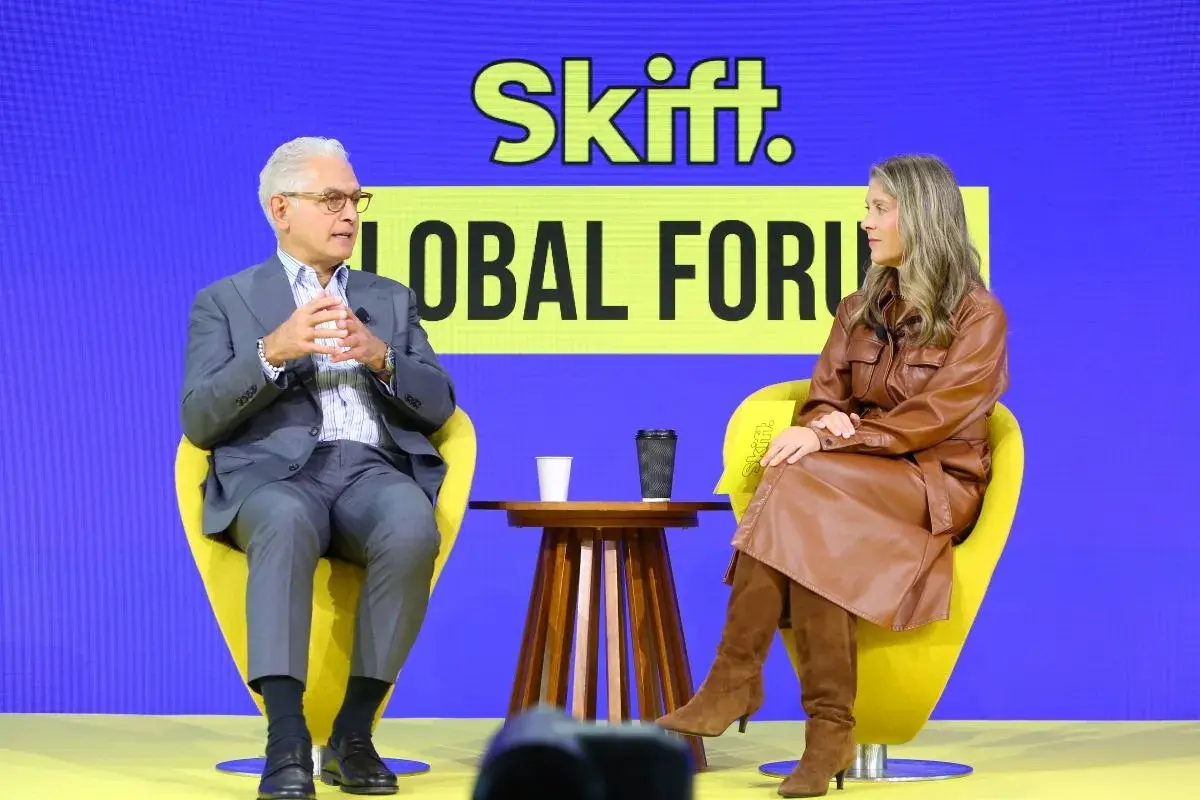
NEW YORK CITY — As friction intensifies across the global hospitality sector regarding escalating hotel brand fees, complex operational costs, and the delicate balance of power between franchise operators and property owners, industry leaders are under immense pressure to justify their value propositions. Amid this backdrop of rising discontent, Hyatt Hotels Corporation Chairman, President, and CEO Mark Hoplamazian took to the stage at the Skift Global Forum in New York City to articulate a radically different approach.
Addressing a packed room of industry peers, investors, and analysts, Hoplamazian argued that Hyatt’s strategy for retaining and satisfying hotel owners is rooted not in corporate deflection, but in a deeply ingrained operational empathy—what he describes quite simply as "an owner’s mindset."
The remarks come at a critical juncture for the hospitality industry. Property owners, private equity firms, and real estate investment trusts (REITs) are increasingly scrutinizing the overhead costs associated with major global hotel chains. From mandatory technology upgrades and frequent brand-mandated renovations to reservation system fees and loyalty program costs, owners are pushing back. They are demanding greater transparency, lower friction, and tangible returns on their investments.

For Hyatt, bridging this divide is existential. By tracing its historical DNA back through decades of asset ownership, Hoplamazian attempted to demonstrate that Hyatt does not merely understand the pain points of hotel ownership—it has historically lived them.
Executive Overview: The High-Stakes Battle Over Hospitality Costs
The modern hotel landscape is characterized by a fundamental tension: hotel brands want to scale rapidly, expand their loyalty ecosystems, and maintain stringent brand standards, while hotel owners bear the capital expenditure, operational overhead, and financial risk of maintaining physical assets. In recent years, this dynamic has birthed a contentious debate. Owners frequently complain that corporate giants are insulated from local market realities, passing down mounting costs while keeping brand fees intact regardless of property-level profitability.
Hoplamazian’s address at the Skift Global Forum served as a direct counter-narrative to this critique. By positioning Hyatt as a brand that "eats its own cooking," the CEO sought to reassure stakeholders that the company’s corporate decisions are filtered through the lens of asset-level profitability.
Key takeaways from Hoplamazian’s address and the broader industry context include:
- The Legacy of Asset Ownership: For nearly seven decades of its nearly 70-year history, Hyatt operated primarily as a heavy asset owner, deeply intertwining its corporate balance sheet with the operational realities of brick-and-mortar hotels.
- Crisis-Tested Agility: The COVID-19 pandemic served as a crucible for Hyatt, forcing the company to radically slash break-even occupancy thresholds across its portfolio through drastic, hands-on operational restructuring.
- Radical Transparency: Rather than guarding its survival playbook, Hyatt took the unprecedented step of sharing its crisis management strategies and cost-cutting methodologies directly with its largest third-party owner, Host Hotels & Resorts.
- The Cultural Imperative: Hoplamazian contends that operational empathy cannot be faked; it requires executive leadership to genuinely understand the daily capital pressures faced by real estate investors.
Detailed Chronology: From Heavy Asset Legacy to Modern Partnership
To understand Hyatt’s current philosophical stance on owner relations, one must examine the historical architecture of the company. Unlike several of its major competitors that evolved primarily as asset-light franchise and management companies from their inception, Hyatt spent the vast majority of its corporate life as an owner-operator.
The Foundation of Asset Ownership
For 67 of Hyatt’s nearly 70 years in existence, the company stood as the preeminent owner of its own hotels. This meant that corporate executives, property-level general managers, and regional directors were all looking at the same financial statements. If a hotel lost money, the corporate entity felt the pain directly on its balance sheet. This structural reality fostered an internal culture where operational decisions were intrinsically tied to asset preservation and yield optimization.
However, as the global hospitality market matured in the late 2000s and 2010s, Wall Street heavily rewarded an "asset-light" business model. Companies that shed their real estate holdings to focus purely on management and franchising enjoyed higher valuations, lower balance-sheet risk, and rapid, capital-free unit growth. Hyatt gradually pivoted toward this asset-light model, spinning off and selling down its real estate portfolio. Yet, according to Hoplamazian, shedding the bricks and mortar did not mean shedding the cultural DNA forged over six decades.
The Crucible of COVID-19
The ultimate test of Hyatt’s owner-centric philosophy arrived in early 2020 with the onset of the COVID-19 pandemic. As global travel ground to an absolute halt, occupancy rates plummeted to single digits, and the global hospitality industry faced an existential threat.
Because Hyatt still maintained significant operational touchpoints and retained the muscle memory of an owner, the pandemic triggered an immediate, all-hands-on-deck survival response. The corporate leadership team did not sit in ivory towers issuing top-down mandates; they rolled up their sleeves alongside property operators to fundamentally rethink how a hotel could function under near-zero revenue conditions.
"We thought that the break-even level for some of our larger hotels was about 43% occupancy," Hoplamazian recalled during his Skift Global Forum address, painting a picture of the initial, grim industry baseline. Under standard operational models, keeping a massive full-service or luxury hotel open below a 43% occupancy rate was considered financial suicide, leading most operators to shutter properties entirely.
Hyatt, however, refused to accept traditional constraints. Driven by the urgent necessity to preserve cash and protect property value, the executive team initiated a radical operational teardown. Every single cost center, labor model, and service workflow was interrogated.
"Within six months, we got it down to 22%," Hoplamazian stated, highlighting a staggering operational turnaround. By aggressively restructuring labor agreements, reimagining food and beverage operations, optimizing energy consumption, and streamlining administrative overhead, Hyatt managed to lower the financial survival threshold of its large-scale hotels by nearly half.
Open-Source Crisis Management: Partnering with Host Hotels
What happened next broke conventional corporate protocol. In moments of severe crisis, large corporations typically guard their proprietary survival strategies as competitive trade secrets, especially when dealing with powerful third-party capital partners.
Instead of keeping its cost-reduction methodologies under lock and key, Hyatt took an unprecedented step. The company invited Host Hotels & Resorts—its largest third-party owner and one of the most prominent lodging real estate investment trusts in the world—directly into its corporate offices. Hyatt laid bare its entire operational playbook, sharing every metric, cost-cutting measure, and structural innovation it had developed during the darkest days of the pandemic.
This move was not merely altruistic; it was a masterclass in strategic alignment. By actively ensuring the financial health and survival of its primary institutional owner, Hyatt cemented a bond of trust that transactional, fee-extracting brand relationships simply cannot replicate.
Supporting Context & Metrics: The Economics of Owner Relations
The tension between hotel brands and hotel owners is rooted in divergent economic incentives. To fully appreciate why Hoplamazian’s message resonates—or where it faces skepticism—one must examine the quantitative realities of the modern hospitality ecosystem.
The Fee Friction
Hotel owners pay significant fees to flag a property under a major global brand. These typically include:
- Initial Application and Franchise Fees: Upfront costs to secure the brand flag.
- Royalty Fees: A continuous percentage of gross room revenues (often ranging from 4% to 6%).
- Marketing and Reservation System Fees: Contributions to the central reservation system (CRS) and global marketing campaigns.
- Loyalty Program Assessments: Costs associated with funding point redemptions and tier benefits within programs like Hyatt’s World of Hyatt.
When macroeconomic conditions tighten—marked by rising interest rates, inflationary construction costs, and plateauing average daily rates (ADR)—every percentage point of fee extraction becomes a battleground. Owners argue that corporate brands are too quick to mandate capital-intensive property improvement plans (PIPs) that disrupt cash flow without guaranteeing a proportional bump in top-line revenue.
Hyatt’s Response Through Empathy
Hoplamazian’s argument addresses this friction at its psychological core. When a brand executive can look an owner in the eye and say, "We know what it feels like to bleed cash from this asset class because we owned thousands of keys ourselves," it disarms adversarial negotiations.
Furthermore, Hyatt’s ability to drive down break-even occupancy to 22% during the pandemic demonstrated that the company’s operational expertise is not just theoretical. It translates directly into lower downside risk for property owners during market downturns. In an industry where black swan events—from pandemics to geopolitical shocks—are an ever-present reality, having an operator capable of engineering extreme operational resilience is a powerful competitive differentiator.
Official Statements & Industry Perspectives
The reception to Hoplamazian’s remarks at the Skift Global Forum highlighted the complex dynamics of modern hospitality leadership. Industry analysts and investment professionals have increasingly pointed to cultural alignment as the single most important factor in long-term brand retention.
"The mindset of being an owner leads you to put yourself in the shoes of an owner, and really understand you have to eat your own cooking every day," Mark Hoplamazian emphasized during his keynote session. This phrase—"eating your own cooking"—has become a rallying cry for executives attempting to prove that their corporate strategies yield positive results not just for Wall Street shareholders, but for Main Street asset managers.
Industry veterans note that while asset-light models have dominated corporate strategy over the past fifteen years, the pendulum may be swinging back toward a more collaborative, empathetic approach to property management. Owners are increasingly voting with their feet, shifting flags when they feel neglected, and demanding seats at the table when brand standards are revised.
Institutional partners who have worked alongside Hyatt point to the Host Hotels collaboration as a watershed moment in brand-owner relations. By treating a major real estate partner as an ally rather than a captive revenue source, Hyatt demonstrated that transparency can yield long-term loyalty that survives even the most volatile market disruptions.
Future Outlook: The Next Era of Brand-Owner Collaboration
As the global hospitality sector looks toward the remainder of the decade, the relationship between hotel groups and real estate owners will continue to evolve under the pressures of technological disruption, labor constraints, and shifting consumer demographics.
Several critical trends will shape this evolution:
- Technology Integration vs. Owner Cost: As artificial intelligence, automated check-in systems, and advanced data analytics reshape hotel operations, brands will face the challenge of implementing costly technological upgrades without alienating owners who must foot the bill. Hyatt’s historical focus on operational efficiency will be tested as it rolls out next-generation guest experience platforms.
- Evolving Loyalty Ecosystems: Loyalty programs remain the lifeblood of major hotel brands, but owners frequently question the true return on investment of funding sprawling reward networks. Bridging this gap will require brands to prove that loyalty members drive higher direct bookings and spend more freely on property-level ancillary services (food, beverage, and spa).
- The Rise of Flexible Management Models: Traditional rigid long-term management contracts are increasingly giving way to more flexible, performance-based agreements. Brands that can prove their operational acumen—much like Hyatt did by slashing break-even thresholds during the pandemic—will be best positioned to win new management and franchise contracts in an increasingly competitive landscape.
- Cultural Authenticity Over Corporate Rhetoric: As Hoplamazian noted, owners can easily spot hollow corporate messaging. The hospitality groups that thrive in the coming years will be those that genuinely integrate owner perspectives into their daily decision-making processes, ensuring that corporate growth does not come at the expense of asset-level health.
Conclusion
Mark Hoplamazian’s appearance at the Skift Global Forum was more than a retrospective look at pandemic-era survival; it was a deliberate articulation of corporate philosophy in an era of heightened owner skepticism. By anchoring Hyatt’s identity in its 67-year history of asset ownership and highlighting its willingness to share crisis playbooks with institutional partners like Host Hotels, Hyatt is attempting to carve out a distinct identity: a global hospitality leader that refuses to lose touch with the hard, daily realities of holding the keys.
Whether this owner-centric mindset will be enough to completely insulate Hyatt from broader industry fee friction remains to be seen. However, by publicly acknowledging that hospitality success begins with "eating your own cooking," Hyatt has set a high standard for empathy, transparency, and operational partnership in a rapidly changing world.