Executive Overview
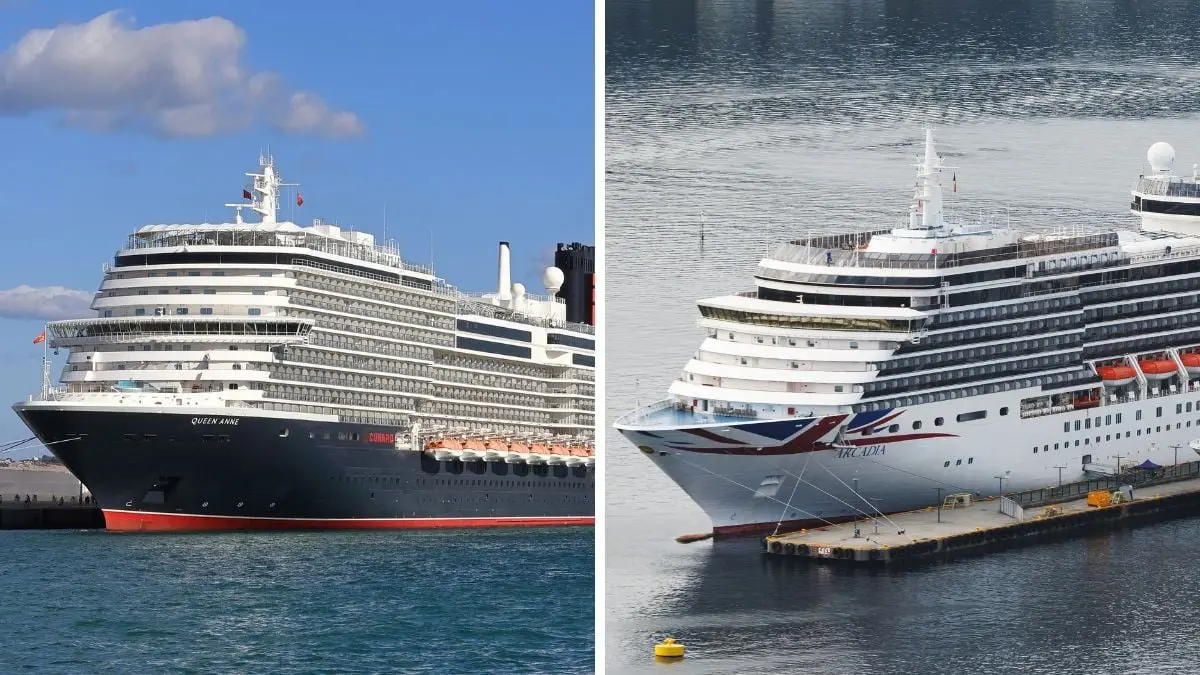
In a strategic operational maneuver that underscores the agility of multi-brand cruise conglomerates, Carnival Corporation & plc has announced a significant fleet realignment involving three of its premier operating lines: Holland America Line, P&O Cruises, and Cunard. Set to take place in 2029, this high-profile corporate reshuffle will see the 83,781-gross-ton Arcadia transition from P&O Cruises to Holland America Line, expanding the latter’s fleet from 11 to 12 vessels. Simultaneously, Cunard’s relatively young 113,000-gross-ton Queen Anne will be transferred to P&O Cruises following an extensive, multi-million-dollar redesign and a comprehensive rebranding process.
This complex series of vessel reassignments is far more than a simple corporate shell game; it represents a deeply considered alignment of assets designed to optimize guest capacity, streamline brand identities, and amplify ongoing multi-million-dollar capital investments across the parent company’s portfolio. For Holland America Line, the arrival of Arcadia serves as a poignant historical homecoming nearly three decades in the making, while providing over 2,000 additional guest berths and boosting operational flexibility. For Cunard, the departure of the Queen Anne in mid-2029 consolidates its operations into a tightly integrated, highly uniform three-ship fleet comprising the Queen Mary 2, Queen Victoria, and Queen Elizabeth. Meanwhile, P&O Cruises absorbs a modern, high-capacity flagship that seamlessly bridges the gap left by its outgoing tonnage.
Crucially, Carnival Corporation has emphasized that guest impact will be entirely neutralized during this transition phase. All currently published itineraries for both Arcadia and Queen Anne leading up to their respective 2029 handovers will operate precisely as scheduled. This comprehensive report delves into the intricate historical backdrop of these vessels, the financial and structural contexts driving the decisions, the official statements from corporate leadership, and a forward-looking analysis of what this multi-brand pivot means for the global cruise market.
Detailed Chronology: The Fascinating History and Eventual Realignment of Arcadia
To fully grasp the significance of Arcadia joining the Holland America Line fleet in 2029, one must look back nearly three decades to the ship’s genesis. The vessel’s journey through the maritime world is a rare and compelling tale of shifting corporate priorities, shipyard designs, and brand reallocations.
A Ship Comes Home After Nearly Thirty Years
Originally ordered in the year 2000 by Holland America Line, the ship was conceived as part of the highly successful Vista Class platform. However, as the corporate strategies of the newly formed Carnival Corporation (following the 2003 merger of Carnival Corporation and P&O Princess Cruises) evolved, leadership opted to reassign the hull during construction. The vessel was initially earmarked for Cunard Line, where it was scheduled to debut under the iconic name Queen Victoria.
Before that iteration could come to fruition, plans shifted once again. The ship was ultimately transferred to P&O Cruises, officially entering service for the British brand in 2005 as the Arcadia. For nearly a quarter of a century, Arcadia has served as a cornerstone of the P&O Cruises fleet, operating primarily as an adults-only haven known for its classic styling and loyal British following.
When Arcadia officially transfers to Holland America Line in 2029, the event will mark a poetic, full-circle moment: the ship will finally join the brand for which it was originally commissioned, nearly thirty years after its blueprints were first drawn. Because it shares its underlying Vista Class architecture with existing Holland America favorites—such as the Oosterdam, Noordam, Westerdam, and Zuiderdam—the vessel requires virtually no retraining of operational paradigms regarding engineering, spatial flow, and structural layout. It is, by all accounts, a tailor-made fit.
The Evolution Program and the 2029 Conversion
The transition of Arcadia is not merely a change of flag and funnel paint; it is tightly coupled with Holland America Line’s multi-year, multi-million-dollar fleet modernization initiative known as the "Evolution program." First unveiled by Cruise Hive in April 2026, this $500 million overarching capital investment was designed to comprehensively overhaul the line’s ships from bow to stern, elevating the onboard product to meet contemporary luxury expectations while retaining the classic elegance for which the brand is celebrated.
Initially, the Evolution program targeted six specific vessels: the Oosterdam, Zuiderdam, Westerdam, Noordam, Nieuw Amsterdam, and Eurodam. The scope of these overhauls includes the introduction of cutting-edge dining venues, expanded specialty restaurants, upgraded and redesigned staterooms, and the incorporation of popular Pinnacle Class features—such as enhanced entertainment spaces and modern public rooms.
Before hoisting the Holland America flag in 2029, Arcadia will undergo an extensive dry-dock transformation aligned with the Evolution program. While corporate executives have yet to release a granular room-by-room breakdown of which specific upgrades will be installed, industry analysts anticipate a complete interior overhaul to bring its staterooms, culinary spaces, and public lounges up to the exacting standards of the modernized Holland America fleet.
Queen Anne: From Cunard Flagship to P&O Cruises Mainstay
At the other end of this corporate exchange is the Queen Anne, a Pinnacle Class vessel that made waves across the industry when it officially entered service for Cunard Line in 2024. Spanning 113,000 gross tons and boasting a guest capacity of approximately 3,000 passengers, the ship shares its underlying platform with Holland America Line’s modern vessels, including the Koningsdam, Nieuw Statendam, and Rotterdam.
Despite its modern amenities, striking interior design, and immediate popularity among luxury travelers, Queen Anne will embark on its final deployment for Cunard through its 2028/29 World Voyage, which kicks off in January 2029. Following the conclusion of this epic global journey, the vessel will be temporarily withdrawn from service for an extensive architectural reimagining and renaming process. It is scheduled to officially re-emerge under the P&O Cruises banner in May 2029, filling the capacity and operational footprint left by the departure of Arcadia.
Supporting Context & Metrics: Fleet Dynamics and Economic Strategy
To understand the macro-economic forces propelling this strategic reshuffle, one must examine the broader metrics governing Carnival Corporation’s expansive global fleet. Managing a portfolio that spans dozens of cruise lines requires a delicate balance of capacity allocation, regional yield optimization, and brand positioning.
Fleet Expansion and Passenger Capacity Metrics
| Vessel Name | Current Operator | Future Operator | Transfer Year | Gross Tonnage | Passenger Capacity | Platform / Class |
|---|---|---|---|---|---|---|
| Arcadia | P&O Cruises | Holland America Line | 2029 | 83,781 GT | ~2,000+ | Vista Class |
| Queen Anne | Cunard Line | P&O Cruises | 2029 | 113,000 GT | ~3,000 | Pinnacle Class |
The acquisition of Arcadia expands Holland America Line’s active fleet from 11 to 12 ships. In an era where cruise lines are constantly seeking economies of scale while retaining intimate service levels, adding a proven, mid-sized platform allows Holland America to inject over 2,000 additional passenger berths into its inventory without the multi-billion-dollar capital expenditure required to commission a brand-new custom build. Furthermore, having a twelfth ship provides crucial deployment flexibility, enabling the line to expand its footprint in lucrative seasonal markets such as Alaska, Europe, and the Caribbean, or to pioneer new itineraries previously constrained by fleet size.
Conversely, P&O Cruises stands to benefit enormously from absorbing the Queen Anne. As the UK’s premier cruise line, P&O caters to a massive domestic market with a distinct appetite for contemporary mega-ships. While Arcadia has served its purpose admirably as an adults-only boutique option, the introduction of the significantly larger Queen Anne (re-branded and redesigned to suit P&O’s specific demographic preferences) injects substantial capacity and modern amenities into the fleet, cementing the brand’s dominance in the British cruise sector.
Cunard’s Strategic Retrenchment and Fleet Cohesion
For Cunard Line, parting ways with the Queen Anne might at first glance appear counterintuitive for a brand that just welcomed the ship to its fleet in 2024. However, a deeper examination reveals a calculated strategy of fleet rationalization and brand purity.
Following the 2029 transfer, Cunard will operate a streamlined, highly cohesive three-ship fleet comprising:
- RMS Queen Mary 2 (The legendary ocean liner)
- MS Queen Victoria (Vista Class)
- MS Queen Elizabeth (Vista Class)
According to Carnival UK, P&O Cruises, and Cunard President Paul Ludlow, this streamlined collection of vessels represents a powerful crystallization of the brand’s core identity. Rather than managing a disparate collection of disparate designs, Cunard will operate a tightly curated fleet where every single ship effortlessly channels the heritage, timeless style, and formal elegance synonymous with the Cunard name.
Before this transition takes place, Queen Anne will participate in a historic milestone for the company: Cunard’s unprecedented "Four Queens" celebration in Liverpool in May 2028. This momentous gathering will mark the first and potentially only time in maritime history that all four contemporary Cunard Queens (Queen Mary 2, Queen Victoria, Queen Elizabeth, and Queen Anne) assemble side-by-side in a single port, offering a spectacular curtain call for the ship before its eventual transfer to P&O Cruises.
Official Statements and Leadership Perspectives
Corporate transparency during major asset realignments is critical to maintaining consumer confidence and stakeholder trust. Executives from Carnival Corporation and its regional operating brands have stepped forward to articulate the vision behind the 2029 fleet shuffle.
Beth Bodensteiner, President of Holland America Line, emphasized the natural synergy of welcoming Arcadia into the fold and how it ties directly into the brand’s historic multi-million-dollar upgrade cycle:
"As a Vista Class ship, she is a natural fit and an exciting extension of Holland America Evolution, the largest guest experience transformation in our 153-year history," said Bodensteiner.
Her sentiments highlight the operational advantages of introducing a vessel that utilizes familiar engineering architectures, drastically reducing the learning curve for marine engineers, hotel directors, and culinary teams alike.
Paul Ludlow, President of Carnival UK, P&O Cruises, and Cunard, addressed the structural consolidation from the British brand perspective, emphasizing how the streamlined Cunard fleet will reinforce the line’s storied heritage:
"Each [ship] has a deeply established identity and embodies the timeless style, heritage and sense of occasion that guests around the world most closely associate with Cunard," noted Ludlow.
By framing the departure of Queen Anne as a refinement rather than a loss, leadership has successfully positioned the move as a reinforcement of Cunard’s ultra-luxurious, traditional positioning, while simultaneously equipping P&O Cruises with a state-of-the-art platform tailored to the modern British cruiser.
Future Outlook: Operational Continuity and Market Implications
As the cruise industry looks ahead to the remainder of the decade, operational seamlessness remains the paramount concern for both corporate planners and loyal passengers. The announcement of these 2029 transfers has raised immediate questions regarding existing bookings, future deployment maps, and the broader competitive landscape.
Seamless Operational Continuity for Guests
One of the most critical logistical hurdles during any corporate fleet reshuffle is the management of existing passenger reservations. Carnival Corporation has moved swiftly to quell any consumer anxiety. Company representatives have explicitly confirmed that guests with existing bookings on either Arcadia or Queen Anne will experience zero disruption to their scheduled vacations.
All currently published itineraries, shore excursions, and promotional commitments for both vessels leading up to their respective 2029 transfer dates will operate exactly as planned. This unwavering commitment to guest continuity ensures that repeat cruisers can look forward to their upcoming sailings without fear of sudden cancellations, route alterations, or booking invalidations. Once the ships complete their respective handovers, dry docks, and re-branding phases, they will seamlessly integrate into their new operational calendars under their new respective flags.
The Broader Impact on the Global Cruise Industry
The 2029 fleet shuffle orchestrated by Carnival Corporation serves as a masterclass in modern asset optimization. By capitalizing on internal platform similarities—such as the widespread operational efficiencies of the Vista Class design—the corporation is able to redistribute capacity precisely where market demand is strongest.
- Holland America Line gains an immediate capacity boost of over 2,000 berths, anchored by a vessel that requires no new engineering paradigms, perfectly timed to coincide with the culmination of its $500 million Evolution fleet overhaul.
- Cunard Line achieves a lean, highly focused three-ship luxury fleet that eliminates structural redundancies and sharpens its brand identity around timeless ocean liner heritage.
- P&O Cruises secures a modern, high-capacity flagship asset in the Queen Anne, ensuring its continued dominance in the rapidly growing British cruise vacation market.
Ultimately, this strategic maneuver illustrates the immense power of a multi-brand corporate parentage. By fluidly shifting multi-million-dollar maritime assets across internal brand boundaries, Carnival Corporation continues to future-proof its global operations, maximizing shareholder value while delivering tailored, elevated experiences to millions of cruise passengers worldwide. As the maritime world counts down to 2029, the industry will undoubtedly watch closely as these iconic vessels embark on their next historic chapters.