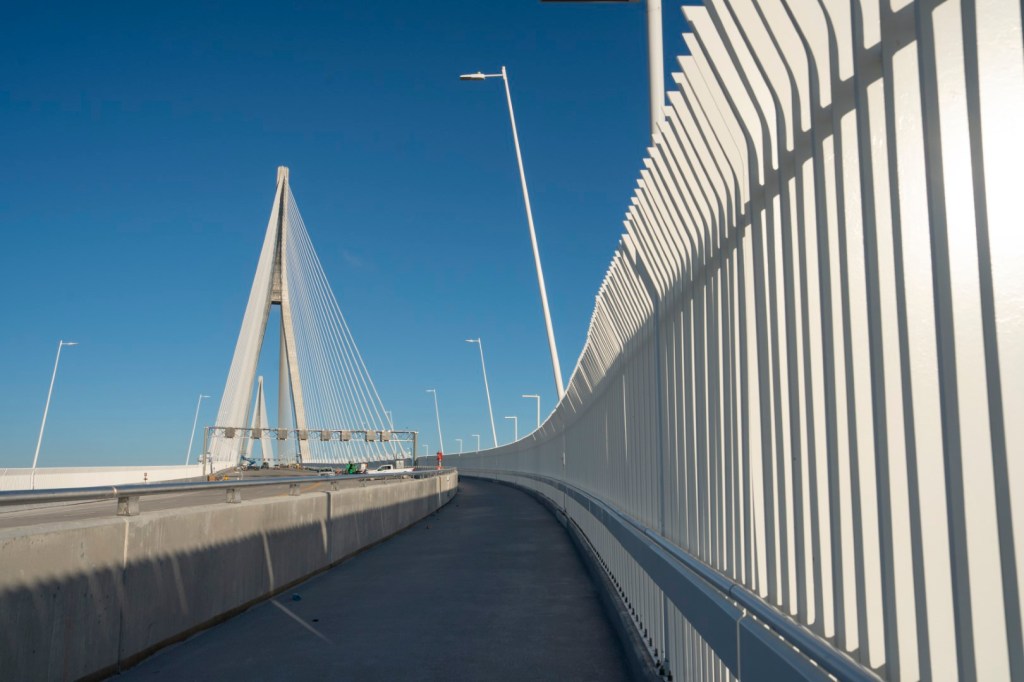
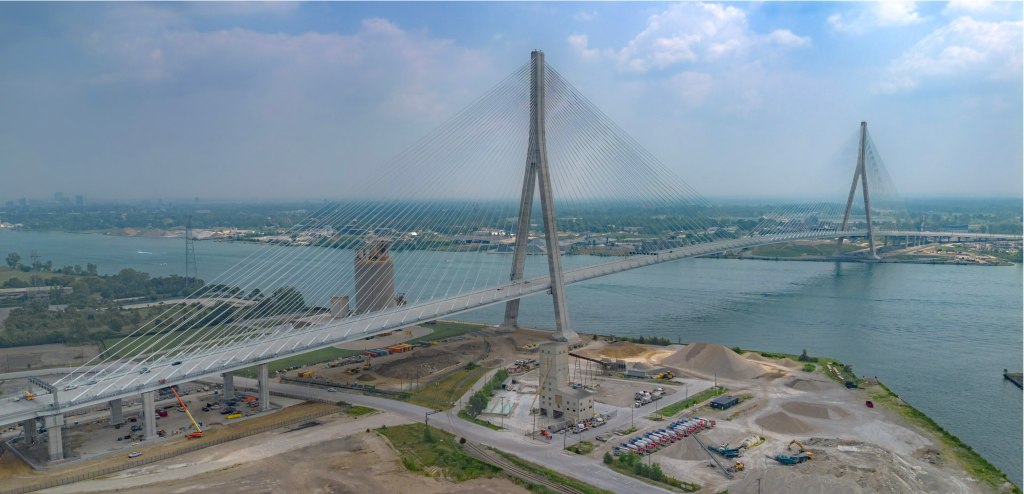
The grand opening of the pedestrian and bicycle path on the Gordie Howe International Bridge on August 5 marked a monumental achievement in cross-border infrastructure, urban planning, and international diplomacy. Spanning the Detroit River to connect Detroit, Michigan, and Windsor, Ontario, this magnificent 1.5-mile cable-stayed bridge now features a dedicated 12-foot-wide non-motorized pathway. This path stands as one of the very few active transportation crossings between the United States and Canada.
While motorists face tolls to navigate the main span, access to the pedestrian and bike lane remains entirely free and open to the public year-round. This design choice champions equitable mobility and regional connectivity.
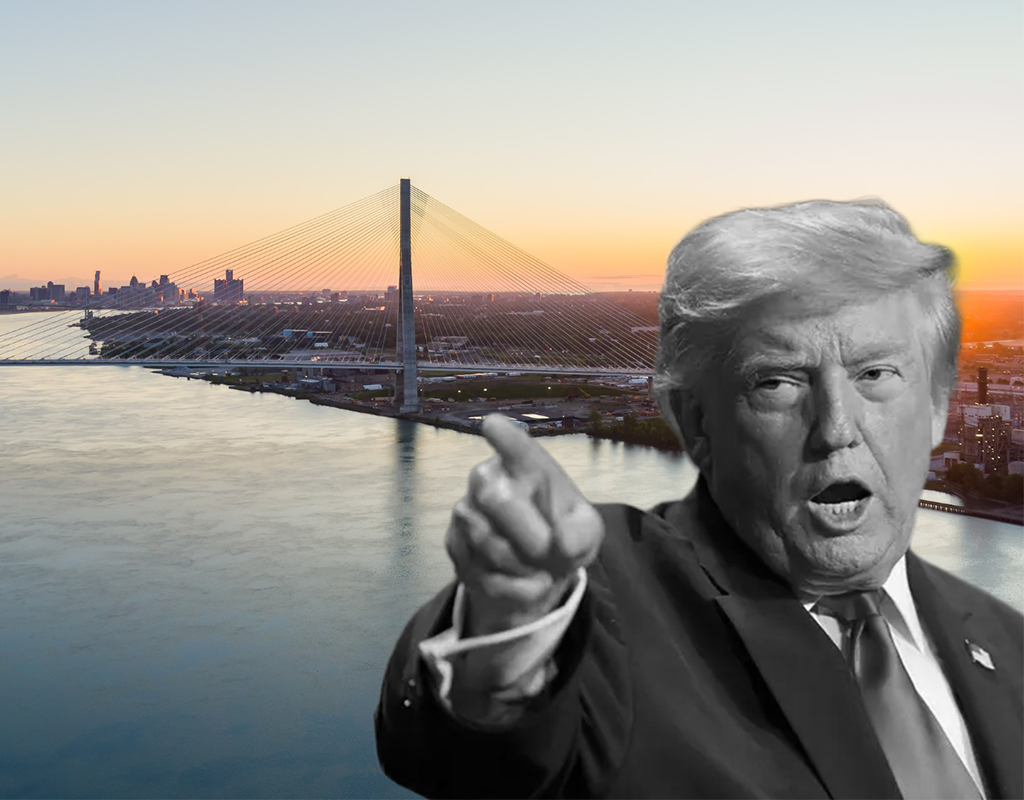
Yet, the path to this historic opening was far from straightforward. The inauguration of the non-motorized lane—occurring just nine days after the bridge itself opened—unfolded against a backdrop of intense geopolitical friction. Throughout the year, then-President Donald Trump leveraged the bridge’s opening in broader trade disputes and deteriorating bilateral relations, successfully delaying the debut by a month and prompting the Canadian government to disinvite U.S. officials from the ribbon-cutting ceremonies.
Despite this high-stakes political theater, the appetite for cross-border active transportation proved unstoppable. On opening day alone, over 3,400 visitors flooded the path, overwhelming officials who temporarily restricted access to manage the unprecedented crowds. For local advocates, residents, and urban planners on both sides of the border, the bridge is far more than a civil engineering marvel; it is a long-sought-after catalyst for neighborhood revitalization, regional tourism, and international reconciliation.
Detailed Chronology: From Concept to Crossing
The realization of the Gordie Howe International Bridge’s pedestrian and cycling infrastructure is the culmination of nearly two decades of grassroots persistence, strategic advocacy, and complex binational negotiations.
The Seeds of Advocacy (2009–2015)
The vision for a non-motorized crossing across the Detroit River began taking shape around 2009. At the time, the Gordie Howe International Bridge—named in honor of the legendary Canadian-born Detroit Red Wings hockey icon—was little more than a hypothetical concept debated by regional planners.
When the Canadian government first initiated public consultations regarding the bridge’s design parameters, planners received a resounding message from the communities on both shores. The two most frequent requests submitted by the public were straightforward yet ambitious: dedicated lanes for walking and cycling. Todd Scott, executive director of the Detroit Greenways Coalition, and Lori Newton, then-executive director of Bike Windsor Essex, stepped forward to champion this cause, establishing a cross-border advocacy partnership that would span nearly twenty years.
As construction commenced and the soaring towers of the cable-stayed bridge began to dominate the Detroit-Windsor skyline, the project faced standard engineering hurdles compounded by unprecedented geopolitical headwinds.
Throughout early 2026, political tensions flared. President Trump utilized the bridge as a strategic pressure point in ongoing U.S.-Canada trade negotiations, publicly threatening to stall its debut. These maneuvers successfully delayed the opening ceremonies by approximately one month. Relations grew sufficiently strained that the Canadian government—which financed the entirety of the bridge project—ultimately disinvited U.S. officials from the official opening events.
Opening Week Triumphs (August 2026)
The vehicular span opened to traffic in late July 2026, followed eagerly by the pedestrian and bicycle path on August 5. The public response defied all expectations. More than 3,400 pedestrians and cyclists traversed the span on its inaugural day, creating congestion so significant that bridge operators had to temporarily halt entry to manage the crowd safely.
Chris Palmer, one of the thousands of opening-day visitors, encapsulated the public sentiment:
"It is quite the game-changer. It is… a remarkable political phenomenon. It was a great experience."
Supporting Context & Metrics: Infrastructure and Integration
The Gordie Howe Bridge’s non-motorized path does not exist in a vacuum; it serves as the crown jewel in a rapidly expanding network of regional greenways and active transportation corridors designed to transform the post-industrial landscapes of Detroit and Windsor.
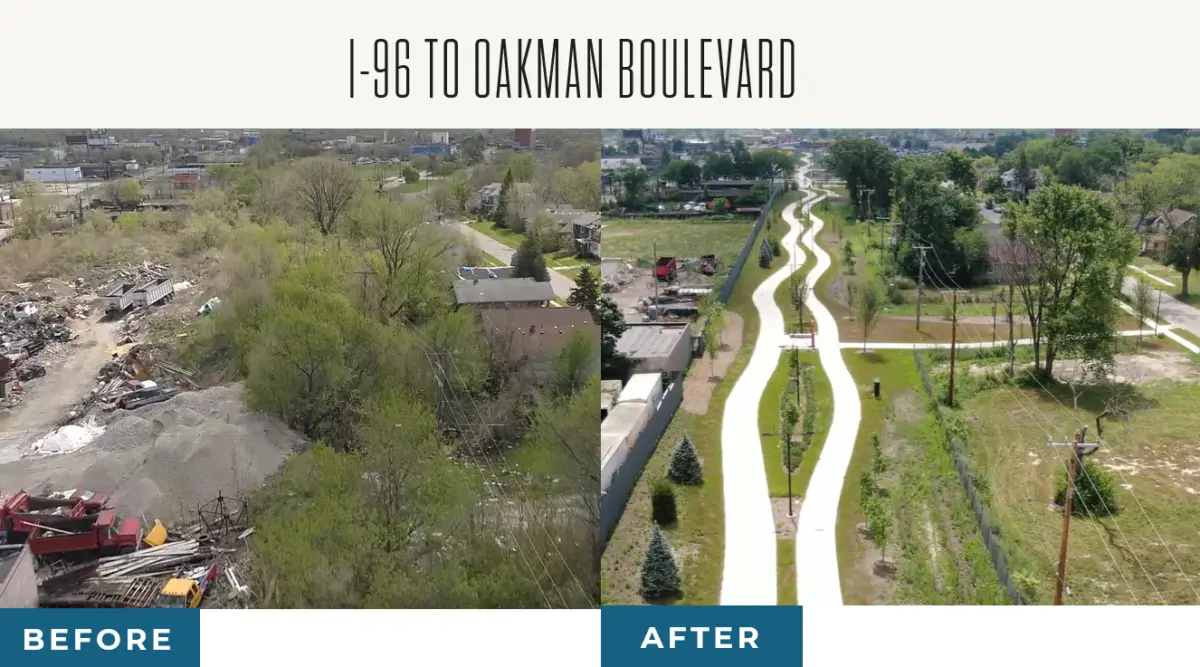
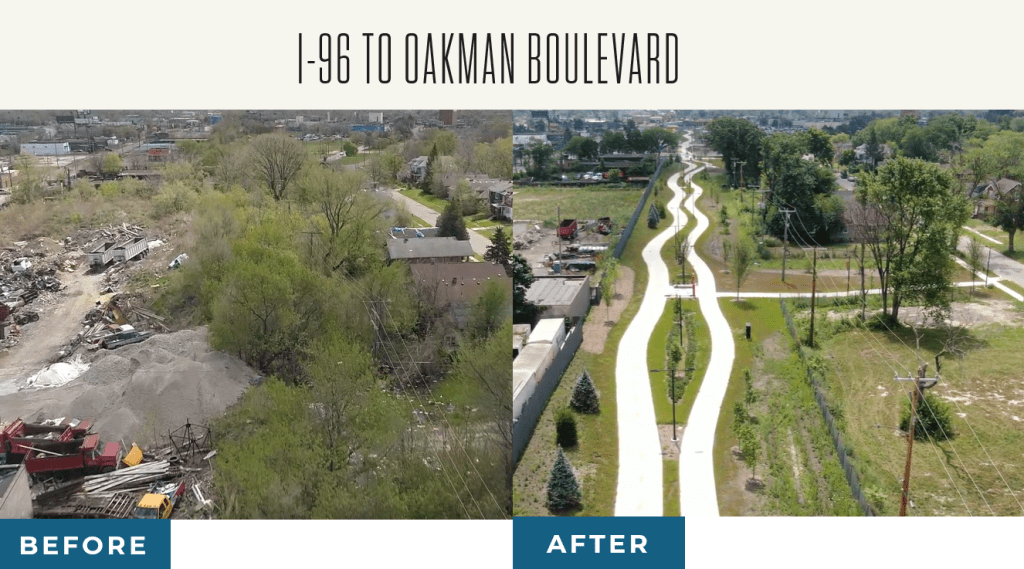
To maximize the utility of the new international crossing, the city of Detroit has aggressively invested in connecting infrastructure. Chief among these is the Joe Louis Greenway, an ambitious urban trail project that will eventually encircle the city with nearly 30 miles of continuous, car-free routing upon its completion in the early 2030s.
By the end of 2026, an additional six miles of the greenway are slated to open, establishing a direct, seamless connection to the American anchorage of the Gordie Howe Bridge. Todd Scott has rightly characterized this initiative as "one of the most important urban trail projects in the country." Cyclists exiting the bridge can plug directly into these protected networks, unlocking destinations across Detroit without ever interacting with heavy vehicular traffic.
On the Windsor Side: Waterfront Revitalization
Across the river in Ontario, Bike Windsor Essex and local municipal leaders have similarly transformed the city’s waterfront. Protected bike lanes, multi-use paths, and scenic trails now thread through neighborhoods that were once entirely car-centric. Lori Newton noted that the integration of the bridge path fundamentally alters "the whole view and the whole feeling of the neighborhoods that it goes through."
Economic and Engineering Realities
Financed entirely by the Canadian government, the bridge required a compelling business case rather than a partisan battle to secure its multi-use path. Regional business leaders and municipal politicians—initially skeptical of non-motorized infrastructure—were won over by data demonstrating the economic vitality of active tourism and regional connectivity.
While drivers must pay a toll to cross the 1.5-mile span, the pedestrian and cycle path remains permanently free. This inclusive pricing model ensures that the bridge serves all socioeconomic strata, bridging not only two nations but also economic divides.
Official Statements and Advocate Perspectives
The emotional and cultural resonance of the bridge cannot be overstated. For the advocates who fought for two decades to see a footpath included in the designs, the opening day was deeply personal.
Lori Newton reflected on the journey, noting the bittersweet nature of the opening following the recent passing of her cyclist husband, a passionate advocate who worked alongside her for years:
"He would be so excited that I was going up there for a ride with Todd."
Newton emphasized that the path redefines regional perceptions of cycling:
"Cycling is more than 20 guys in Lycra on bikes zooming past. It changes the whole view and the whole feeling of the neighborhoods that it goes through."
Todd Scott echoed these sentiments, marveling at the aesthetic and structural achievement of the crossing:
"You’re riding over a piece of art. It just looks stunningly beautiful. This is a once-in-a-generation opportunity."
Reflecting on the collaborative process of designing the crossing, Newton observed the pragmatic approach taken by Canadian planners and stakeholders:
"There wasn’t a fight… it was building a business case."
Future Outlook: A New Era for the Great Lakes Region
As the dust settles on the opening-week crowds, urban planners, tourism boards, and residents are turning their attention toward the long-term horizons unlocked by the Gordie Howe International Bridge.
Healing Binational Relations
The completion of the bridge—and particularly its accessible, shared public space—provides a powerful antidote to the border friction that has characterized U.S.-Canada relations in recent years. Following the heightened security measures implemented after the September 11 attacks, the deep organic ties between Detroit and Windsor experienced decades of strain. By offering a direct, human-scale connection between the two downtowns, the bridge invites citizens to bypass geopolitical posturing and experience their neighbor city firsthand.
Expanding Mobility and Tourism
Looking forward, advocates anticipate a surge in cross-border active tourism. Weekend cyclists, international commuters, and families are expected to utilize the path to explore cultural events, parks, and culinary scenes on both sides of the river. Furthermore, the accessibility of the path opens new doors for seniors and mobility-impaired individuals seeking safe, barrier-free ways to remain active and connected.
The Detroit Greenways Coalition has already published comprehensive online mapping tools (available via platforms like detroitgreenways.org and map.detroitgreenways.org) to guide travelers safely from the bridge deck into local bike lanes and green spaces.
As the Joe Louis Greenway in Detroit continues its phased rollout toward a total 30-mile completion in the 2030s, the Gordie Howe Bridge will function not as a terminal border checkpoint, but as a dynamic portal linking two great North American nations through sustainable, joyful, and people-first transportation.