










Executive Overview
San Juan’s dynamic and rapidly evolving culinary landscape has welcomed back a familiar name with an entirely new identity. Tras-Patio, a fixture of the local dining scene since its original debut in 2010, has officially reopened its doors in the bustling Hato Rey neighborhood following a sweeping, multi-faceted transformation. Spearheaded by chef, owner, and certified sommelier Javier Nassar, the newly reincarnated establishment drops its former skin to emerge as an upscale, globally influenced steakhouse deeply rooted in Puerto Rican heritage.
The resurrection of Tras-Patio is far more than a simple menu update; it represents a comprehensive reimagining of space, concept, and philosophy. Blending classical techniques acquired through an illustrious international career spanning Miami, Vienna, and various culinary capitals across Europe, Nassar has crafted a dining destination that bridges the gap between traditional Caribbean comfort food and high-end international gastronomy. Situated in Hato Rey—a district traditionally recognized as San Juan’s financial core rather than its primary tourism hub—the revitalized Tras-Patio signals a broader geographical expansion of the city’s world-class dining offerings.
At its core, the new Tras-Patio is an intimate reflection of Nassar’s life work, punctuated by decades of rigorous professional training and deeply personal touches. From a meticulously curated wine program that leverages his certification with the United States Sommelier Association to a striking dining room mural featuring handwritten heirloom recipes from his mother and grandmothers, the restaurant offers an immersive sensory experience. As San Juan continues to cement its reputation as the gastronomic heartbeat of the Caribbean, Tras-Patio stands as a testament to reinvention, proving that legacy institutions can successfully redefine themselves to meet the sophisticated palates of modern travelers and local epicures alike.
Detailed Chronology: From Humble Beginnings to a Grand Transformation
To truly understand the weight of Tras-Patio’s current incarnation, one must examine the chronological arc of its creator and the physical space it occupies. The journey of Chef Javier Nassar is one defined by academic rigor, international exploration, and an eventual, purposeful return to his island roots.
The Formative Years and Global Training
Long before conceptualizing the new Tras-Patio, Nassar laid the groundwork for his culinary philosophy through formal education and elite professional placements. He enrolled in the esteemed culinary arts program at Johnson & Wales University, where he mastered the foundational mechanics of professional kitchen operations. Eager to expand his repertoire beyond domestic borders, Nassar subsequently sought out rigorous international postings.
His career trajectory led him to the historic Biltmore Hotel in Coral Gables, Florida. There, he immersed himself in the exacting standards of Mediterranean and classic French cuisine. Beyond his duties on the line, Nassar took on the role of a culinary instructor for the hotel’s exclusive wine club, a position that foreshadowed his later specialization in beverage pairings.
Seeking further exposure to European gastronomy, Nassar relocated abroad, staging and working in high-end kitchens in Vienna, Austria, and orchestrating elite hospitality events across multiple European countries. These experiences exposed him to diverse preservation techniques, complex sauce work, and distinct regional dining cultures. Upon returning to the United States, he honed his craft at The Forge in Miami, a legendary institution known for its opulent atmosphere and demanding culinary standards.

The 2010 Debut and the Path to Reinvention
Armed with a wealth of international knowledge and a certified sommelier credential from the United States Sommelier Association, Nassar returned permanently to Puerto Rico. In 2010, he opened the original iteration of Tras-Patio, establishing it as a reliable neighborhood gathering space. For well over a decade, the restaurant served its community faithfully, carving out a niche in San Juan’s competitive culinary ecosystem.
However, the post-pandemic dining climate demanded evolution. Recognizing shifting consumer preferences and eager to apply the accumulated wisdom of a 20-year career, Nassar made the bold decision to shutter the original concept. He initiated a complete physical and conceptual overhaul of the property. The months of closure involved gutting the interior, redesigning the kitchen workflow to accommodate a high-end steakhouse program, and conceptualizing an entirely new menu architecture. In June, Tras-Patio made its triumphant return, trading its old identity for a sophisticated, multifaceted steakhouse concept that redefines Hato Rey’s culinary identity.
Supporting Context & Metrics: The Gastronomic Ecosystem of San Juan
The grand reopening of Tras-Patio does not occur in a vacuum; it is part of a larger, highly dynamic evolution taking place across Puerto Rico’s capital. San Juan’s food and beverage sector has experienced an unprecedented renaissance, characterized by adventurous new concepts, a surge in boutique hotel openings, and a decentralization of fine dining away from traditional tourist hotspots like Old San Juan and Condado.
Decentralizing the Capital’s Culinary Scene
For decades, culinary tourism in San Juan was hyper-concentrated within a few coastal neighborhoods. Today, however, districts like Hato Rey and Santurce are emerging as independent epicurean hubs. Hato Rey, historically dominated by banking institutions, corporate offices, and legal firms, is undergoing a residential and lifestyle transformation. By anchoring Tras-Patio in this bustling commercial sector, Nassar is tapping into a burgeoning local demographic of professionals and residents who demand exceptional dining options close to home, without needing to venture toward the beachside tourist corridors.
This localized expansion mirrors broader trends across San Juan. The capital’s food scene has welcomed innovative concepts at a rapid clip, including high-profile openings such as DANTE, a sleek rooftop lounge in Condado that has quickly become a nightlife and cocktail hotspot. Together, these venues contribute to a vibrant, multi-layered gastronomic economy where international travelers and locals alike view food and drink as the primary vehicles for cultural exploration.
The Economics of Wine and Beverage Integration
A defining metric of modern fine dining success in San Juan is the sophistication of its beverage programs. No longer treated as an afterthought, wine and artisanal mixology are central revenue and experiential drivers. According to hospitality industry analysts, establishments that feature dedicated, certified sommelier oversight enjoy significantly higher average guest checks and extended table turnover times due to prolonged beverage engagement.
Nassar’s dual expertise as both a chef and a certified sommelier positions Tras-Patio advantageously within this economic landscape. By integrating a meticulously curated wine program directly into the DNA of a steakhouse—where robust proteins naturally demand complex tannins and structured acidity—the restaurant elevates the dining experience while maximizing per-cover profitability. Furthermore, the inclusion of a dedicated bar lounge and a bespoke cocktail menu captures the lucrative pre- and post-dinner drinking trade, catering to Hato Rey’s corporate crowd looking for high-end networking and relaxation spaces.
Official Statements and Culinary Philosophy
The philosophy guiding the new Tras-Patio is articulated best through the vision of its creator. Chef Javier Nassar has been remarkably transparent about the emotional and professional motivations driving the restaurant’s radical transformation.
Bridging Hemispheres on the Plate
"Tras-Patio has always been a reflection of my life, but this new chapter needed to represent who I am today," Nassar explains regarding the transition. "Working across Miami, Vienna, and various parts of Europe taught me discipline, technique, and flavor pairing. But my roots, my palate, and my heart have always belonged to Puerto Rico. Bringing those worlds together in a steakhouse format felt like the natural evolution of my career."
The culinary approach avoids the clichés of fusion cuisine, opting instead for a respectful dialogue between global techniques and local soul. "A steakhouse is traditionally viewed as an American institution, but the soul of a great meal is universal," Nassar notes. "By taking prime cuts of meat and infusing them with the comforting, vibrant seasoning of Puerto Rican home cooking—while utilizing French sauces and Mediterranean seafood preparations—we are offering something entirely unique to San Juan."
Preserving Family Legacy Through Design
Perhaps the most poignant statements regarding the restaurant’s new identity are not spoken, but displayed upon the dining room walls. The physical space serves as a living museum of Nassar’s familial lineage.
"For years, we had boxes of handwritten index cards and notebooks belonging to my grandmothers, Alexandra and Herminia, and my mother, Hylsa, tucked away in closets," Nassar shares. "These weren’t just recipes; they were the emotional roadmap of our family. When we decided to rebuild Tras-Patio, I knew I wanted their handwriting to be the literal backdrop of the restaurant. When guests sit in our dining room, they aren’t just tasting my food—they are stepping directly into my family’s history."
Future Outlook: What’s Next for Tras-Patio and Hato Rey
As Tras-Patio settles into its first year of operation under its new banner, the outlook is overwhelmingly positive. The restaurant has successfully captured the attention of local food critics, regional travelers, and Hato Rey professionals, establishing itself as a cornerstone of the neighborhood’s ongoing revitalization.
Setting a New Benchmark for Regional Steakhouses
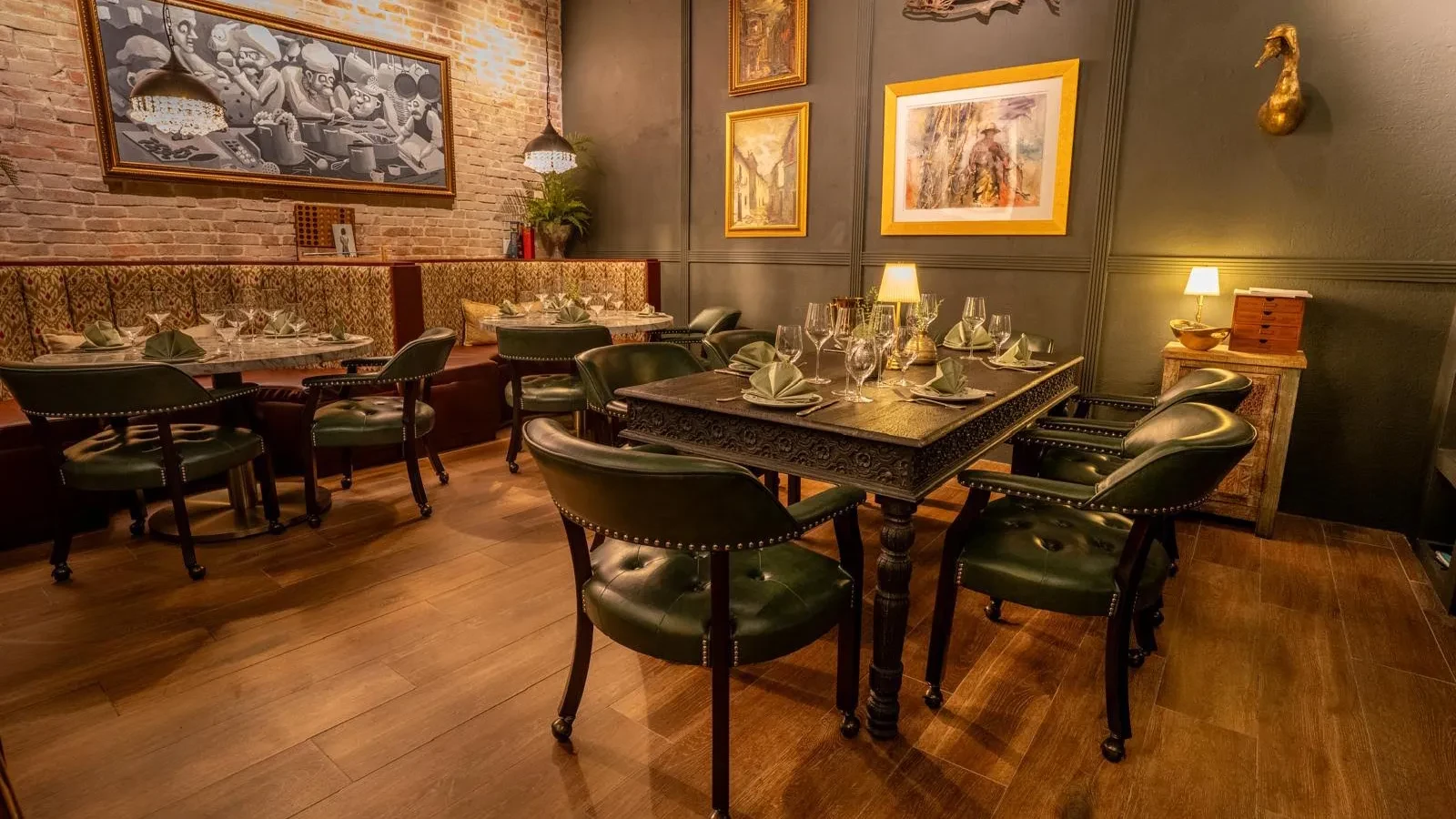
Looking forward, Tras-Patio is poised to influence how steakhouses operate within the Caribbean. By refusing to rely on imported tropes of dark, wood-paneled American steak joints, Nassar has pioneered a lighter, more vibrant paradigm. The integration of breezy, tropical elements, warm lighting, plush upholstered banquettes, and contemporary artwork creates an environment that feels both luxurious and intimately connected to its island setting.
Plans for the future include seasonal menu rotations that highlight micro-seasons in Puerto Rican agriculture, expanding the sommelier-led wine dinner series, and introducing bespoke cocktail-pairing menus designed to showcase local spirits like artisanal rums. As Hato Rey continues to grow as a residential and lifestyle destination, Tras-Patio stands ready to anchor the neighborhood’s evening economy.
A Beacon for Culinary Entrepreneurship in Puerto Rico
Ultimately, the story of Tras-Patio’s rebirth is a microcosm of Puerto Rico’s broader economic and cultural resilience. It demonstrates that when local chefs combine rigorous international training with an unwavering commitment to their cultural heritage, the results are transformative.
For travelers planning a culinary itinerary to San Juan, Tras-Patio is no longer merely a nostalgic neighborhood stop—it is an essential destination. It offers a masterclass in how to honor the past while boldly stepping into the future, cementing Chef Javier Nassar’s place at the vanguard of the Caribbean’s dynamic new culinary era.