










Executive Overview
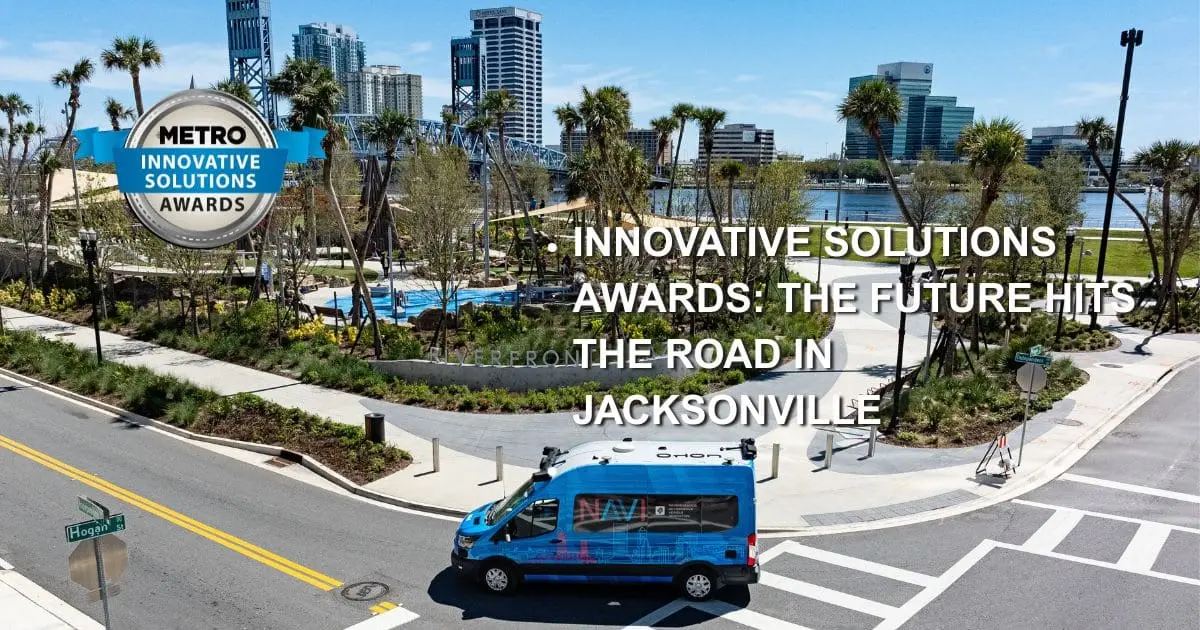
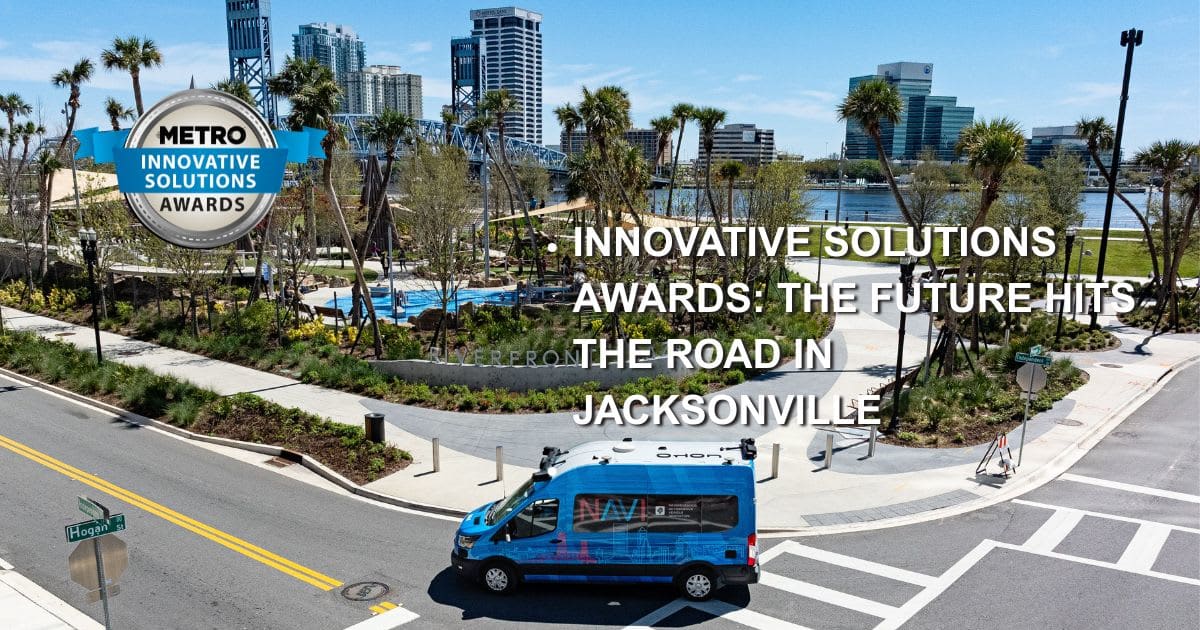
The future of public transportation has officially arrived on the streets of Jacksonville, Florida. For decades, the concept of fully autonomous transit operating seamlessly within dense, mixed-traffic urban environments existed primarily in the realm of science fiction, academic research papers, and heavily constrained pilot tracks. Today, however, that speculative horizon has shifted into tangible, everyday reality, courtesy of the Jacksonville Transportation Authority (JTA) and its groundbreaking Neighborhood Autonomous Vehicle Innovation (NAVI) program.
Recently honored with METRO’s prestigious Innovative Solutions Award, NAVI represents a monumental milestone: the establishment and successful deployment of the United States’ first fully integrated, public autonomous transportation network. Far more than a mere showcase of self-driving vehicles, NAVI serves as the pioneering first phase of JTA’s ambitious, long-range Ultimate Urban Circulator (U2C) initiative. This comprehensive program is methodically redesigning how a major metropolitan area connects its central business district, residential neighborhoods, commercial hubs, and entertainment venues.
Operating along a strategically mapped 3.5-mile route winding through Jacksonville’s vibrant urban core, NAVI is dismantling traditional barriers to public mobility. It proves that autonomous vehicles (AVs) can be safely, reliably, and efficiently woven into the fabric of daily municipal transit. Yet, the true genius of JTA’s achievement does not rest solely on the sleek profile of its autonomous fleet. Instead, it lies within a meticulously engineered mobility ecosystem. This ecosystem marries connected roadside infrastructure, real-time data exchange, advanced command-and-control architecture, cutting-edge sustainable energy solutions, and a proactive workforce development pipeline.
As transit agencies across North America and around the globe grapple with shifting commuter patterns, tight operating budgets, and the imperative to modernize aging infrastructure, Jacksonville’s NAVI program stands out as the definitive blueprint. It demonstrates that transforming public transit requires a holistic, ecosystem-wide approach rather than a piecemeal technology rollout. This in-depth special report explores the evolution of the NAVI program, dissects the technological components powering its success, highlights the strategic partnerships driving its momentum, and evaluates the profound lessons it offers the broader transportation industry.
Detailed Chronology: From Aging Skyway to the Ultimate Urban Circulator
The journey toward the nation’s first operational public autonomous transit network was neither rapid nor accidental. It is the product of years of visionary strategic planning, political alignment, rigorous engineering, and cross-sector collaboration. To understand the magnitude of NAVI’s success, one must trace its roots back to the operational challenges that initially plagued downtown Jacksonville’s legacy transit assets.
The Catalyst: Modernizing the Downtown Skyway
For years, Jacksonville’s downtown mobility relied heavily on the Jacksonville Skyway, an automated monorail system built in the late 1980s and early 1990s. While innovative for its era, the Skyway faced mounting limitations. Its fixed guideway infrastructure was extraordinarily expensive to maintain, lacked the flexibility to adapt to shifting urban growth patterns, and struggled to extend cost-effectively into newly developed residential and entertainment districts.
Recognizing that the city required a dynamic, scalable, and cost-efficient alternative to expand its footprint without sinking billions into steel guideways, JTA leadership initiated a visionary pivot. The agency began asking a fundamental question: How can a modern transit authority leverage rapidly advancing automotive automation to replace fixed-rail limitations with flexible rubber-tired or specialized electric autonomous vehicles, while still maintaining high safety and reliability standards?
This inquiry catalyzed the conception of the Ultimate Urban Circulator (U2C). Rather than abandoning automated transit entirely, JTA envisioned transforming the Skyway’s central core while branching out into the surrounding neighborhoods via an open, expandable network of autonomous vehicles capable of navigating public roadways alongside traditional cars, buses, bicycles, and pedestrians.
Phase One: Laying the Groundwork for NAVI
With the U2C framework established, JTA broke down the massive undertaking into manageable, sequential phases. The first of these operational phases was christened the Neighborhood Autonomous Vehicle Innovation (NAVI) program.
Turning this conceptual roadmap into an operating transit service required clearing numerous regulatory, financial, and logistical hurdles. JTA actively pursued and secured vital funding streams through key state and federal partners, notably the Florida Department of Transportation (FDOT) and the Federal Transit Administration (FTA). These financial commitments provided the stable foundation required to design and build specialized physical infrastructure.
The agency selected the Bay Street Innovation Corridor as the primary testing and deployment ground. This critical artery through Jacksonville’s downtown core offered a diverse mix of traffic conditions, pedestrian density, and intersections, making it an ideal proving ground for mixed-traffic automation.
Rigorous Testing and Public Integration
Before welcoming its first paying passengers, the NAVI route underwent extensive pre-revenue testing phases. Engineers, safety drivers, software developers, and municipal officials spent countless hours validating vehicle sensors, mapping roadway anomalies, testing communication protocols with traffic signals, and running stress simulations under various weather and traffic scenarios.
This rigorous preparation culminated in the official launch of passenger service along a 3.5-mile route seamlessly linking Jacksonville’s central business district with residential neighborhoods and the bustling sports and entertainment district, including direct service near EverBank Stadium. Today, the route features 12 designated passenger stops, servicing routine commuters, lunch-hour workers, convention visitors, and sports fans alike. By embedding autonomous transit directly into daily municipal workflows, JTA shifted the technology from a controlled laboratory experiment into a dependable, everyday public utility.
Supporting Context, Infrastructure, and Technological Metrics
A common pitfall in early smart-city initiatives is the "vehicle-centric" fallacy—the mistaken belief that purchasing advanced self-driving cars is sufficient to solve public transportation challenges. JTA avoided this trap by approaching the NAVI program as an infrastructure-wide integration challenge. The physical vehicles are merely the most visible node in a complex, multi-layered technological network.
[Autonomous Vehicles] <---> [Connected Infrastructure (Bay Street Corridor)]
         ^                                        ^
         |                                        |
         v                                        v
[Autonomous Innovation Center (AIC)] <---> [Dedicated Cybersecurity Framework]
The Bay Street Innovation Corridor: Intelligent Infrastructure
Along the Bay Street Innovation Corridor, the roadway itself is an active participant in the transit ecosystem. JTA deployed advanced intelligent infrastructure designed to help vehicles "see" around corners and anticipate traffic conditions well beyond the range of their onboard LiDAR and camera arrays.
Key technological components of this corridor include:
- Connected Vehicle (V2X) Communications: Roadside units communicate continuously with the autonomous fleet, transmitting real-time data regarding traffic flow, signal phases, and roadway hazards.
- Traffic Signal Priority (TSP): The system dynamically communicates with traffic lights to optimize travel times through intersections, reducing transit delays and smoothing out the passenger ride experience.
- Comprehensive Environmental Sensors: Integrated pedestrian detection systems, high-definition optical cameras, and specialized flood sensors line the corridor. These tools give vehicles instant awareness of changing weather conditions, localized street flooding, and sudden pedestrian movements, establishing essential layers of operational redundancy.
The Autonomous Innovation Center (AIC)
At the heart of NAVI’s operational backbone stands the Autonomous Innovation Center (AIC). Located in LaVilla, the AIC functions as the nerve center, maintenance facility, and research hub for the entire U2C network.
The command center continuously monitors the status of every vehicle in the fleet, managing active deployment, fleet rotation, remote diagnostics, and emergency intervention protocols. Furthermore, the AIC houses charging infrastructure designed to maintain the electric fleet’s operational readiness around the clock.
In alignment with JTA’s commitment to environmental sustainability and resilience, the AIC itself incorporates state-of-the-art green building technologies:
- Solar Microgrid: The facility features a high-capacity microgrid powered by 129 rooftop solar panels, significantly offsetting the building’s baseline energy demand.
- Battery Energy Storage: Advanced battery systems store solar generation for use during peak demand periods or grid disruptions.
- Accelerated Construction Techniques: The building was engineered using modular, accelerated fabrication methods to ensure rapid completion while providing structural flexibility for future expansions as the U2C network grows.
- Isolated Cybersecurity Architecture: Recognizing the heightened threat landscape associated with connected and automated municipal infrastructure, the AIC operates on a dedicated cybersecurity network entirely separate from JTA’s enterprise administrative systems, safeguarding critical transit operations against digital intrusion.
Official Statements and Industry Validation
The significance of JTA’s accomplishment has resonated far beyond the borders of Florida, drawing international acclaim and validating years of painstaking multi-agency coordination. Winning METRO Magazine’s Innovative Solutions Award served as both a celebration of past milestones and a powerful affirmation of collaborative public-private vision.
In reflecting on the award, JTA leadership emphasized that the true triumph of the NAVI program is rooted in persistence, shared risk, and cross-sector trust:
"Receiving METRO’s Innovative Solutions Award is a tremendous honor and a meaningful validation of the work our team and partners have accomplished together," JTA officials stated. "While we’re proud of the recognition, what makes this award especially significant is that it acknowledges years of collaboration, innovation, and persistence by a broad coalition of public and private partners who believed in a bold vision for the future of public transportation."
The agency frequently highlights that autonomous mobility cannot be built in a vacuum. It requires an active coalition of federal regulators, state transportation departments, municipal planners, academic institutions, vehicle manufacturers, and software developers. By maintaining open lines of communication and shared accountability among these stakeholders, JTA created a replicable framework for project execution.
Furthermore, agency representatives have consistently stressed that technology must serve human needs rather than dictating them:
"Our experience shows that autonomous public transportation is no longer a future concept; it can be safely and successfully deployed today when supported by the right infrastructure, partnerships, and operational framework."
Building Public Confidence and Cultivating the Workforce of Tomorrow
Deploying advanced automation into public spaces requires overcoming two major hurdles: public skepticism and a shortage of specialized technical talent. JTA addressed both challenges head-on through community engagement and proactive workforce development.
Earning Public Trust Through Routine Experience
Introducing driverless vehicles to everyday commuters inevitably triggers questions regarding safety, reliability, and comfort. JTA recognized that public confidence cannot be manufactured through marketing campaigns; it must be earned through consistent, positive, everyday experiences.
Since launching passenger service, the response from Jacksonville residents and visitors has been overwhelmingly encouraging. Initial curiosity routinely brings first-time riders aboard the NAVI shuttles. Once passengers experience the smooth ride, observe the vehicle’s cautious navigation around pedestrians and obstacles, and see how seamlessly it integrates into downtown traffic, abstract apprehension quickly transforms into practical acceptance.
By normalizing autonomous transit through routine, low-stress trips across the central business district, JTA is effectively demystifying automation for the general public, laying a robust cultural foundation for broader future deployments.
Workforce Development and Academic Partnerships
Behind every successful autonomous vehicle fleet lies an army of skilled technicians, software engineers, systems administrators, and safety monitors. Anticipating a nationwide talent deficit in advanced transportation maintenance, JTA forged strategic educational partnerships—most notably with Florida State College at Jacksonville (FSCJ).
Together, JTA and FSCJ are developing specialized vocational training and certification programs tailored to the emerging needs of the autonomous mobility sector. These curricula focus on:
- Autonomous Vehicle Systems Diagnostics & Maintenance
- Cybersecurity Protocols for Intelligent Infrastructure
- V2X Communications Network Management
- Electric Fleet High-Voltage Safety and Charging Infrastructure Management
By embedding workforce training directly into the local educational pipeline, JTA ensures that Jacksonville is not only importing technological tools from private vendors but is also cultivating a local, highly skilled workforce capable of sustaining and expanding the mobility economy for generations to come.
Future Outlook: The Next Phase of the Ultimate Urban Circulator
With the foundational success of the NAVI program securely established, JTA is already looking ahead to the subsequent phases of the Ultimate Urban Circulator. The 3.5-mile Bay Street Innovation Corridor is merely the proof-of-concept for a much larger regional vision.
As funding permits and technological refinements continue, the U2C initiative will progressively expand its footprint outward from the urban core. Future phases will connect downtown Jacksonville directly to major adjacent residential enclaves, expanding medical centers, university campuses, and commercial nodes currently underserved by rapid, high-frequency transit.
Lessons for the Global Transit Industry
For transit agencies across North America and around the world, Jacksonville’s NAVI program provides a masterclass in modern transit innovation. The key takeaways for municipal leaders include:
- Ecosystem Integration Over Isolated Procurement: Purchasing autonomous vehicles without investing in connected infrastructure, command centers, and cybersecurity is a recipe for operational failure. Technology must be deployed as an interconnected ecosystem.
- Problem-Driven, Not Technology-Driven: Automation must solve specific mobility challenges—such as replacing aging, inflexible fixed-guideways—rather than being adopted merely for its novelty.
- Public-Private-Academic Synergy: True innovation requires breaking down organizational silos, combining the financial backing of government agencies with the agility of private tech firms and the educational horsepower of local colleges.
- Proactive Public Engagement: Earning community trust requires transparency, safety redundancies, and positive firsthand passenger experiences that normalize new technologies over time.
Conclusion
Through the NAVI program and the broader Ultimate Urban Circulator initiative, the Jacksonville Transportation Authority has permanently altered the trajectory of public transportation in the United States. By bridging the gap between autonomous vehicles, intelligent infrastructure, sustainable microgrids, and workforce development, JTA has demonstrated that the future of mobility is not a distant aspiration—it is an operational reality currently moving passengers safely, efficiently, and sustainably through the heart of Florida. As cities worldwide seek viable solutions to modern traffic congestion and aging transit infrastructure, Jacksonville’s pioneering model stands ready to guide the way.